
Some watches are so deeply ingrained in the collective imagination that they have achieved the status of icons. When I say this, I think of the great classics such as the Speedmaster or the Submariner, which are familiar and recognizable names even to non-experts in the field. There are other watches, which while less well known to the general public, deserve to be counted among the symbols of watchmaking history. The Bvlgari Bvlgari is one of them.
The first, original Bvlgari Bvlgari was unveiled in 1977 as an evolution of an old, little-known cadeau reserved for the Maison’s most loyal customers, in the same year that the following debuted Star Wars. Just as the American blockbuster subverted the structures of mythology and epic in a modern cinematic key, the Bvlgari Bvlgari reinterpreted the richness of ancient Roman coins in an essential design, almost closer to the iconic language of fashion than to that of traditional watchmaking, because it made the obvious logo engraved on the bezel a style manifesto.
In those years, both were making a breakthrough gesture in their field that would give rise to a new idea of filmmaking and a new way of imagining watches.
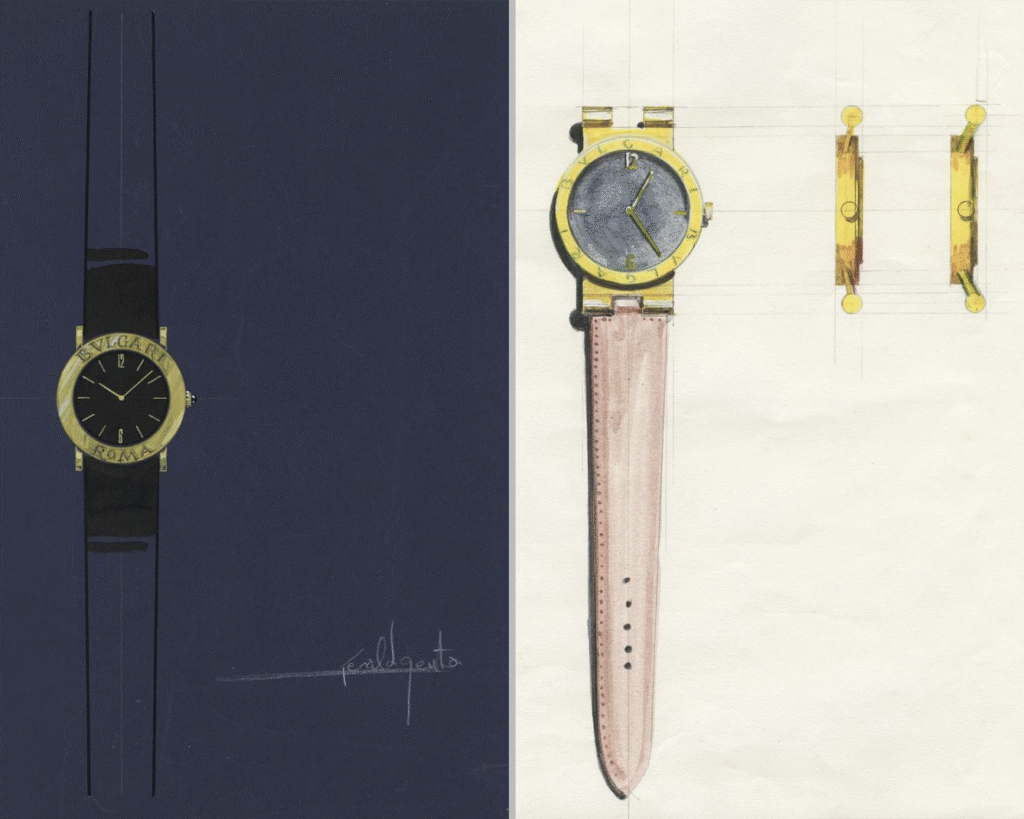
Original drawings by Gérald Genta, ca. 1975.
For the 50th anniversary of Bvlgari Bvlgari, the Roman fashion house not only inaugurates an immersive exhibition in the DVMUS, the exhibition space of the historic boutique on Via Condotti, but also presents four new models with marble dials as a tribute to its historic icon, accompanied by a set of matching jewelry.
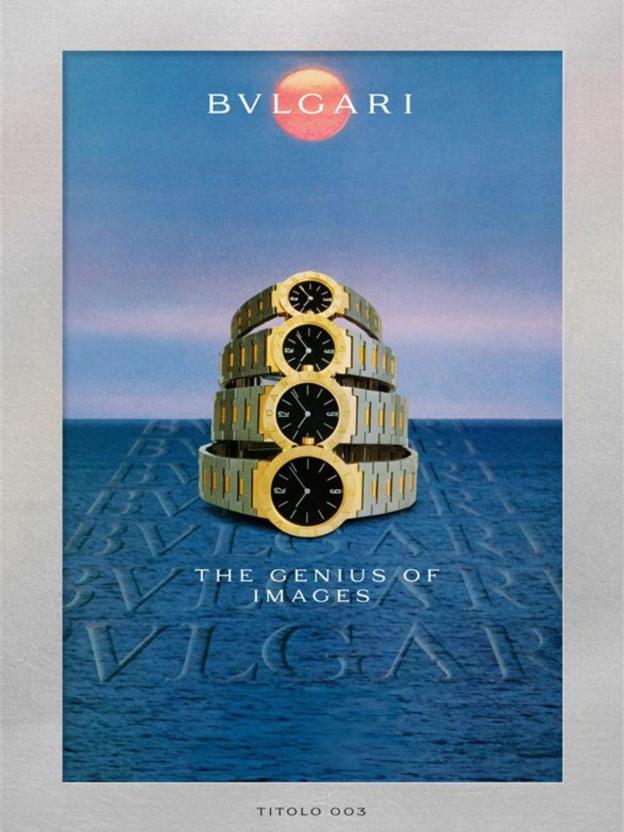
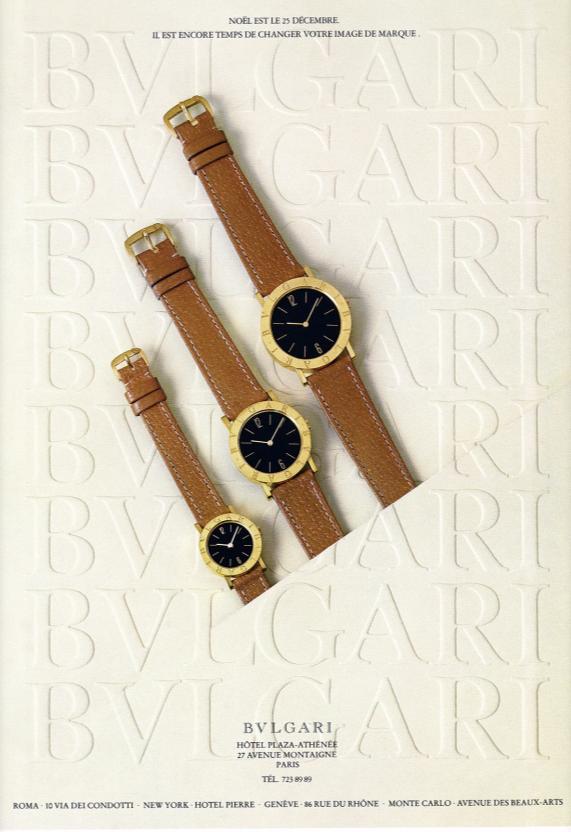
At left, the exhibition template. At right, an advertising campaign from 1979.
The Genius of Images: How Bvlgari built an immortal visual identity
The Genius of Images selects materials from Bvlgari ‘shistorical archive (some of which have never before been exhibited) to tell, through the evocative power of photography, the history and evolution of the brand’s posters and advertising campaigns from the 1960s to the 1990s.
Beginning in the 1960s, Bvlgari embarked on a radical stylistic shift destined to change the habits of modern jewelry forever. Confirming this, as one traverses the halls of the space, the outlines of a dreamlike world bearing the signature of Emment Bright, Gaio Bacci and Davide Pizzigoni emerge, made up of landscapes of Rome now and then, surrealist and metaphysical inspirations, and irreverent interpretations of everyday objects and spaces in which jewelry lives an alternative and unusual dimension.
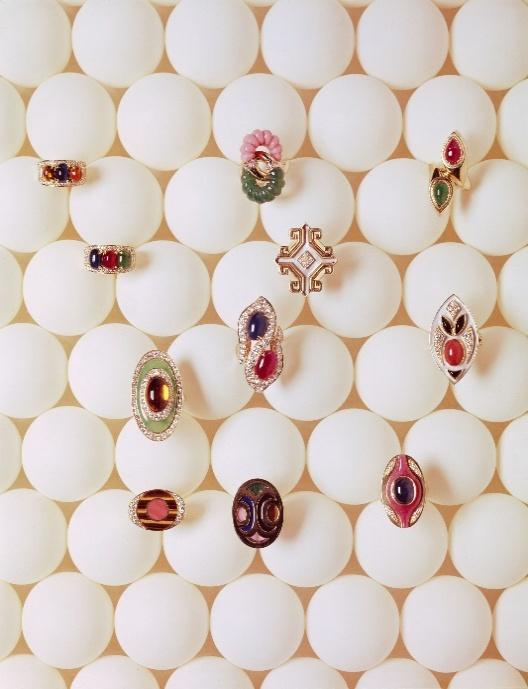
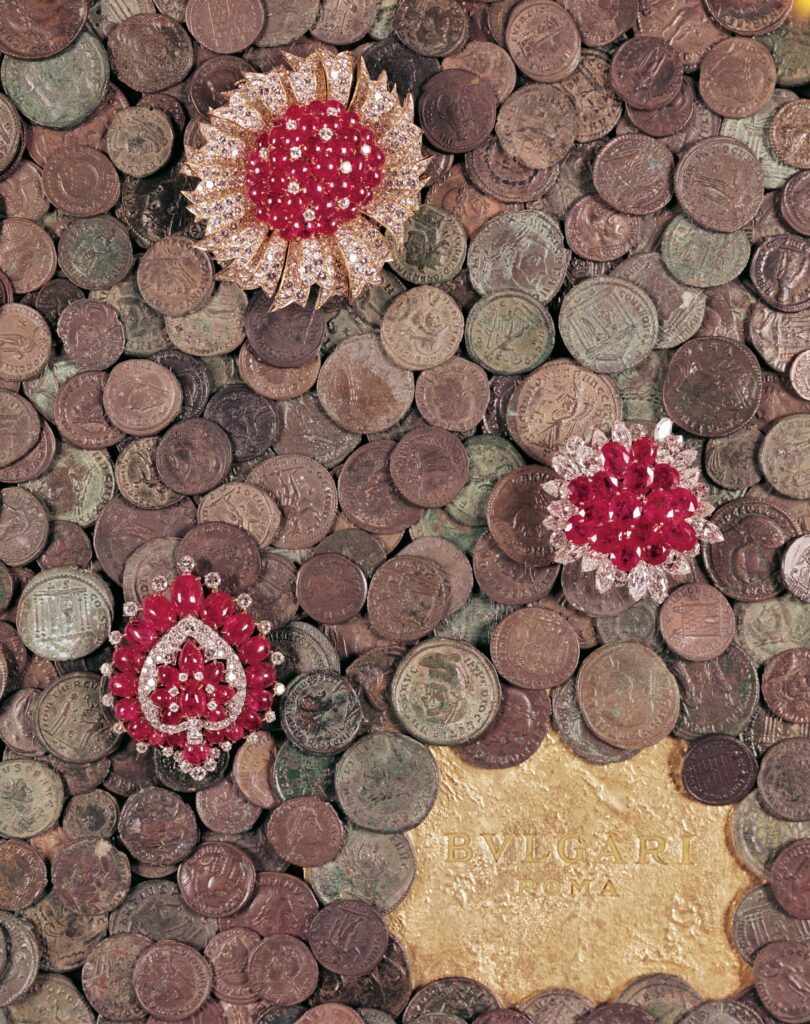
Left, advertising campaign depicts gold brooches and rings with colored gemstones, ca. 1970 – Egg backgound, 1970-1975, Gaio Bacci, Bvlgari Historical Archives.
Precious brooches are portrayed in a field of ping-pong balls or on carpets of ancient coins, watches (one above all, the Bvlgari Bvlgari emerging as an undisputed icon) are used as harnesses for elegant steeds. Bold lines, unexpected color combinations and a pioneering use of polychrome gems are the elements recounted here, which have become iconic stylistic figures of the Maison.
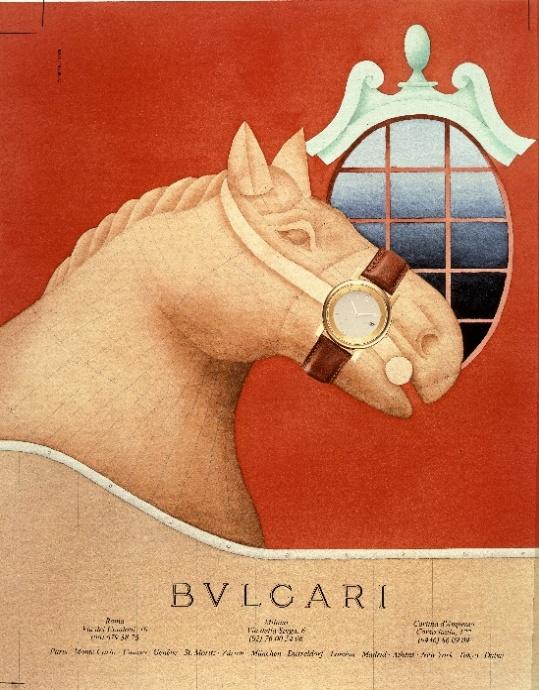
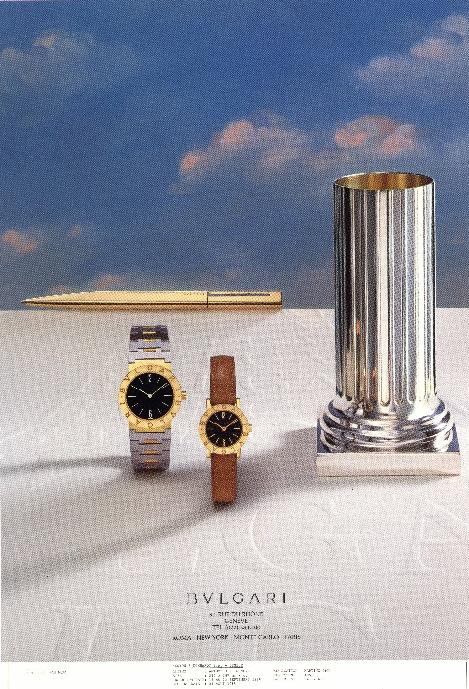
Left, the gold Bvlgari Bvlgari with leather strap, ca. 1989 – Metamorphosis, 1992-1996, Davide Pizzigoni, Archivi Storici Bvlgari. At right, the iconic yellow gold, gold and steel Bvlgari Bvlgari in a metaphysical landscape – Bvlgari Dream, 1981-1989, Historical Bvlgari Archives.
The Bvlgari Bvlgari in 50 years of history: evolution of a watchmaking icon
The exhibition The Genius of Images tells the story of the original Bvlgari B vlgari model alongside its most significant evolutions, testimonies as much to the Maison’s innovative spirit as to its deep connection with antiquity. Born in 1957 from an intuition of Gianni Bvlgari as an exclusive limited-edition gift for the most prestigious clients, this archetype featured a gold case inspired by Roman columns, a digital display and a hemp strap. Absolute novelty was the gold bezel engraved with the capital BVLGARI ROMA logo, confirming a strong and instantly recognizable identity.
Although never intended for wide distribution, demand for the Bvlgari Roma grew incredibly, precisely because it was memorable and unconventional. Only two years later, Gérald Genta reinterpreted this model, creating the original Bvlgari Bvlgari, which, while retaining the circular shape inspired by ancient coins, featured a traditional dial, a gold case, and a brown leather strap.
Compared to Gianni Bvlgari’s version, the bezel retained the engraved BVLGARI logo, now duplicated at the top and bottom, and introduced a new font that replicated the typical characters of ancient Roman inscriptions.
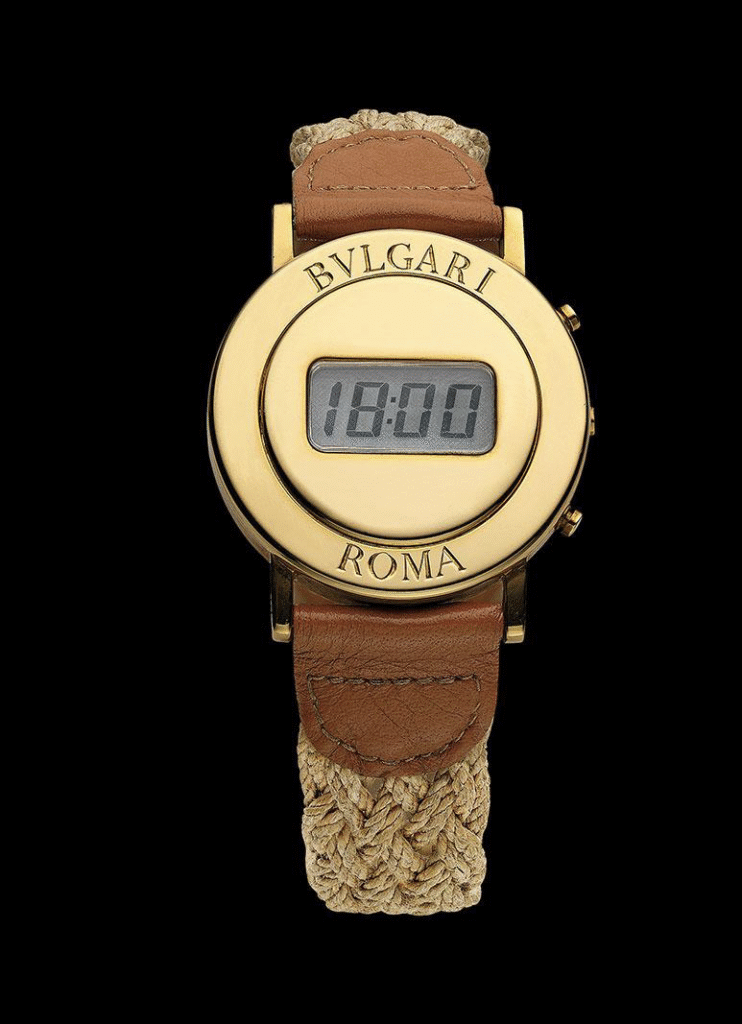
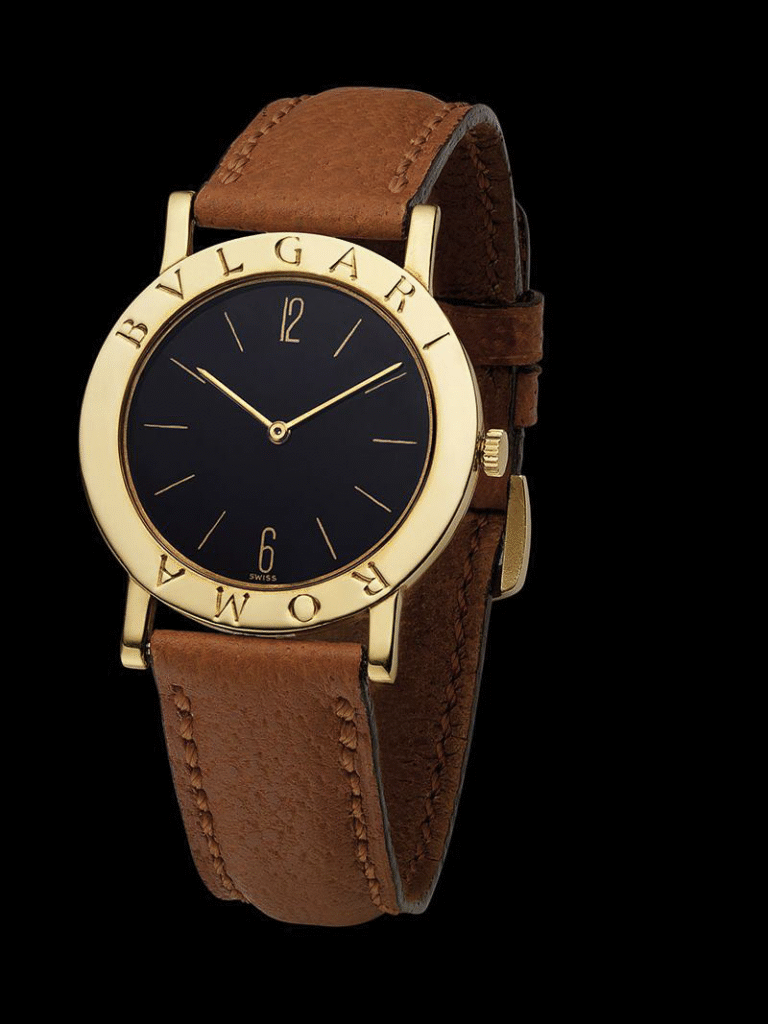
On the left is the first model designed by Gianni Bulgari; on the right is the second version designed by Gérald Genta.
Colored marble dials for the 50th Anniversary of Bvlgari Bvlgari
In its fifty-year history, the Bvlgari Bvlgari has experienced countless interpretations. To celebrate the important milestone, the Maison presents four new variants, limited to one hundred and fifty pieces each, available in two case sizes (26mm and 38mm) with two different movements (quartz or automatic), all embellished with a fine marble dial .
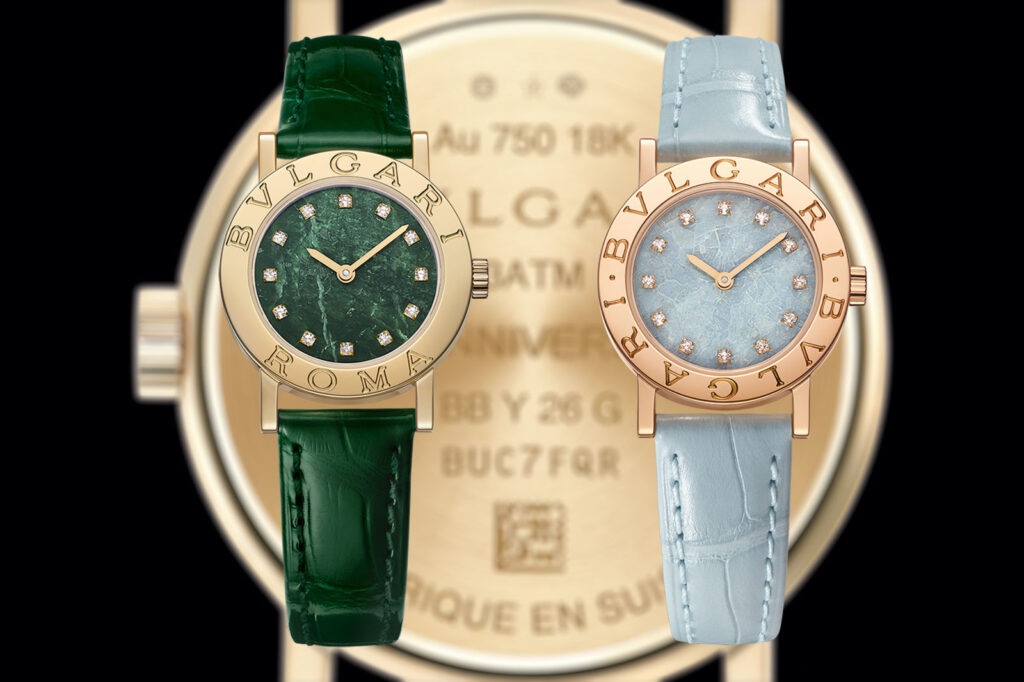
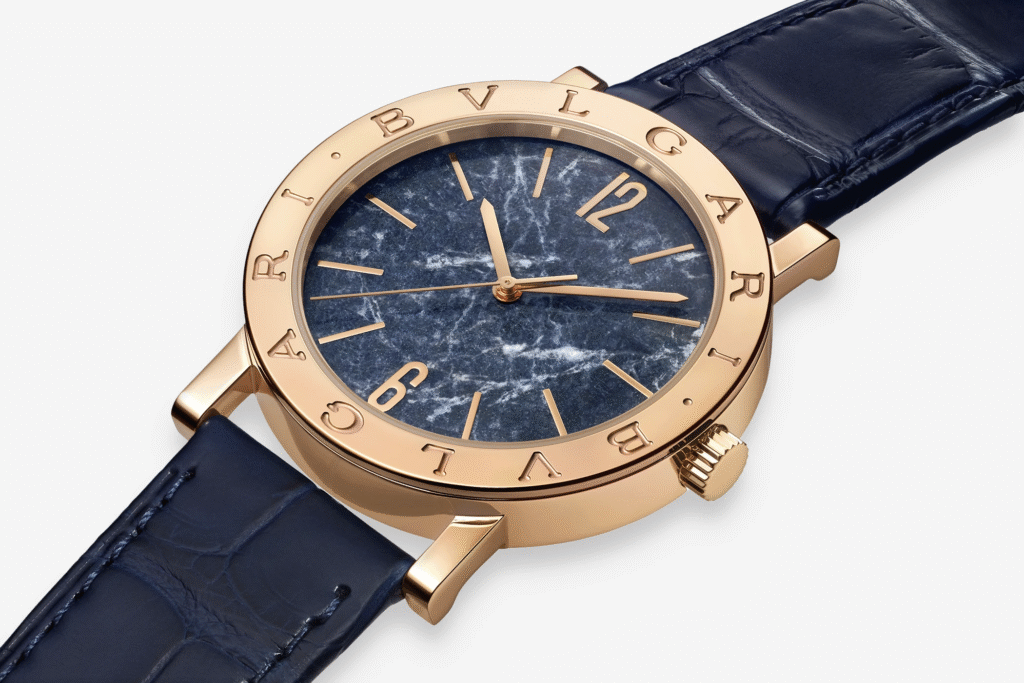
A symbol par excellence of the splendor and wealth of ancient Rome, marble represents for Bvlgari not only a material of enormous material complexity and chromatic variety, but an authentic artistic expression, a tangible and exhibited manifesto of the deep connection with the world of Classical Antiquity. For these models, Bulgari chooses the green marble Verde Alpi combined with yellow gold, and for the rose gold versions the deep blue marbles Blu Incanto and ice blue Azzurro infinito.
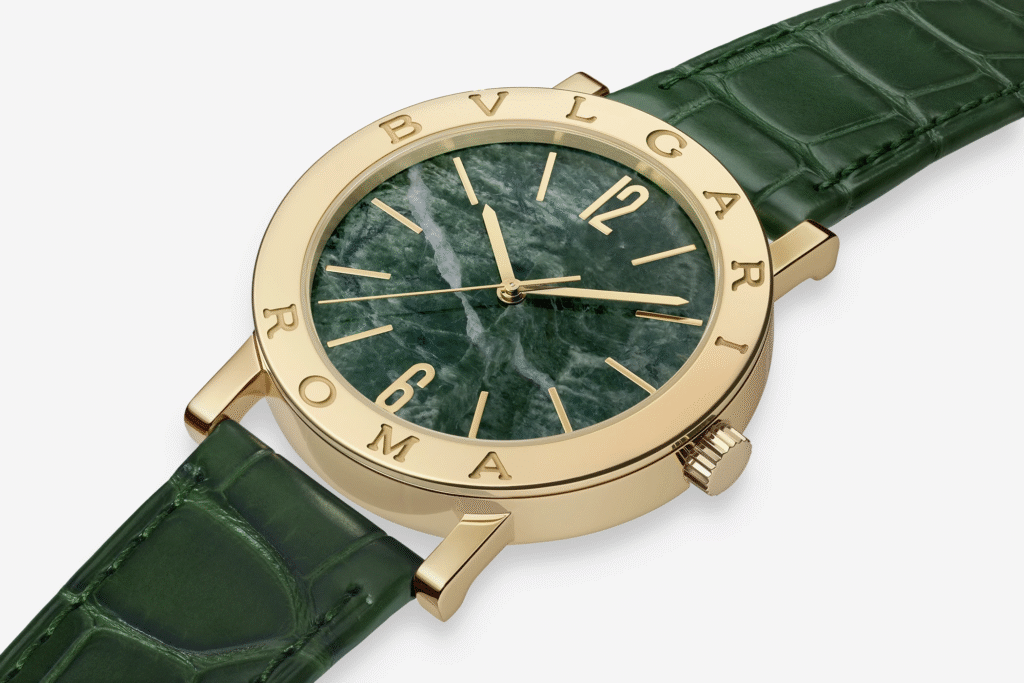
Largely faithful to the original, the new edition retains the double engravings on the polished bezel that read “BVLGARI ROMA” in the green versions and “BVLGARI BVLGARI” in the blue versions, with the only slight modern concession being laser engraving, however, which mitigates the handcrafted character of the original executed by hand.
Two quartz and automatic movements for the new Bvlgari Bvlgari
Two of the four models made for the 50th anniversary, specifically the two with 26mm cases, owe their precision to a quartz movement, while the larger 38mm models rely on the automatic Solotempo BVL 191 caliber.
Introduced in 2013, this movement was billed as a cornerstone of Bvlgari‘s mechanical future, a promise the Maison has kept, continuing to favor this solution for its reliability and precision. The Solotempo BVL 191, equipped with ceramic ball bearings, runs at 4 Hertz and provides a 42-hour power reserve.
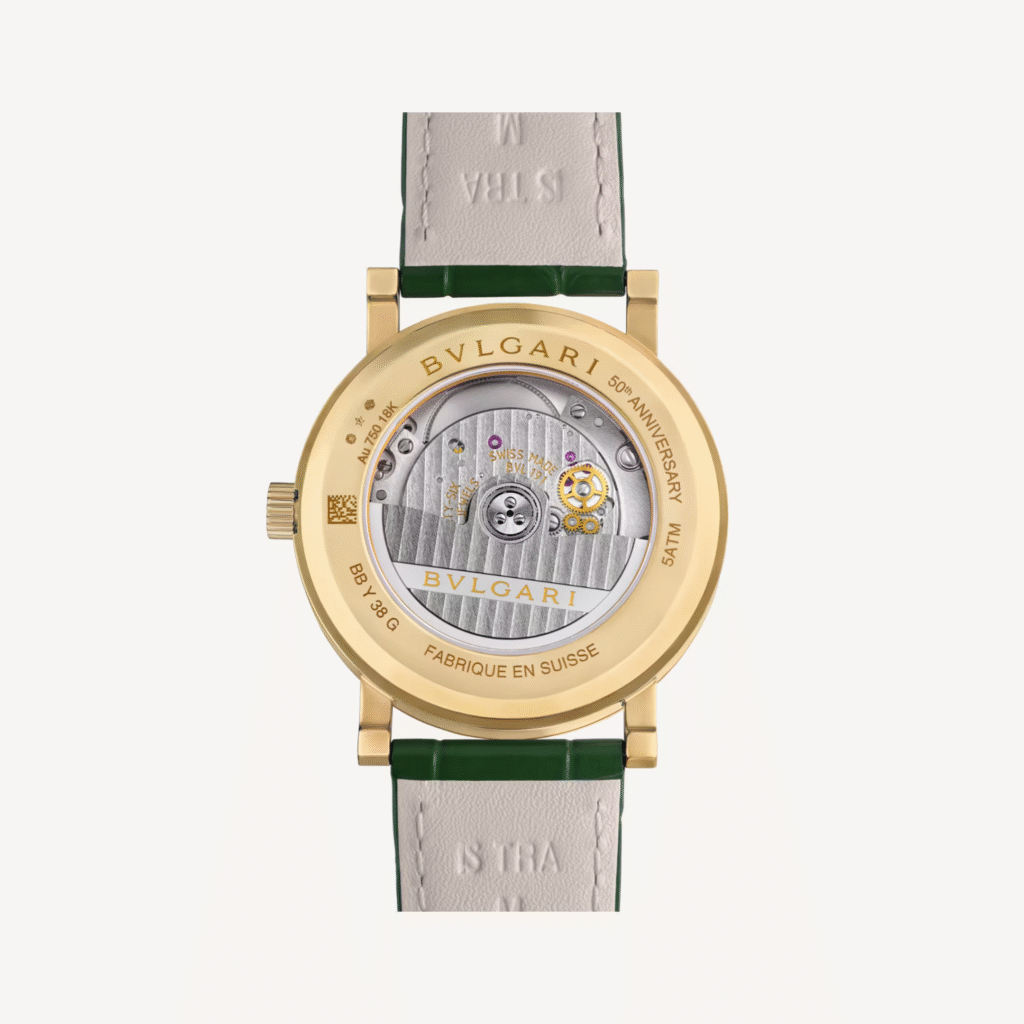
The maison calls it a movement of “complex simplicity,” and this is where the name Solotempo comes from, an expression that emphasizes the purity of a caliber dedicated exclusively to hours, minutes, seconds and date (a function that is not used in these models). Visible through the sapphire crystal case back, the automatic movement is decorated with Côtes de Genève and embellished with the golden Bvlgari logo on the rotor.
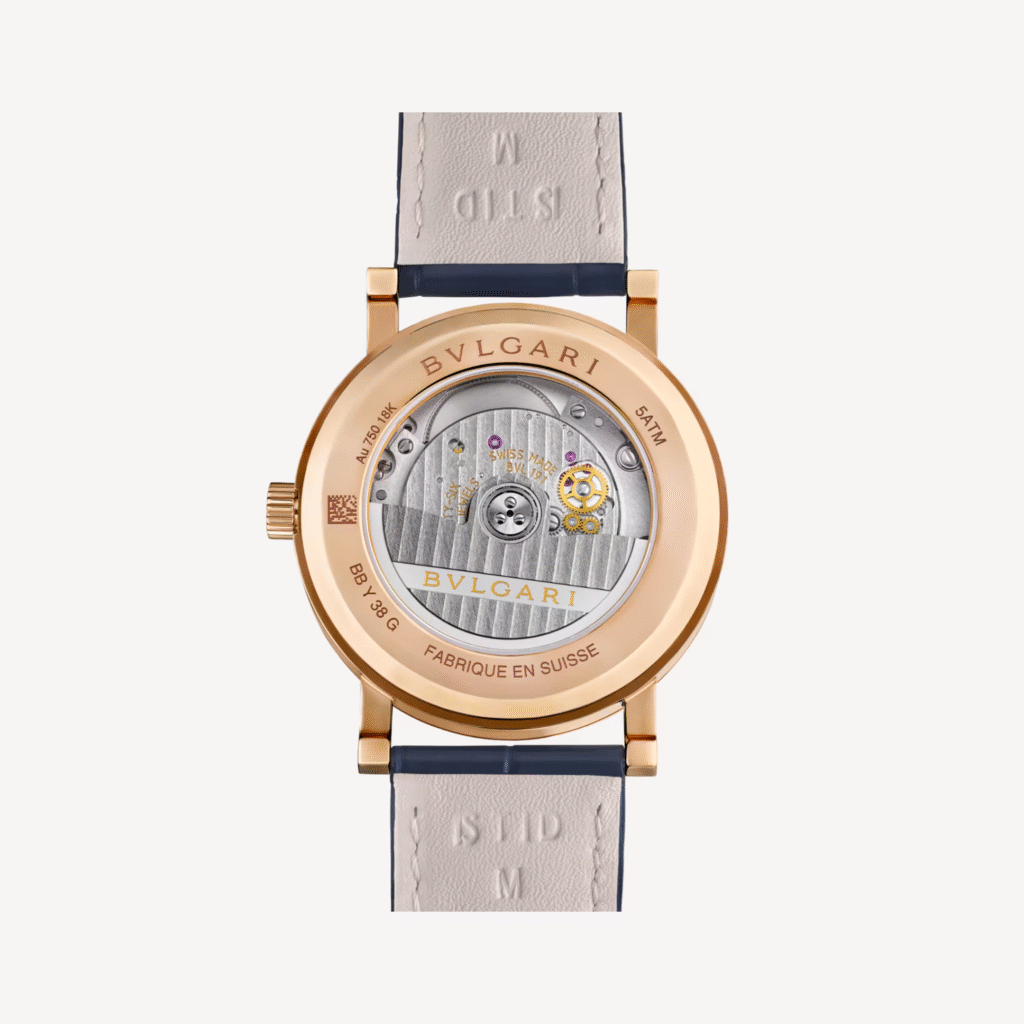
These Bvlgari Bvlgari models are paired with tone-on-tone alligator straps and matching yellow or rose gold buckle. The automatic versions, with a 38-millimeter case and green or blue dial, are priced at 18,000 euros each, while the smaller quartz models are offered at 13,500 euros.
Conclusions
These days, as the Roman Maison celebrates the 50th anniversary of Bvlgari Bvlgari through new references and the exhibition The Genius of images, it reflects on its own identity, inextricably linked to the allure of the Eternal City, which par excellence has gathered within itself for centuries the wisdom of ancient civilizations and the fascination of history, becoming an inexhaustible source of inspiration.
Bvlgari ‘s identity is revealed to be founded on cross-references and connections with the ancient, on constant research and on this iconographic and chromatic enchantment that is the lifeblood of each of its creations. Of this constant dialogue with art and culture that has lasted for decades, Bulgari makes its greatest boast.
Visit our Youtube channel to experience the best of the world of watchmaking firsthand.
For all real-time updates follow us on Instagram.