
They call it a “Grand Exhibition,” but the definition almost risks limiting its scope. Because when Patek Philippe decides to move out of Geneva and transfer its universe to a world city, the result goes far beyond a simple exhibition of exceptional timepieces. A place where watchmaking rediscovers its cultural dimension and returns to the territory that historically belongs to it: that of applied arts, manufacturing excellence and the transmission of knowledge.
In 2026, for the first time, this world will come to Italy. From Oct. 2 to 18, CityLife’s CityOval will host the seventh edition of the Patek Philippe Watch Art Grand Exhibition: more than 2,500 square meters of exhibition space, about 500 timepieces, historical creations coming directly from the Patek Philippe Museum, master craftsmen at work, immersive environments and limited editions dedicated to Italy. “It will be the largest Grand Exhibition ever held by the Geneva-based maison,” Patek Philippe President Thierry Stern told us during our interview.
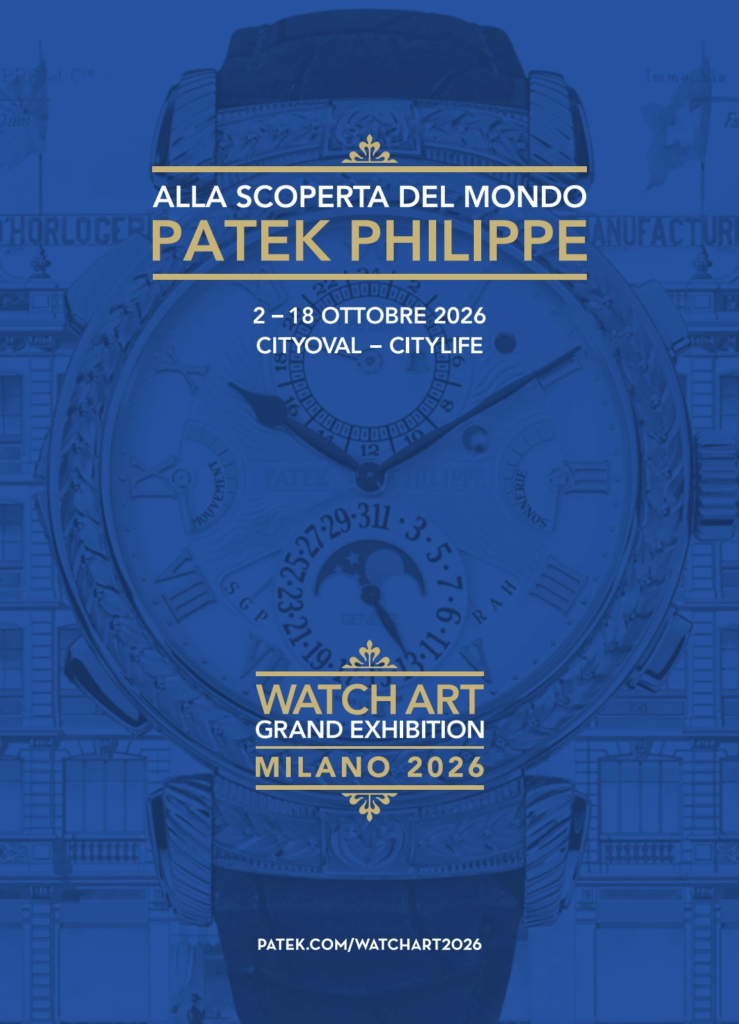
Patek Philippe Watch Art Grand Exhibition in Milan in 2026
And perhaps the choice of Milan already tells a lot about the philosophy that drives this event. For there are few cities in the world with such a developed sensitivity to the culture of manufacturing, design and executive excellence. Milan has built its language around the precision of detail, the balance of proportions, the quality of material, and an idea of elegance that focus on purity of gesture and solidity of content.
It’s an approach deeply akin to that of Patek Philippe. Since 1839, the Geneva-based maison has been building its watches from the same vision: that technique and beauty should belong to the same object, without compromising function, aesthetics and craftsmanship.
The Watch Art Grand Exhibitions were born exactly to tell this universe. To show what exists beyond the dial, beyond the complication, beyond the name engraved on the case.
Indeed, behind a perpetual calendar, a minute repeater or an enamel dial lives a cultural ecosystem built up over nearly two centuries: historical archives, technical research, rare crafts, decorative arts, slowly handed down skills and a conception of watchmaking that continues to see time as something to be cherished, interpreted and passed on.
What is really a Watch Art Grand Exhibition?
A format designed to tell the story of the maison in its entirety: contemporary collection, historical heritage, decorative arts, technical research, and manufacturing savoir-faire coexist within the same exhibition itinerary.
The idea took shape in 2012, at a time when haute horology was slowly beginning to change its language. After years dominated mainly by product communication, some major maisons understand that the deeper value of a watch lies not exclusively in rarity or technical complexity, but in the history and values it manages to convey.
Patek Philippe interprets this evolution in a radical way. Instead of constructing an event designed around the sale or simple presentation of novelties, the maison transforms the Grand Exhibition into a cultural experience open to the public and designed to show everything that normally remains behind the scenes: the ateliers, the archives, the decorative techniques, the construction of movements, the work of artisans, and the time it takes to reach certain levels of execution.
Each edition is designed specifically for the host city. It changes the environments, the installations, the cultural references, the sets and even the pace of the visit. It’s this almost museum-like setting that distinguishes the Grand Exhibition from any other contemporary watchmaking event.
Visitors pass through spaces that reconstruct the Salon on the Rue du Rhône, parts of the Plan-les-Ouates manufactory, the Patek Philippe Museum, and workshops dedicated to Rare Handcrafts. Master craftsmen and watchmakers work live in front of the public, demonstrating disciplines that often require decades of experience before they can be truly mastered.

Patek Philippe Watch Art Grand Exhibition Milan 2026 – “Watchmakers Room” Render
And it’s here that one of the most profound aspects of the Patek Philippe philosophy emerges: the belief that watchmaking belongs first and foremost to the world of applied arts.
Just look at the way the manufacture develops its movements. Each caliber is born in-house, from time-only to grand complications. The Patek Philippe Seal, introduced in 2009 after the abandonment of the Poinçon de Genève, further reinforced this idea of absolute control over quality, extending standards from the execution of the movement to the entire watch.

Patek Philippe Watch Art Grand Exhibition Milan 2026 – “Manufacture Room” Render
It’s a vision that seems to belong to another era of the industry, and it’s this distance from contemporary logic that makes Patek Philippe still so influential in the eyes of collectors.
Clocks: from contemporary collection to museum masterpieces
One of the most fascinating aspects of the Watch Art Grand Exhibition is the way it manages to bring completely different eras into dialogue.
On one side is the maison’s entire contemporary collection: Calatrava, Nautilus, Aquanaut, Twenty~4, World Time, Complications, and Grande Complications. On the other is a selection of watches coming directly from the Patek Philippe Museum in Geneva, including examples that rarely leave Switzerland.
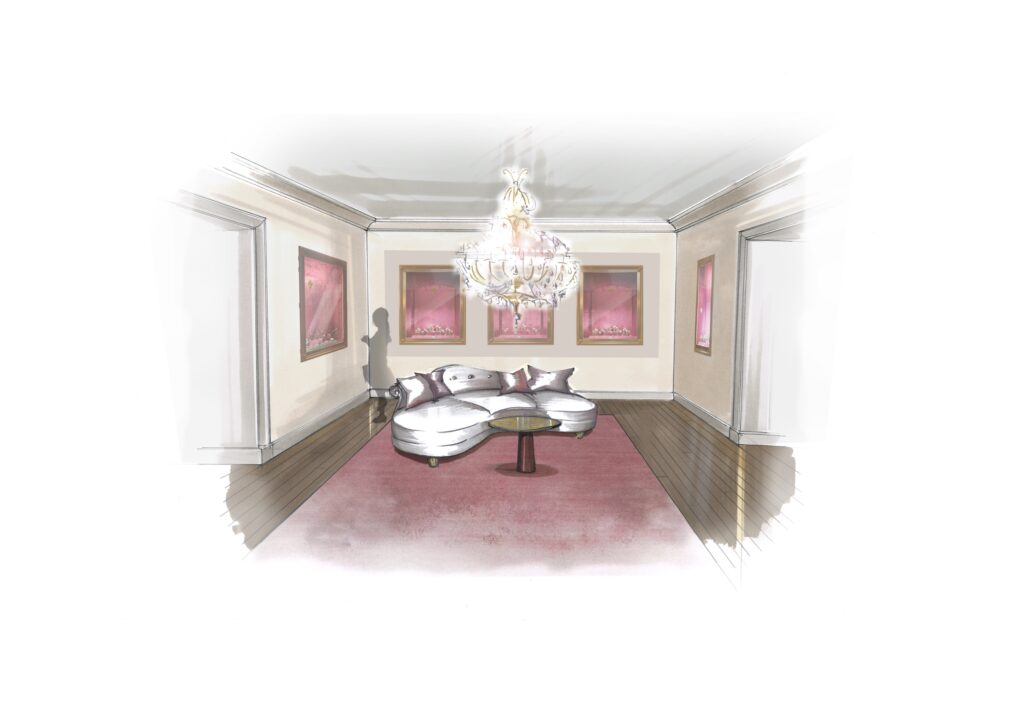
Patek Philippe Watch Art Grand Exhibition Milan 2026 – “Current Collection Room” Render
The public is confronted with five centuries of watchmaking history brought together in the same space: 18th-century pocket watches, astronomical clocks, great historical complications, prototypes that never went into production, and creations that belonged to the European aristocracy.
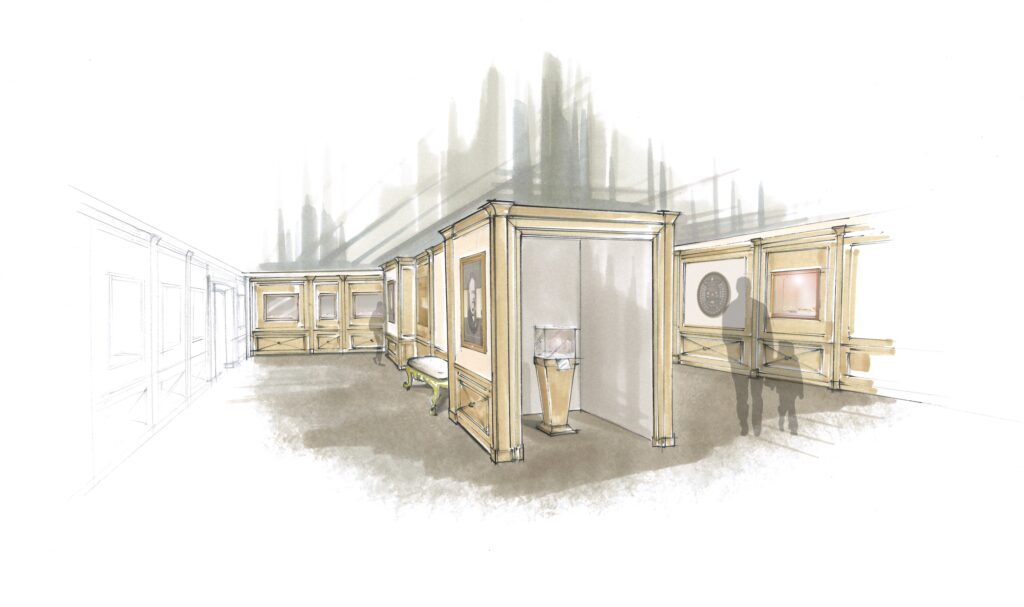
Patek Philippe Watch Art Grand Exhibition Milan 2026 – “Museum Room” Render
The Patek Philippe Museum holds one of the world’s most important collections dedicated to the measurement of time. The “Ancient Collection” section traverses the history of European watchmaking from the 16th century onward, including works by such seminal masters as Jean-Antoine Lépine, Abraham-Louis Breguet and Ferdinand Berthoud. The “Patek Philippe Collection,” on the other hand, traces the maison’s evolution from 1839 to the present day, showing how many innovations now considered pillars of modern haute horlogerie have found in Patek Philippe one of their most influential interpreters.
Milan will also devote ample space to watches equipped with“sonneries,” with an area called “Master of Sound” that will bring together some of the most sophisticated creations ever made by the house, including the Grandmaster Chime and the Sky Moon Tourbillon.

Patek Philippe Watch Art Grand Exhibition Milan 2026 – “Master of Sound Room” Render
Yet the real wonder emerges the moment these watches are heard live. Anyone who has had occasion to hear a Patek Philippe minute repeater in a silent setting knows well that feeling that is difficult to put into words: the moment when mechanics transcends the purely technical dimension and becomes a sensory experience. The timbre of the hours, the depth of the vibration, the duration of the note, the way the sound propagates through the case.
Details impossible to understand through a photograph or film.
Rare Handcrafts: the true heart of the maison
Whenever people talk about Patek Philippe, the contemporary debate almost inevitably ends up focusing on steel sportsmen, waiting lists, and secondary market dynamics. The Watch Art Grand Exhibitions also serve to redress this perception by bringing attention back to what historically represents the most authentic heart of the maison: craftsmanship.
Indeed, the Rare Handcrafts section remains one of the most extraordinary moments of the entire exhibition. Dome pendulettes, pocket watches, and one-of-a-kind pieces decorated through cloisonné enamel, miniature painting, micro-wood inlay, hand engraving, traditional guilloché, and entirely handmade settings transform watchmaking into a territory that openly dialogues with European decorative arts.
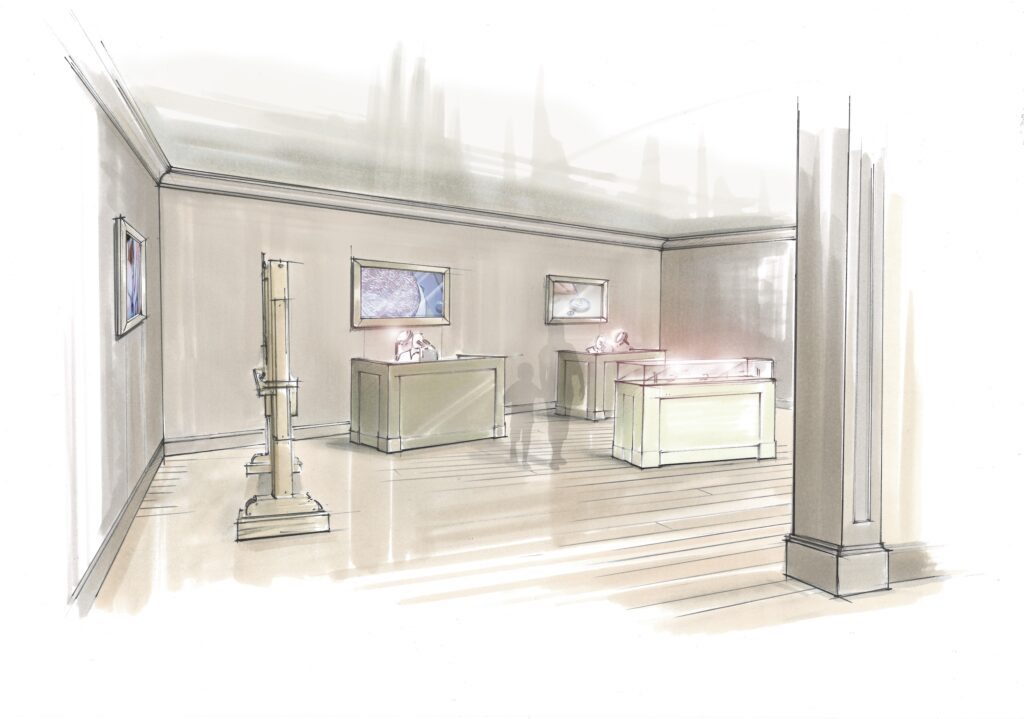
Patek Philippe Watch Art Grand Exhibition Milan 2026 – “Rare Handcrafts” Render
The fashion house does not consider these techniques mere ornamental exercises intended for a niche of collectors. It treats them as an integral part of its cultural identity. Each discipline is preserved, handed down internally and kept alive even at times when the market seems to be oriented almost exclusively toward technical performance, sportiness and immediate desirability.
Just look at the level of complexity required by some of these processes.
Cloisonné enamel, for example, requires the hand-laying of very thin threads of gold delineating different color areas before subsequent firings at very high temperatures. Miniature painting involves continuous passes through the kiln, where even the slightest thermal variation can compromise weeks of work. Traditional guilloché continues to this day to be done through centuries-old hand lathes, tools that require years of experience to truly control.
More than just decorative techniques, they seem to be disciplines belonging to another idea of time and logic of production.
And this is probably where Milan could express the most interesting side of the upcoming Grand Exhibition. Because Italy possesses a very deep relationship with the culture of manufacturing and the idea that the value of an object also derives from the amount of knowledge it can contain. From fashion to furniture, from architecture to mechanics, the Italian tradition has always recognized in executive detail a precious form of expression .
Patek Philippe seems perfectly aware of this affinity, and that means expecting creations designed specifically to dialogue with the Italian cultural imagination. Not mere commemorative editions, but objects designed to interpret the relationship between Patek Philippe and one of the countries that have most profoundly contributed to defining taste in contemporary watchmaking.
Previous editions: seven cities, seven different interpretations
The story of the Watch Art Grand Exhibition began in Dubai in 2012. It was an extremely lucid choice for the historical moment: the Middle East already represented one of the great centers of international collecting, with a clientele deeply attached to grand complications, special orders, and a conception of watchmaking experienced as a cultural expression even before being a status symbol.
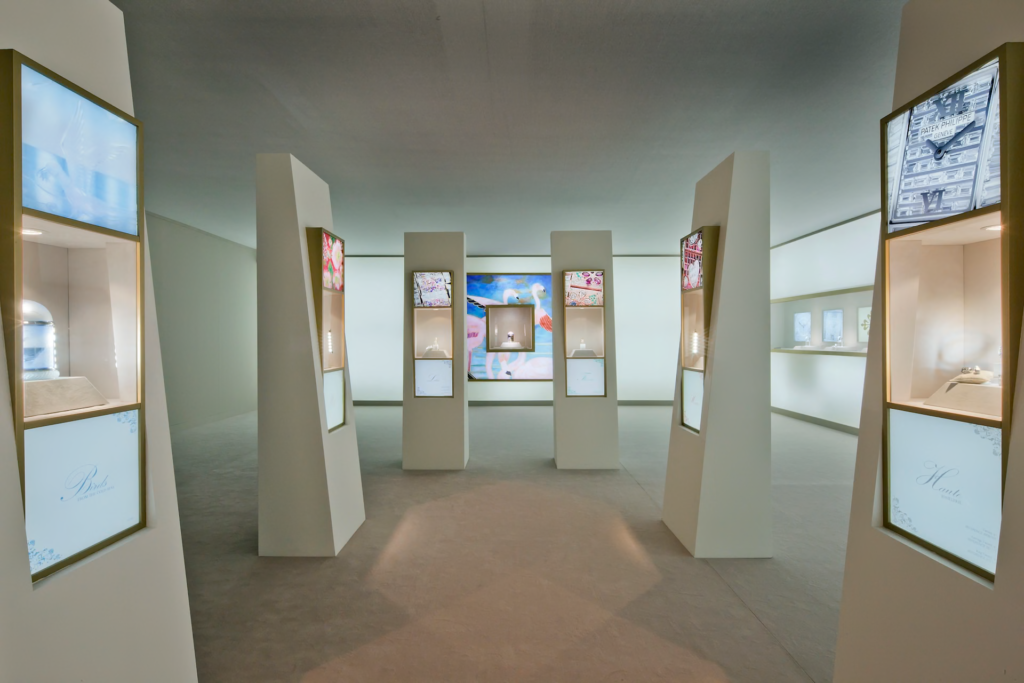
Dubai 2012
Dubai immediately defines the language of the Grand Exhibition. Monumental scale, strong immersive component, and a narrative built to transport the visitor inside the Patek Philippe universe rather than in front of a simple succession of showcases.
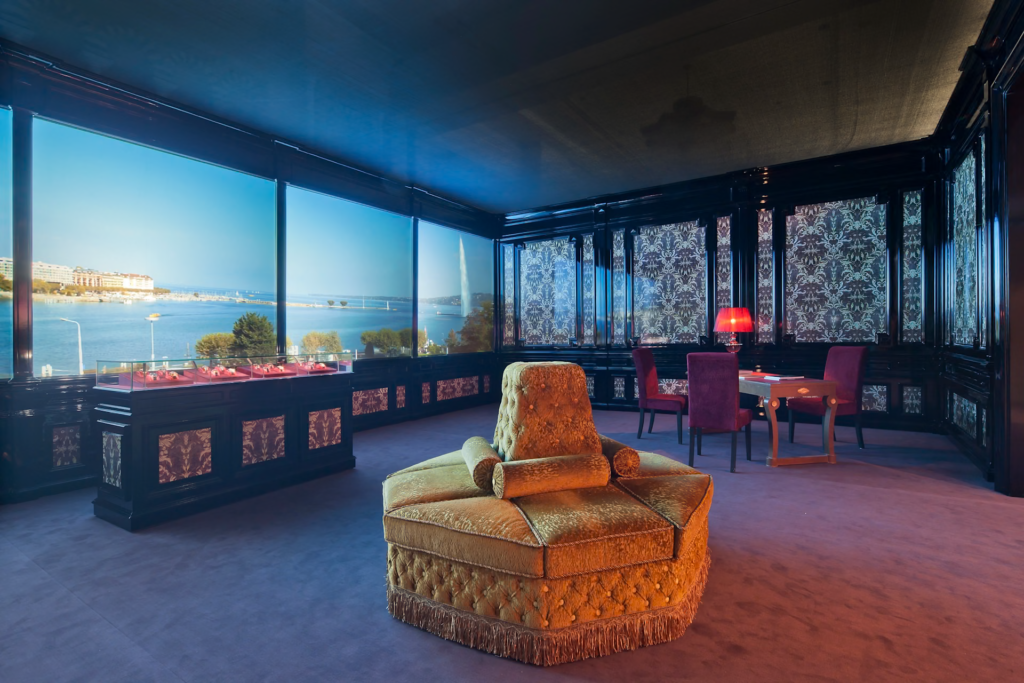
Dubai 2012
Munich, in 2013, instead accentuates the more technical side of the maison. The German edition insists on the mechanics, manufacturing precision, and engineering value of the movements, perfectly reflecting the sensibilities of a public historically attentive to the technical construction of the watch as much as to its aesthetics.
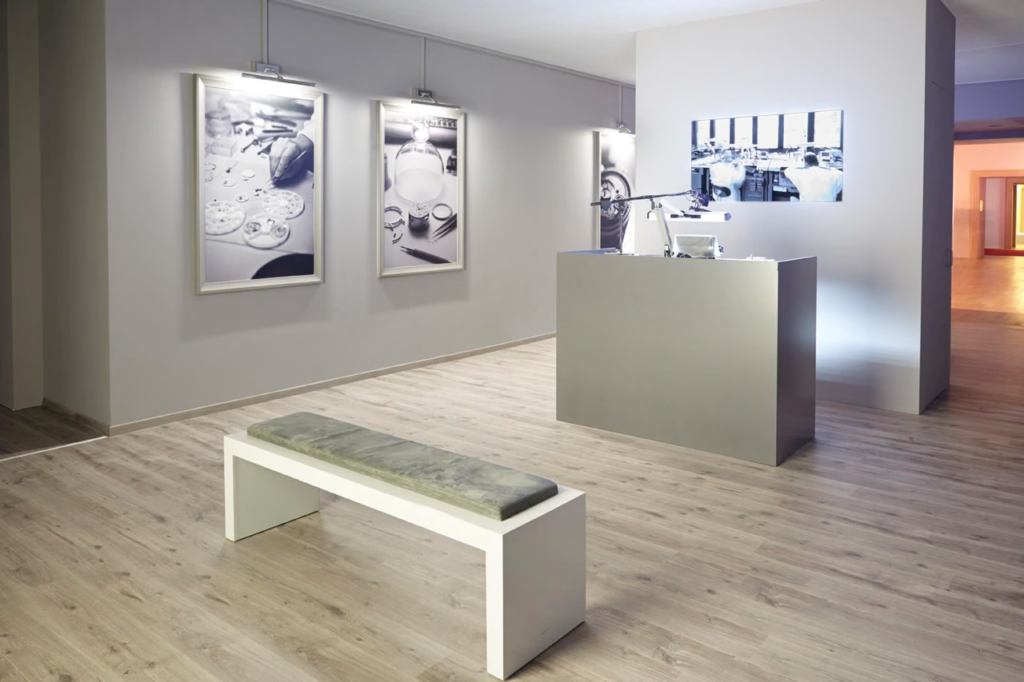
Munich 2013
With London 2015, the Grand Exhibition takes on an even more cultural dimension. Patek Philippe constructs a narrative deeply connected to the British tradition of collecting, classical elegance, and heritage continuity. Time becomes almost an aristocratic theme: family memory, transmission, heritage, the relationship between object and personal history.
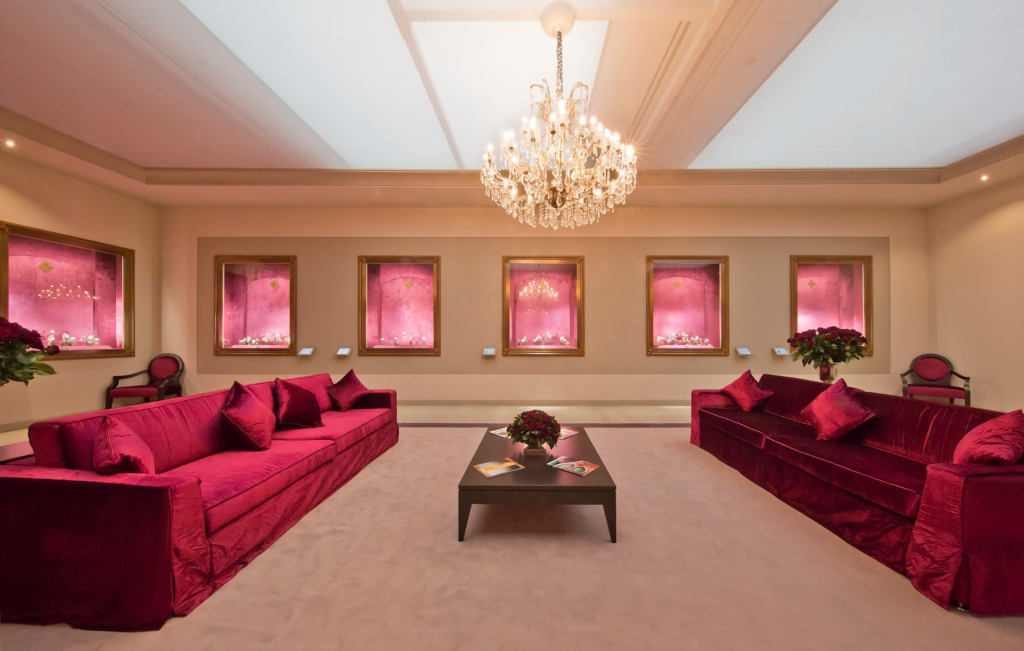
London 2015
New York 2017 completely changes scale. It’s the edition that definitively establishes the Grand Exhibition as a global phenomenon. More monumental, more scenic, more media-friendly. Manhattan becomes the ideal stage to showcase Patek Philippe’s ability to speak simultaneously to the great American collectors, to the international public, and to a new generation of enthusiasts who were rediscovering mechanical watchmaking precisely in those years.
Instead, Singapore 2019 brings the theme of craftsmanship and Rare Handcrafts to the center. Asia is now emerging as the new cultural epicenter of contemporary haute horology, with an extraordinary sensitivity to decorative techniques, perfection of execution, and the value of craftsmanship.
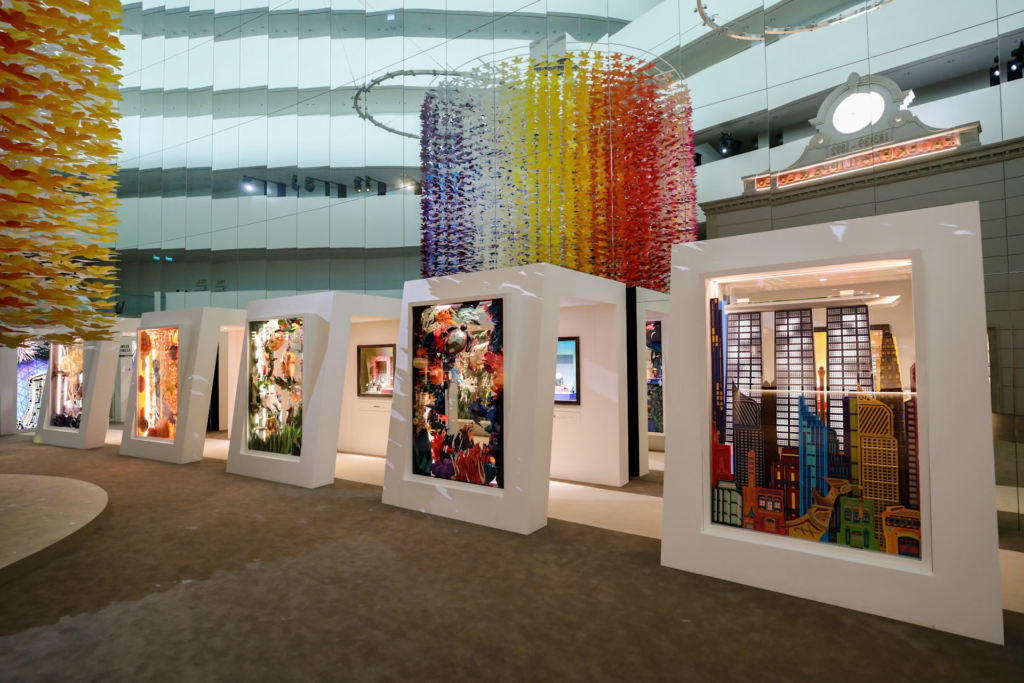
Singapore 2019
Then comes Tokyo 2023, considered by many observers to be one of the most successful editions ever produced by the house. Japan possesses a unique relationship with detail, with the precision of gesture, and with the very concept of craftsmanship. Patek Philippe responds by constructing an exhibition of extraordinary refinement, in which every setting, every light and every transition seem calibrated with the same attention given to the construction of an haute horlogerie movement.

Tokyo 2023
Tokyo clearly shows how much the Grand Exhibition has evolved over the years. Less and less a traditional exhibition, more and more a total cultural experience. A place where watchmaking dialogues with architecture, decorative arts, historical memory, and contemporary craftsmanship, until it becomes something that transcends the simple concept of an event dedicated to luxury.
The choice of Milan
To truly understand the importance of the Milan edition, one must look at the role Italy has played in the construction of contemporary watchmaking culture.
Italy was one of the first countries to develop a collectorism capable of reading watches through proportions, aesthetic balance, dial quality, historical consistency, and sensitivity to detail. Long before the international market started talking about “vintage,” Italian collectors had already built a highly sophisticated critical approach around watchmaking.
It’s no coincidence that many of the aesthetic categories codified and considered fundamental today, from viraggies to patina, found one of the first real laboratories in Italy.
It’s a country that has always had a very deep relationship with the idea of beauty enshrined in an object. Beauty understood in the most cultured sense of the term: balance between function, form, technique and quality of execution.
Patek Philippe knows this sensibility perfectly well. And this is probably also why Milan will be the most ambitious Grand Exhibition ever held by the maison. Not only in size, but in symbolic weight and cultural value.
The reconstruction of the Salon on Rue du Rhône, for example, goes far beyond the scenic aspect. For those who really know Geneva and the history of the maison, that place represents a kind of physical extension of the Patek Philippe identity. Bringing it to Milan means temporarily relocating an extremely authentic part of the Patek Philippe world out of Switzerland.
And then there are the limited editions, always one of the most anticipated elements of Grand Exhibitions. The maison has already confirmed that Milan 2026 will be accompanied by new references created especially for the event. Historically, these editions have often represented one of the most interesting sides of the dialogue between Patek Philippe and the host country’s culture: dedicated dials, Rare Handcrafts, commemorative world time, and creations designed specifically to reflect the local aesthetic language.
Will Patek Philippe choose architectural references? Will it interpret Italian identity through the decorative arts? Or will it work on that culture of proportion and balance that historically defines Milanese taste? Curiosity also stems from this.
Because Milan, more than any other contemporary European city, inevitably forces one to confront the concept of taste. And in the world of Patek Philippe, taste is never just a matter of aesthetics, but a form of culture.
Our invitation to an event more unique than rare
There is a phrase that has accompanied Patek Philippe for decades: “You never actually own a Patek Philippe. You merely look after it for the next generation .”
The strength of this slogan lies in the fact that it manages to tell more than just a clock. It tells a long, layered, handed-down idea of time. Time that spans generations, absorbs memory, builds continuity and acquires meaning precisely through its permanence.
Watch Art Grand Exhibitions arise from the same vision. They serve to showcase all that exists behind an enameled dial, a grand complication or a perfectly sculpted case: historical archives, craft disciplines, technical research, aesthetic obsessions, extremely rare crafts and skills built slowly over decades. A cultural heritage that Patek Philippe continues to preserve with an almost unique consistency in contemporary watchmaking.
Milan, in this respect, appears to be a surprisingly natural destination.
Because it’s a city that deeply understands the value of manufacturing when it meets the language of culture. A city that has built its international identity around the idea that technique, aesthetics and quality workmanship can coexist within the same object without ever really separating.
And for anyone with even a curiosity about this world, the live experience will inevitably make all the difference, for no photograph or film can really restore the timbre of a grand sonnerie, the almost organic depth of a cloisonné enamel, or the physical presence of certain great historical complications observed from a few inches away. Some objects simply need to be seen up close to be fully understood.
Registration for the Patek Philippe Watch Art Grand Exhibition Milan 2026 is already open. And considering how quickly previous editions have reached the limit of available access, organizing in advance is probably the best choice.
Also because events of this level rarely happen. And even more rarely come to Italy.
Are you looking for the perfect gift? Explore our online store and discover the entire collection signed IWS – Italian Watch Spotter!
For all real-time updates on the world of watchmaking follow us on Instagram and visit our Youtube channel.