



At Watches and Wonders 2026 in Geneva, we had the privilege of meeting Andrew Feustel, astronaut at the NASA, a moment that felt, to us, both extraordinary and deeply human. Sitting across from someone who has lived and worked in space carries a quiet intensity, a feeling unlike anything else.
What began as a conversation about watches soon evolved into something far beyond the ordinary. As Feustel spoke about life in orbit, where the rhythm of day and night dissolves into a succession of sixteen sunrises and sunsets, time emerged not as a background element, but as something to rely on, to structure daily life around, to trust. And space, in his words, no longer felt distant or abstract; it became tangible, almost within reach.
Yet what made this encounter truly memorable was how naturally that distance seemed to disappear. His perspective, shaped by experiences few people will ever have the chance to live, resonated in a way that felt unexpectedly familiar. It reminded us that time, whether on Earth or in orbit, is ultimately what connects us all, shaping our days, our work, and the moments we choose to hold onto.
For those of us who live and breathe the world of watchmaking, it was a rare shift in perspective. Beyond mechanics and design, beyond precision and heritage, time revealed itself in its purest form.
So take a moment and make yourself comfortable. Through this conversation, we invite you on a journey that weaves together humanity, time, and space.
IWS meets NASA astronaut Andrew Feustel
IWS: Over the course of your career, you have had the opportunity to work alongside NASA and guided the International Space Station (ISS). Could tell us about your background and the lessons or experiences from those years that you carry with you even today?
Andrew: I spent 23 years with the NASA, during which I had the privilege of flying three missions to space. Two of those were aboard the Space Shuttle, which operated in the United States from 1981 until its final flight in 2011. In 2018, I returned to space aboard a Russian Soyuz spacecraft and served as commander of the International Space Station (ISS) for six and a half months, from March through October. Living and leading in such a unique and demanding environment was a formative experience.
I concluded my time at the NASA as Acting Chief Astronaut. Shortly after leaving the agency in 2023, I joined VAST, where I have spent the past few years contributing to the development of what is intended to become the world’s first commercial space station, designed to carry forward the legacy of the International Space Station as it approaches the end of its operational life.
Throughout my career, I have conducted nine spacewalks and had the extraordinary opportunity to work closely with international partners. Those years taught me two lessons that remain deeply important to me today.
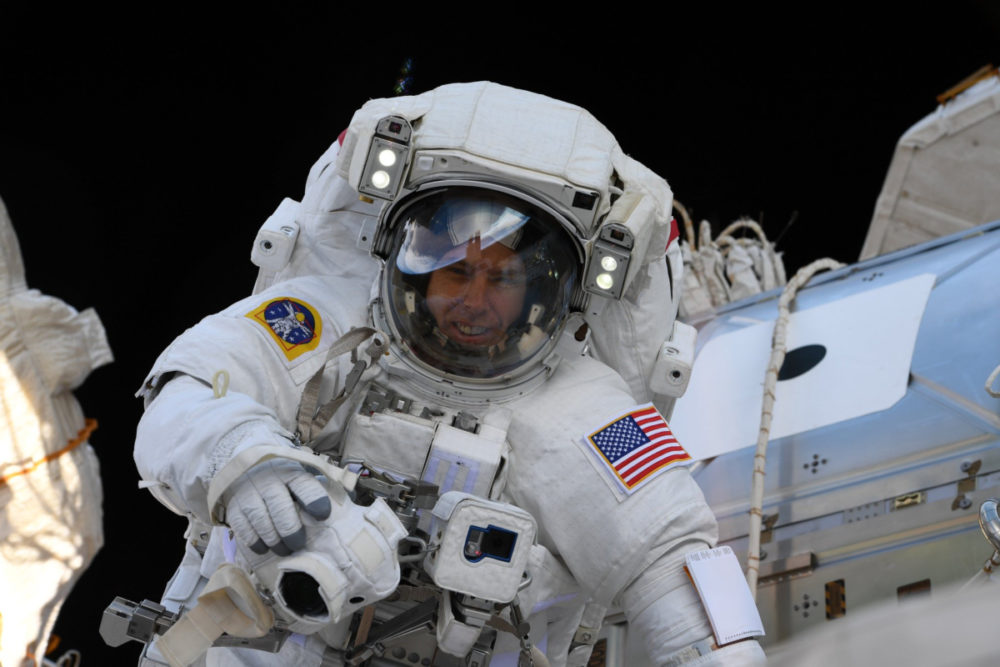
Andrew Feustel on a spacewalk in March 2018 | Credits: NASA
The first is learning how to manage expectations, approaching every challenge with humility, never taking anything for granted, and maintaining a strong sense of responsibility toward the work I do.
The second is the importance of treating everyone with respect and preserving dignity in every interaction. Spaceflight represents the highest expression of teamwork, and over the years I have learned that everyone has something valuable to contribute. Recognizing and valuing that is essential to achieving success.
Today, in my role as Chief Astronaut at VAST, I continue to apply these principles while helping shape the next chapter of human space exploration.
IWS: As the Lead Astronaut at VAST, you worked closely with IWC Schaffhausen’s for the new Pilot’s Venturer Vertical Drive. Tell us about this experience
Andrew: At VAST, I serve as Lead Astronaut, a role that involves working closely with the company and its engineering teams on the development of human-rated spacecraft. My responsibility is to help ensure that every system is designed with the realities of human spaceflight in mind. For that reason, it’s essential to have people within the organisation who possess direct experience in space operations.
In fact, I have brought two additional astronauts into the program to support this effort and contribute from a similarly operational perspective.
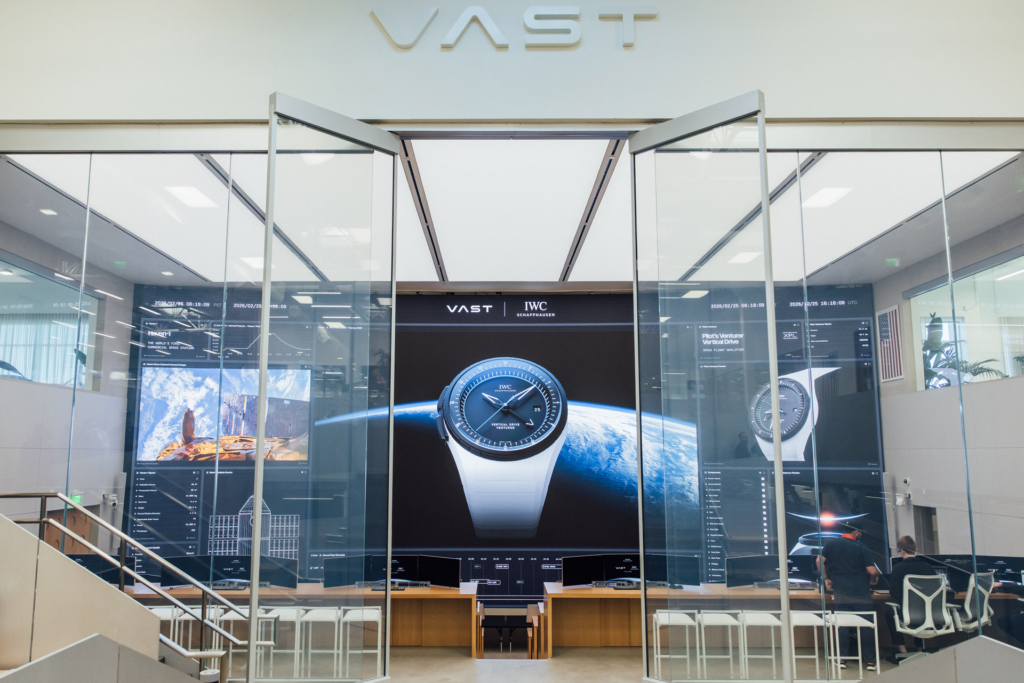
VAST headquarters in Long Beach, California
This same attention to real-world use naturally extends to the tools we rely on every day, including the way we keep track of time. In space, timekeeping is fundamental.
Aboard spacecraft and the International Space Station, watches serve both a personal and an operational purpose. In low Earth orbit, we experience sixteen sunrises and sunsets every day, which means there is no longer any natural environmental rhythm like the one we are used to on Earth. There is no intuitive sense of when it is day or night, nor when it is time to rest. As a result, astronauts rely on the time displayed on their wrists to structure their days, monitor activities, and manage workloads.
That is where my collaboration with IWC Schaffhausen on the Pilot’s Venturer Vertical Drive becomes particularly meaningful. The watch has been designed with the realities of space operations in mind. It supports use while wearing gloves, accommodates the way we interact with tools in microgravity, and is engineered to perform reliably during launch, while in orbit, and throughout re-entry.
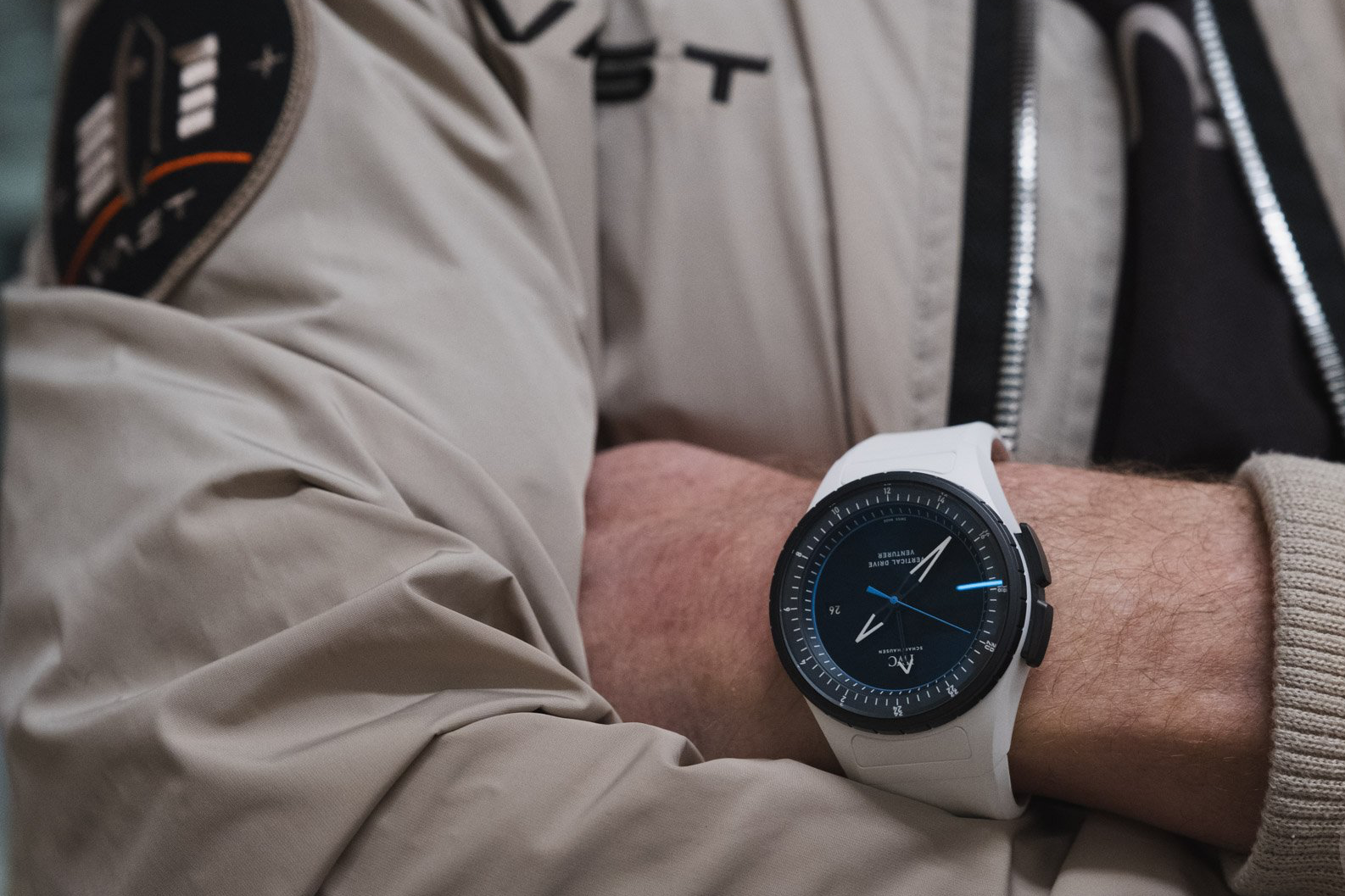
The new IWC Pilot’s Venturer Vertical Drive on the wrist of Andrew Feustel | Credits: Fratello Watches
Equally important is its physical design. Its streamlined form and the absence of protruding elements reduce the risk of damaging sensitive equipment or spacesuits, something critical when operating within the confined and delicate environment of a spacecraft.
In many ways, this project reflects the same philosophy we apply to spacecraft design: functionality, reliability, and a deep understanding of how humans truly operate in space.
IWS: How did you replicate all the astronauts experiences/conditions for the watch?
Andrew: Replicating the conditions astronauts experience in space ultimately comes down to firsthand knowledge. It is something developed over time through direct exposure to microgravity and the full spectrum of operations we carry out in orbit. That hands-on experience is essential because it allows us to guide designers and engineers with insights that are both practical and grounded in reality.
As astronauts, one of our key responsibilities before any mission is to work closely with engineering teams, helping define which tools are needed and how they should be designed to function effectively in an operational environment. We are not simply users, we are part of the development process.
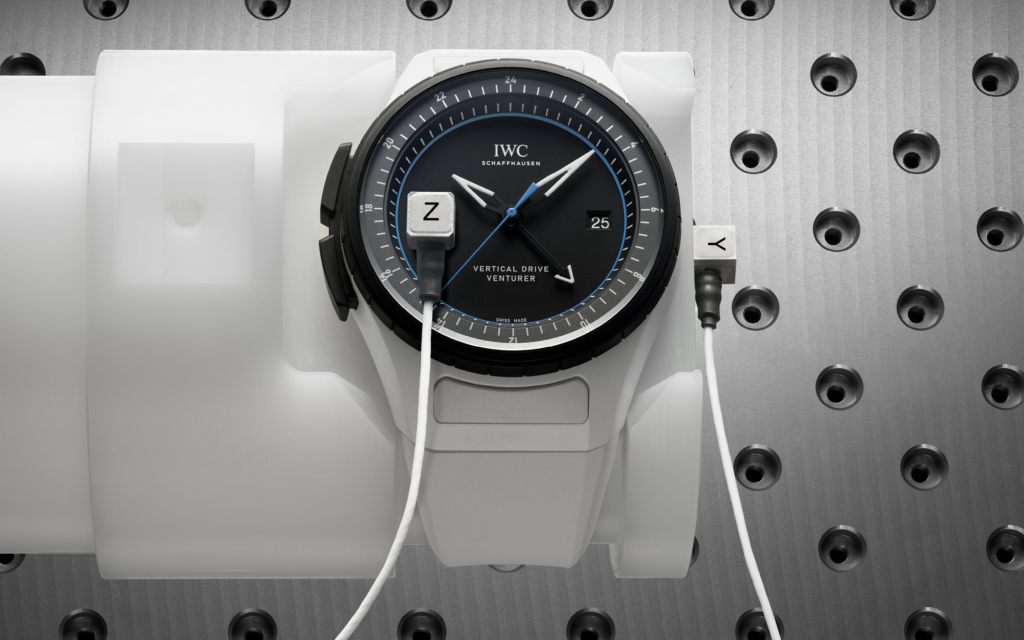
Tests on the new IWC Pilot’s Venturer Vertical Drive
The same approach was applied throughout the development of the watch. My role was to provide continuous feedback, evaluating whether a particular concept would truly work in space or whether it required further refinement. Sometimes an idea proves effective from the very beginning; other times, it needs to be adapted to meet the realities of operating in microgravity.
In the end, it’s precisely this ongoing dialogue between experience and design that makes it possible to create tools that are not only functional, but genuinely suited to life and work in space.
IWS: Vast is building Haven-1, scheduled to be the world’s first commercial space station. How important is the material compatibility in that environment?
Andrew: Material compatibility is absolutely critical in the space environment, and it is something we evaluate with extreme care. There has been close collaboration between our engineering teams at Vast and those at IWC Schaffhausen to fully understand the conditions the watch will be exposed to.
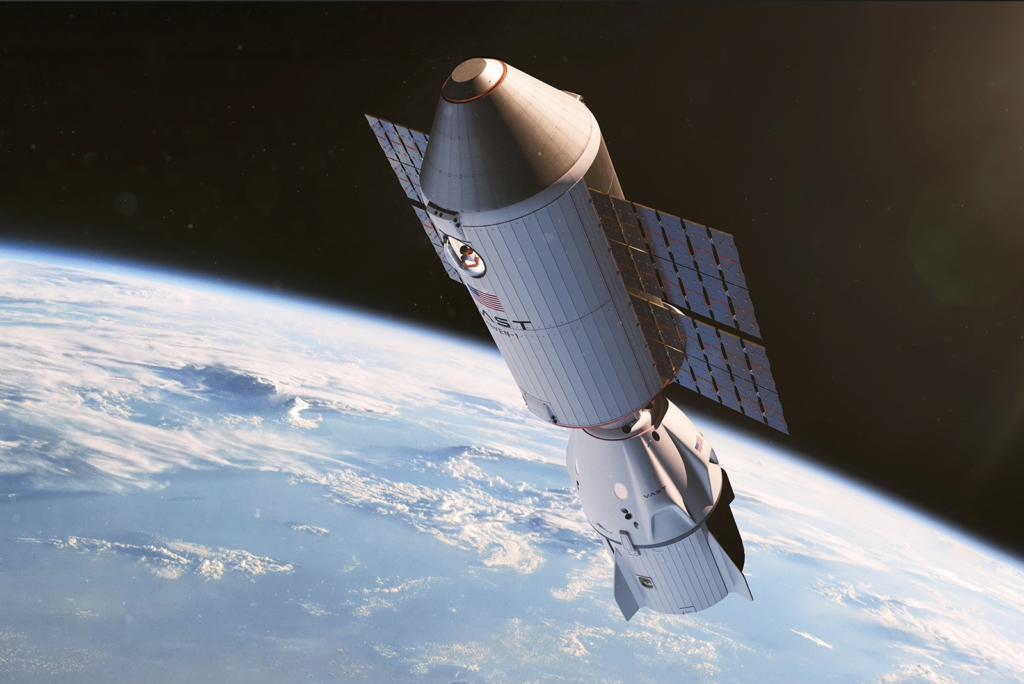
Heaven-1, the world’s first commercial space station
One of the key aspects we consider is off-gassing, in other words, how materials behave in a vacuum environment. We carefully assess whether selected materials could degrade over time, release particles, or generate debris that might interfere with onboard equipment or operations. Even minor material failures can have significant consequences in space, which is why these risks must be minimized from the very beginning of the development process.
In addition to that, the watch has been evaluated for the mechanical stresses associated with spaceflight. During launch and re-entry, astronauts are subjected to intense vibration and high G-forces. Any object worn on the body, including a watch, must be capable of withstanding those forces without compromising either performance or safety.
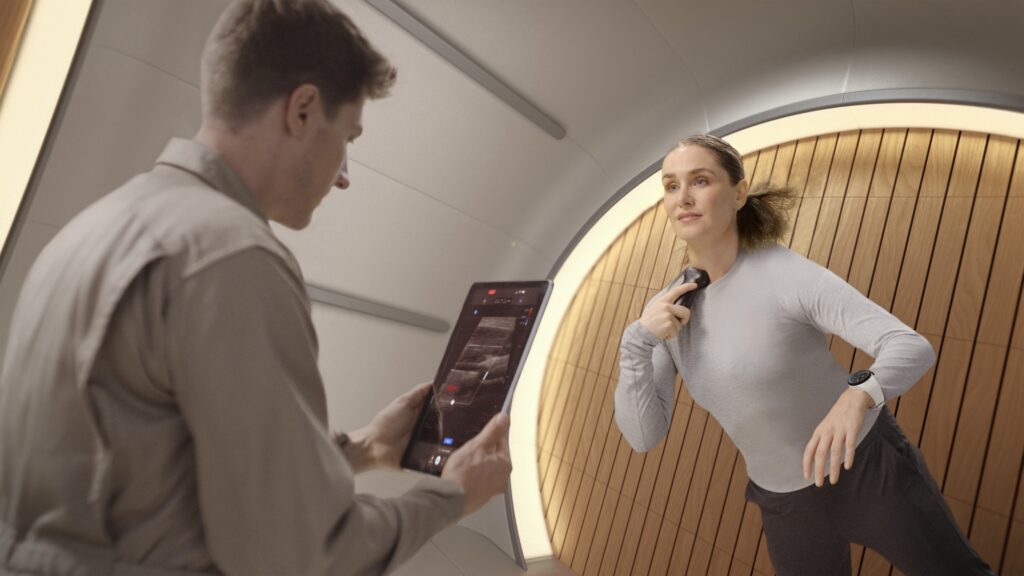
Inside the Heaver-1, 45 m³ habitable volume
That is why both material selection and structural integrity are so critical. The goal is to ensure that the watch remains fully functional throughout every phase of the mission, from lift-off to orbit, and ultimately aboard Haven-1, where reliability is not simply desirable, but essential.
IWS: As an astronaut, what is your relationship with space and time?
Andrew: That’s a tough one! I think that, as human beings, we often struggle to truly understand our place in the universe. We live with the idea that space may be infinite, without boundaries, and trying to grasp what that really means is incredibly difficult. If space has no edge, how do we define where we are or even what “existence” means within it?
We experience the world physically: we see one another, we interact, we move through tangible spaces. And yet, when we begin thinking about the broader framework of space and time, everything becomes far more elusive. The absence of boundaries, the very concept of infinity, these are ideas that stretch well beyond our everyday intuition.
What I find especially fascinating is that, in space, distance is often measured in terms of time. We speak in light-years, defining distance by how long light takes to travel. It serves as a reminder that space and time are deeply interconnected, even if we do not yet fully understand that relationship. And of course, with today’s technology, traveling at the speed of light remains far out of reach.
I would never claim to have definitive answers. I am not an astrophysicist, I am a geologist. But perhaps that is part of the beauty of it all. Each of us approaches these questions from a different perspective, and together we continue exploring, trying to better understand the universe and our place within it.
IWS: What do watches represent to you personally, is there a specific model to which you feel particularly connected?
Andrew: Personally, I believe a watch is meant to be worn. I would wear mine every day if I could, even the more refined pieces. To me, it’s similar to owning a classic car, if you never drive it, you miss the essence of what makes it special. A watch truly comes to life through daily use, through the moments it accompanies.
There are a few models I feel particularly connected to. I really like this one, as well as the Pilot line. I also own the IWC Top Gun Pilot, which I genuinely enjoy wearing. It’s a great watch, with features that are both highly functional and thoughtfully engineered.
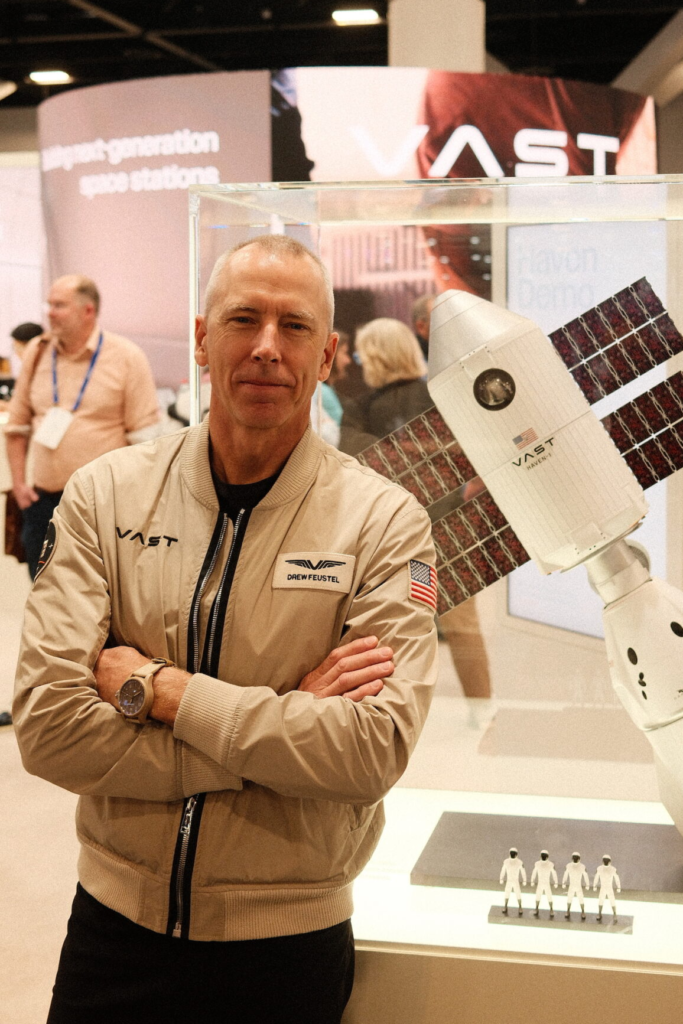
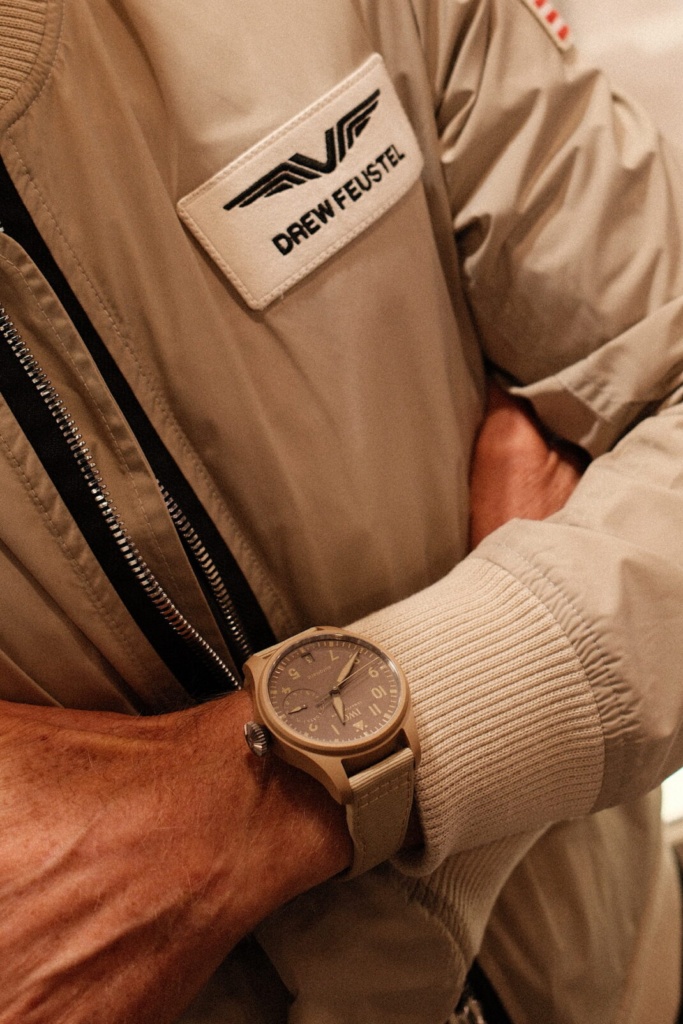
IWC Pilot TOP GUN “Mojave Desert” on Andrew’s wrist in Sydney for the 76th International Astronautical Congress | Credits: Boss Hunting
More broadly, my relationship with watches goes beyond the object itself. It’s also about what they represent, our connection to time, especially in an environment like space, where time is something you actively manage rather than simply experience.
I also have a deep appreciation for IWC Schaffhausen as a brand. If you take a step back and look at what has been created here, it’s remarkable. The entire setup reflects a genuine operational space environment, not just an abstract interpretation of space, but a concrete concept inspired by real spacecraft.
The details are what make the difference. The walls echo the interiors we are accustomed to, the design language feels authentic, and the focus is clearly on functionality. It’s not simply about evoking space in a symbolic way; it’s about understanding how things actually work in orbit, from spacecraft design down to the mechanisms of a watch.
That level of alignment with real space operations is what makes this collaboration so meaningful.
IWS: What would you say to young people who dream of becoming astronauts or pursuing a path like yours?
Andrew: It all begins with something very simple: truly believing that what you want to achieve is possible. It may sound like a cliché, I used to think the same whenever I heard people say, “You can do anything you set your mind to.” But over time, I came to realize that there is a very real truth behind those words.
My path was far from conventional. I started out as a mechanic, working in a repair shop. From there, I attended junior college, then university, eventually earning a PhD in seismology. It was that journey, built step by step, that ultimately led me to join the NASA.
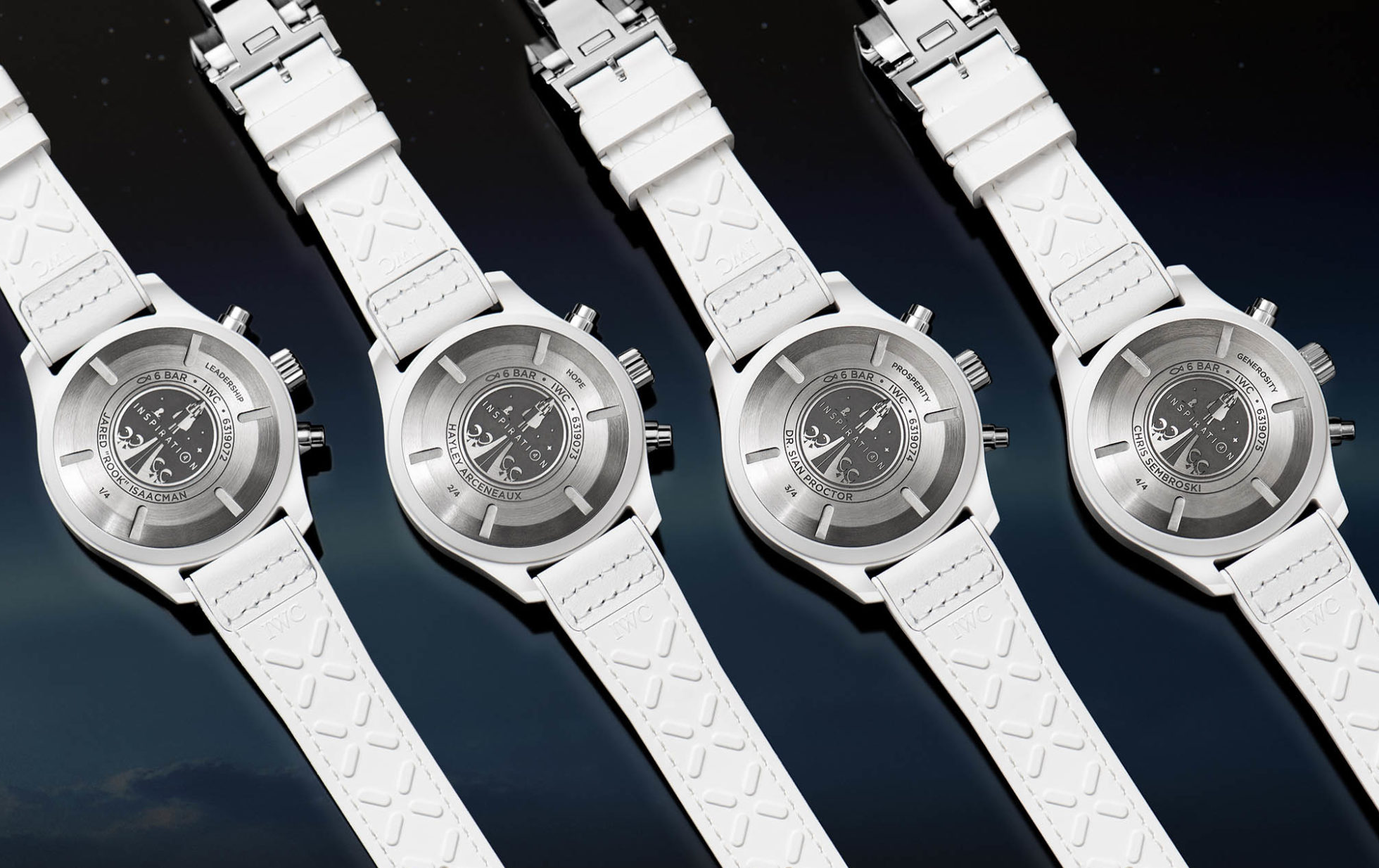
IWC Pilot Chronograph in white ceramic for astronauts aboard Inspiration 4 in 2023. 4 watches, stories and different values: Leadership, Hope, Prosperity, Generosity.
When I look back on my journey, I see it as proof that where you begin does not define where you can ultimately go. You can come from very humble beginnings and still reach places that once felt unimaginable, even leading teams responsible for sending humans into space.
If there is one message I hope to pass on, it’s this: that initial spark, the idea or dream you carry within you, can take you much further than you might ever imagine. Hold onto it, believe in it, invest your time and energy into it, and allow it to guide you.
Becoming an astronaut may seem like an extraordinary ambition, but that is precisely why it matters. It reminds us that curiosity, determination, and ambition have the power to open paths that once seemed impossible.
Are you looking for the perfect gift? Explore our online store and discover the entire collection signed IWS – Italian Watch Spotter!
For all real-time updates on the world of watchmaking follow us on Instagramand visit our Youtube channel.