
IWS Meets Georges Kern, CEO of the House of Brands
IWS: We are in Milan during Fashion Week, a particularly meaningful moment to bring Le Couturier de la Montre to a city where fashion, design and watchmaking have long shared a common language. What makes Milan the right setting for this new chapter of Universal Genève?
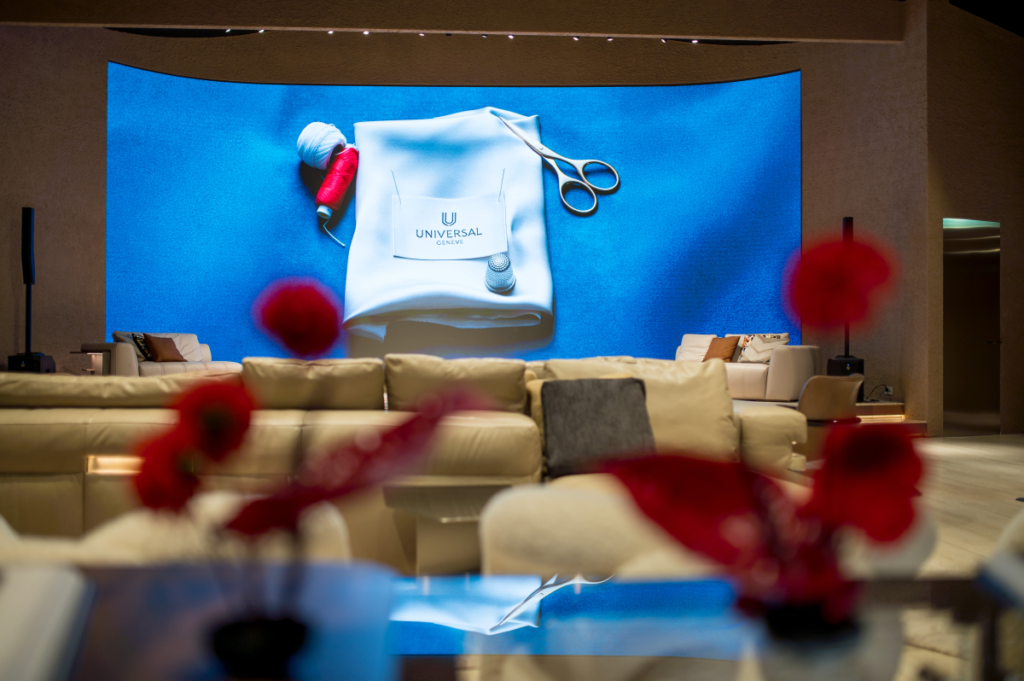
Georges Kern: Milan is a natural setting for this chapter because of its relationship with fashion and design, and because Italian collectors have played an important role in shaping Universal Genève’s return. Le Couturier de la Montre was a revelation for me. When we went through the archives and I discovered this historical slogan, I immediately thought: this is brilliant. Absolutely brilliant!
It dates back to the 1950s. Couture is not simply about tailoring a garment; couture means Christian Dior, it means the creators of fashion. To me, it represents the most refined expression of design and craftsmanship.
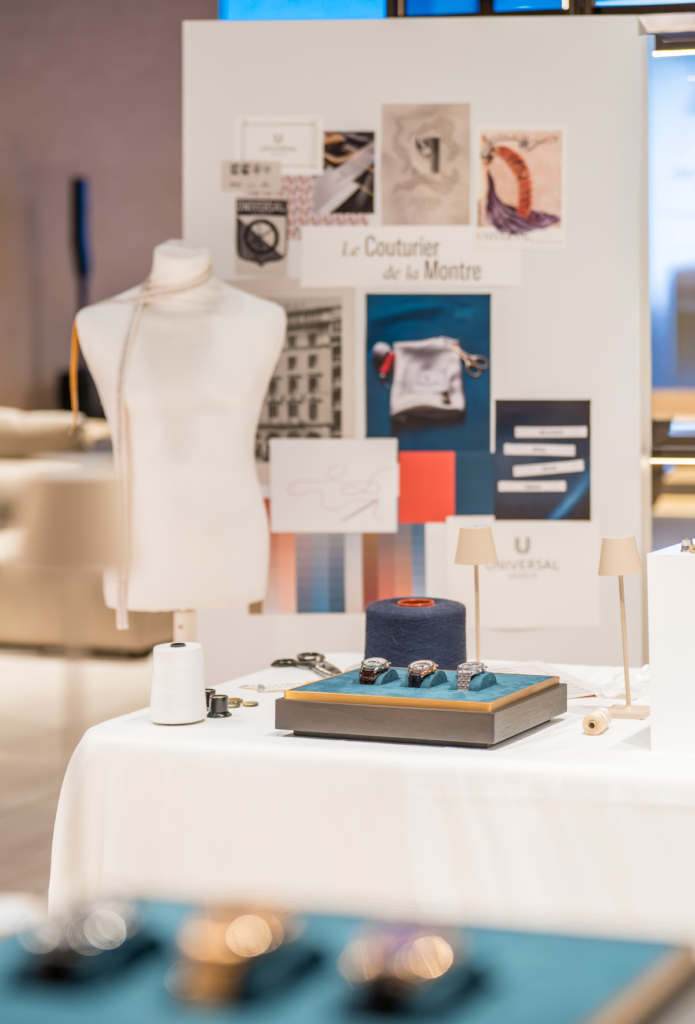
That immediately led me to think about how we could structure the collection: Couture, Capsules and Prêt-à-Porter, complemented by the Signature editions. It opens up extraordinary creative possibilities.
Much of high-end watchmaking traditionally revolves around complications and métiers d’art. With Universal Genève, our guiding principle is functional beauty: the belief that reliable, precise movements must always serve the watch’s design and aesthetic appeal. Of course, there is extraordinary technical content, but it must work in harmony with the proportions, elegance and wearability of the watch.
At every stage in developing the brand, we asked ourselves the same question: how can we create something genuinely distinctive? How can we avoid falling into existing categories and instead add something of our own? Le Couturier de la Montre became fundamental because it allows us to operate across different levels, with Couture naturally representing the bespoke expression.
It also gives us another form of freedom: the possibility of speaking equally to both men and women. Most brands tend to lean clearly towards one or the other. That balance comes directly from the Maison’s history, and creatively, it gives us enormous freedom.
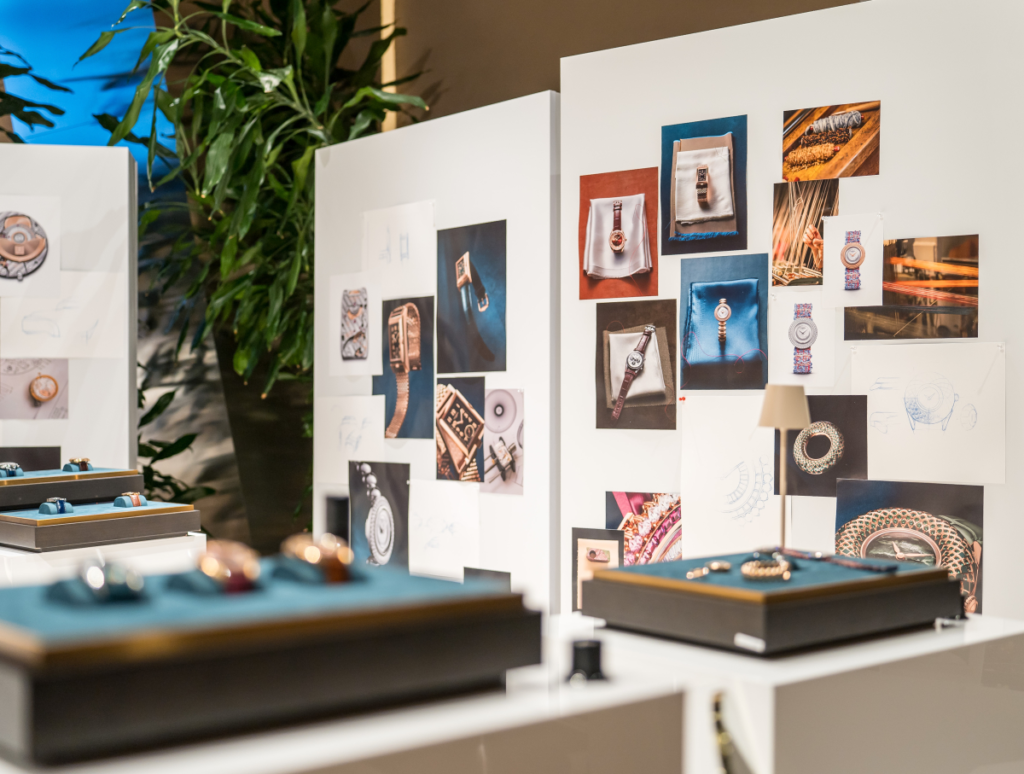
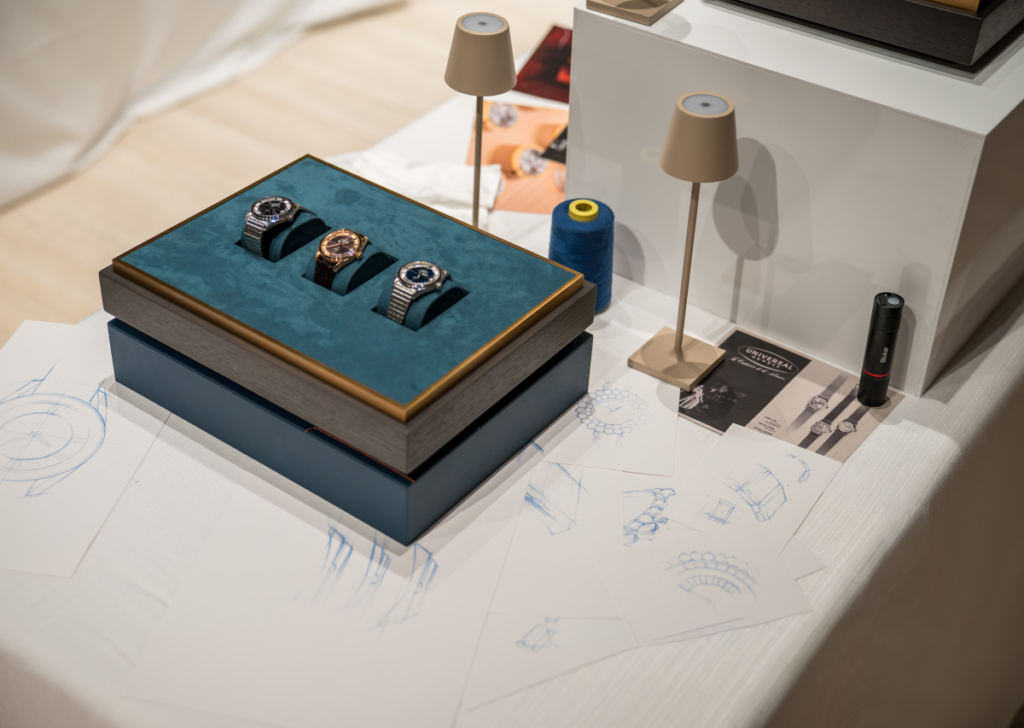
If you are a couturier, you should be able to surprise people. In Geneva, some asked me why we had presented so many references. But each Couture creation is one reference, one unique piece. We showed these creations because they are beautiful and because they express what Universal Genève can be.
Had we returned with only one type of watch, the brand could immediately have been placed within a single category. With Le Couturier de la Montre, we wanted to open that spectrum from day one and establish the breadth of its creative universe, regardless of conventional distinctions between male and female.
Then there is another extraordinary dimension: Universal Genève is an incredibly cultural brand.
Jeanne Lanvin loved Universal Genève and wrote remarkable things about it. Then you have Jean Cocteau and Jean Marais. We have extraordinary letters and notes. In my entire career, I have rarely encountered a brand with such a depth of cultural treasures and with so many remarkable people who were genuinely passionate about it. Collectors associatethe Compax with Nina Rindt and the Tri-Compax with Eric Clapton. And, of course, you have the Polerouter, Gérald Genta’s breakthrough design, created when he was just 23 years old.
Couture is therefore not simply a positioning. It belongs to the cultural identity of the brand.
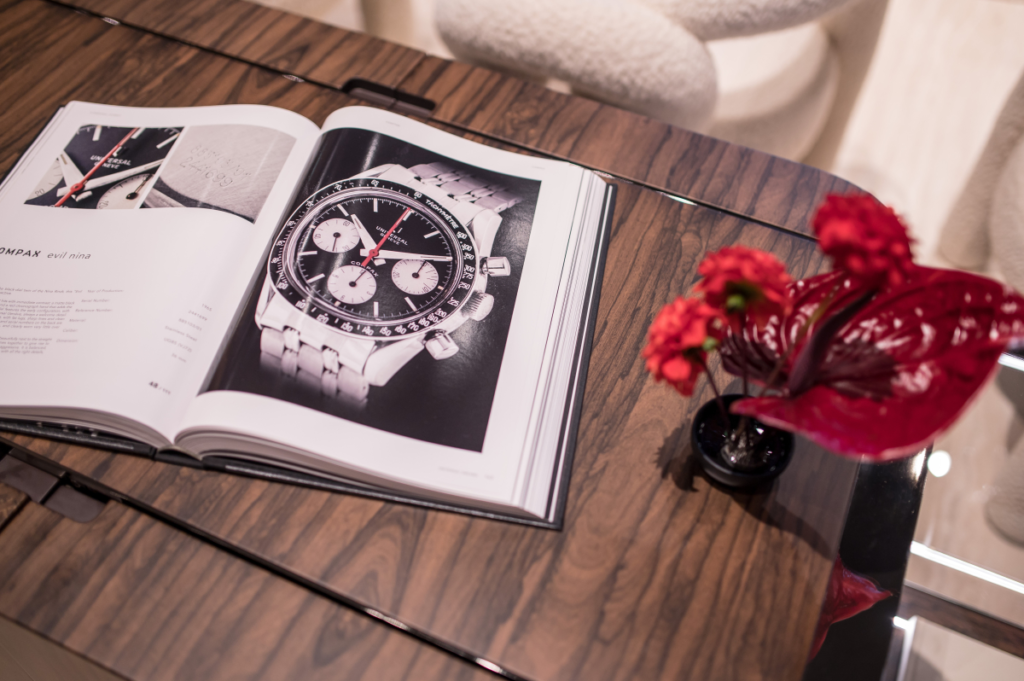
And then there is Italy. After acquiring Universal Genève, I discovered an extraordinary community of Italian collectors with a very deep connection to the Maison. Their contribution was extremely important in shaping both the collection and its style. We met with them many times and listened closely.
Italy had a real influence on the project, and Milan is a natural setting for this new chapter, with its strong culture of fashion, design and craftsmanship. I am very happy to be working with Bartorelli. There is a historical relationship between Bartorelli and Universal Genève, and Carlo immediately understood the brand.
What you need are people who understand this world, who have a community, a personal relationship with collectors and genuine knowledge of the watches. Bartorelli has that.
At the same time, we are seeing growing interest in niche and independent brands with distinctive identities. Alongside the major players, clients are looking for watches with character, authentic history and a fresh perspective. Universal Genève naturally speaks to that through its rich heritage and distinctive creative vision.
We call ourselves a House of Brands, but I have always been very clear: I do not want us to become a conventional group. These are independent brands, each with its own positioning and identity.
IWS: Universal Genève seems to possess a rare degree of creative freedom: different forms, different audiences, different expressions of watchmaking, yet an identity that remains immediately recognisable. How do you turn such diversity into a coherent contemporary language without allowing heritage to become nostalgia?
Georges Kern: You don’t want to become a vintage brand. You have a foundation, you have a DNA, and that is extremely strong and important. But if you want to build a contemporary brand, one of the fundamental elements is developing a design language.
That language exists here. The products can be very different from one another, yet there is a style running through them. There is something recognisable. And creating that kind of coherence is one of the most difficult things to achieve.
When you look at the brand as a whole, from the website and films to the products and retail environments, there is a sense of unity despite the diversity.
But you cannot create that simply through strategy. It has to emerge through design itself. You design a boutique. You design advertising. You design a Polerouter. You design products and environments. And all of those elements need to belong to the same world.
That is why you cannot work in silos. If trade marketing, communication, product and development all operate independently, you risk creating different identities.
The question is: how do you create one identity while preserving diversity?
My answer is to bring everything under one roof and make sure everybody is talking to everybody else. That is how you develop a shared understanding of style.
When you see the entire rollout, the boutique in Milan, the one in Geneva and the other environments we are creating, I hope Universal Genève will emerge as a genuinely distinctive brand.
That is artistic direction.
IWS: Italian collectors have already played a meaningful role in shaping this new chapter of Universal Genève. Looking beyond Italy, however, the industry itself is entering a different phase. How do you read this moment in watchmaking, and what does it mean for a brand returning with such extraordinary expectations around it?
Georges Kern: It’s a very broad question, but I would look at it through a few different elements.
First, we are operating in an extraordinarily complex global environment, both politically and economically. There are significant headwinds and yet the watch industry continues to do business, and retailers continue to do business.
I think we should therefore be careful about constantly describing the market in terms of crisis. What we are seeing is a new normal.
After Covid, revenge buying produced growth of 20 or 25 per cent, sometimes even 30 per cent. That was an exceptional period, not a sustainable benchmark. If the Swiss watch industry grows by 5 per cent, I consider that a healthy result.
I was at Geneva Watch Days and the retailers I spoke to were not panicking. I often use a football analogy: perhaps you are no longer winning 6–0, but you are still winning 2–0. The extraordinary period cannot become the measure against which every subsequent year is judged.
There is then a second element, which I consider fundamental.
In a digital age, the mechanical watch retains an emotional dimension that many other objects are gradually losing.
Think about cars. As technology evolves, you can lose the smell, the sound, the mechanics, even part of the physical experience of driving.
A watch is different. It will continue to be an expression of status, certainly, but also an object of art and emotion. I believe that dimension will always remain.
And then there is the third element: you simply have to be exceptional at what you do, in differentiation, in design and in storytelling.
When we announced the acquisition of Universal Genève, I received more emails and messages than for anything else in my entire career. Messages from CEOs, collectors and people known around the world. The level of excitement was extraordinary.
I believe this is one of the most anticipated returns the watch industry has seen in decades. Naturally, that creates expectations. But watches today are no longer purchased primarily because we need them to tell the time. We choose them for everything they represent beyond their function: design, culture, identity, emotion.
And in a global market where genuine differentiation has become increasingly precious, I believe Universal Genève has something truly unique.
IWS: You mentioned Carlo Bartorelli earlier. Beyond the historical connection between his family and Universal Genève, what made Bartorelli the natural partner for this new chapter of the Maison in Italy?
Georges Kern: First of all, he is an incredibly passionate gentleman and I would say the same about the entire family.
From our very first conversations, there was an immediate connection with the history of Universal Genève. Carlo remembered the brand from the past, from his father, and he still has original advertising and material from those years. There is a genuine history there.
Then he fell in love with the products. And that matters enormously to me. I prefer working with people who are genuinely passionate about what they represent.
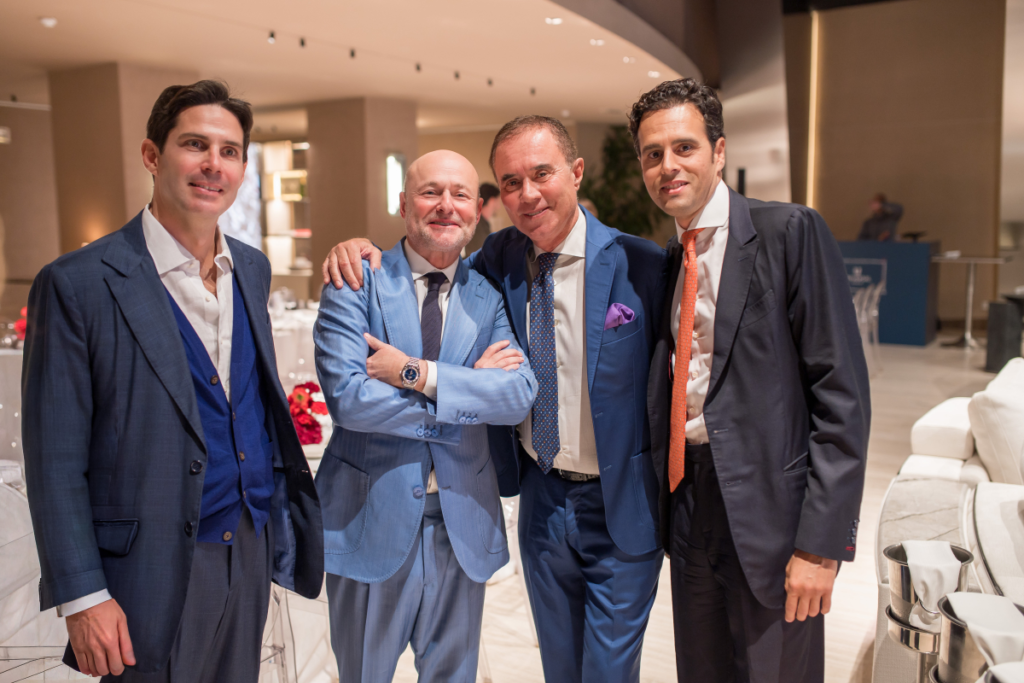
Bartorelli also has a very particular clientele: cultivated, knowledgeable collectors who look beyond the name on the dial. They are not simply buying brands; they are buying Maisons. They understand the culture, the work and the people behind them.
That is a very different relationship with watchmaking, and it’s precisely why I enjoy working with Bartorelli. We are going to maintain a very selective distribution, with carefully chosen partners. For me, choosing a retailer is a little like choosing a partner in life: there has to be a connection. It cannot simply be a matter of fulfilling a list of requirements.
Universal Genève deserves more than that.
IWS: What ambitions do you share with Bartorelli, and how do you envision the Maison evolving without compromising what makes it distinctive today?
Georges Kern: Universal Genève is a distinct Maison within the House of Brands. We are starting small, yes, but we do not want to remain a niche brand. Universal Genève has much broader potential and we have ambitions for it.
The challenge is finding the right rhythm.
As a brand grows, it may become fashionable, even highly desirable, and eventually reach a crossroads. From there, it can either remain tied to a particular moment or evolve into something enduring, into an institution.
Look at Hermès or Cartier. These are institutional brands. They have transcended individual moments and trends. Building something with that kind of longevity requires discipline. You have to grow at the right pace, in the right way, preserve desirability and understand when not to accelerate.
I have been doing this for thirty years and I have seen many brands, many successes and many mistakes. And there is something I learned very early in my career that has remained with me ever since.
Günter Blümlein was one of my first great mentors. He was responsible for A. Lange & Söhne, Jaeger-LeCoultre and IWC, and I was very young at the time, in my mid-thirties, already a CEO and extremely ambitious.
I am still ambitious, of course. But I remember Blümlein giving me a book called “The Discovery of Slowness”. He would always tell me, “Slow down, slow down.” At the time, I didn’t understand why. I felt that I had to prove myself by moving faster and pushing harder. With experience, I have come to understand the value of that advice. Today, I listen much more to people, and while I have clear opinions, I am more willing to change my mind when someone makes a convincing argument.
I have been extremely fortunate with the mentors I have had throughout my career. Franco Cologni was another enormously important figure for me. Blümlein’s lesson, in particular, has stayed with me: building something with depth requires time. Ambition does not necessarily mean acceleration. Sometimes it means understanding the right rhythm at which something should grow and I think Universal Genève deserves exactly that.
IWS: After speaking about strategy, growth and the future of Universal Genève, let me end with the watches themselves. If you had to build your own selection from this new chapter of the Maison, which pieces would you choose?
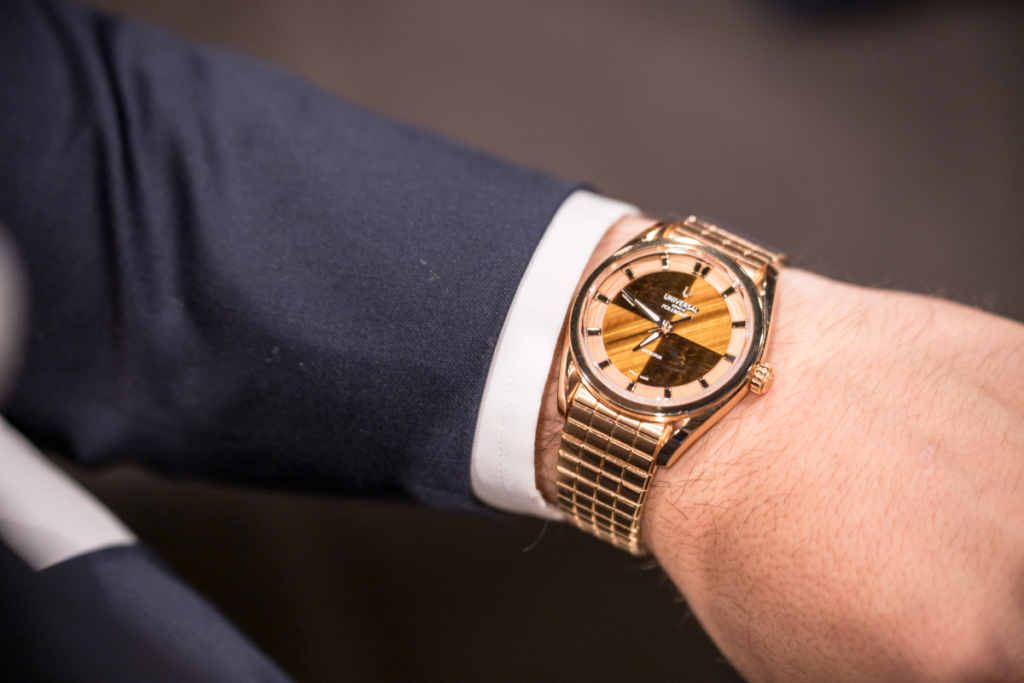
Georges Kern: The Polerouter, obviously. I wanted a Polerouter from the beginning. Then I would definitely choose a Compax, most probably the dark blue and gold version. I rarely wear gold, so this would be an unusual choice for me.
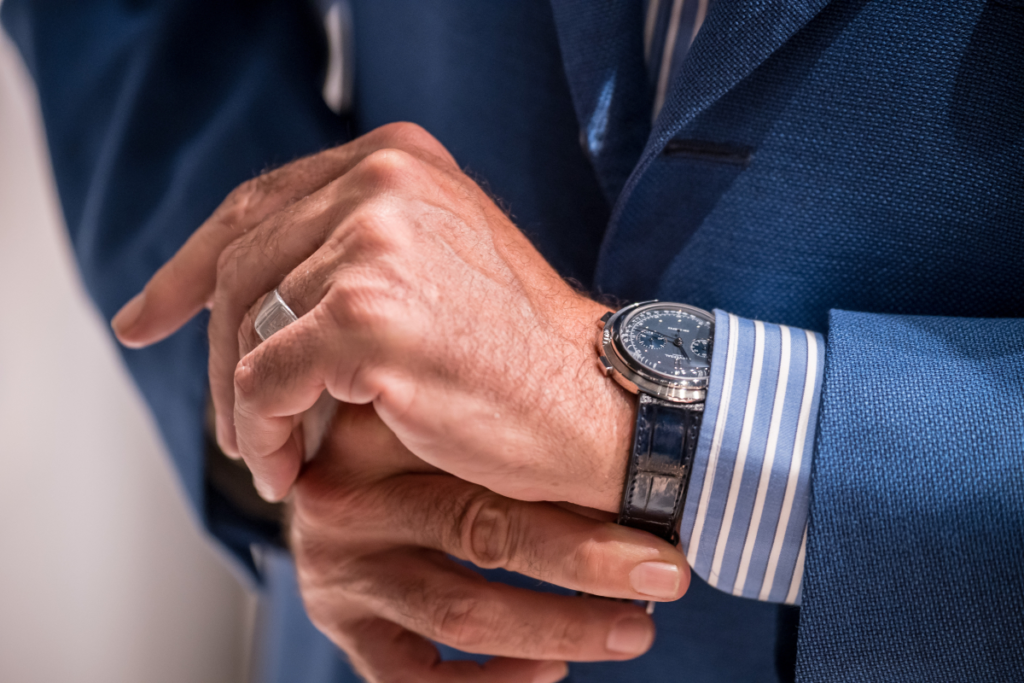
I would certainly take a Dioramic, probably in gold as well and then the Disco Volante with the blue dial. Actually, I also really like the Cabriolet. Initially, I thought it might be too small, but once you put it on the wrist, particularly the gold version with the rose-colored indexes, it’s beautiful.
What fascinates me across these watches is precisely this intersection between watchmaking, design and art. Perhaps that is ultimately what makes Universal Genève so compelling.
Are you looking for the perfect gift? Explore our online store and discover the entire collection signed IWS – Italian Watch Spotter!
For all real-time updates on the world of watchmaking follow us on Instagram and visit our Youtube channel.