
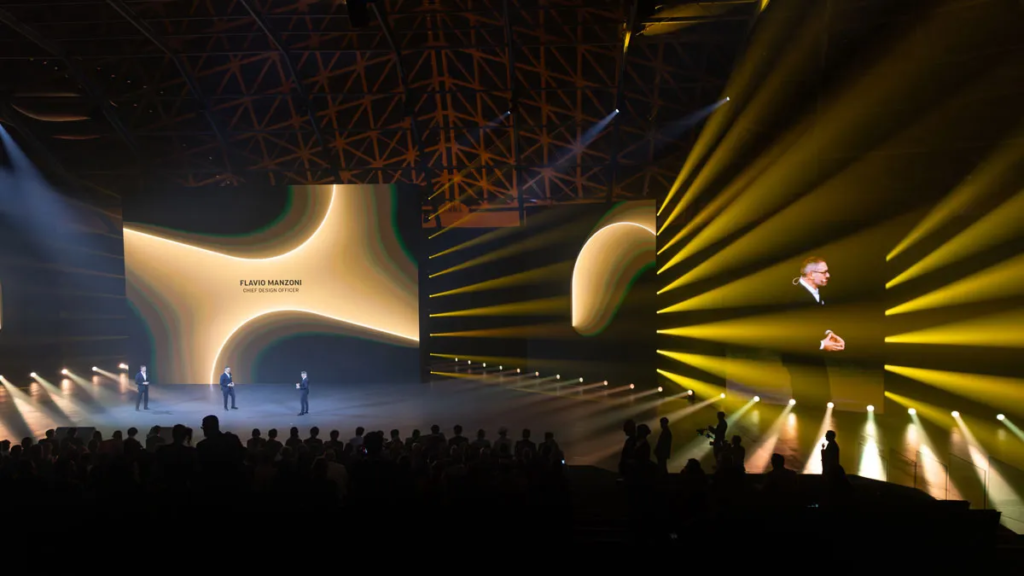
When Ferrari revealed Luce in Rome on May 25, 2026, there was a sense of something different from the classic Maranello reveals. There was awe and there was the symbolic weight of the first electric Ferrari in history, of course, but one question hovered among journalists, collectors, and the brand’s historic customers: can a Ferrari change language without losing identity?
Ferrari has built its myth around very specific elements: naturally aspirated engines, mechanical involvement, technical theatricality, sound design and dynamic response. The Ferrari Luce inevitably challenges all of these.
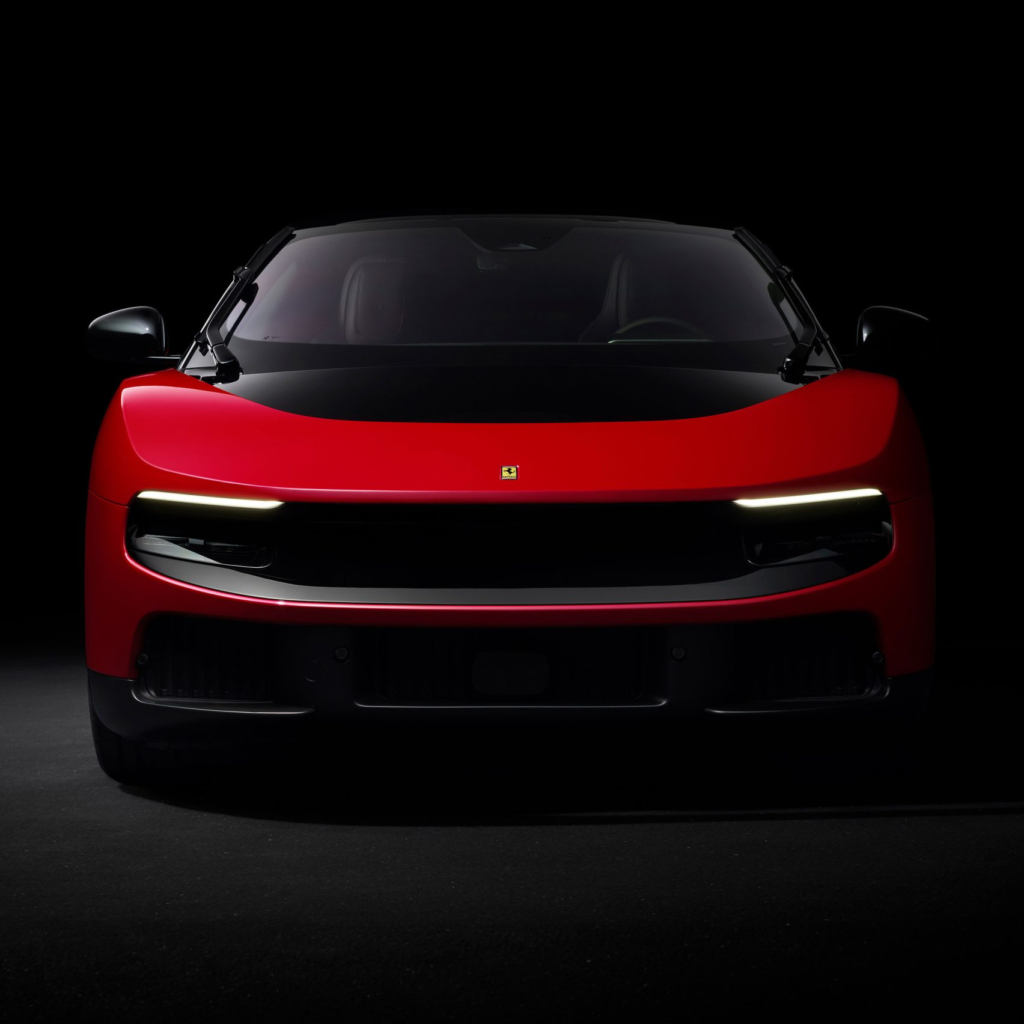
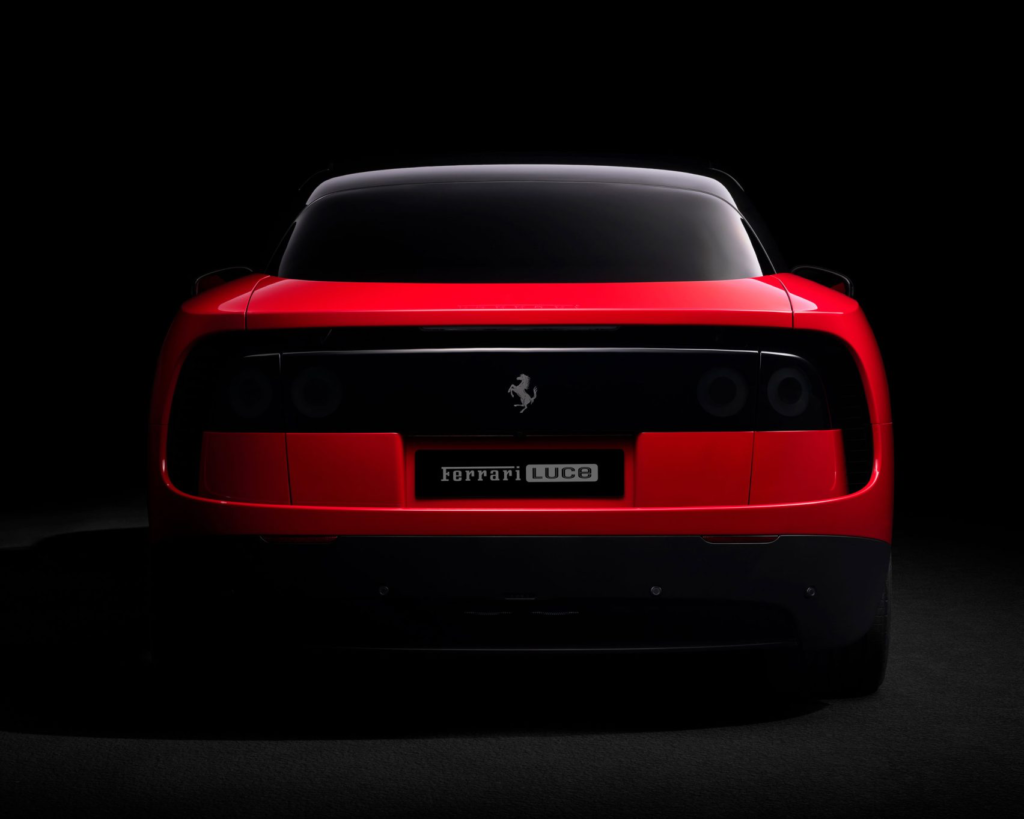
Image credit: Ferrari
Benedetto Vigna, CEO of Ferrari called the project “a new frontier of Ferrari emotion,” explaining how the goal was not to replicate the past through electric, but to redefine the way Ferrari builds sensory engagement. John Elkann, on the other hand, insisted on the concept of cultural evolution, recalling how the brand has always faced decisive moments in its history by being open to change.
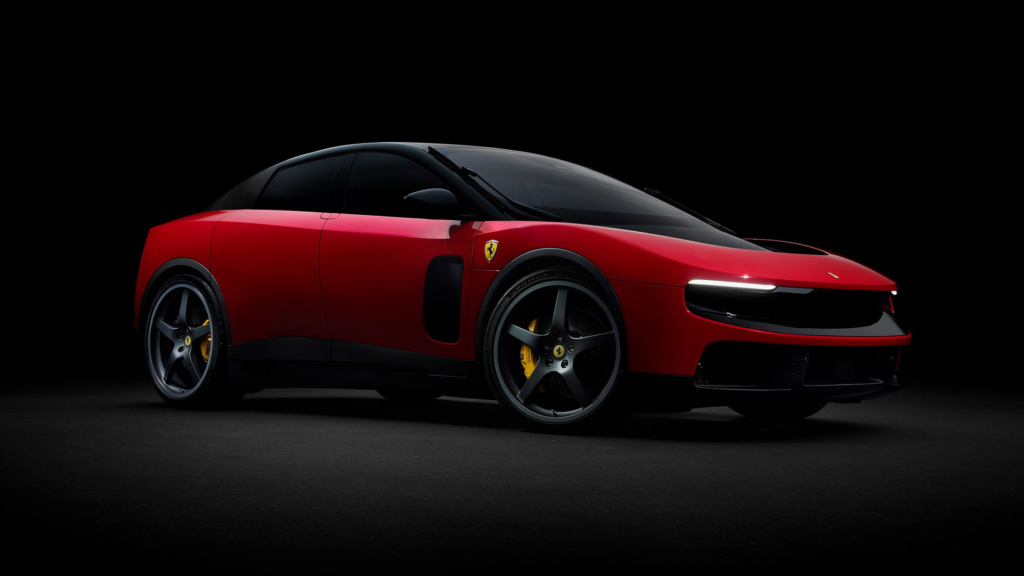
Image credit: Ferrari
But such a story, dear IWS fans and readers, we have heard it before, haven’t we?
In 1972, when Audemars Piguet presented the Royal Oak at the Basel Salon, much of the watch industry thought Georges Golay had gone mad. A steel sports watch, designed by an outsider like Gérald Genta, with exposed screws on the bezel and a price tag higher than many gold dress watches. To the trade press it was too aggressive, too industrial, too far removed from the traditional idea of haute horlogerie.
Fifty years later, the Royal Oak has become the single most influential object in the history of contemporary sports watchmaking, and it is hard not to see a very similar dynamic in Luce: an iconic brand deciding to redefine its language before that language becomes “canonical.”
LoveFrom and the choice to look outside Maranello
To develop the Luce‘s cockpit, Ferrari chose LoveFrom, the creative collective founded by Jony Ive and Marc Newson. A decision that speaks well of the kind of approach taken by Maranello.
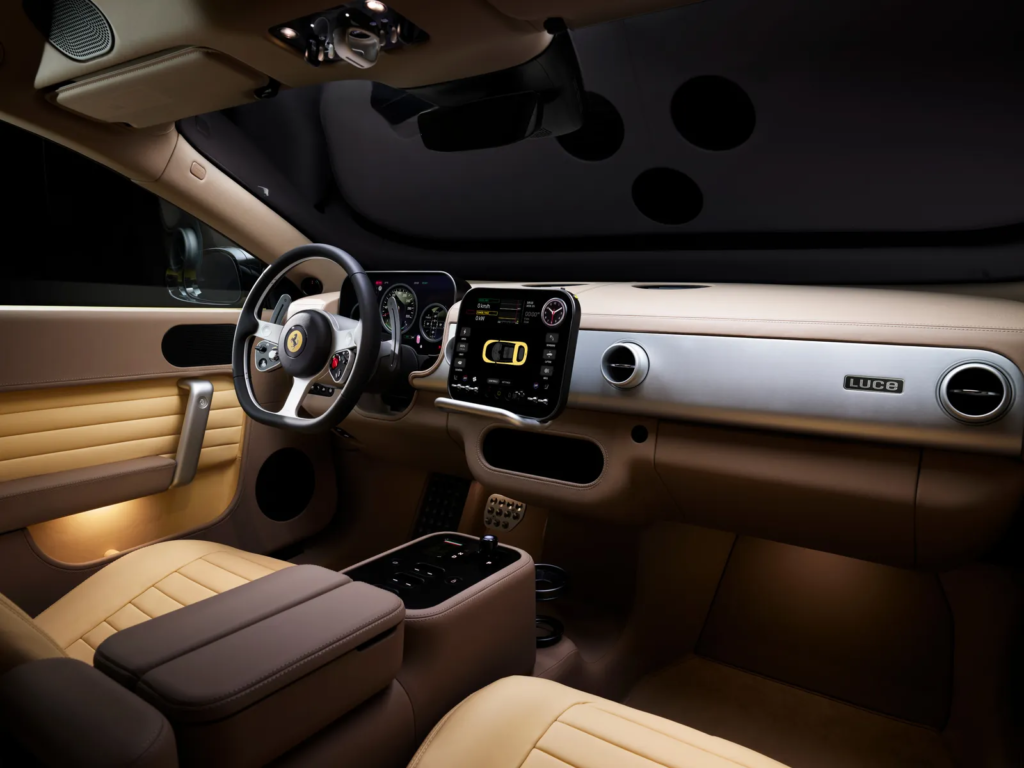
Image credit: Ferrari
During the presentation, Benedetto Vigna explained that Ferrari wanted to introduce skills capable of reading contemporary luxury more broadly, going beyond the traditional automotive language.
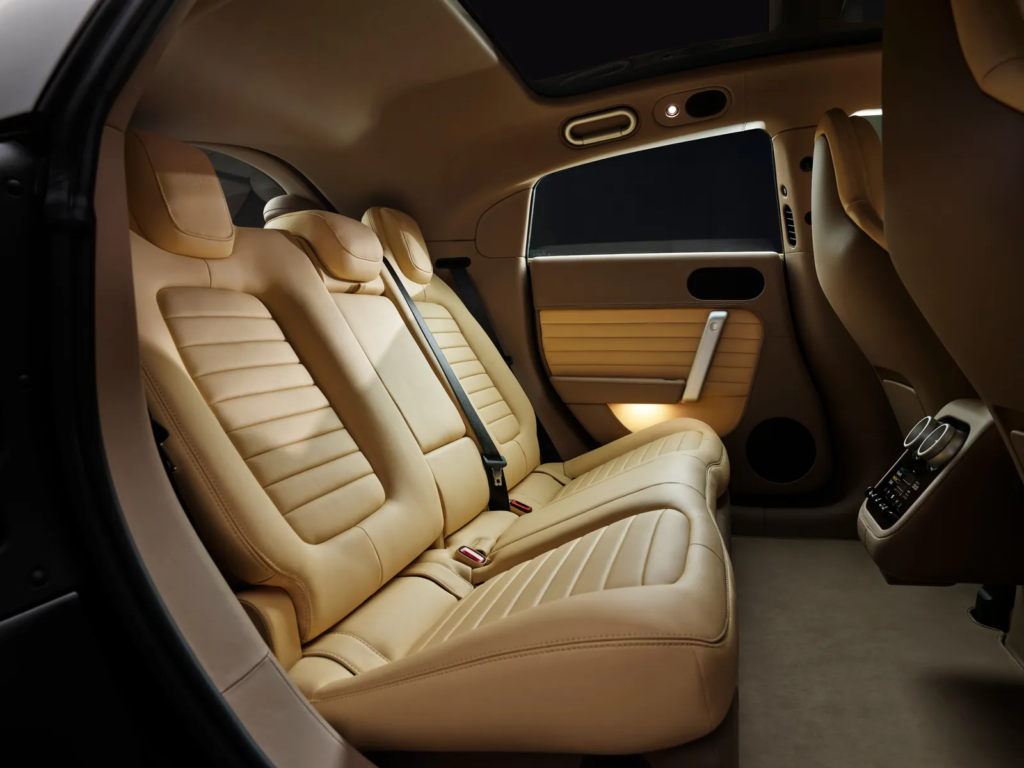
Image credit: Ferrari
Jony Ive has built Apple’s industrial language for the past three decades: the iMac, iPod, iPhone, and MacBook Air. His work revolves around simplifying the experience through ergonomics, materials, and intuitive relationship with technology.
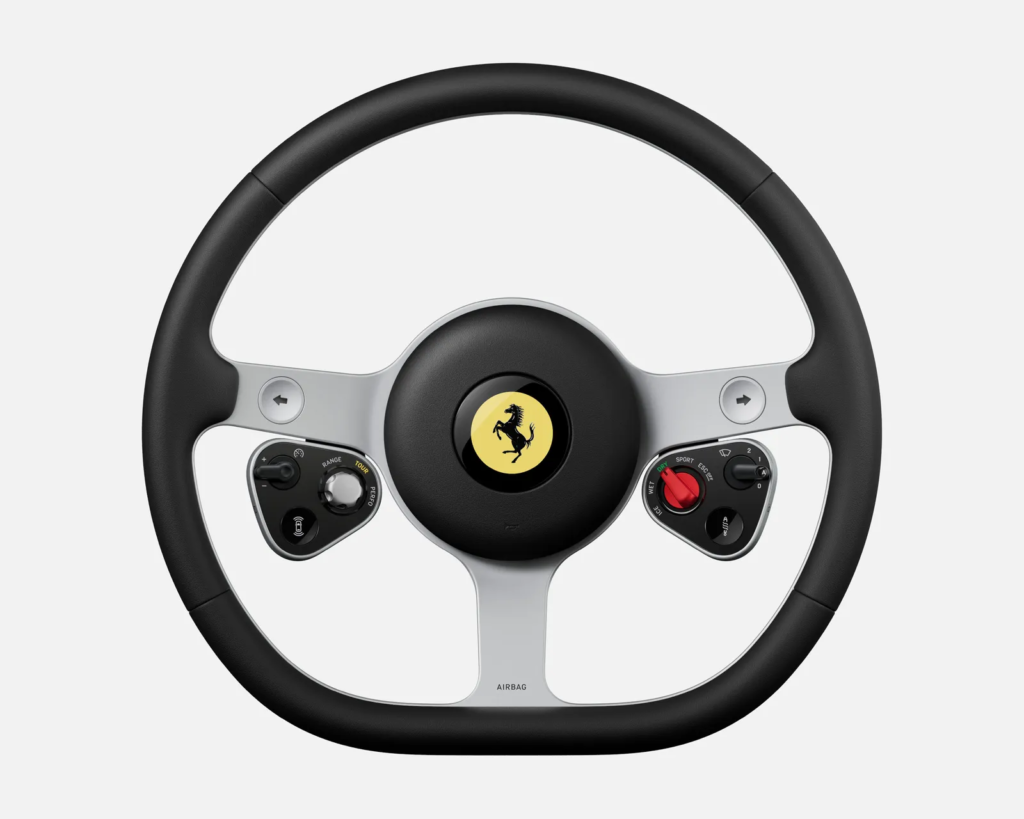
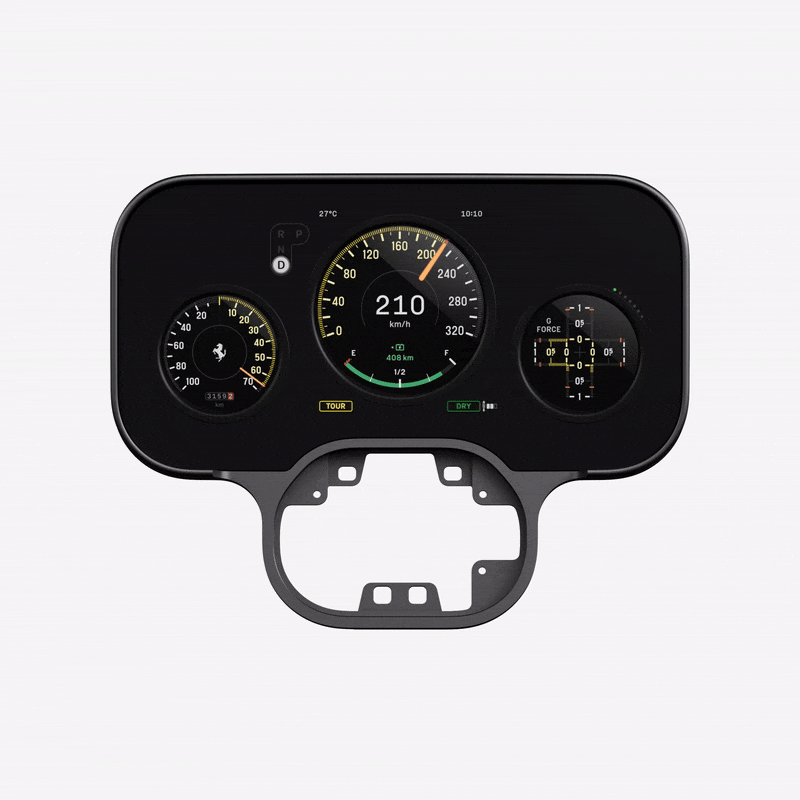
Image credit: Ferrari
Marc Newson, on the other hand, comes from a more cross-cultural design background: Ikepod clocks, Qantas cabins, industrial furniture, and collaborations with Louis Vuitton. A strong focus on the continuity of surfaces and the physical relationship to the object always emerges in his work.
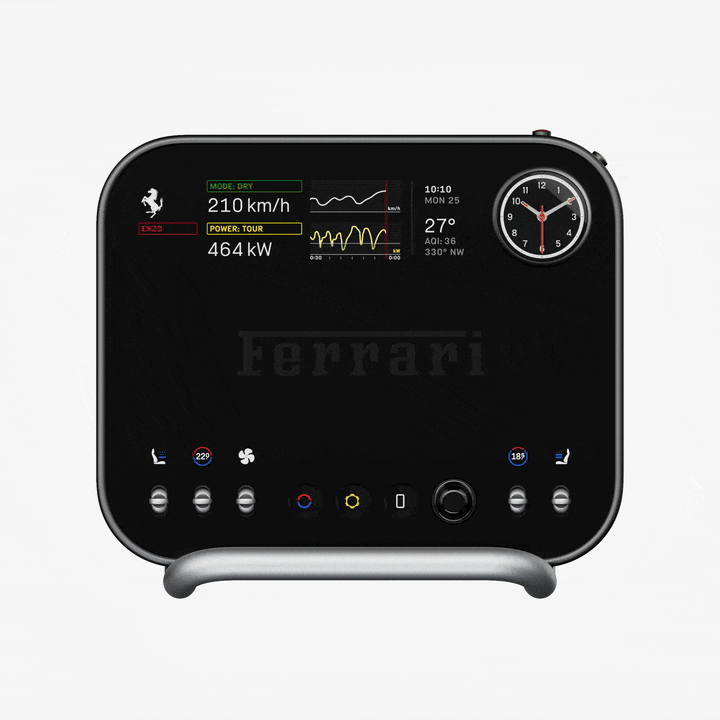
Image credit: Ferrari
Ferrari could have relied on any studio specializing in hypercars. He preferred to involve figures from different worlds, capable of reading luxury through entirely different parameters.
A cockpit that looks more at watchmaking than motorsport
The interior of the Ferrari Luce marks a rather obvious break with the Ferrari language of recent years. The theatricality of the cockpit gives way to a much more sculptural and textural pursuit: machined glass, anodized micropeened aluminum, continuous surfaces and physical controls finished with a precision surprisingly close tohaute horlogerie.
According to information released by Ferrari, some selectors use knurled machining obtained by CNC micro-milling, the same technique used in high-end watchmaking for crowns and bezels.
Haptic feedback has also been developed very carefully. Ferrari speaks openly of “tactile hierarchy”: each command possesses a different resistance and response depending on the function performed.
In practice, the driver should be able to distinguish controls almost without looking at them, simply through muscle memory and mechanical feedback. This is the same principle that makes the crown of a Royal Oak or the click of a well-executed bezel instantly recognizable.
At a time when much of the automotive industry is turning the cockpit into a giant touchscreen, Ferrari seems to have chosen a different direction: bringing physical gesture, matter and tactile interaction back to the center.
Underneath the bodywork, Luce remains deeply Ferrari
Beyond the design, perhaps the most interesting part of the Ferrari Luce is that Ferrari has approached the electric with a deeply engineered approach.
The configuration uses four independent electric motors, one per wheel, with fully variable torque vectoring, and according to technical previews that emerged during the reveal, Ferrari would choose axial-flow motors with magnetic Halbach array configuration, a solution derived directly from Formula 1 experience to increase torque density and energy efficiency.
The 880-volt architecture enables faster charging and better thermal management, while the brake-by-wire system works in conjunction with predictive energy recovery to maintain braking consistency and dynamic precision. The 48V active suspension is also derived directly from Ferrari’s accumulated experience in the endurance program and on the Le Mans-winning 499P.
The Luce thus tries to transfer to the electric that quality of response and dynamic precision that have always characterized the most successful Ferraris.
The sound: the real challenge of the first electric Ferrari
The most sensitive issue inevitably remains the acoustic one. For Ferrari, sound has always been an integral part of the driving experience. A Ferrari V12 can be recognized almost instantly: the metallic timbre, the progression at high rpm, the way the intake and exhaust build a unique sonic identity.
With electrics, however, the starting point changes completely. Many manufacturers have chosen to artificially simulate the behavior of heat engines through synthetic sounds and virtual gear changes. Ferrari seems to have followed a different path. In fact, the Luce‘s acoustic system works on the real harmonic frequencies generated by the electric powertrain, processed dynamically as a function of speed, load and driving mode.
Also during the reveal, Benedetto Vigna spoke openly about the desire to create a new “signature Ferrari” in electrics as well, and this is where the parallel with Audemars Piguet and watchmaking becomes particularly curious.
1972: the Royal Oak and the redefinition of sports luxury
When Audemars Piguet introduced the Royal Oak in 1972, much of Swiss watchmaking was going through the quartz crisis. Japanese movements were more accurate, cheaper and technologically advanced.
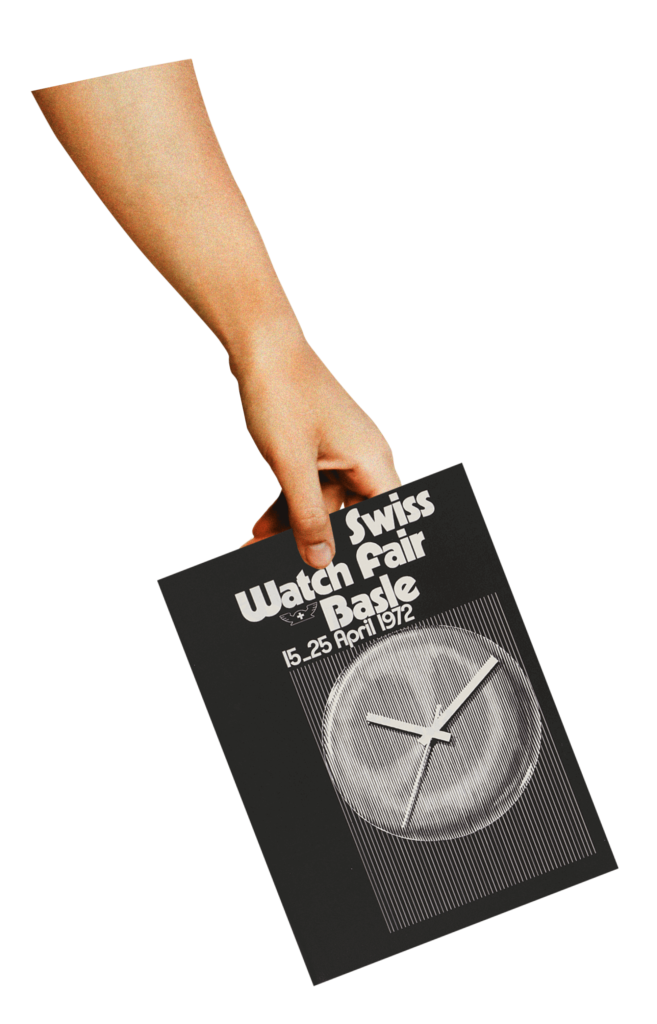
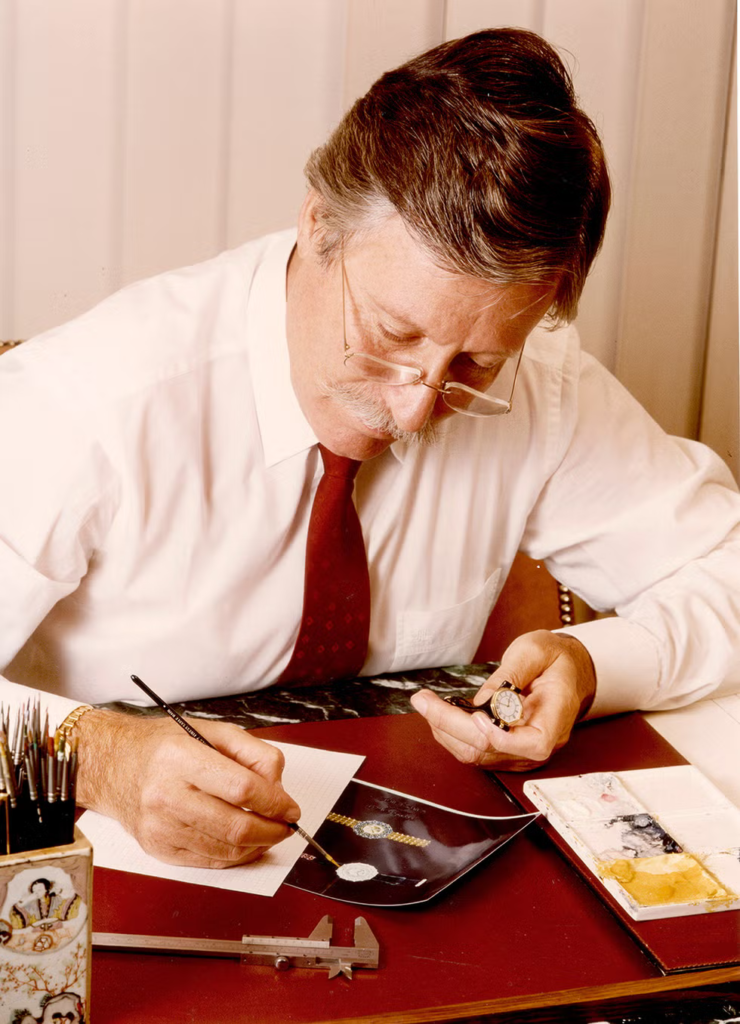
The house entrusted the project to Gérald Genta, asking him to imagine something completely different from the traditional codes of haute horlogerie. The result was the Royal Oak ref. 5402: octagonal bezel, exposed screws, integrated bracelet, and a steel construction finished to a level of quality hitherto reserved for gold watches.
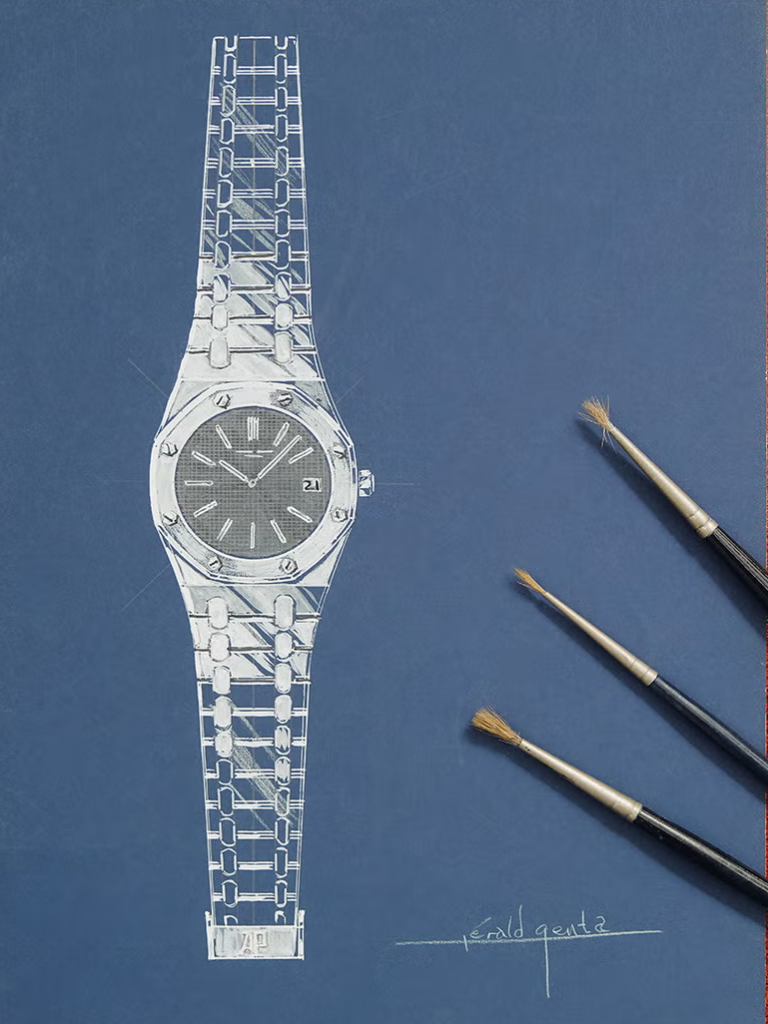
The launch price (3,300 Swiss francs) was higher than many precious metal models of the time. Initially, the market reacted cautiously. In time, however, the Royal Oak completely redefined the concept of the luxury sport watch, and the Ferrari Luce seems to move along a very similar logic.
Will Luce be remembered as the Royal Oak of automotive?
It is impossible to answer today. The Royal Oak took years before it was fully understood. Only in time did it become one of the most influential objects in the history of contemporary design.
The Luce could follow a similar trajectory or remain an important but isolated experiment. Either way, Ferrari seems to have realized a fundamental point: the future of automotive luxury will play less and less on simple performance figures and more and more on the quality of the experience.
This is why the Luce generates discussion. Because it brings to the center a question much broader than electrification itself: what really makes a luxury item recognizable when technology completely changes the rules of the game?
In 1972 Audemars Piguet answered this question by turning a steel watch into the ultimate icon of modern sports watchmaking. Today Ferrari is trying to do something similar with an electric car.
Are you looking for the perfect gift? Explore our online store and discover the entire collection signed IWS – Italian Watch Spotter!
For all real-time updates on the world of watchmaking follow us on Instagram and visit our Youtube channel.