There are brands that traverse watchmaking history as silent but decisive presences, leaving innovations that become standards even before the market is ready for them. Angelus belongs to this rare category. His is a trajectory studded with technical insights, inevitable declines and lucidly orchestrated revivals; a story that deserves to be reread carefully, for it tells much about the independent creativity that has nurtured, and continues to nurture, watchmaking Switzerland.
A workshop of ideas in the Le Locle of the late 1800s.
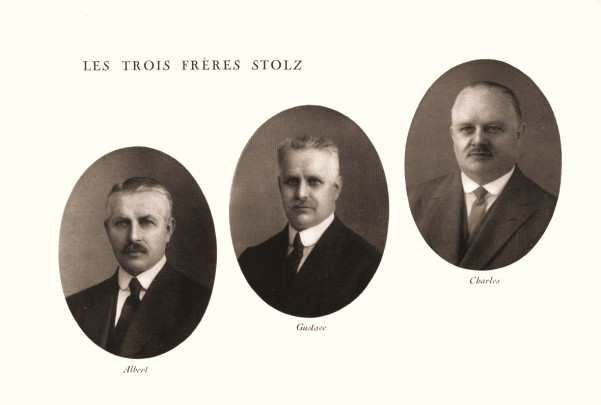
Angelus was born in 1891 in the heart of Swiss watchmaking, in the small but bustling district of Le Locle, when brothers Albert and Gustav Stolz established a manufacture in a room on the Rue du Marais. In 1898 the third brother, Charles Stolz, also joined, completing the original team.
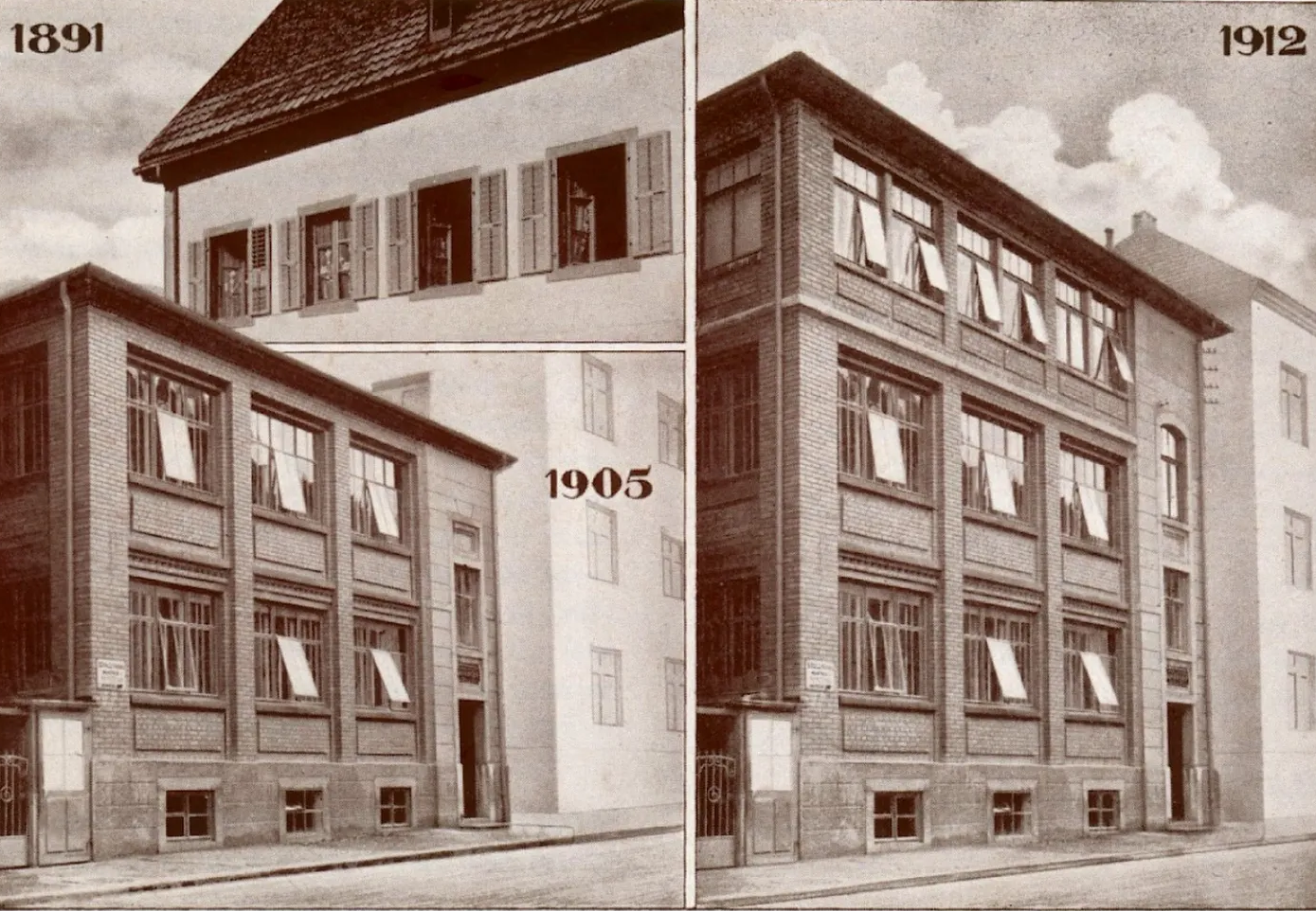
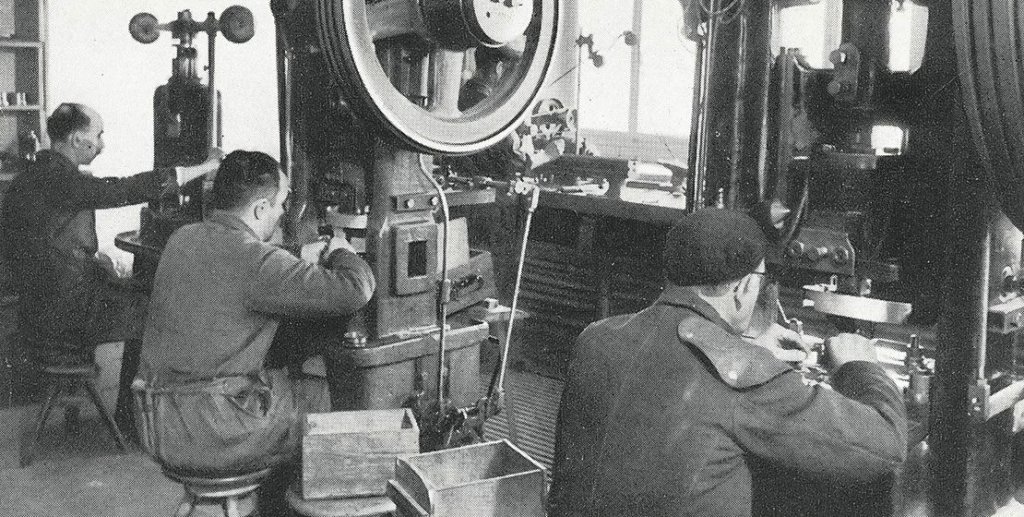
In the first decades of the twentieth century, Angelus already stands out as a highly skilled business: in 1902 the brand was awarded a gold medal at the International Exhibition in Paris and later a Médaille de Vermeil in Lille. By 1904, growth was evident: the company exceeded 15 artisans and began to produce its ébauches in-house, focusing on complications such as quarter repeats and chronographs (a way of defending its design freedom in an industry already prone to standardization).
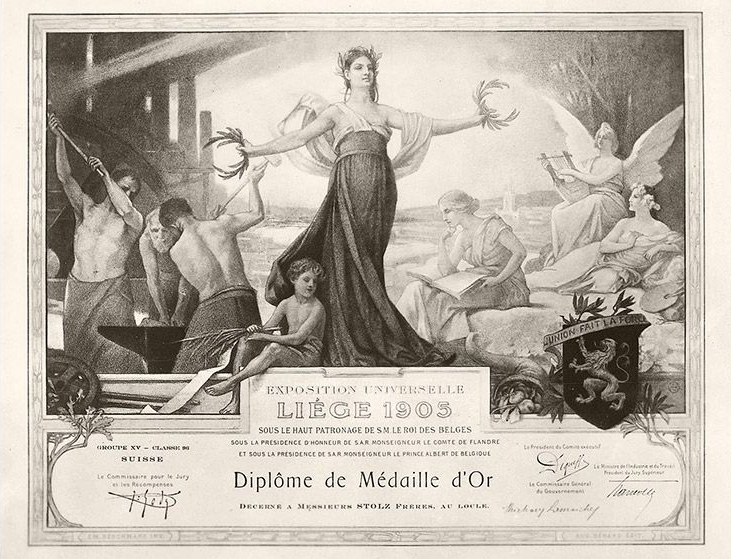
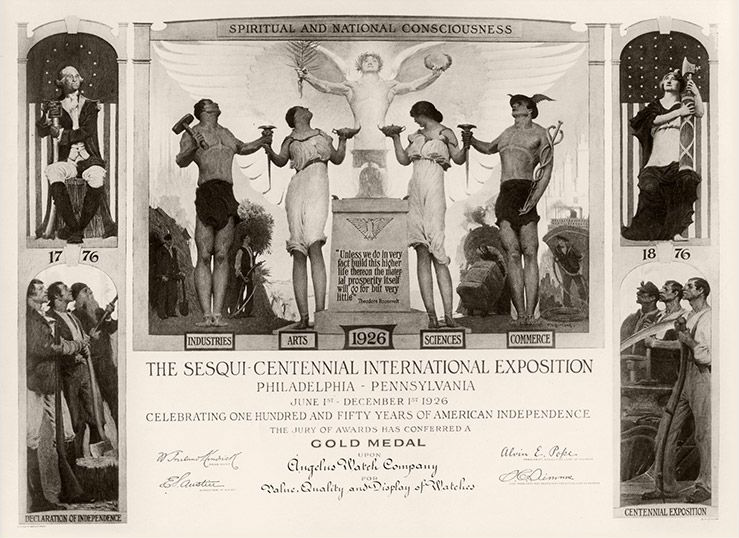
Between 1905 and 1906 Angelus was awarded again: gold medal in Liège and the Grand Diplôme d’Honneur in Milan. In 1913 the brand’s first advertisement appeared, a sign that the brand was seeking a more structured presence in the market.
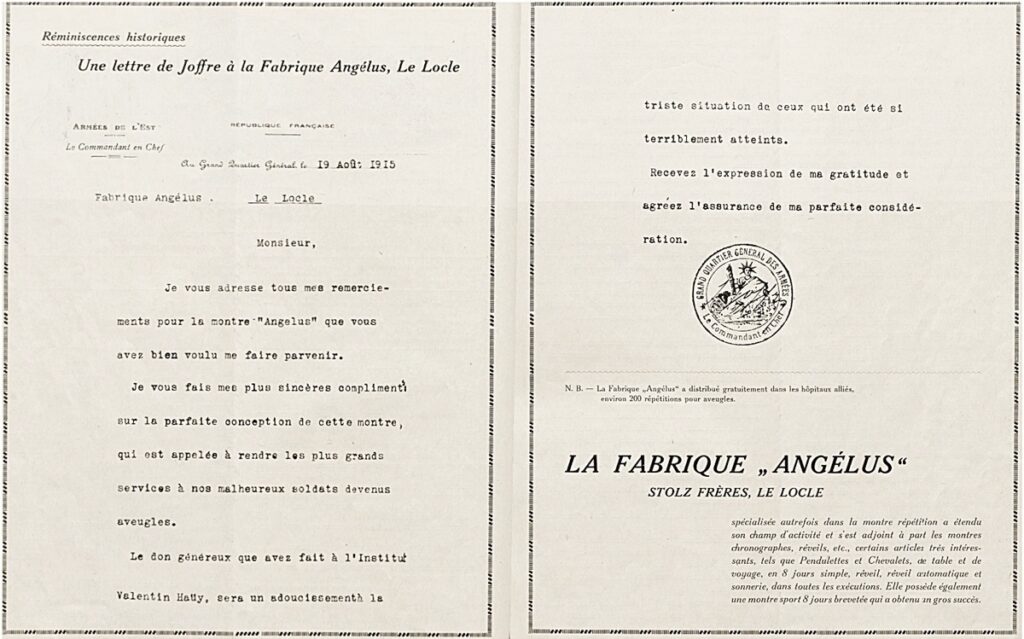
In 1914, the year of World War I, Angelus faced significant challenges but did not give up on innovation: she developed a repeater watch designed for blind people, offering wounded soldiers the sound of the hour. This gesture earned her a letter of thanks from French Marshal Marshal Joffre.
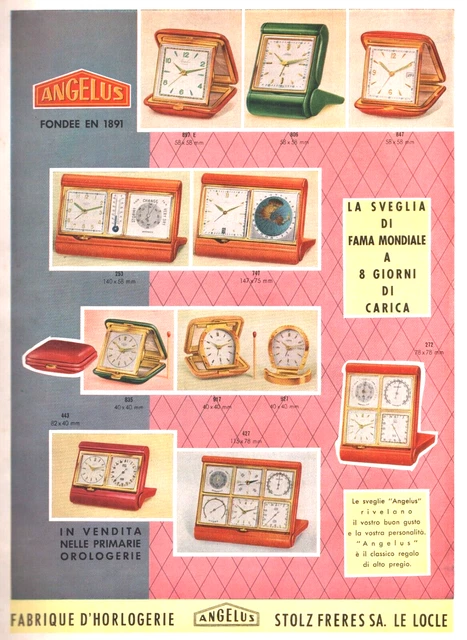
In the 1920s, with experimentation with luminescent materials, Angelus diversified further: it produced alarm clocks, travel watches, and complete calendars. It was just before 1925 that the brand laid the foundations for another great season, but it was with the 1925 launch of its single-pusher chronographs (13 and 14 ligne) that a new era began.
The golden age of complications
The interwar decades mark the first major qualitative leap. In 1925 Angelus made single-pusher chronographs of surprisingly compact dimensions. In the late 1920s and early 1930s, Angelus’s technical reputation is further solidified by an incredibly compact eight-day movement (32 × 21 mm) with a claimed reserve of up to ten days but a true accuracy of ±1 minute per week.
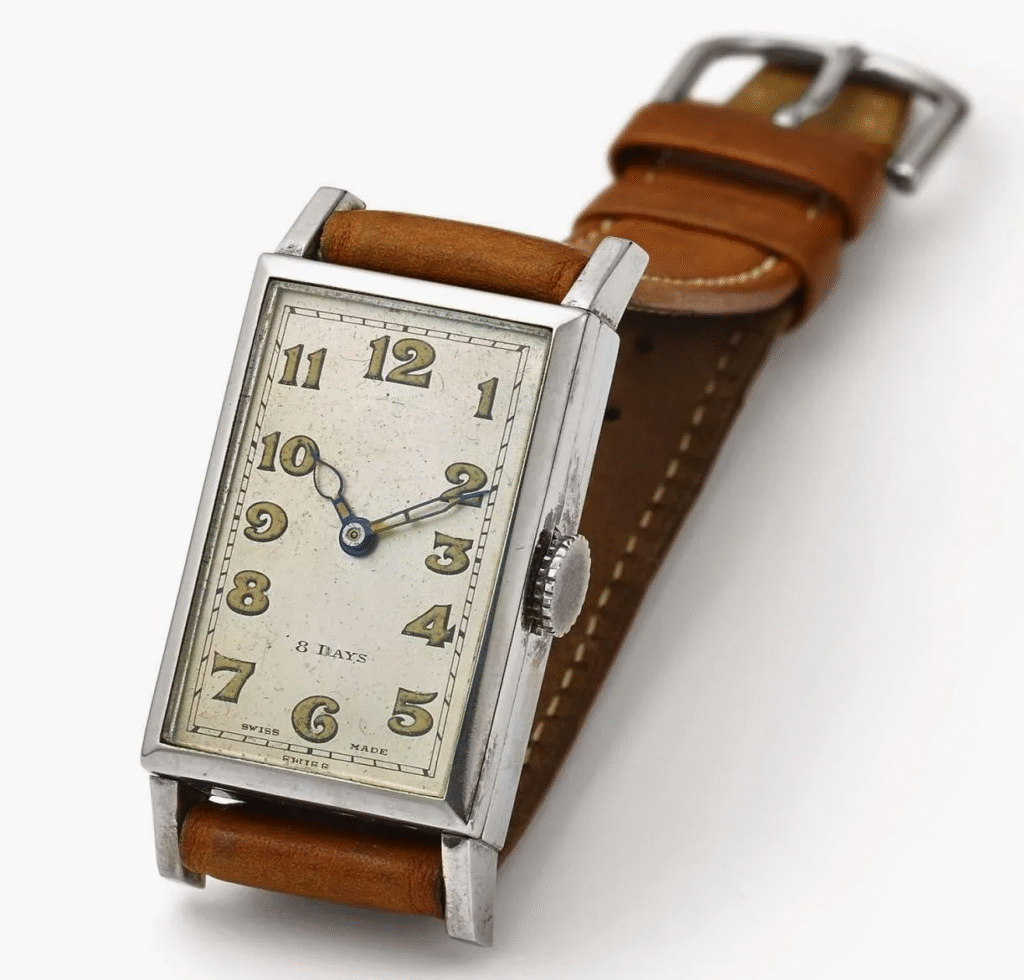
This multidisciplinary approach is no accident. Angelus sensed that the measurement of time was changing: it was moving away from just the mechanical dimension and into that of everyday functionality. It is an idea that culminates in 1942, with the birth of the model that would define the brand’s identity.
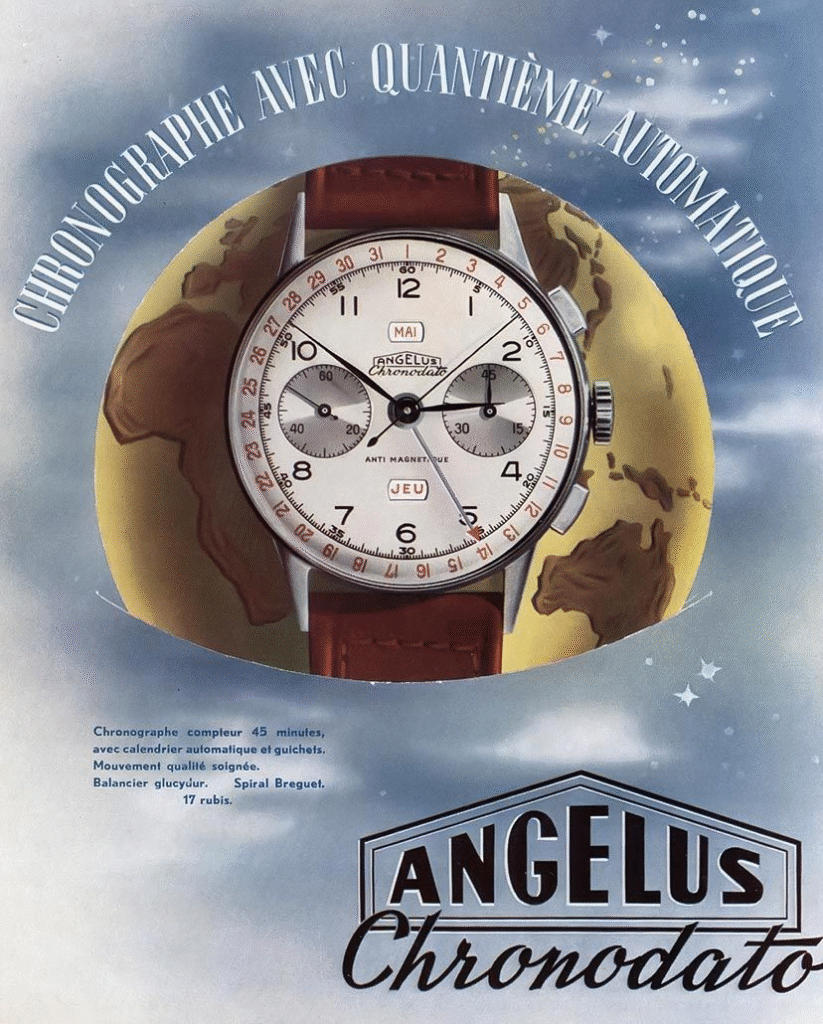
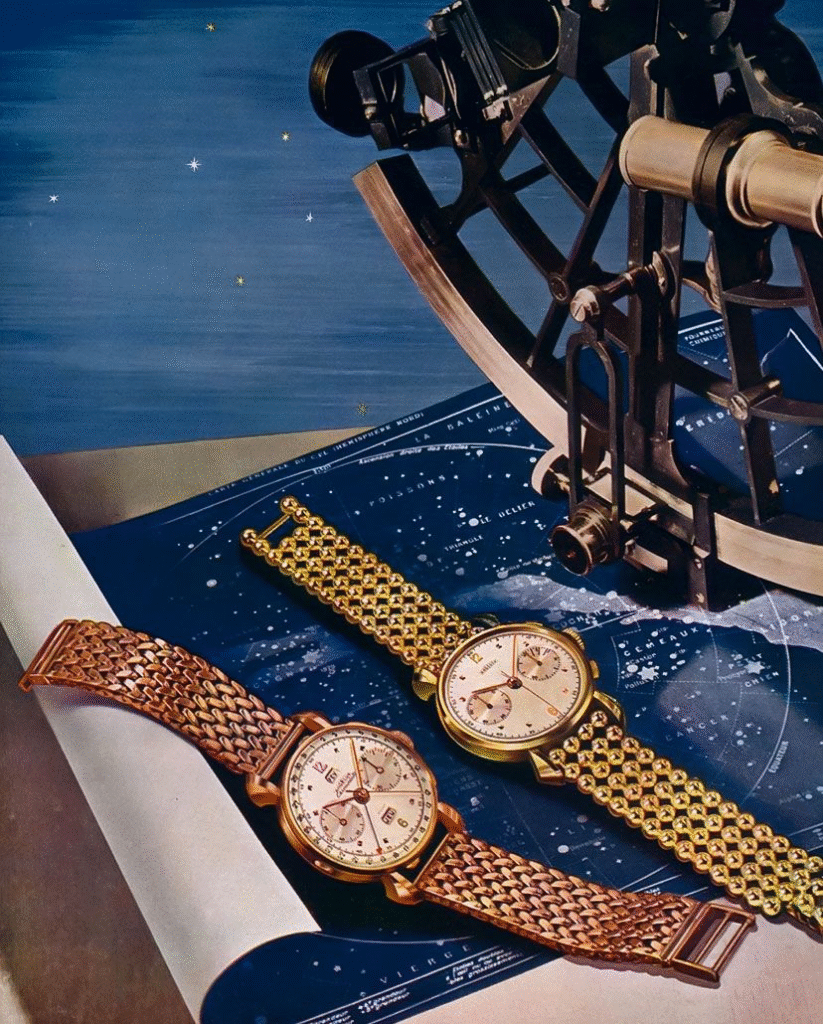
The Chronodato is not only a calendar chronograph: it is the first mass-produced example of its kind. A watch that, for the years, seemed to belong to another era. On the dial, the date is indicated by a central hand touching a peripheral scale; day and month appear instead in two opposite windows. The caliber SF217 (17 or 19 jewels), animates a construction that is harmonious, legible, and remarkably modern for 1942.
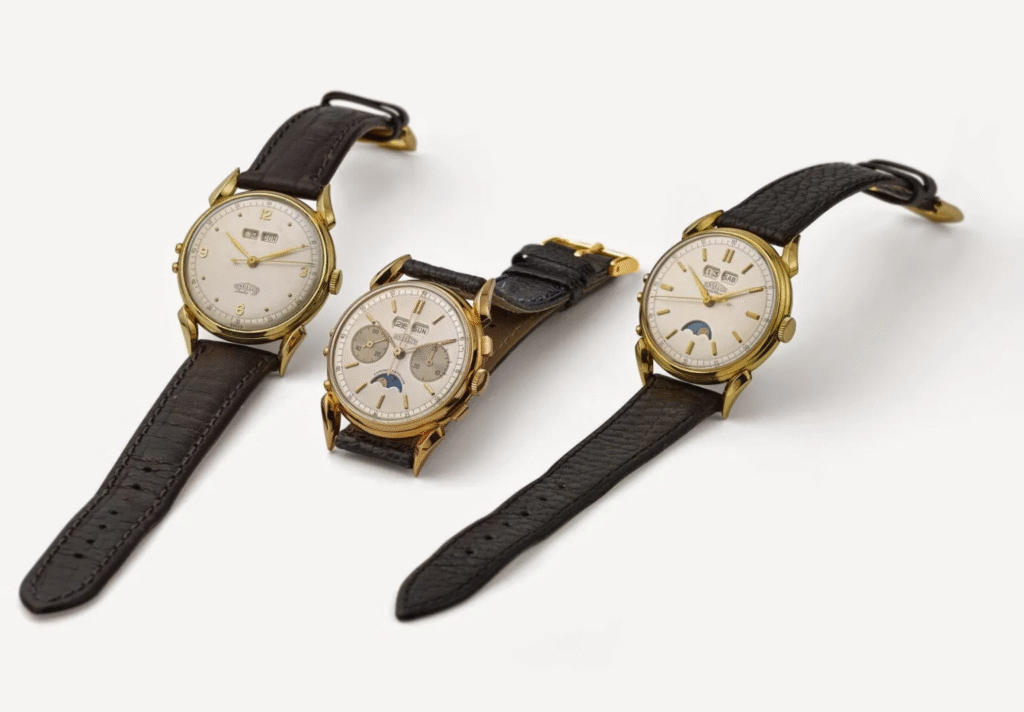
The Chronodate was not an isolated episode, but the beginning of a fertile decade. In 1948 came the Chrono-Datoluxe, equipped with a large digital date and moon phases: an anticipation of “collector’s” complications before that term even existed in the modern sense.
Board instruments, wrist alarms, and quarter repeats
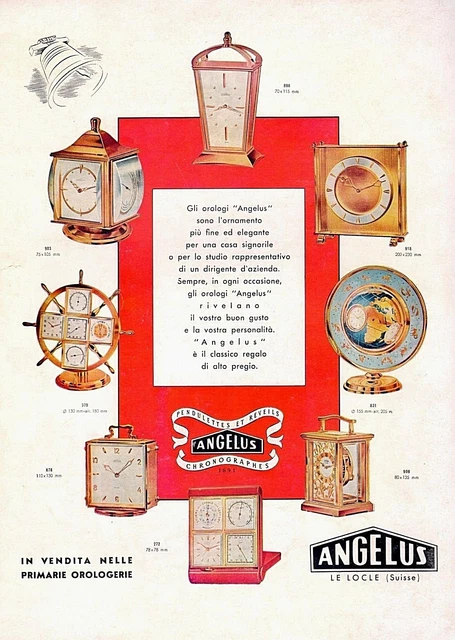
In parallel with chronographs, Angelus develops instruments that testify to a broad vision of the concept of measurement. The Sixome combines eight-day reserve with barometer, thermo-hygrometer, compass and calendar; the Foursome integrates barometer, thermometer and calendar in an even more compact format.
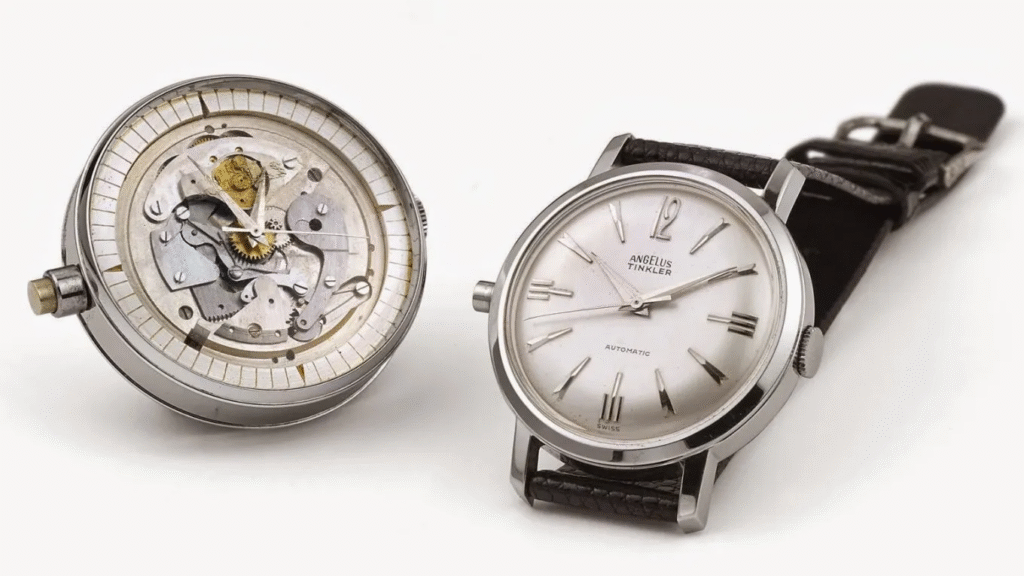
In 1956 came the Datalarm, the first wristwatch to combine date and mechanical alarm clock. Two years later, the
The quartz crisis
Angelus is a brand shaped by mechanical research. No wonder, then, that starting in the 1970s the quartz crisis challenged the manufacture more deeply than other Swiss companies. The slowdown inevitably becomes a stop: for several decades the Maison remains in suspension, like an idea waiting to be re-read at the right time.
La Joux-Perret and the return of creative independence
The “right moment” came in 2011, when La Joux-Perret acquired Angelus. It is a structural rebirth before even an aesthetic one. The manufacture in La Chaux-de-Fonds allows Angelus to return to its original essence: movements designed in-house, components machined in-house, finishes that combine classic techniques (Côtes de Genève, circular graining) with modern laser engraving.
After four years of quiet development, in 2015 Angelus unveiled its new collection, a chapter that shifts the brand’s center of gravity to more contemporary, more technical, bolder terrain.
The Angelus of the XXI carries forward the historic penchant for experimentation by adopting a radically modern language. The Chronodate in full titanium is proof that Angelus knows how to transform a historic idea, the 1942 peripheral date chronograph, into a contemporary design without technical compromise.
The case measures 42.5 mm in diameter by 14.25 mm in thickness, proportions that give the timepiece a noticeable but measured presence on the wrist. The body is made of grade 5 titanium, with a mostly satin finish and mirror-beveled edges. Angelus then introduced a carbon composite underbody, to which the chronograph pushers are connected, while the one-piece bezel features twelve notches that break up the silhouette, lending dynamism to the whole. The crystal is a box-sapphire with anti-reflective treatment on the dial and back.
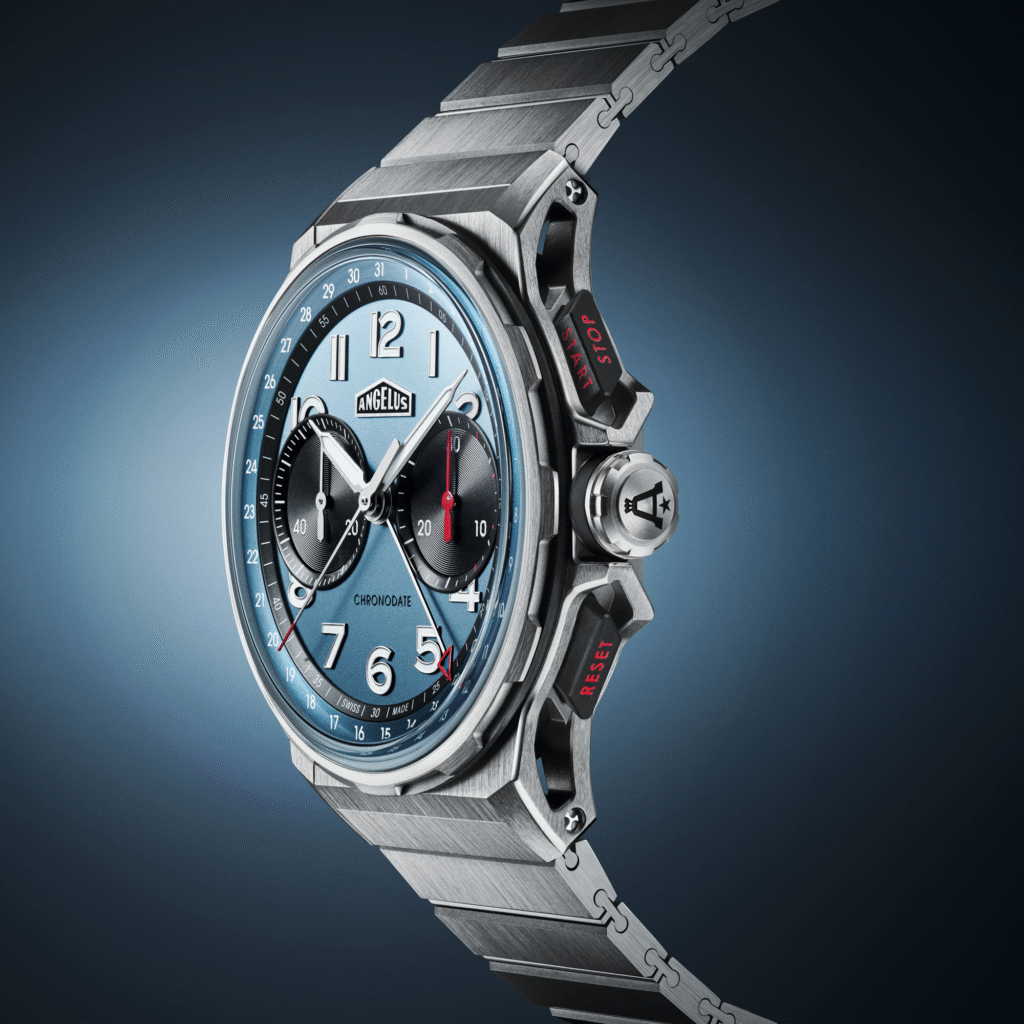
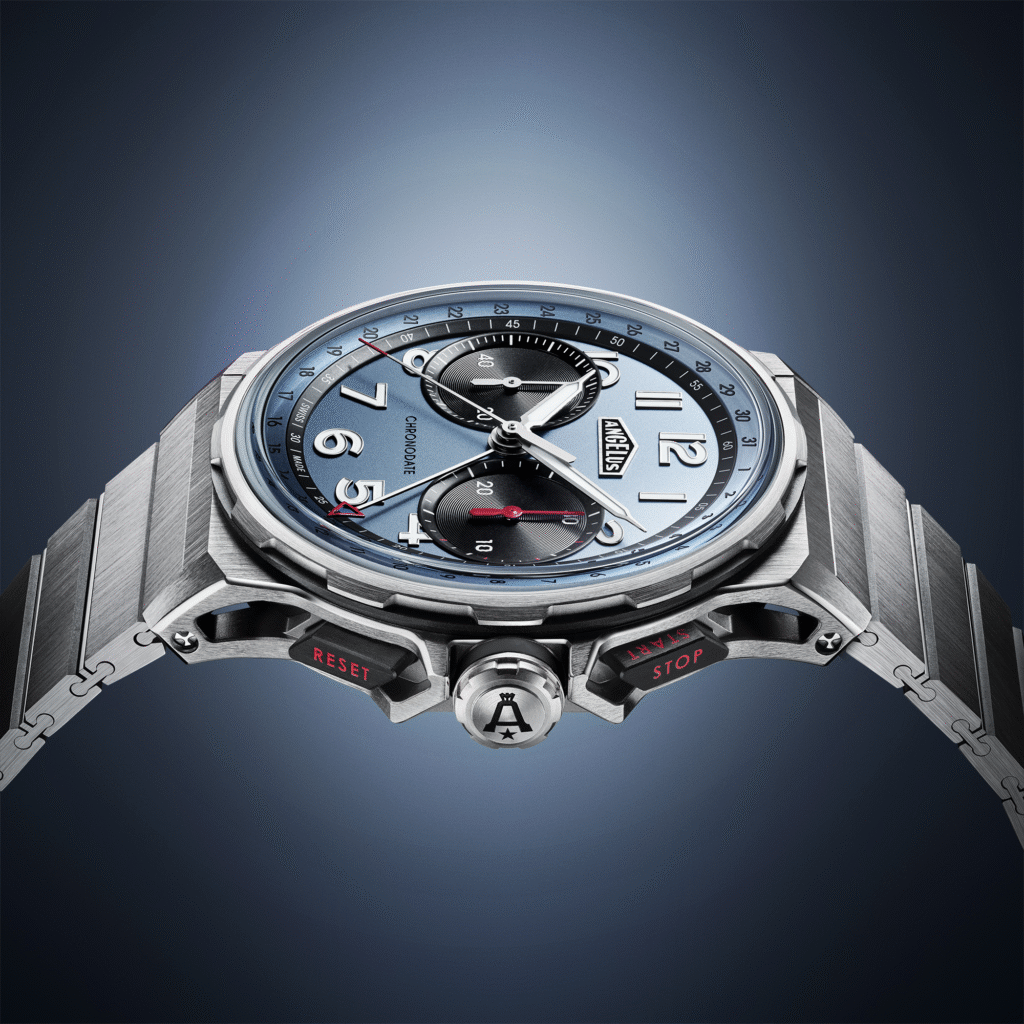
What visually distinguishes the Chronodate is the peripheral date display solution on the main flange: a raised circular scale that frees up the central dial and restores great balance to the chronograph reading.
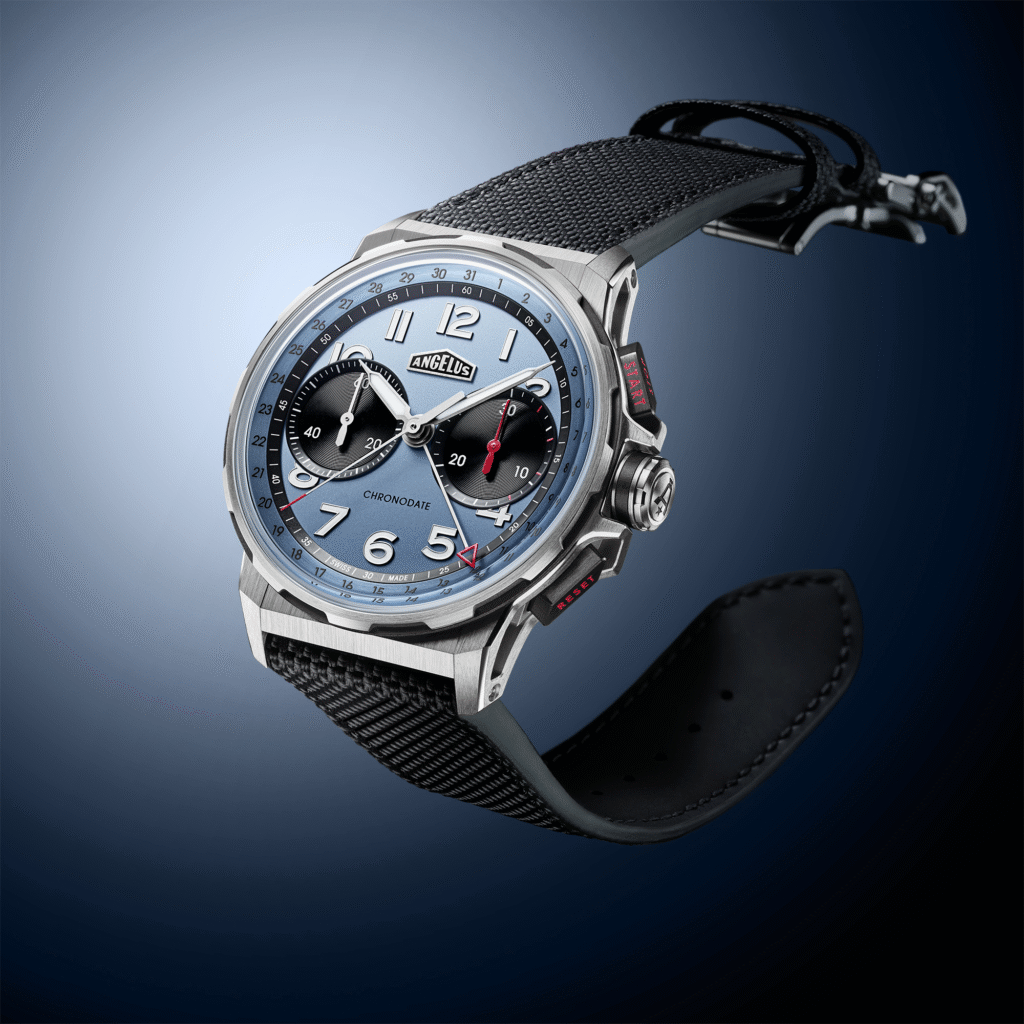
The date hand, slender and culminating in a painted tip (often red to increase legibility), slides along the flange without interfering with the bicompax counters; this choice keeps the chronograph function intact while reaffirming the link with the original Chronodato. The dial features applied indexes and hands with Super-LumiNova, counters made with a “snailed” finish, and a color contrast designed to optimize visibility.
Inside is the caliber A-500 Titanium Edition: an in-house automatic movement with a frequency of 4 Hz (28,800 A/h), declared 60-hour power reserve, 26 jewels and a modular column-wheel construction. The dimensions of the movement (approximately Ø 30 mm, thickness around 7.9 mm) and its architecture allow the three-dimensionality of the components to be exposed through the case back.
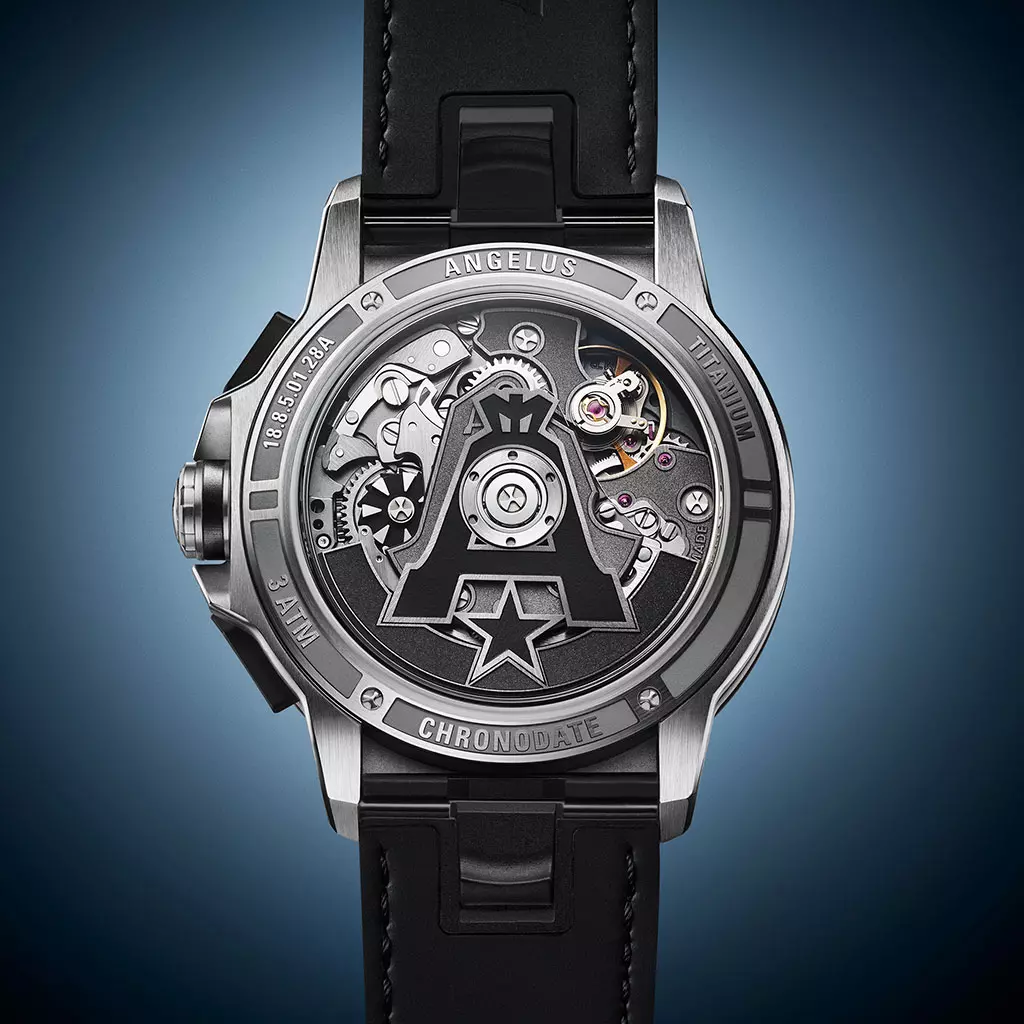
Water resistance is moderate (30 meters), a signal that the Chronodate is intended as a performance urban instrument rather than a professional diver.
Finally, versatility of use: the watch is available with a satin-finished titanium bracelet or a molded rubber strap, both with a titanium deployant clasp. The combination of materials (titanium, carbon composite, box crystal) together with the peripheral date layout creates a chronograph that is both historical homage and technical progression.
GPHG Acknowledgements
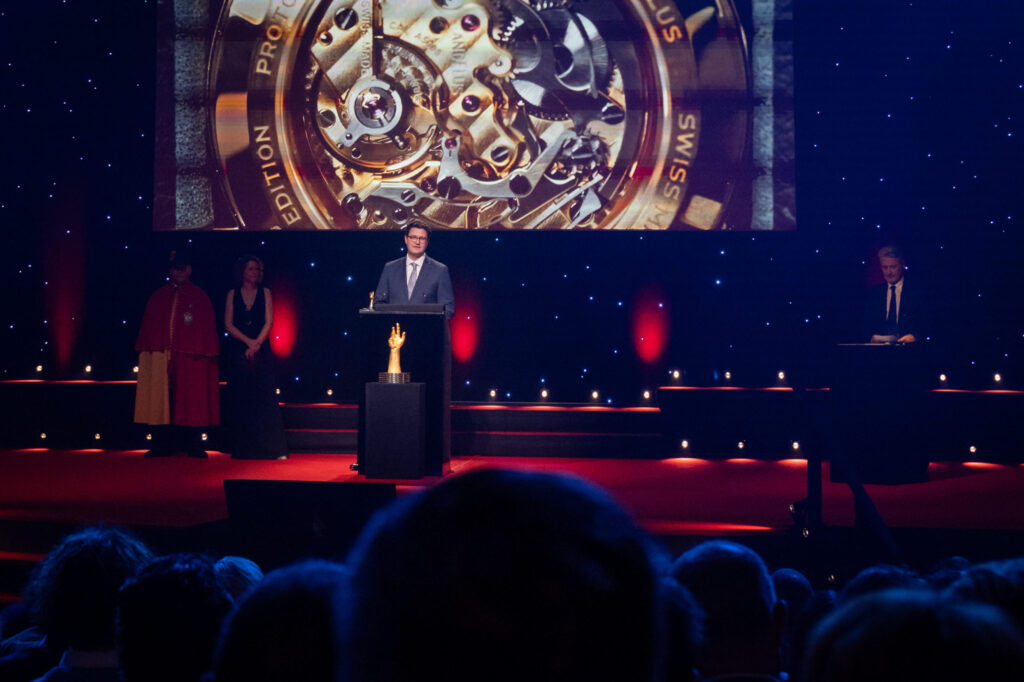
At GPHG 2025, Angelus won a prestigious award with the Chronographe Télémètre Yellow Gold, which won in the “Chronograph Watch” category.
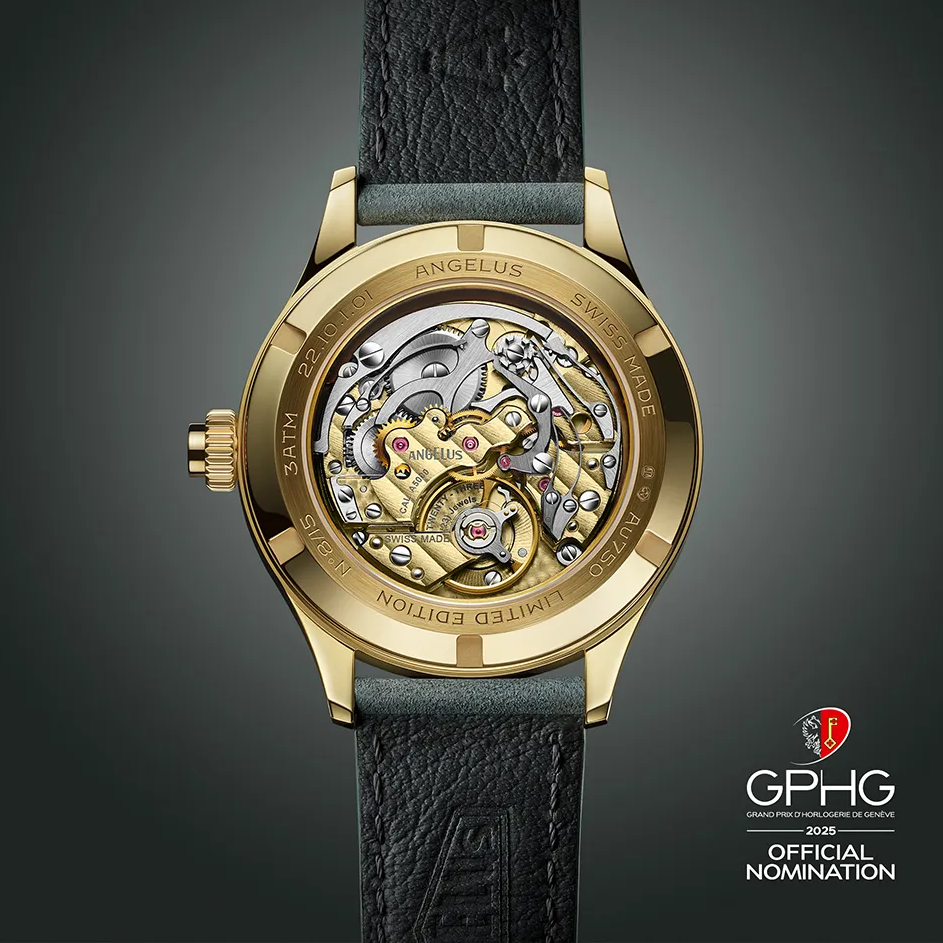
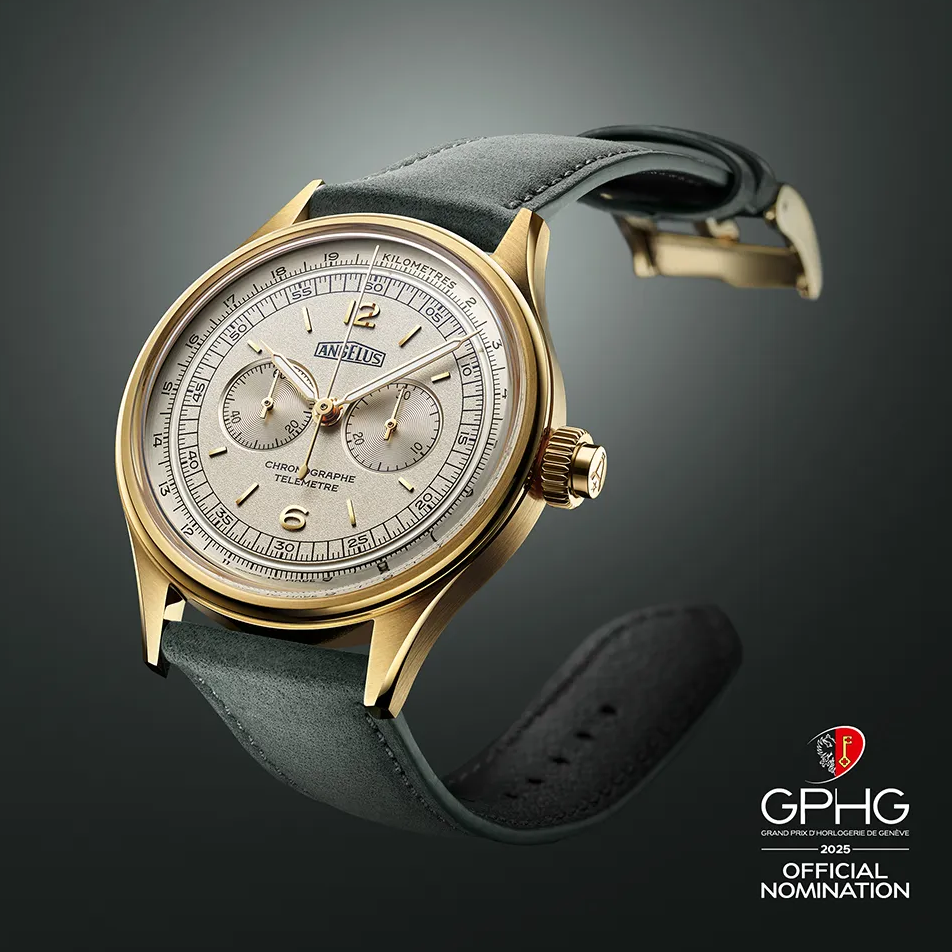
Pascal Béchu, the brand’s general manager, took the stage to celebrate Angelus’ return to the Olympus of complications
Italian presence
The brand’s exclusive positioning is also reflected in its distribution: Verga 1947 is the only official Angelus dealer in Italy. A detail that tells how much the Maison prefers a measured diffusion, in line with its own limited production and attention to a conscious collecting.
An ongoing dialogue between eras
The story of Angelus is not linear. It is a curve made up of spurts, suspensions and unexpected returns. What makes it interesting today is not only the depth of its archive, but the skill with which it has been able to reinvent itself without ceasing to be itself. From Le Locle in 1891 to the manufacture in La Joux-Perret, passing through models that have marked historic milestones, Angelus continues to exist in the dimension that is most congenial to it: one in which watchmaking is a territory of research, not imitation.
Visit our Youtube channel to experience the best of the world of watchmaking firsthand.
For all real-time updates follow us on Instagram.