
Since its founding in 1875, Audemars Piguet has made collaboration one of its pillars.
In the early years, the system of theétablissage organized a network of independent craftsmen in the Vallée de Joux, each responsible for a specific component of the watch. Audemars Piguet, as an établisseur, coordinated this ecosystem: collecting, assembling, finishing. The result was unique timepieces, built by several hands, but guided by a common vision.

Today, although the operating model has evolved, the spirit of co-creation persists. And it is precisely from this philosophy that today, on the occasion of Watches & Wonders 2026, l’Atelier des Établisseurs, a project inaugurating a new era of unique and contemporary creations, revised in a modern key but born from the collective work of artisans in the Jura Valley.
A project that was created to preserve traditional handicraft skills, often passed down orally and at risk of disappearing, but is also concerned with enhancing the talent and joint work of engravers, enamellers, lapidaries, jewelers, designers, graphic designers, and watchmakers. Not just involved, but appointed. Recognized.
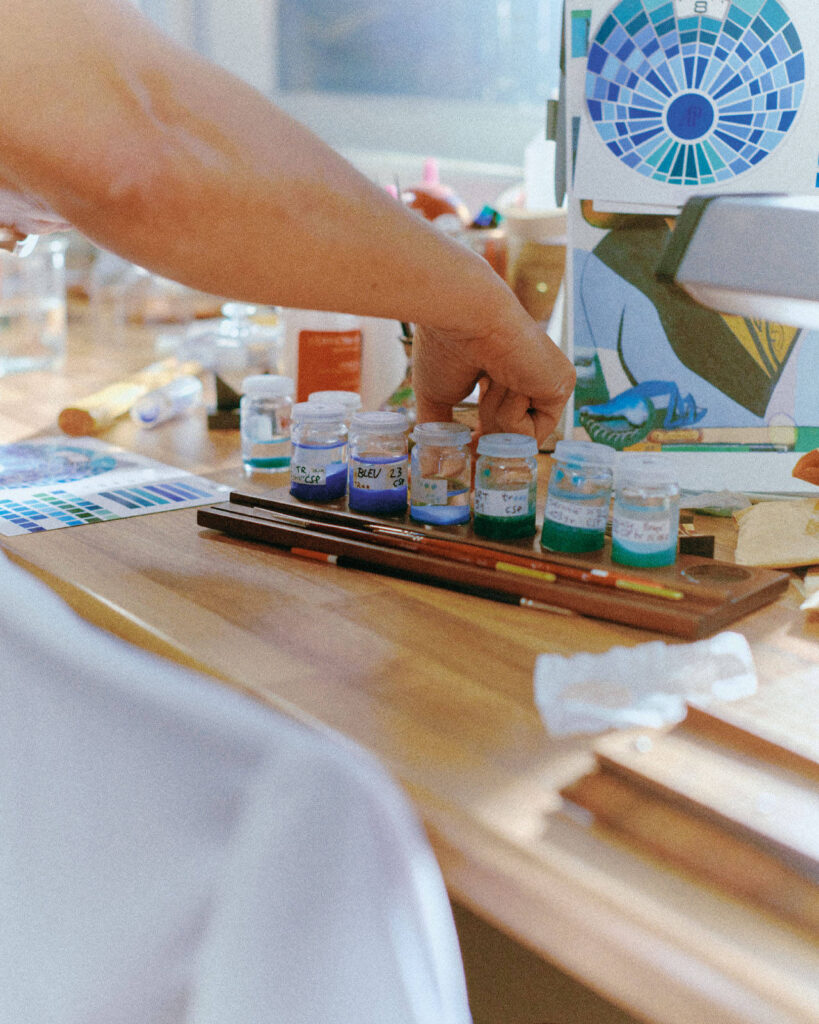
The result is three watches that combine advanced technique, aesthetics and creative freedom each crafted by a polyphony of voices of artisans, cited and recognized for their signature design with the aim of celebrating the tradition of collective work that has always made Swiss watchmaking famous.
Établisseurs Galets: a watch that mimics the natural charm of the Vallée de Joux
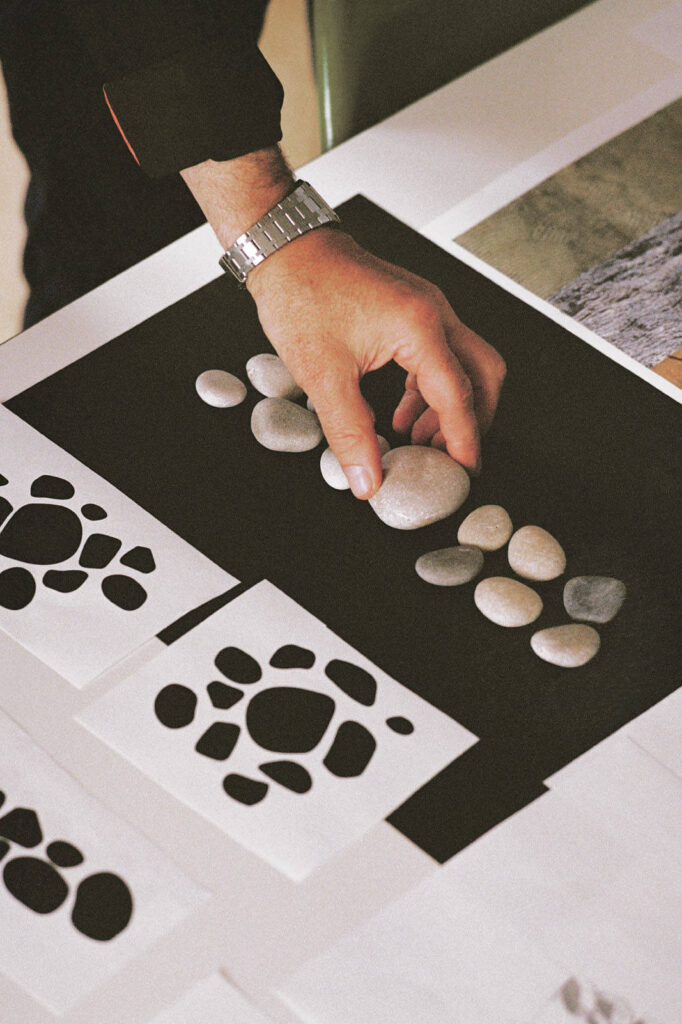
There is an image, at the origin ofÉtablisseurs Galets, the first piece in the collection: it is that of a riverbed, calm and almost motionless, where the water flows smoothing the clear pebbles, lying side by side in an almost ancestral natural pattern.
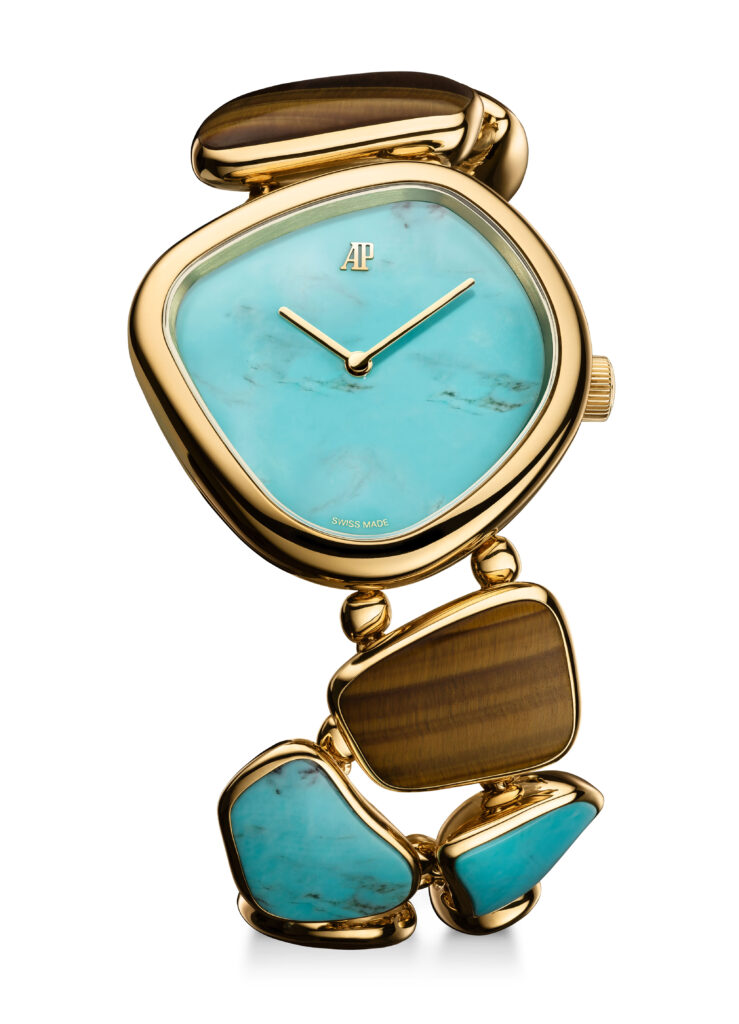
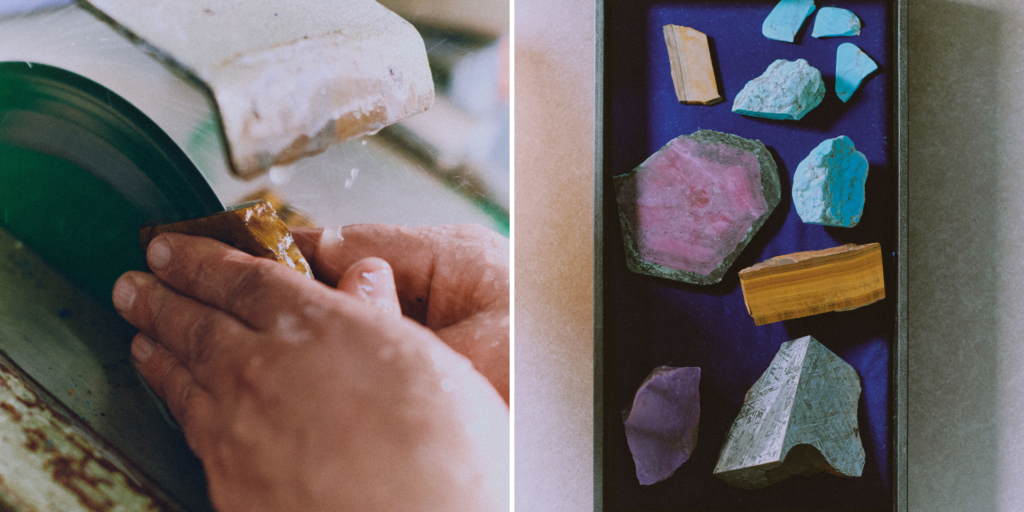
It is in accordance with this organic geometry that does not follow impositions that Audemars Piguet designs the watch bracelet: building it are individual stone and 18-carat gold links, unique and always different in shape and size, linked together by small golden spheres that grant the structure a soft movement, almost giving back to the wrist that feeling of natural adherence.
Also made of natural stone is the dial, left free of indexes with small Audemars Piguet logo interventions and handcrafted 18-karat gold baton hands.
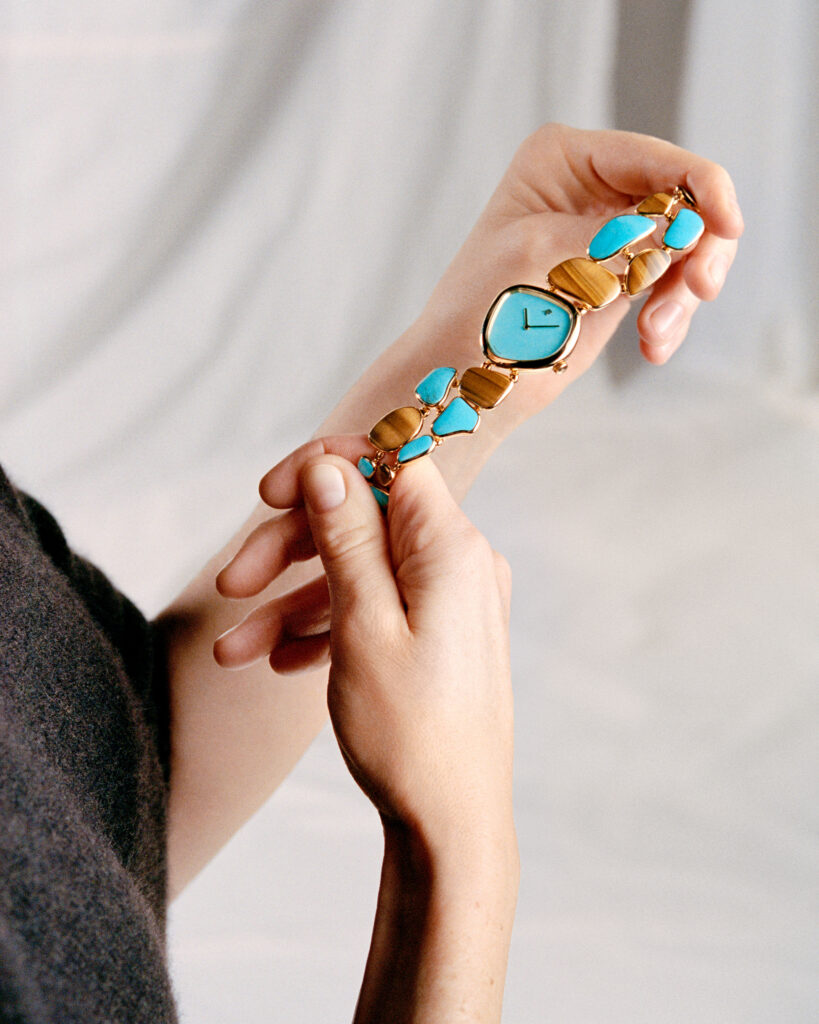
While marking an obvious departure from the maison’s most recognizable language today, the use of stone has always been in Audemars Piguet‘s DNA. From the opal and lapis lazuli of vintage models such as the Tank and Retro TV, to the turquoise and malachite of some of the more recent declinations of the Royal Oak, the maison has known and preserved the techniques of cutting and setting stones (natural and precious) for decades. Five variations, with different stone combinations, will be available in 2026.
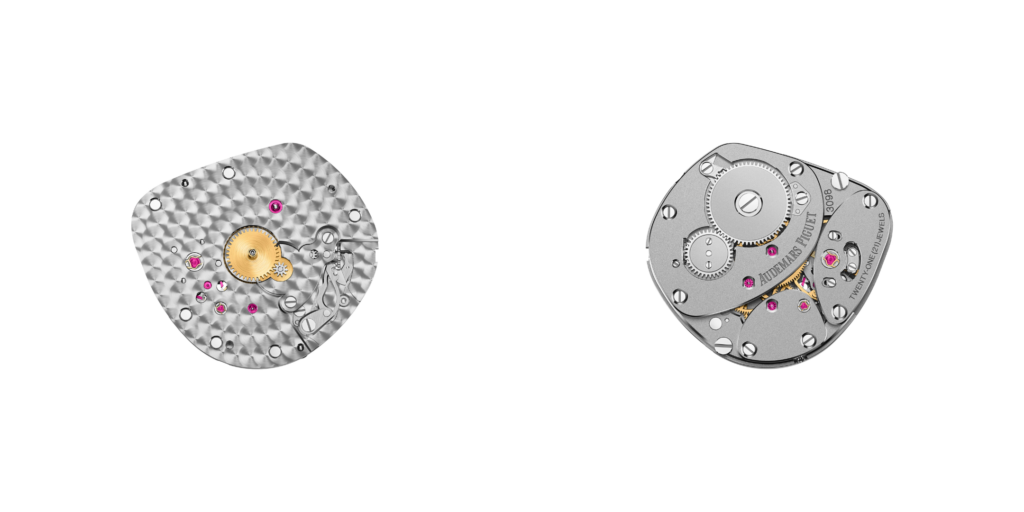
In the case, also made of 18-carat gold, beats Caliber 3098, derived from the house’s first in-house movement, 1999’s Caliber 3090, adapted here to the irregular shape of the case with finely hand-grained bridges imitating the concentric patterns of pebbles, evidence of rare and exclusive craftsmanship. Each watch is assembled, adjusted and boxed by a single watchmaker, following the original principles of timepieces made by the établisseurs.
Établisseurs Nomade: a watch that changes form and function
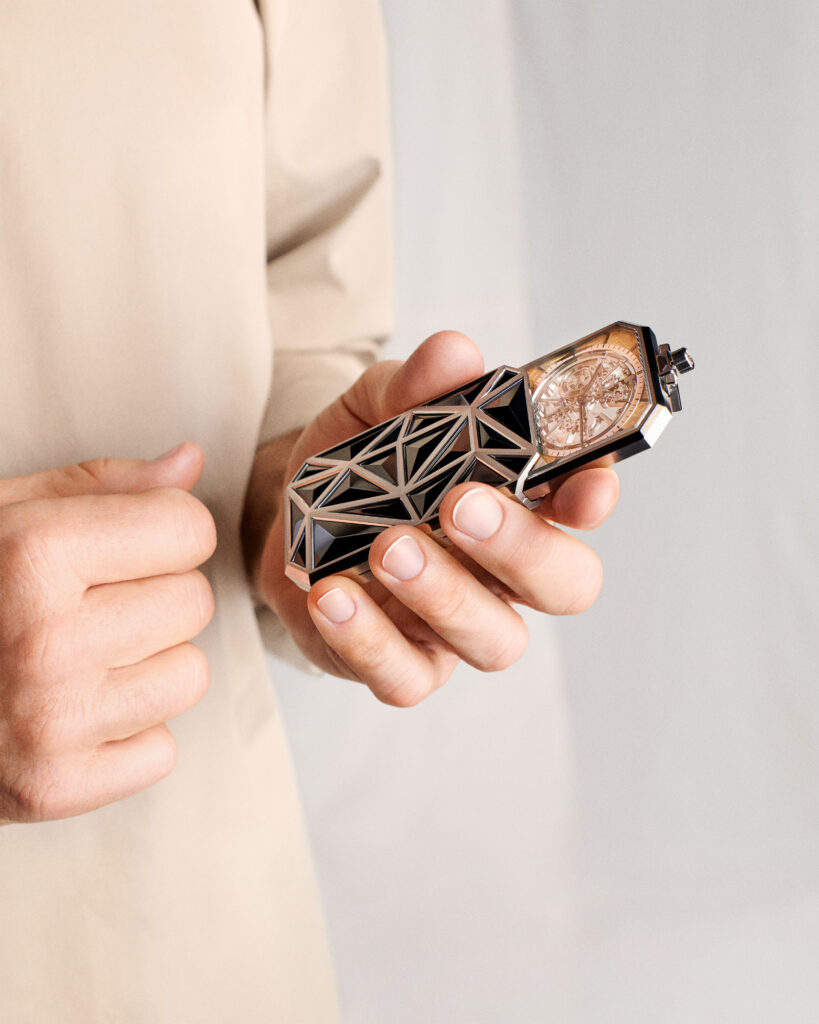
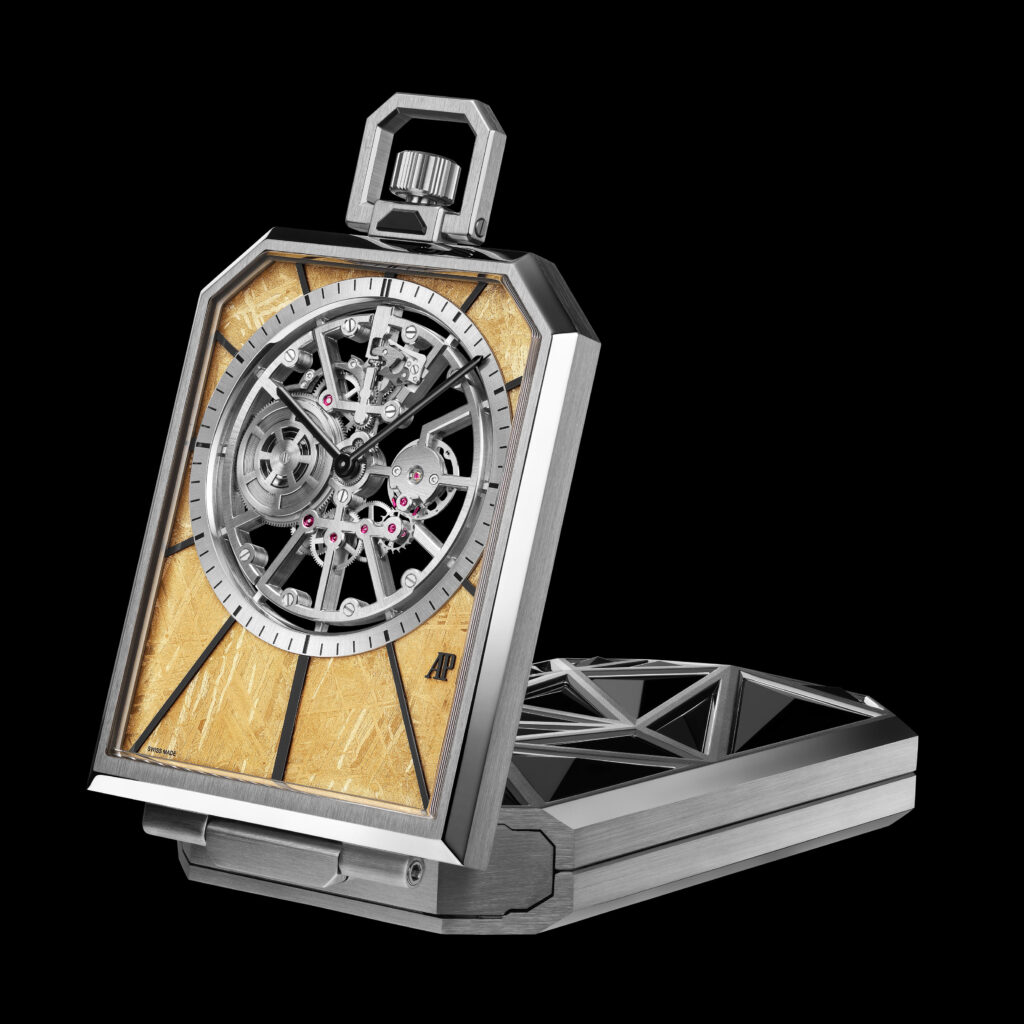
If Galets was born from a more evocative image, Établisseurs Nomade is, on the contrary, an object designed to move, transform, adapt, and change shape. Designed for those who like to juggle functions, the clock lends itself and adapts to three configurations, made possible by a sophisticated construction: as a pocket or table clock, or as a pendulum.
In tabletop version
The case combines precious metals, including gold or titanium, and natural stones selected and worked with extreme delicacy by artisans who devote their talents exclusively to cutting and polishing stones (precious and semiprecious) to reveal their brilliance or unmask their colors.
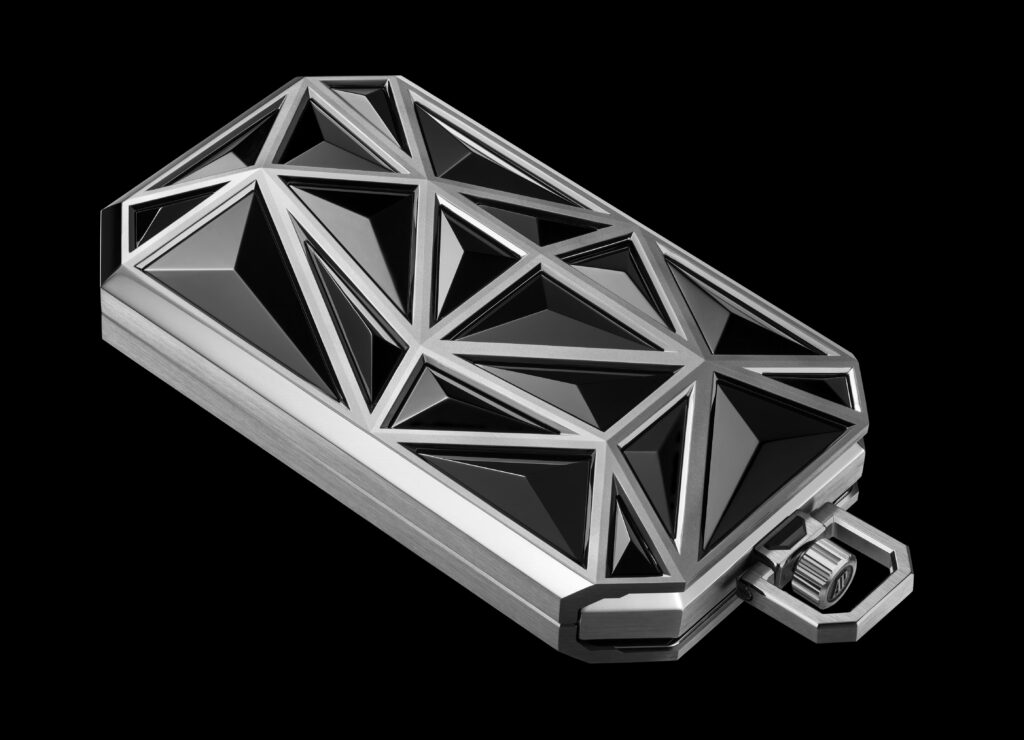
In pocket version
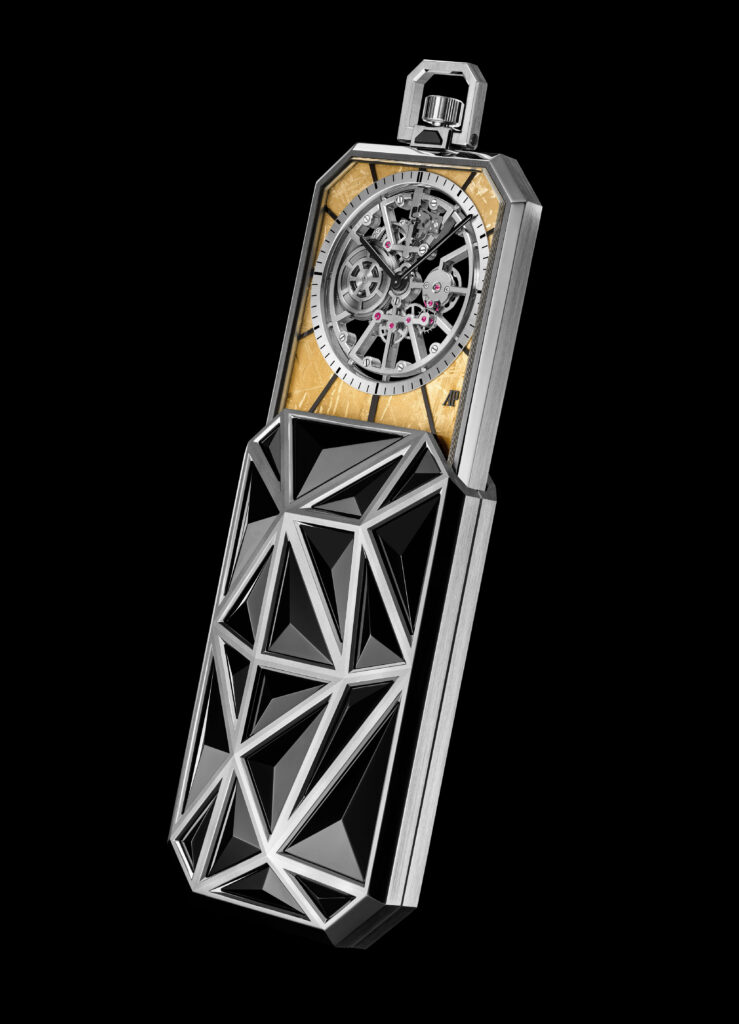
The stone dial slides into a beveled metal mesh case of faceted stones, complemented by a custom-designed chain in gold or titanium. Five variants will be available in 2026, each with unique stone pairings that display precision, transparency, and refined craftsmanship.
In pendulum version
At the heart of the Nomad is Caliber 7501, a movement derived from the extra-flat Caliber 7121 of 2022.
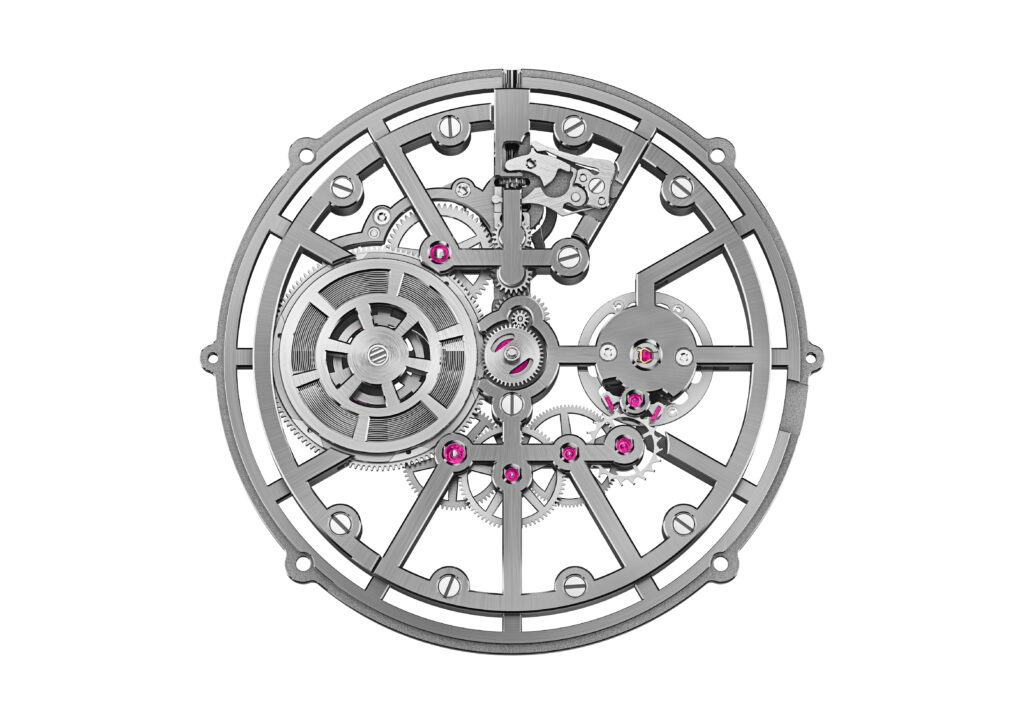
Skeletonized by hand with a hacksaw, it plays on transparencies and symmetries, where bridges become hour markers. Hand skeletonization is an extremely demanding art that only a few watchmakers in the history of watchmaking have mastered. This savoir-faire, which requires precision and patience, particularly in the manual polishing of the corners, has been preserved by Audemars Piguet since the 1930s, for a tradition now almost a hundred years old.

Établisseurs Peacock: a fairytale secret watch
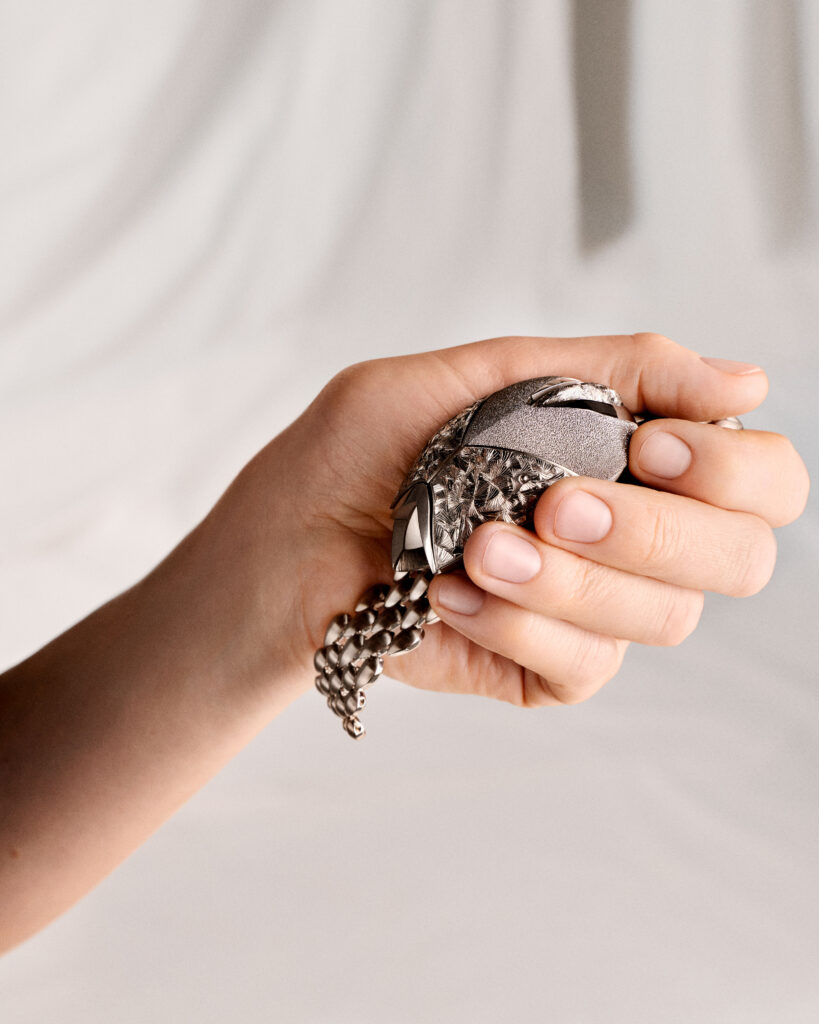
Of the three, Établisseurs Peacock is perhaps the most spectacular. At first glance, the engraved surfaces evoke the shapes and reflections of a precious insect, motionless, closed in on itself: it looks like a delicate white gold beetle, but with a simple gesture, which is actually a complex automaton developed by Giulio Papi, the wings and head open to reveal a miniaturized peacock and a translucent enamel dial with a window for the hour at noon.
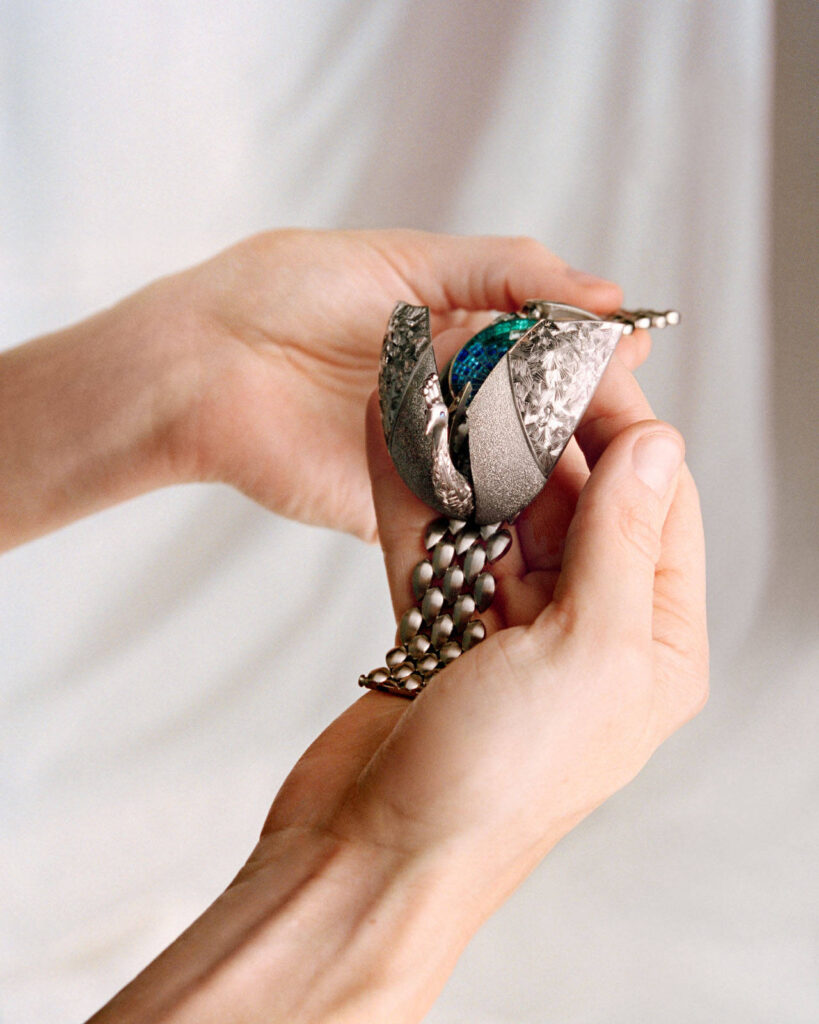
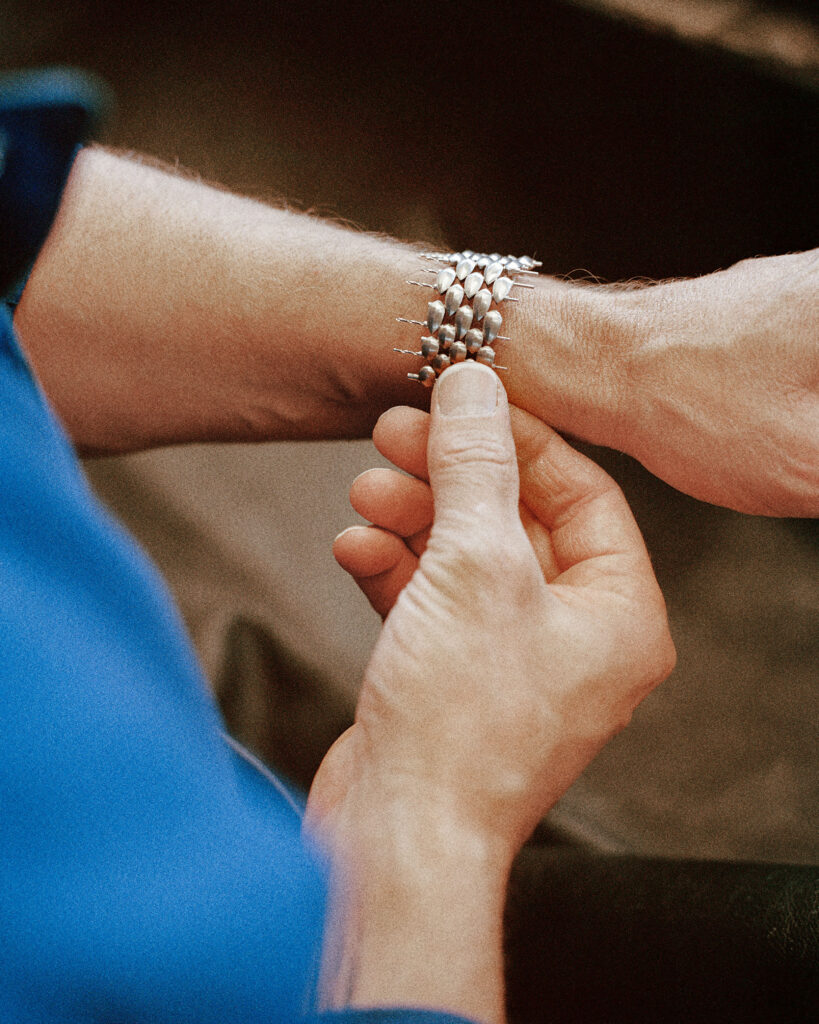
The bracelet continues this tale with a sequence of white gold links, shaped and engraved in the shape of feathers, light despite their complexity. To close, a double safety clasp system.
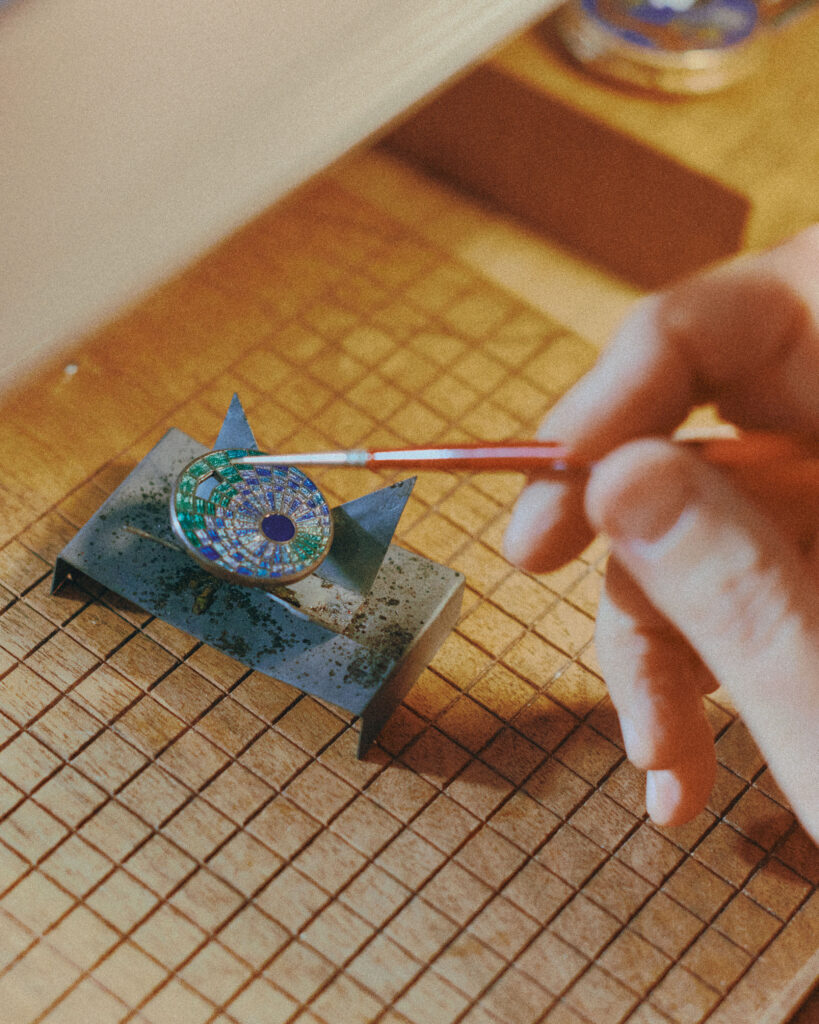
Gems set in the details of the peacock’s body add a subtle color vibe in shades of cobalt blue and petrol green.
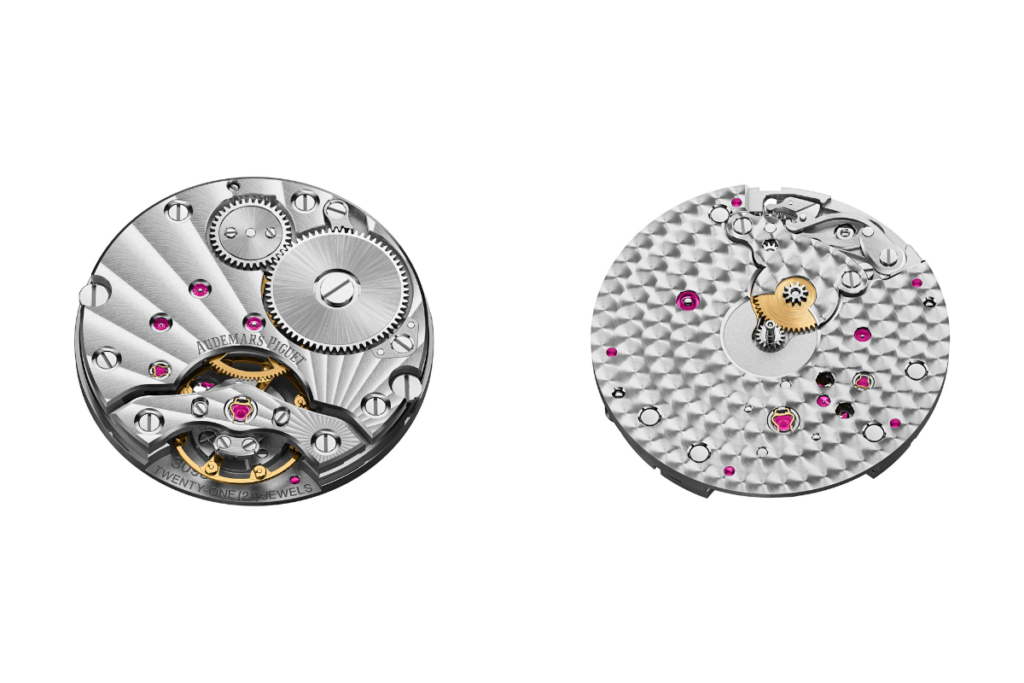
The Caliber 3098.2 movement, an evolution of the 3090, is specially adapted and hand-decorated with a soleil motif for the 17mm case. Three variants will be available in 2027, each a collaboration of watchmakers, jewelers, engravers, enamellers and designers, balancing technique and imagination.
Conclusions
With theAtelier des Établisseurs, Audemars Piguet offers three watches that are also a manifesto of craftsmanship and creative collaboration. Although very different from the novelties we have been accustomed to in recent years, these pieces more than break with the past dig deeper, recovering traditional knowledge and original techniques and mixing them together.
“L’Atelier des Établisseurs brings together the Manufacture’s craftsmen with a multitude of small independent workshops to create extraordinary timepieces, just as in the days of the établisseurs.” says Sébastian Vivas, Director of Museum and Heritage at Audemars Piguet. It is precisely in the combination of knowledge that the strength of these timepieces is played out. Engraving, enameling, skeletonizing, stonework, jewelry-making and contemporary engineering coexist without overlapping, dialoguing with each other and finding an internal balance in each individual piece.
Each watch thus becomes the meeting point between tradition and innovation, between technical precision and aesthetic wonder, but above all it restores to watchmaking its most authentic dimension: that of a collective construction, made up of widespread skills and gestures handed down over time.
Are you looking for the perfect gift? Explore our online store and discover the entire collection signed IWS – Italian Watch Spotter!
For all real-time updates on the world of watchmaking follow us on Instagram and visit our Youtube channel.