
When we talk about a minute repeater, we enter one of the most fascinating territories of haute horlogerie. A complication resulting from the perfect balance between mechanics, acoustics and human sensitivity. Each minute repeater has its own “voice,” and getting that voice to be clear, powerful and harmonious is a challenge that goes far beyond the design of a movement.
With the Minute Repeater Flying Bridges, Girard-Perregaux tackles this challenge from a very clear idea: to transform minute repetition into a completely new experience. Not just to be listened to, but to be observed as it comes to life.
The result is one of the manufacture’s most ambitious creations in recent years: a timepiece that combines flying tourbillon, minute repeater, and micro-rotor self-winding in a fully skeletonized stucture. The movement, the new caliber GP9530, took a full three years to develop and features 475 components (with 295 hand-polished angles).
Let’s see it in detail!
The complexity of the GP9530 caliber
In a minute repeater, sound performance is related to multiple factors (in addition to gong and hammer design), which is why Girard-Perregaux engineers chose to work on both the movement and the case.
One of the key elements is vibration transmission. The main plate is screwed directly to the case, creating a direct metal-to-metal contact that promotes sound propagation.
The case itself then becomes a true sounding board.
The arrangement of the components also follows this logic. The hammers and gongs are placed on the dial side so that the sound is not muffled by the wrist of the wearer of the watch. In contrast, the centrifugal governor, which is responsible for the rhythm of the chime, is placed on the back side to reduce any noise during the activation of the repeater.

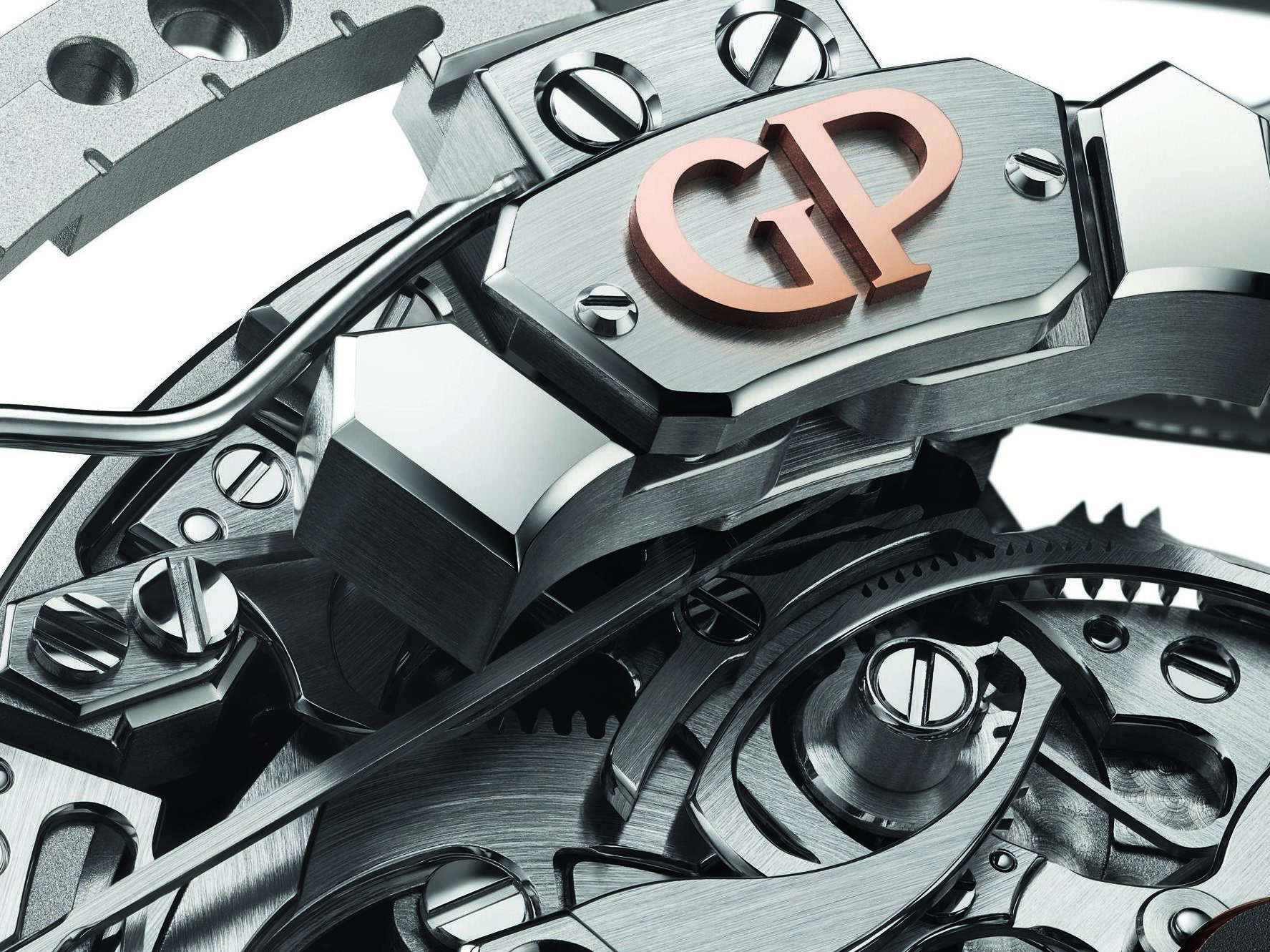
Detail of the hammers inside the GP9530 caliber | Credits: Girard-Perregaux
One particularly interesting detail concerns the construction of the gongs.
In many minute repeats the gongs are welded to a holder. Here, however, gongs and clamping block are machined from a single piece of hardened steel. This one-piece construction eliminates discontinuities in vibration transmission and improves the purity of sound.

Detail of the gongs inside the GP9530 caliber | Credits: Girard-Perregaux
It is a seemingly simple solution, but extremely difficult to implement.
The choice of titanium
The material of the plate and some of the bridges was also carefully chosen. In fact, Girard-Perregaux uses titanium, a light but very rigid metal.

Laying of the arrow-shaped bridge inside the GP9530 caliber | Credits: Girard-Perregaux
These features allow sound vibrations to be better transmitted through the movement and case. At the same time, the main bridges retain the house’s classic aesthetic: rose gold, sandblasted and then finished with polished surfaces that catch the light.
Automatic winding and micro-rotor
Another striking aspect of the GP9530 caliber is the automatic winding with white gold micro-rotor. The choice is by no means a foregone conclusion. Many minute repeats remain manual to reduce acoustic interference or complications.

Detail of the gongs inside the GP9530 caliber | Credits: Girard-Perregaux
Girard-Perregaux adopted a micro-rotor both to reduce the thickness of the movement and to preserve the visual aperture of the caliber. The rotor is then mounted on a ruby instead of ball bearings, a solution that greatly limits noise during oscillation.


Detail of the custom rotor inside the GP9530 caliber | Credits: Girard-Perregaux
A detail that shows how much each element has also been thought out with sound in mind.
The peculiar one-piece case
The 46-millimeter rose gold case with double sapphire crystal is much more complex than it appears at first glance.
Girard-Perregaux has developed an innovative system for operating the minute repeater. The special feature is that when the slide is in place, no visible opening remains on the side of the case.
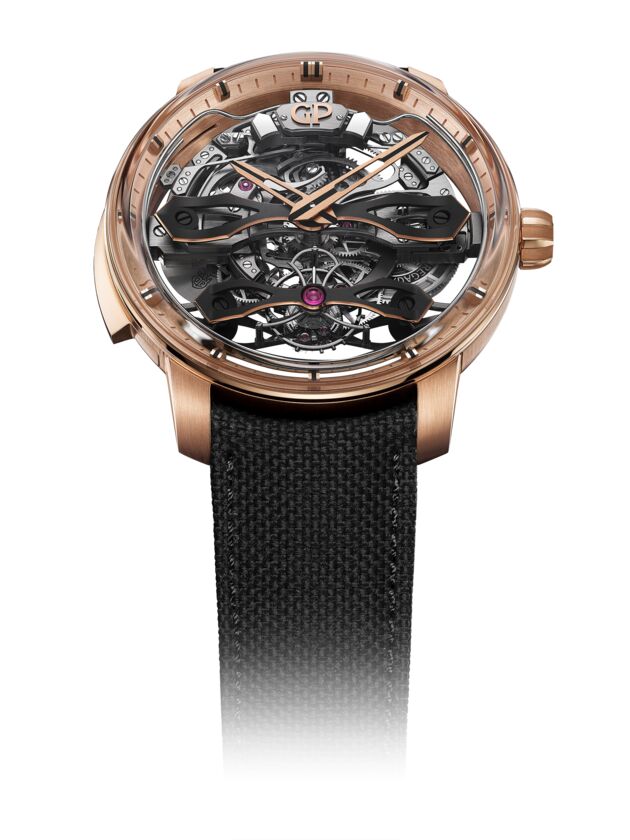

The case is also one-piece, a choice that improves water resistance. This is not a superficial detail as many minute repeaters offer no guarantee of water resistance while here the manufacture certifies 30 meters (3 ATM).
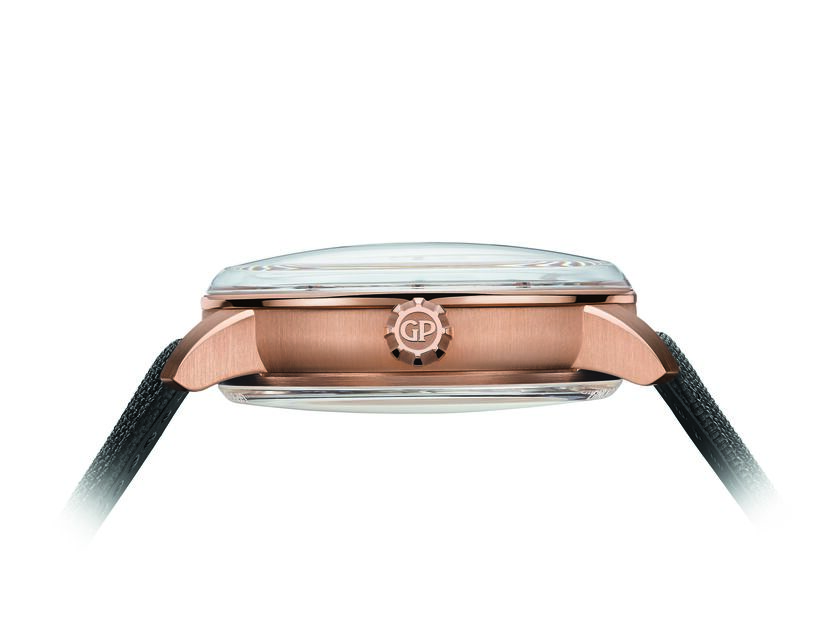
The one-piece construction also simplifies the work of the watchmaker. Some elements of the system can be pre-assembled externally and inserted into the case later, reducing assembly time and improving overall reliability.
Two hundred hours of assembly
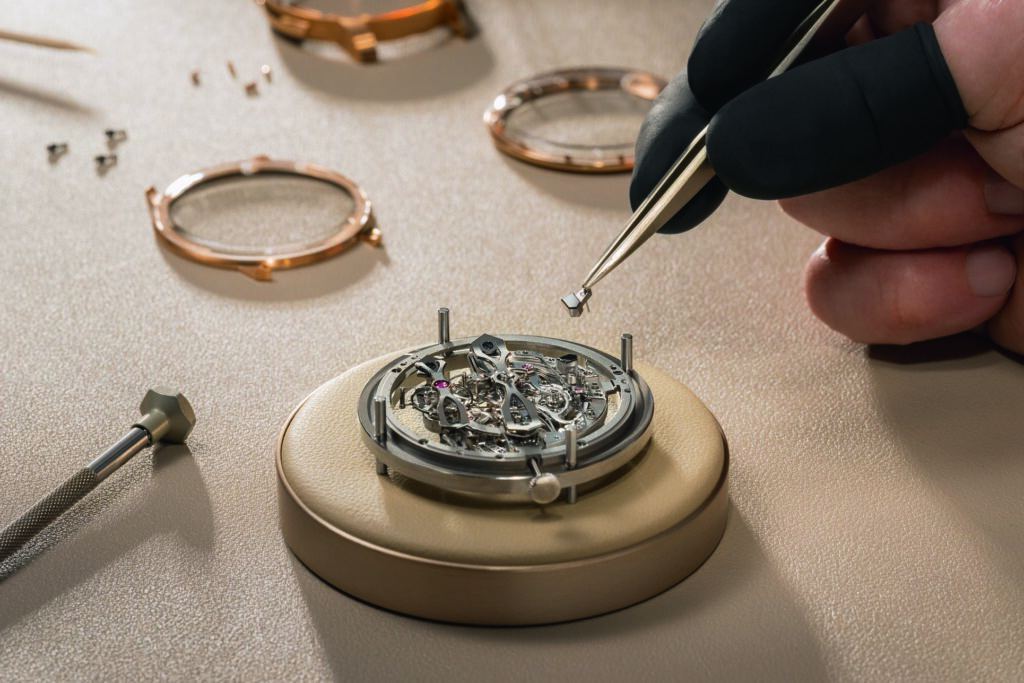
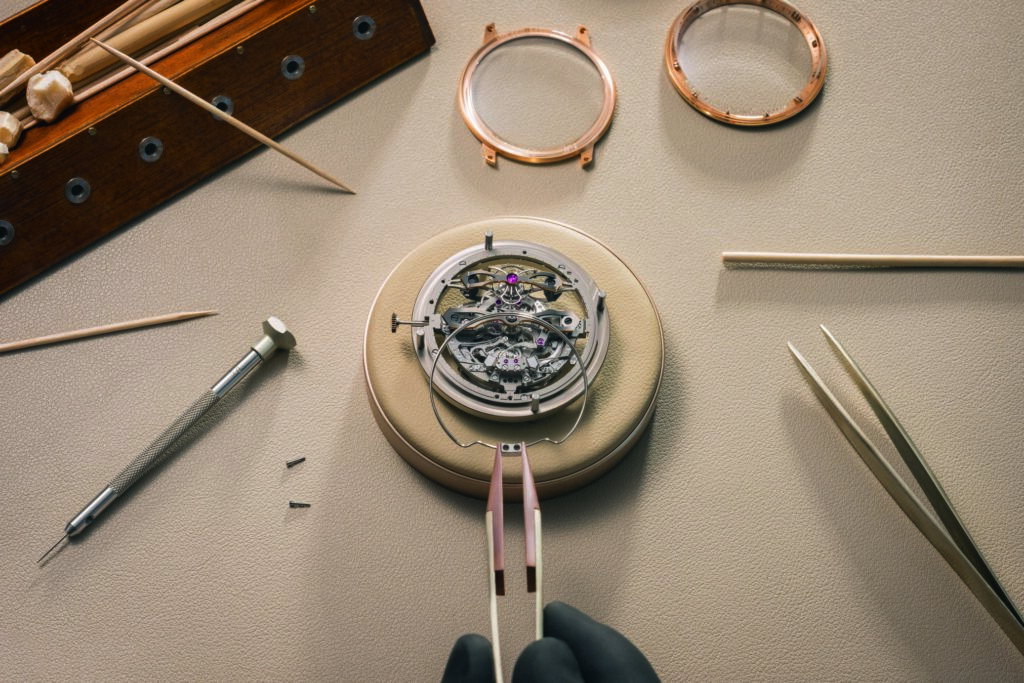
Assembling a minute repeater is never a linear process. In the case of the Flying Bridges Minute Repeater, it requires about 200 hours of work.
At the assembly stage, the watchmaker must literally tune the clock. The gongs are produced intentionally long as they are shortened and filed during tuning to achieve the ideal tone.
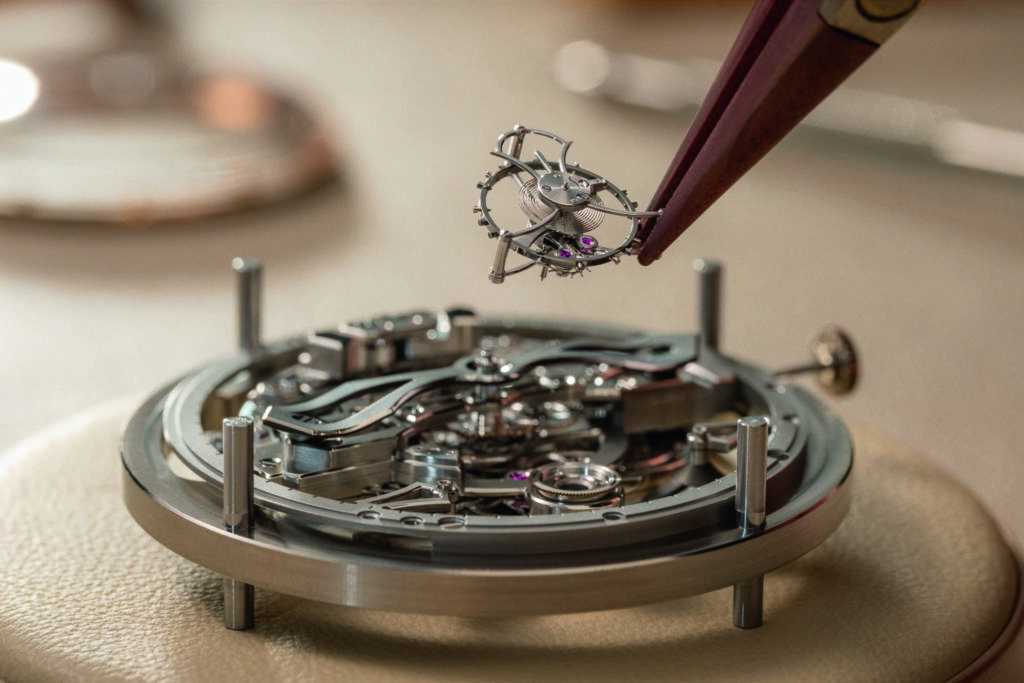
Detail of the lyre-shaped tourbillon cage in the GP9530 caliber | Credits: Girard-Perregaux
Once the first adjustment is completed, the movement is completely disassembled. All components are cleaned and checked before final assembly. In manufacturing, this process is called “double assembly.”
The invisible art of finishing
The skeletonization of the movement exposes every detail. Consequently, the level of finish must be impeccable.

Girard-Perregaux devotes about 240 hours to decorating the movement, with hand anglage work including 295 hand-polished inner corners.


Inner corners are one of the most striking marks of traditional haute horology. They are impossible to make with automatic machines and require hours of manual labor.
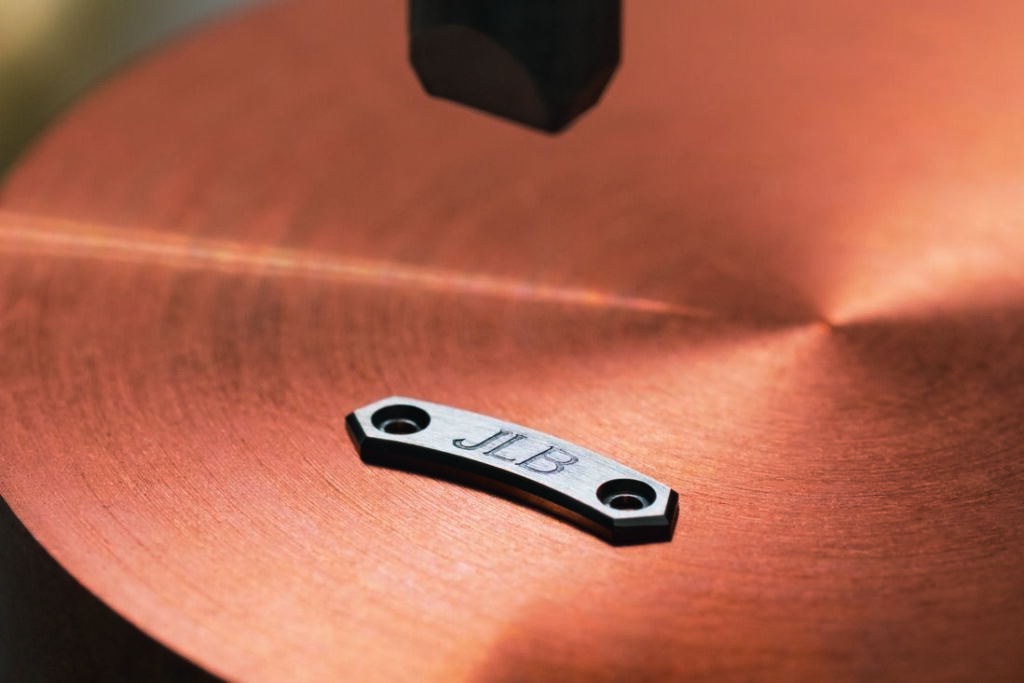
The watchmaker’s initials | Credits: Girard-Perregaux
When the movement is finally complete, the watchmaker who did the assembly engraves his or her initials on the caliber. A small gesture, but a significant one!
Conclusions
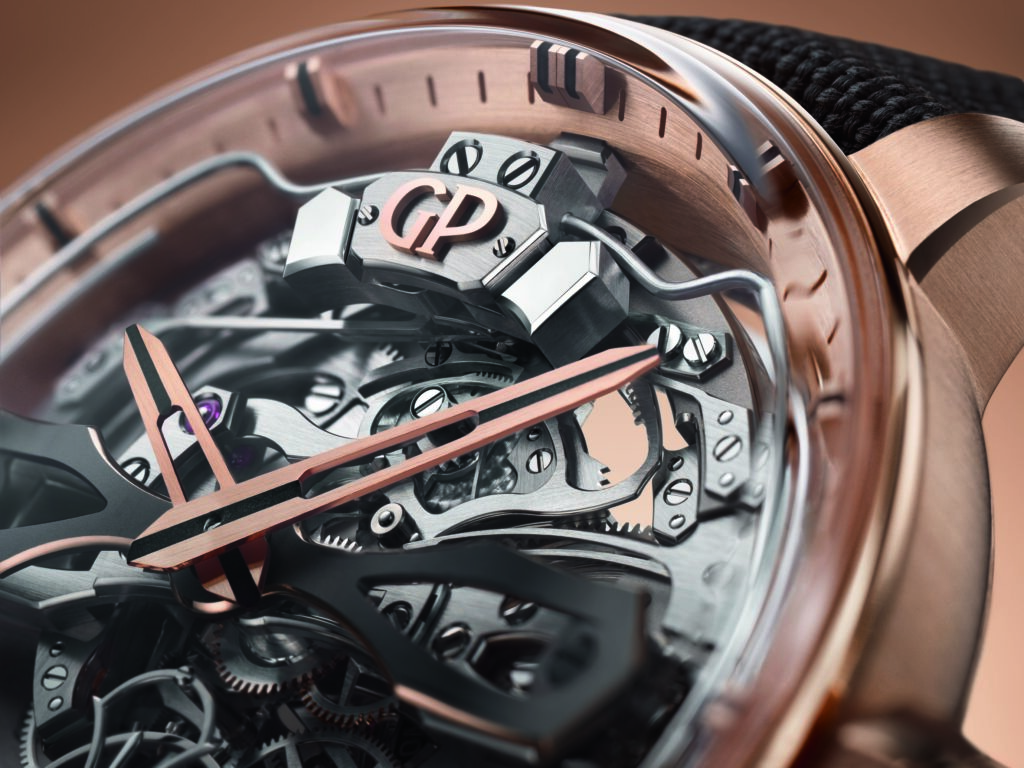
Aesthetically, the Minute Repeater Flying Bridges is an almost theatrical object. The lyre-shaped caged tourbillon rotates slowly at the bottom of the movement. Higher up, micro-rotor and barrel create a natural symmetry. Arrow bridges traverse space with surprising lightness.
When the minute repeater is activated, everything comes alive. The hammers begin to move, the gongs vibrate, the tourbillon continues its rotation. For a few seconds, the watch ceases to be an instrument for measuring time and becomes a small work of art.
With a target price of approximately 564,000 Swiss francs, the Minute Repeater Flying Bridges enters the most exclusive territory of contemporary watchmaking, alongside creations from manufactures such as Patek Philippe, Jaeger-LeCoultre, and Chopard.
However, its identity remains very specific. Girard-Perregaux does not try to hide the complexity of the mechanism behind a dial, it does just the opposite, it stages it.
And this is perhaps the most interesting aspect of this creation, a different and strikingly contemporary way of telling time.
Are you looking for the perfect gift? Explore our online store and discover the entire collection signed IWS – Italian Watch Spotter!
For all real-time updates on the world of watchmaking follow us on Instagram and visit our Youtube channel.