
Who says that only watches have a story to tell? Well, there are components that, although not the watch itself, have been able to build a legendary aura for themselves, and this bracelet undoubtedly belongs to this category.
If you are a true vintage aficionado, the title should already get you excited and therefore, you can’t not know about JB Champion. If, on the other hand, you are a neophyte to this wonderful world, then sit back, take your time and enjoy this incredible story of innovation and technique.
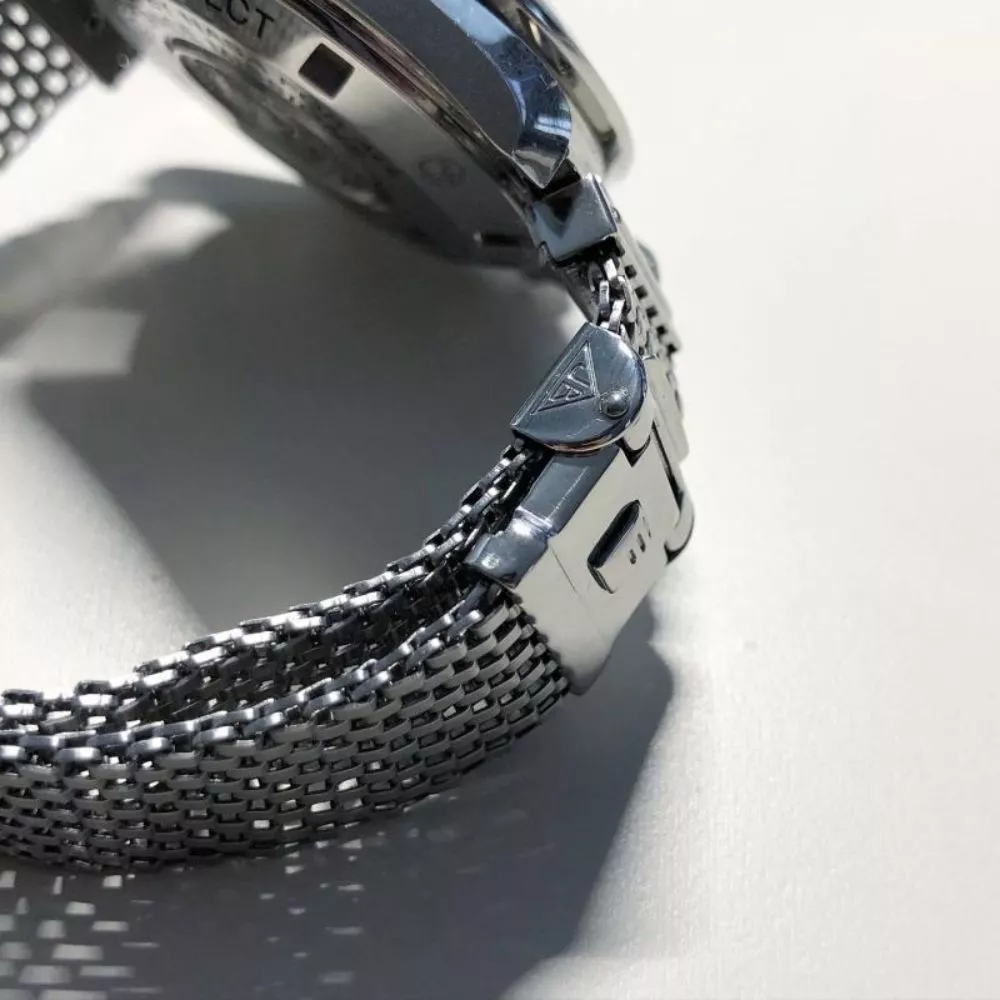
This innovative bracelet, which originated in the United States at the height of the postwar industrial boom, has managed to transform from a simple functional accessory to a cult object for collectors, tool watch enthusiasts, and unabashed historians of space exploration.
The origins of the JB Champion bracelet
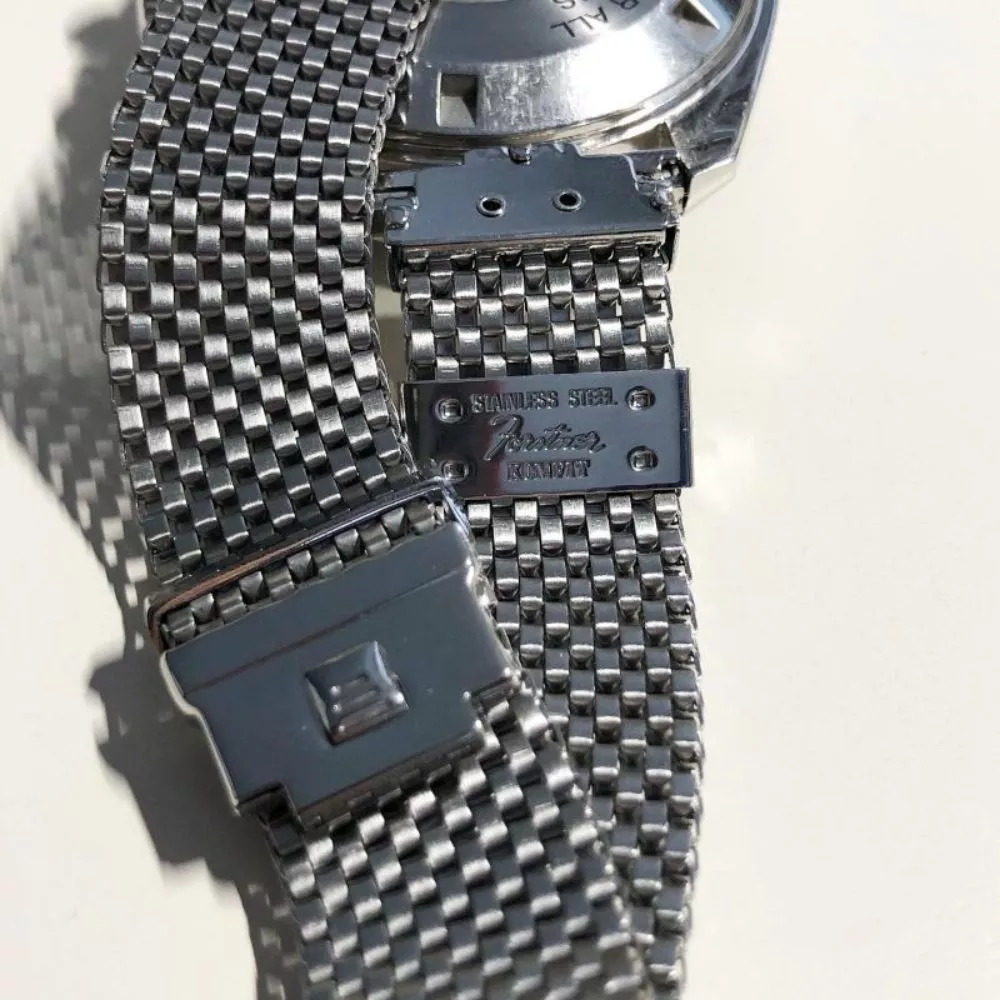
To really understand the history of JB Champion, however, it is necessary to go back even further, to the 1920s, when William Forstner founded the Forstner Chain Corporation in New Jersey. The company initially began as a manufacturer of ornamental jewelry and metal chains, but soon turned its business toward the world of watch accessories: bracelets, straps, pocket chains and innovative fastening systems.

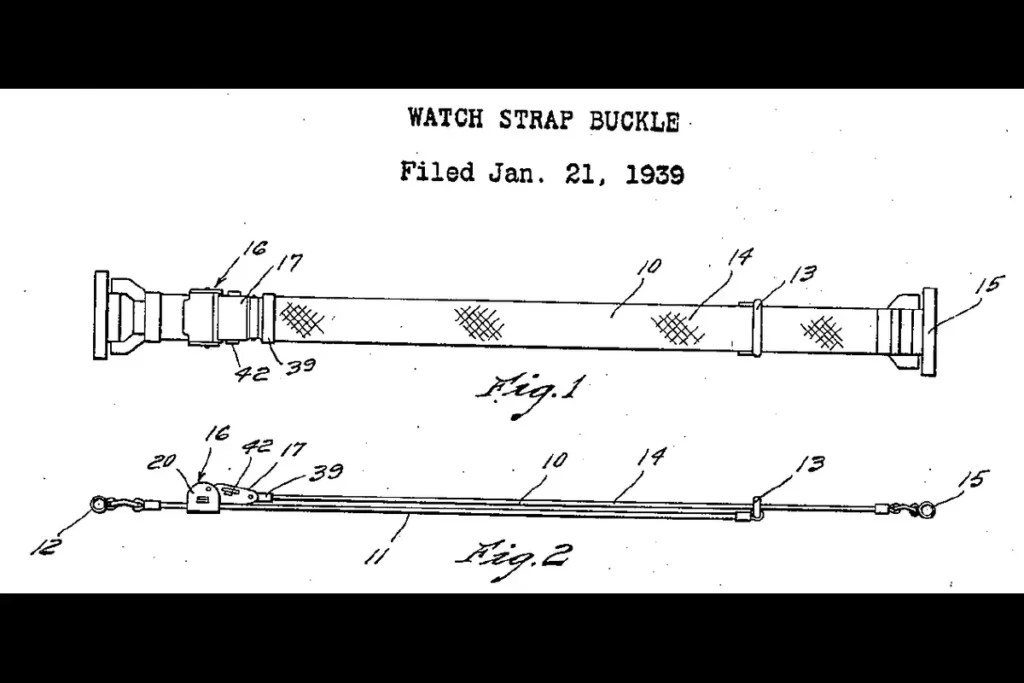
The real breakthrough came in 1939, when Forstner developed a revolutionary system destined to change the concept of the technical bracelet forever. Through a series of patents filed in the U.S.-including numbers 2,213,096 and 2,229,677-the company introduced an expandable bracelet featuring an adjustable micro-extension design and an extremely practical quick release system. The idea was as simple as it was ingenious: allow the buckle and clasp to slide along the bracelet for precise and immediate adjustment, without tools.
Thus was born the famous “Komfit,” a name chosen to emphasize the exceptional comfort the system provided for the wrist. Even today the technical principle behind the Komfit is considered surprisingly modern. In fact, the ability to make millimeter adjustments made these bracelets far more ergonomic than most of the alternatives available at the time.
Then, in 1963, the industrial legacy passed to Jacoby-Bender (the acronym “JB” is derived from this very name), which became one of the leading aftermarket suppliers in the U.S. market, offering solutions that were sturdy, inexpensive, and above all practical. At a time in history when many watches were sold with rather plain leather straps, the ability to personalize one’s timepiece with a quality metal bracelet was an important added value.
When the JB Champion arrived at NASA.
During the heroic era of the space race, NASA began testing various accessories to improve astronauts’ use of watches. Omega‘s Speedmasters, chronographs and onboard instruments had to be perfectly legible and easily accessible even outside the space capsules. It was in this context that some astronauts adopted JB Champion bracelets.

Yes, because technically it was an expandable metal mesh elastic bracelet designed to be lightweight, easily adjustable and safe in extreme conditions. In fact, its design allowed the watch to be worn over gloves or technical suits without compromising comfort. For this reason that model-legend is what is commonly referred to today as the “NASA bracelet.”
Following in the footsteps of the NATO strap, which passed from U.S. Army wrists to civilian wrists, the JB Champion embodied a deeply American philosophy: functionality, comfort, and durability in the service of the user. They were designed to accompany the owner in daily life, but also in demanding professional settings. Workers, pilots, technicians, military personnel and athletes found in JB Champion products a reliable ally in every daily challenge.

If you have sometimes paid attention to archival images, they clearly show several members of the Apollo program wearing chronographs attached to these particular expandable bracelets. Although the bracelet was not officially part of standardized NASA equipment as was the watch itself, its presence on the missions contributed greatly to the brand’s fame. In fact, even today, for many collectors, the JB Champion represents one of the most authentic symbols of the 1960s space aesthetic.
Idubitably, the bracelet’s contemporary popularity is also due to its highly recognizable design. The woven mesh and elastic construction immediately convey a technical and industrial vintage flavor. This is not a luxurious object in the traditional sense of the word; rather, its appeal comes from its design sincerity. Each element is created to solve a practical problem.

Ergonomically, the JB Champion was surprisingly advanced for its time. The ability to adapt to the wrist without the need for complex micro-adjustments made it especially popular in operational environments. In addition, the even distribution of tension ensured a very comfortable fit even during long days of use.
Why the JB Champion is still sought after today
As the decades passed, original JB Champion production gradually decreased. The evolution of the watchmaking market and the arrival of new production standards led many brands to develop their bracelets in-house. However, just as the product disappeared from the mainstream market, the interest of vintage collectors began to grow.
In the 2000s, the rediscovery of tool watches and “space age” aesthetics brought the JB Champion back into the spotlight. Collectors of Omega Speedmaster, Bulova Accutron, Hamilton, and military chronographs began looking for original Apollo-era examples. This increase in demand caused the prices to rise rapidly.
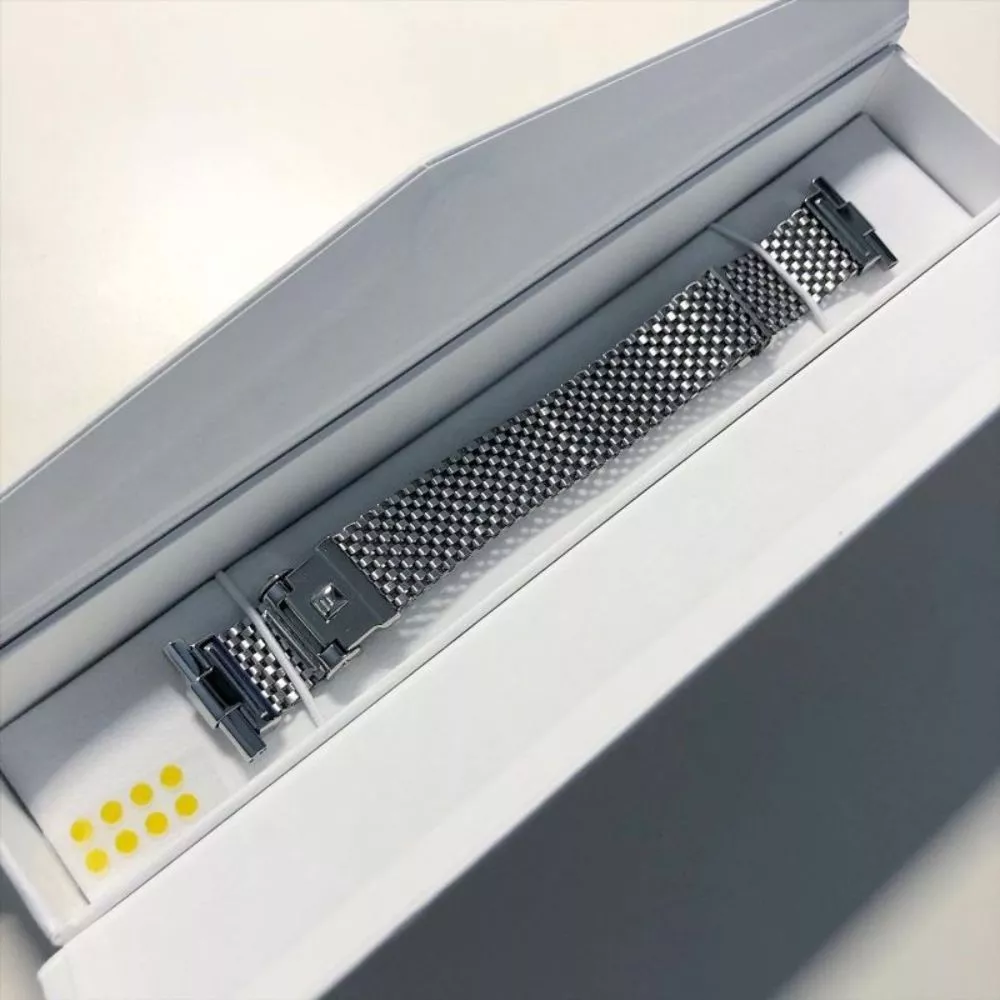
The modern reissue of the JB Champion produced by Forstner
Today an original JB Champion in good condition can fetch significant sums, especially if accompanied by documentation or historical compatibility with models used in aerospace. Some particularly rare specimens have become true collector’s items, hammered out in specialized auctions and sought after by militaria and space memorabilia enthusiasts.
Interestingly, the cultural value of the bracelet has now surpassed its mere practical function. To wear a JB Champion is to evoke a specific period in twentieth-century history: American technological optimism, the space race, functional industrial design, and the era when mechanical instruments represented the height of innovation.
Our thoughts
In short, many contemporary brands have attempted to reinterpret its design through more or less faithful reissues and homages. Forstner itself continues to produce reissues, and yet, the original examples retain a charm that is difficult to replicate. The slight imperfections in the workmanship, the patina of the metal, and the particular elasticity of the links tell an authentic story that no modern reproduction can really imitate. How about you, did you know it?
Are you looking for the perfect gift? Explore our online store and discover the entire collection signed IWS – Italian Watch Spotter!
For all real-time updates on the world of watchmaking follow us on Instagram and visit our Youtube channel.