
It took just twenty years for the Longines Master Collection to become one of the most recognizable signatures of the Saint-Imier-based Maison. Introduced in 2005, the collection has defined its own vision of classicism over the years: mechanical movements, traditional complications, finely crafted dials, and those characteristic Arabic numerals that define its identity, a lineage that traces back to the 1928 Longines Weems Second-Setting Watch.
In 2026, Longines radically reimagined the collection’s design language. The cases, bezels, dials, hands, and bracelets were redesigned in terms of both shape and finish; the “time-only” models were offered in diameters of 30, 34, 39, and 41 mm; the Chrono Moonphase was given a new look. The most significant innovation was reserved for the Chrono Monopusher, a complication previously unseen in the Master Collection and, at the same time, deeply rooted in the history of Saint-Imier.
Longines was already producing single-button wrist chronographs as early as 1911, when this type of watch was still in its infancy. Two years later, the 13.33Z would be introduced, one of the most significant calibers in the brand’s chronograph history and an early example of the gradual miniaturization of movements designed for wristwatches.
More than a century later, that tradition is making its debut in the Master Collection. A long-awaited moment, one might say, considering just how profoundly the chronograph has shaped the history of Longines.
Longines Master Collection Chrono Monopusher
The new Master Collection Chrono Monopusher debuts in the L2.960.4.78.2 and L2.960.4.93.2 models, both in stainless steel.
The case measures 41 mm in diameter and 12.60 mm in thickness, with a lug-to-lug length of 48.60 mm and 21 mm lugs. Contemporary proportions, made to appear more balanced by the collection’s new profile and the concave bezel, which creates a smoother transition from the case middle to the dial and reduces the perceived volume of the case.
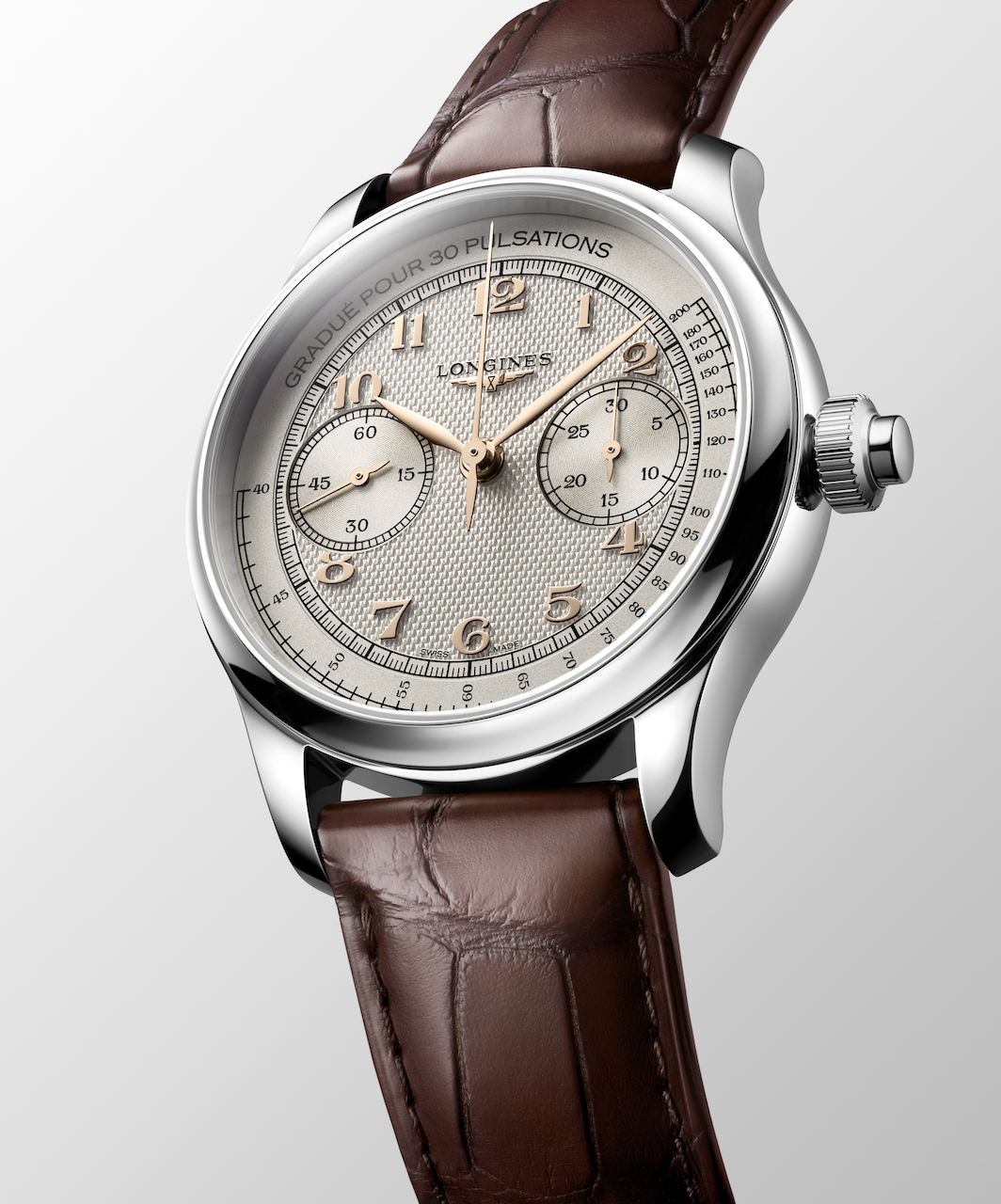
The sapphire crystal features a multi-layer anti-reflective coating on both sides; a second sapphire crystal covers the screw-down case back, leaving the movement fully visible. The watch is water-resistant to 3 bar, equivalent to 30 meters.
Viewed from the side, the Monopusher immediately reveals its unique feature. The two traditional chronograph pushers on the right side of the case are gone: start, stop, and reset are combined into a single button coaxial with the crown.
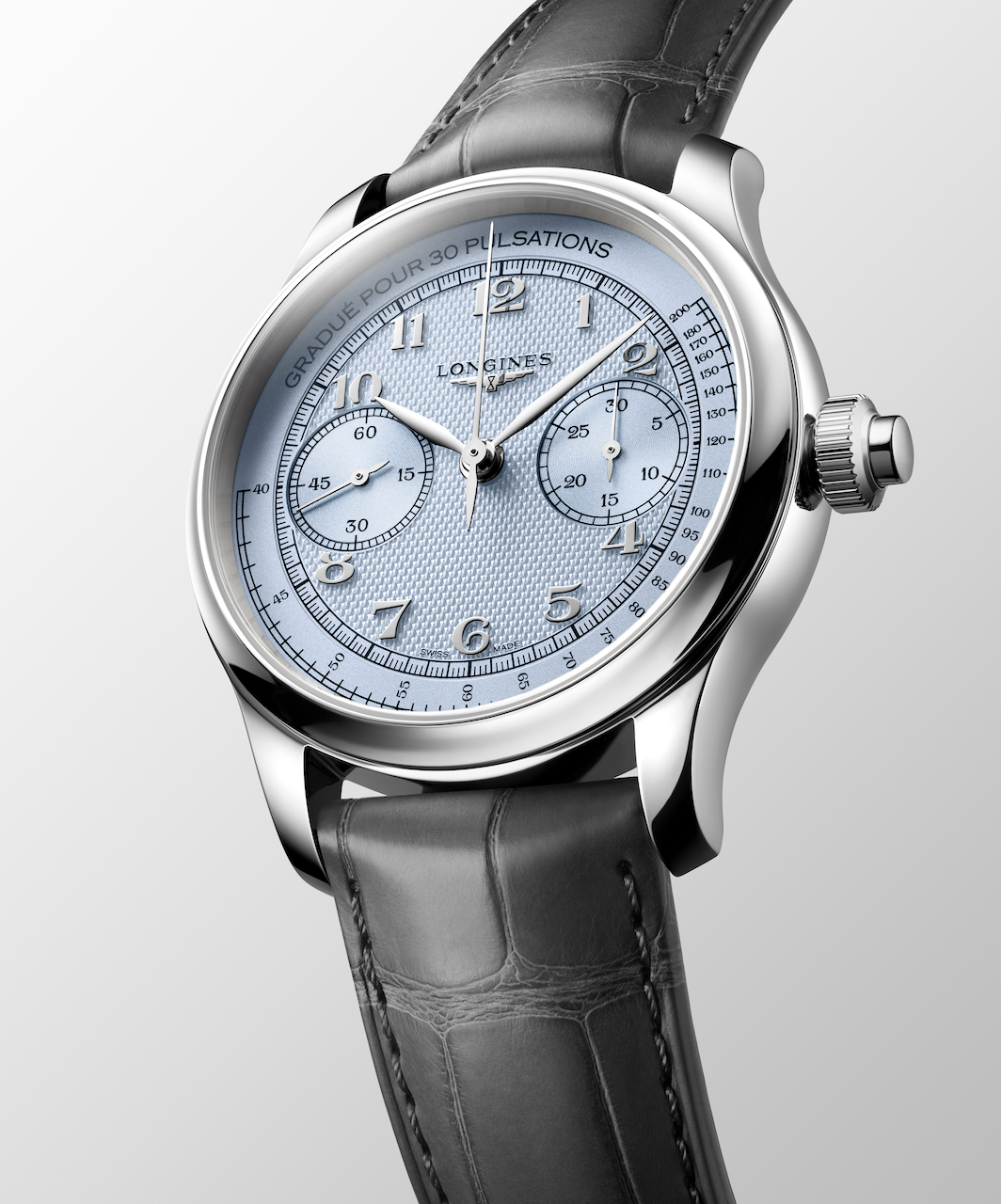
Three successive presses control the entire chronograph cycle. This design keeps the side of the case exceptionally clean and recreates the distinctive operation of the single-button chronograph, where every function is activated from the same contact point.
Anyone familiar with this type of watch knows that part of its appeal lies precisely in the way it operates. The travel of the push-button, the resistance under the finger, the click that accompanies each function: subtle, silent rituals that are almost impossible to capture in a photograph.
The dial in detail
The L2.960.4.78.2 model features a silver opaline dial with a grain d’orge pattern, applied Arabic numerals, and 5N rose gold-colored accents, paired with a brown alligator strap with an Oxford finish.
The L2.960.4.93.2 features the same design in ice blue, with polished rhodium-plated elements and an anthracite alligator strap. The hands and indices match the respective color schemes.
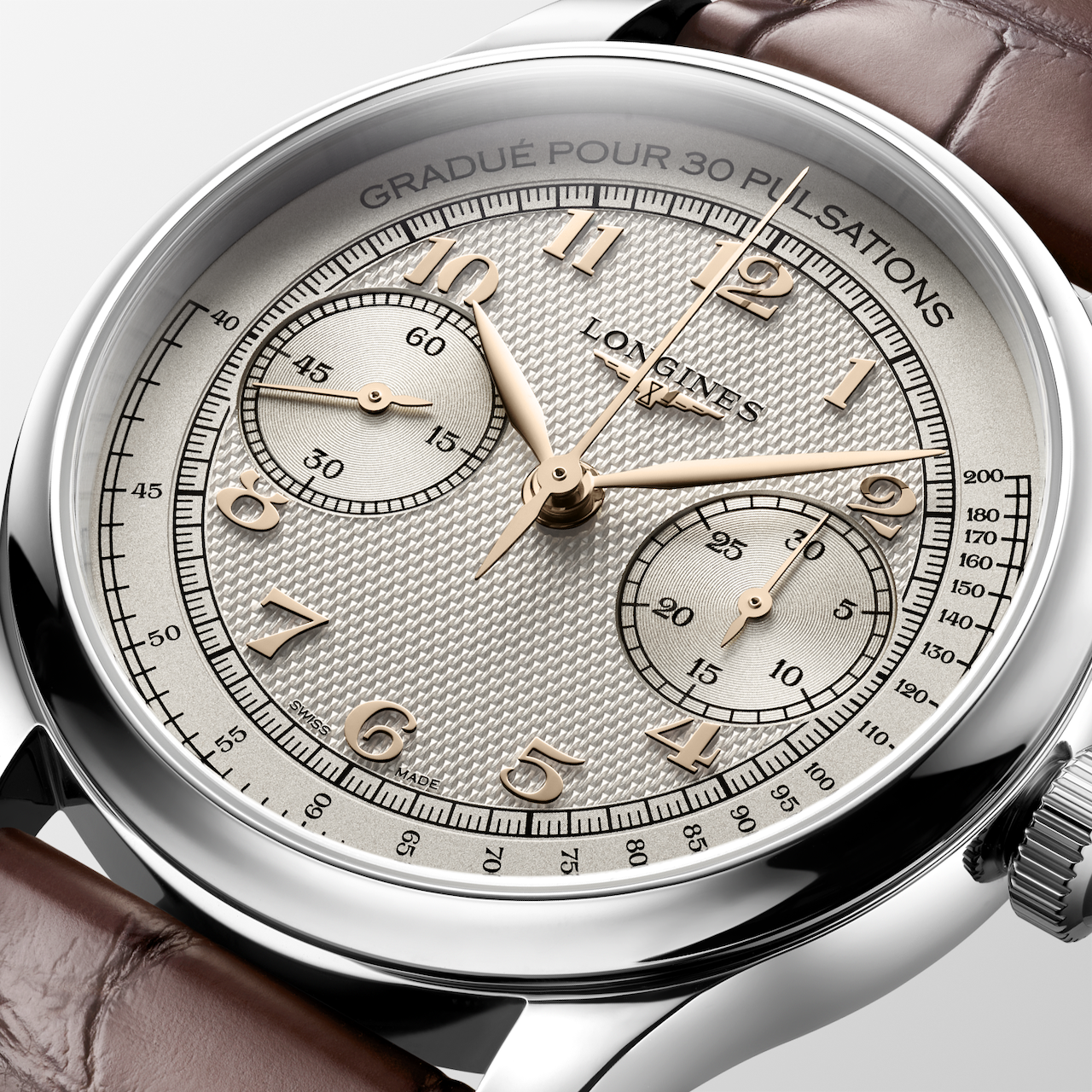
The bicompax layout places the small seconds at the 9 o’clock position and the 30-minute chronograph counter at the 3 o’clock position, while the central hand measures the chronograph seconds. Ten applied Arabic numerals frame the dial, and along the outer edge is a pulsometer scale graduated to 30 beats.
Heart rate scales belong to the most strictly instrumental era of chronography. Before the widespread use of electronic devices, they allowed doctors and nurses to quickly measure heart rate: the chronograph was started at the first beat and stopped at the thirtieth, with the corresponding value in beats per minute read directly from the scale.
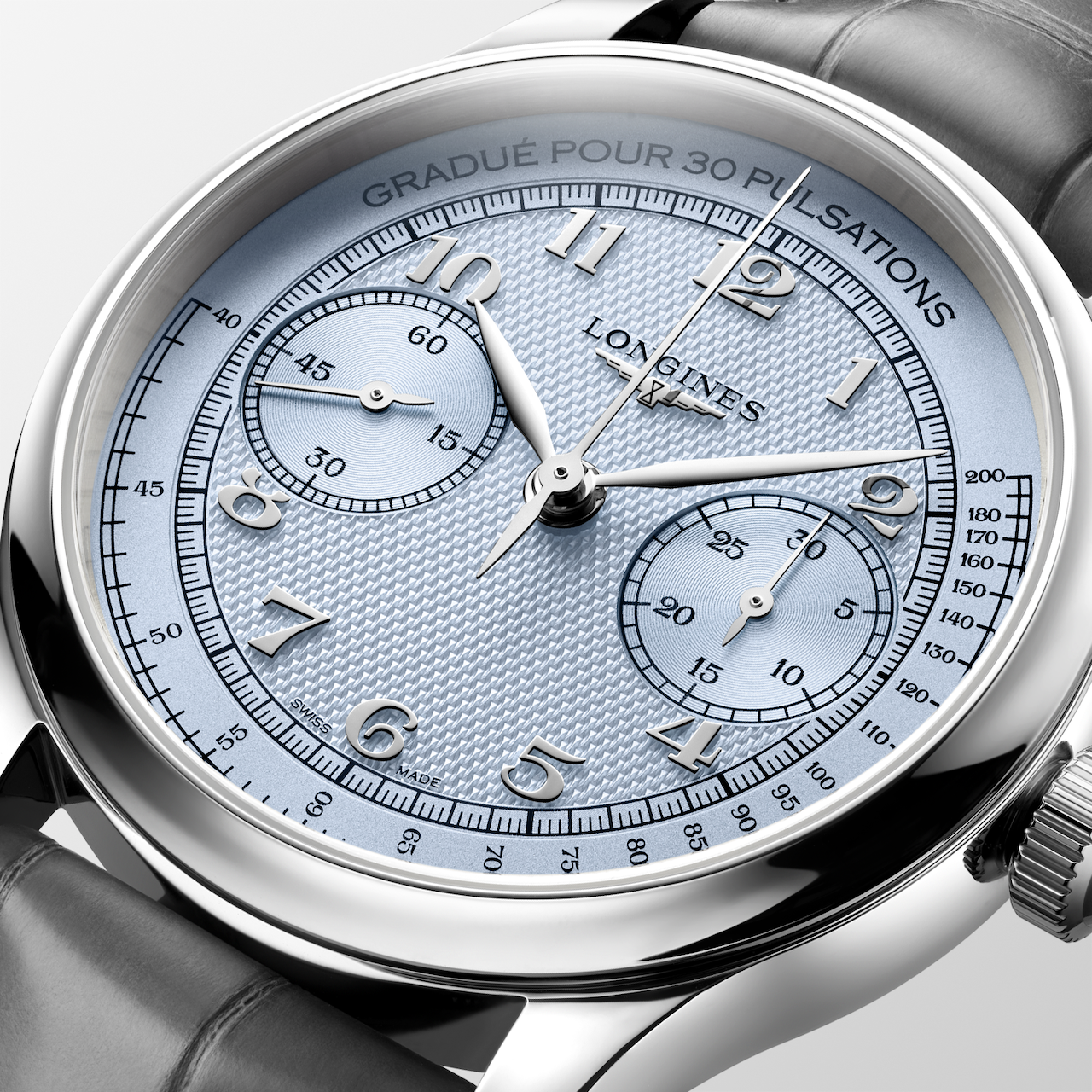
The function has inevitably lost its original purpose. Its significance in watchmaking, however, remains intact. The single-push-button chronograph and the pulsometer share the same functional origins, when scales and counters were created to meet specific professional needs and the chronograph was, above all, a measuring instrument.
Of the two models, the silver-tone version conveys this heritage with particular ease. The barley grain pattern enlivens the surface without weighing it down; the bicompax keeps the center of the dial airy; and the rose gold accents introduce the warmth needed to bring a design with an instrumental origin into the elegance of the Master Collection.
The new Longines L799.5 caliber
Through the sapphire crystal case back, one can see the Longines L799.5, developed exclusively for the brand and featuring a column wheel and a silicon balance spring.
It measures 13 lines and ¼, contains 23 jewels, operates at 28,800 vibrations per hour (4 Hz), and offers up to 68 hours of power reserve.
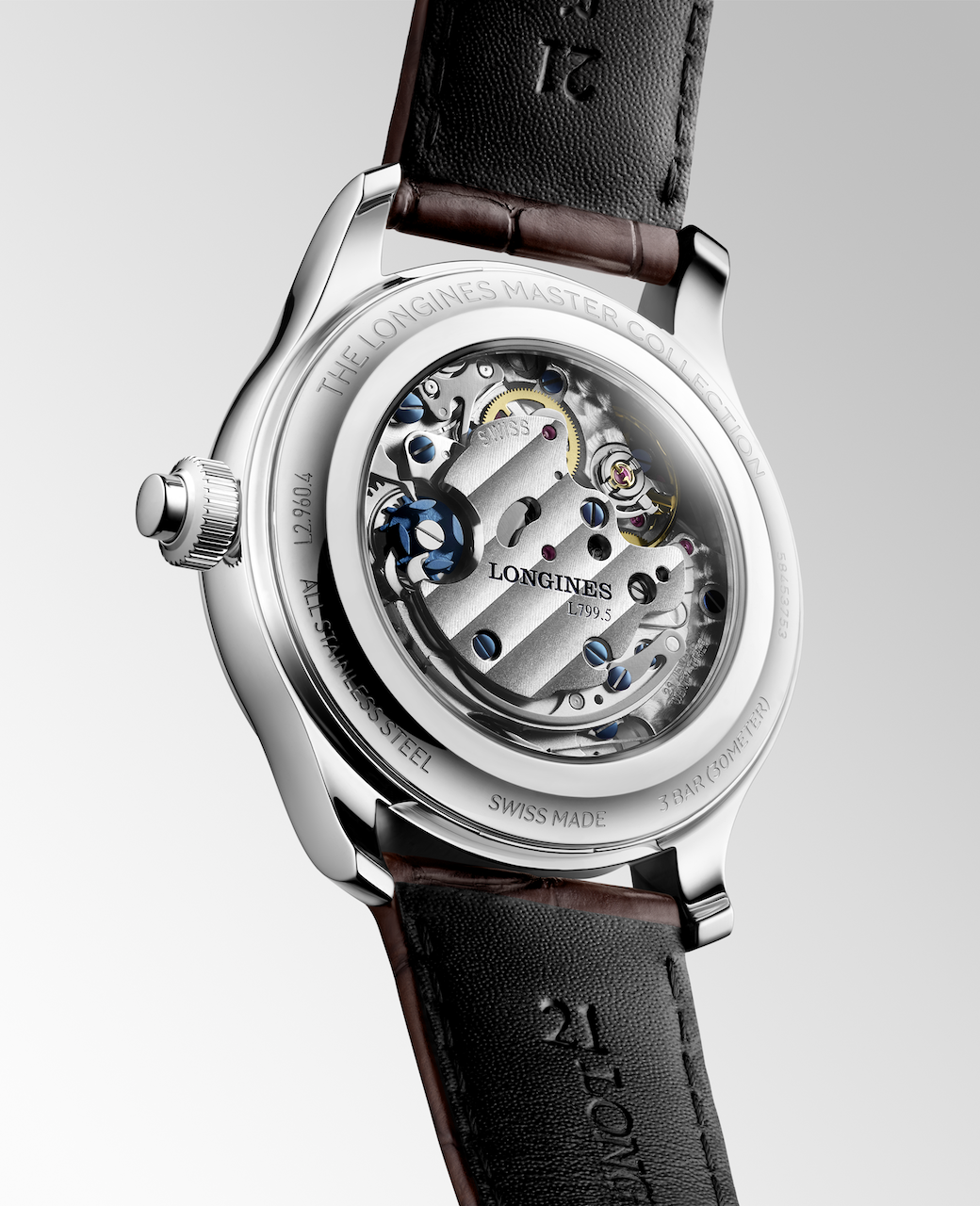
The column wheel plays a particularly important role in a single-push button chronograph, where start, stop, and reset must be performed sequentially using the same control. It is responsible for coordinating the sequence of functions, in accordance with a design deeply rooted in the finest chronograph tradition.
For chronograph enthusiasts, of course, the story doesn’t end with the presence of the column wheel. The travel, resistance, and crispness of the pushpiece are an integral part of the experience and convey the quality of the mechanism with a directness that no technical specification can replace.
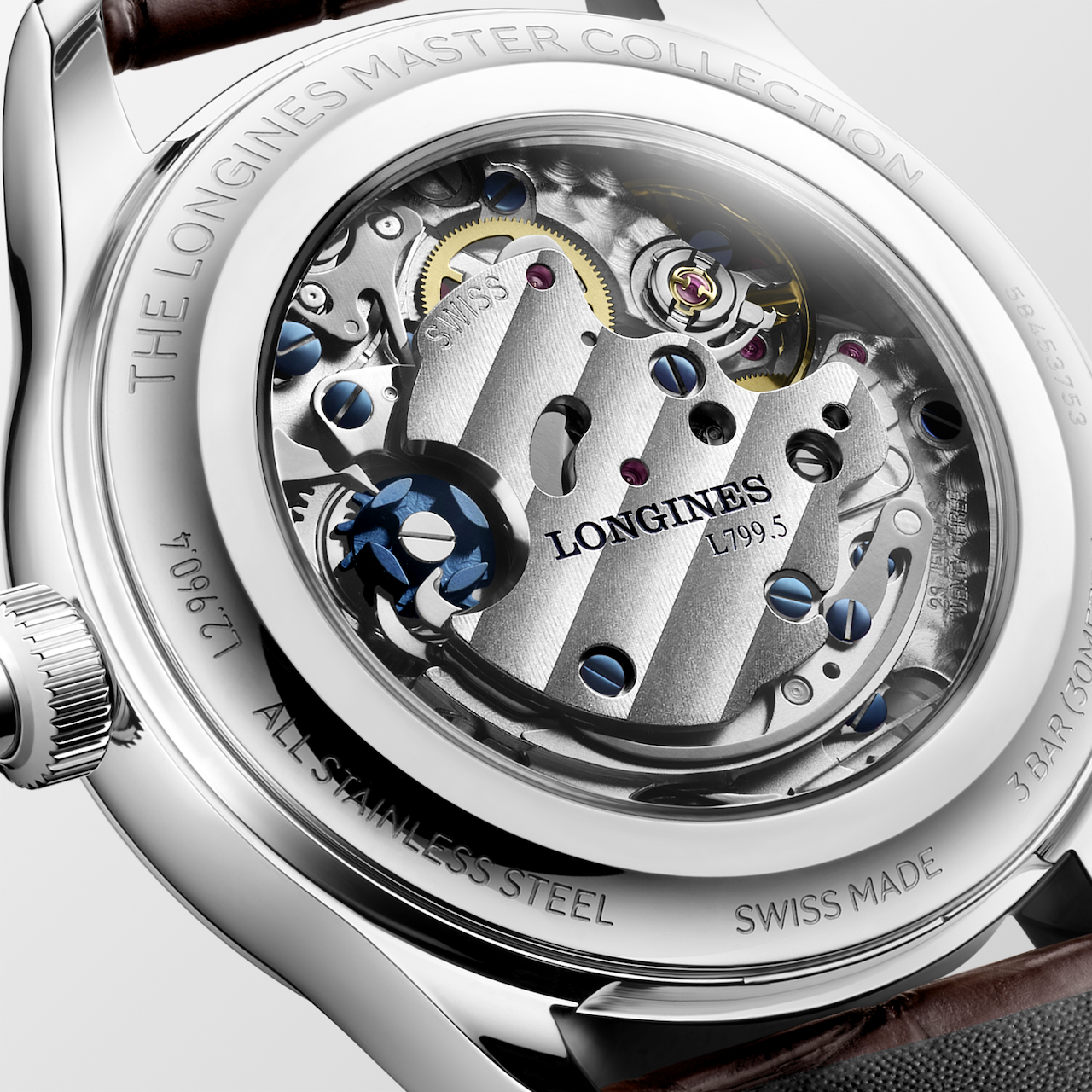
The transparent case back also reveals the new L799.5 in its entirety, a choice that is particularly fitting for a watch in which the chronograph mechanism is much more than just an additional feature.
Both models come with alligator leather straps featuring a folding clasp, a triple safety mechanism, push-button release, and micro-adjustment.
When Longines Was Making Chronograph History
The Monopusher takes on a whole new depth when viewed in the context of Saint-Imier’s history.
As early as 1911, Longines was already producing one of its first single-push-button wrist chronographs, during the pivotal years of the transition from pocket watches to wristwatches. In 1913, the 13.33Z was introduced; recognized by the Maison as the world’s first compact chronograph movement, it was destined, through subsequent developments, to cement Longines’ expertise in measuring short intervals, a hallmark of the brand throughout much of the 20th century.
That expertise would soon find applications far beyond sports timing. Aviation, navigation, and exploration required reliable instruments in an era when accurately measuring time could have far more tangible consequences than those we associate today with a chronograph complication.
The names of Amelia Earhart and Richard Byrd are associated with that pioneering era and the long-standing relationship between Longines, aviation, and the great expeditions of the early 20th century.
Given such a rich heritage, the new Monopusher could easily have become a reissue. Longines chose instead to retain only the essential design elements.
A single push-piece, bicompax layout, and pulsometer scale pay homage to the Maison’s historic chronographs. The proportions, finishes, dial design, and movement are fully in keeping with the contemporary Master Collection.
Longines Master Collection Chrono Moonphase
Alongside the Monopusher is the Chrono Moonphase, which has long been one of the most complex and recognizable models in the Master Collection.
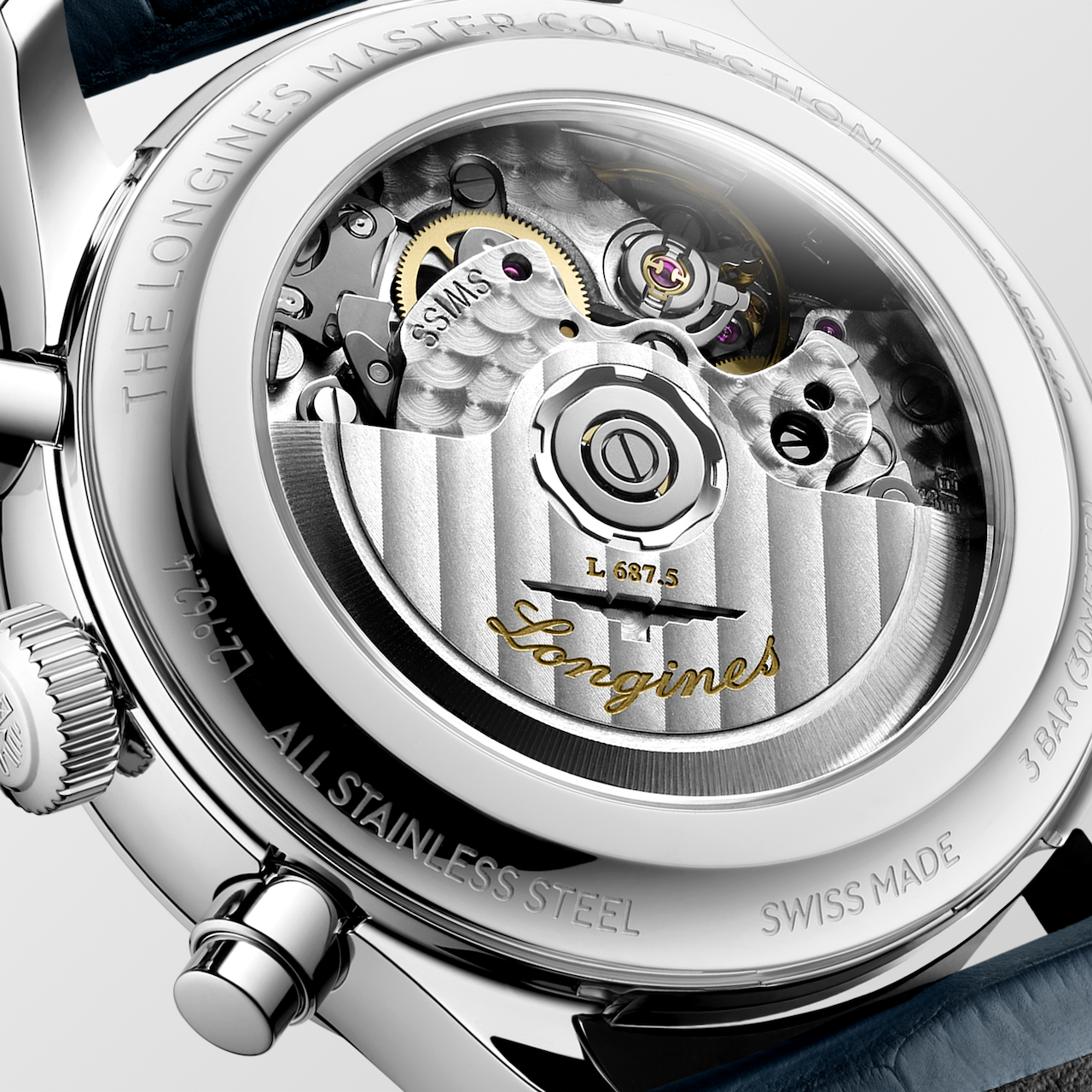
The L2.962.4.73.2 and L2.962.4.73.6 models share a 41 mm stainless steel case, 13.80 mm thick, with a lug-to-lug measurement of 48.60 mm and 21-mm lugs. The sapphire crystal features a multi-layer anti-reflective coating on both sides; the crown is embossed with the Longines winged hourglass, and the transparent screw-down case back reveals the movement. The watch is water-resistant to 3 bar.
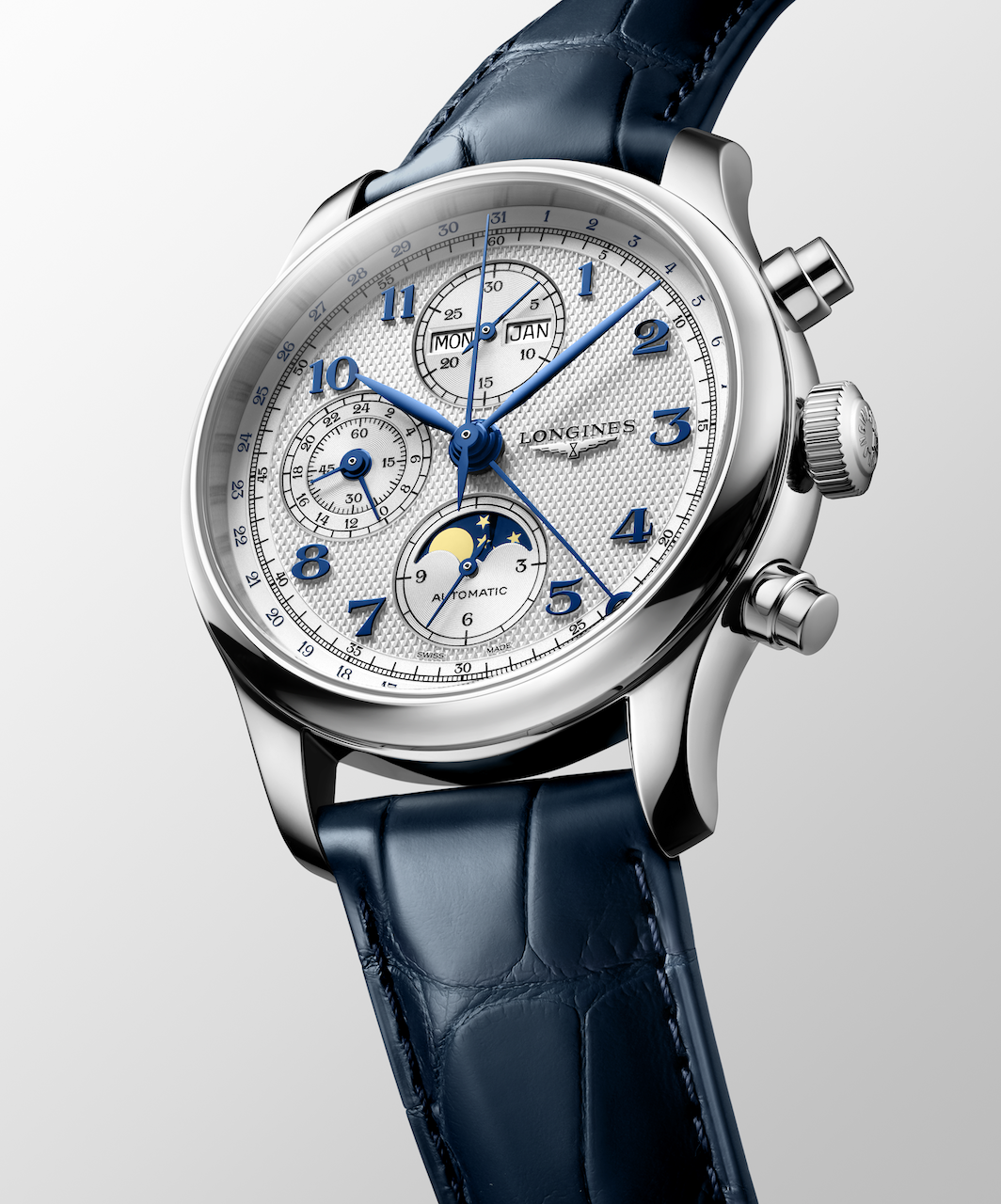
Inside is the Longines L687.5, an automatic caliber featuring a column wheel, a silicon balance spring, 27 jewels, and a frequency of 28,800 vibrations per hour. The power reserve is 66 hours.
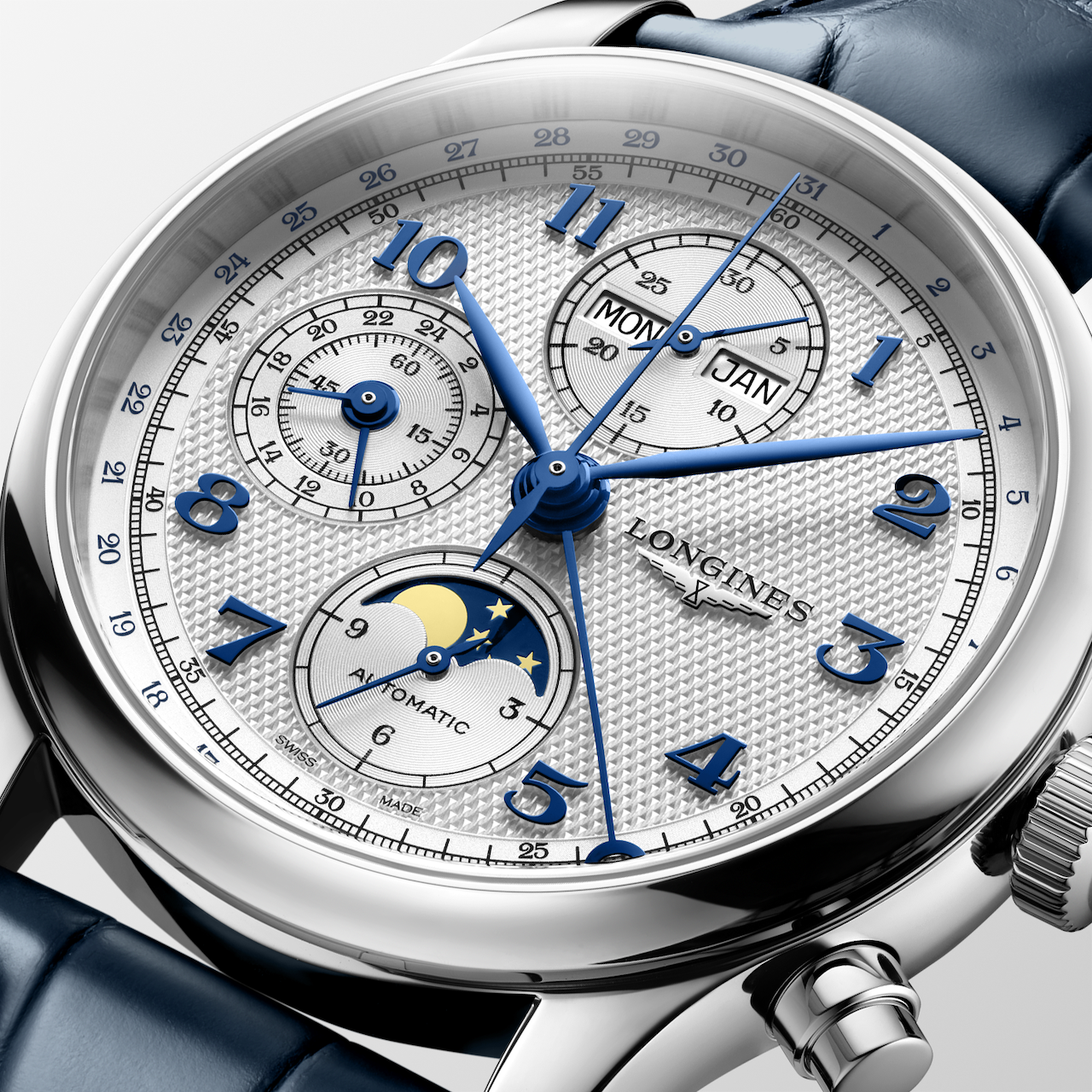
The dial retains the wealth of information that has long been a defining feature of the Chrono Moonphase. The chronograph, calendar, and moon phases are arranged in a layout familiar to fans of the model.
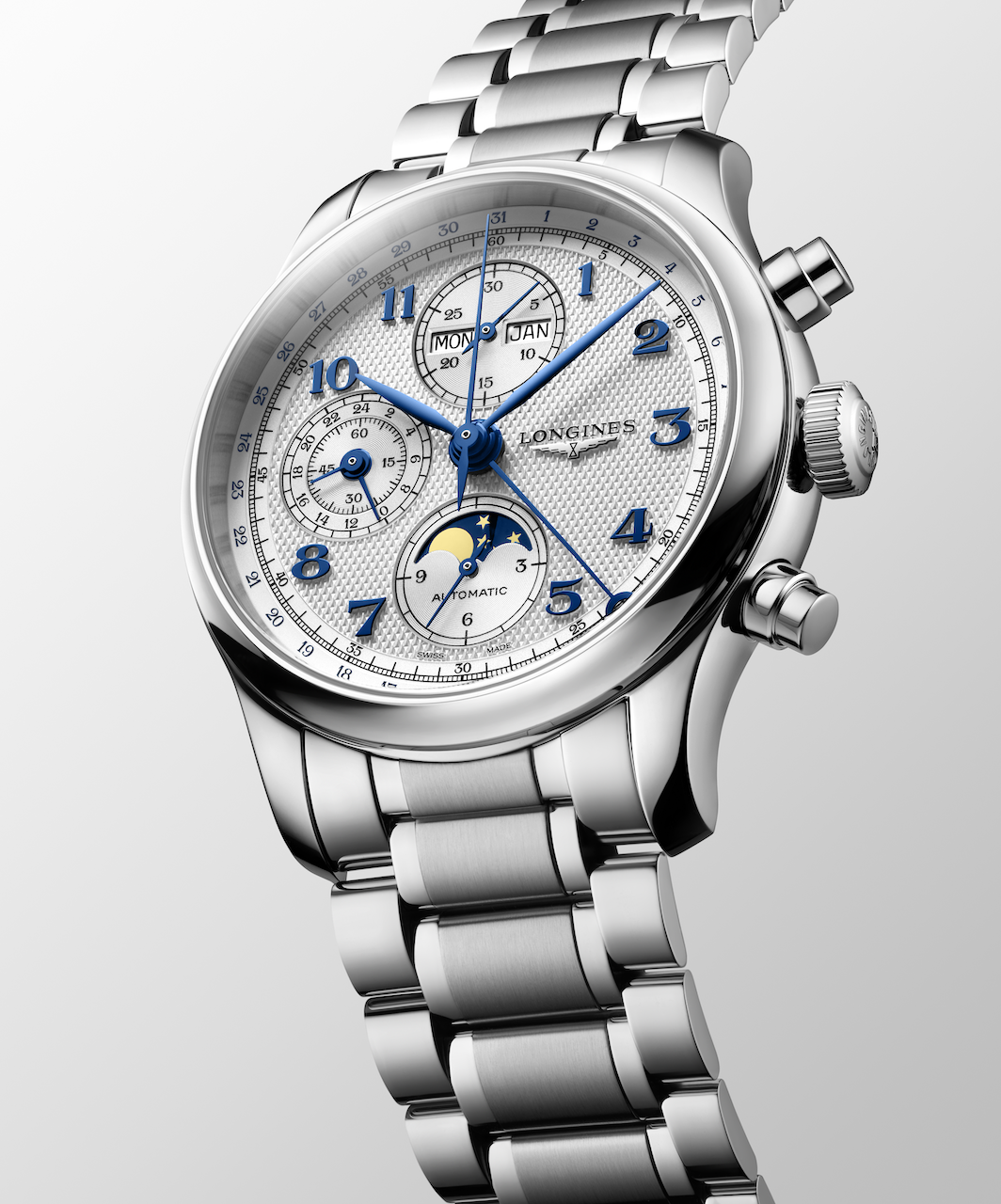
At the 9 o’clock position, there is a small seconds hand and a 24-hour indicator. At 12 o’clock, the 30-minute chronograph counter displays the day of the week and the month; at 6 o’clock, the 12-hour totalizer shares the counter with the moon phase display. The date runs along the outer edge and is indicated by the distinctive central hand with a crescent-shaped tip.
Longines focuses primarily on finishes and visual hierarchy.
The silver dial features the new grain d’orge pattern, accompanied by nine applied blue Arabic numerals and blued steel hands; the minute track remains on the flange. The contrast between blue and silver has long been a hallmark of the Master Collection and helps to organize the inevitably substantial amount of information displayed here.
The barley grain pattern requires careful consideration in such a complex design. The finish adds depth and interacts with light without competing for attention with the calendar, counters, and moon phase display. Viewed up close, it reveals the richness of the surface; at a glance, however, the functions take precedence.
The combination of a chronograph, calendar, and astronomical functions also has notable precedents in the archives of Saint-Imier. The Longines Museum houses a 1911 pocket watch featuring a chronograph, quarter-hour repeater, full calendar, and moon phases.
More than a century separates the two watches. What remains is the same familiarity with timepieces capable of combining numerous functions without sacrificing their distinct identity.
The Master Collection: 30, 34, 39, and 41 mm
The redesign also profoundly affects the Master Collection time-only models, which are available in diameters of 30, 34, 39, and 41 mm.
The choice of four sizes allows the same design language to take on significantly different appearances on the wrist. On an elegant watch, a few millimeters affect the overall balance far more than the numbers suggest: they alter the relationship between the dial and the case, the perception of thickness, and, above all, the way the watch sits on the wrist.
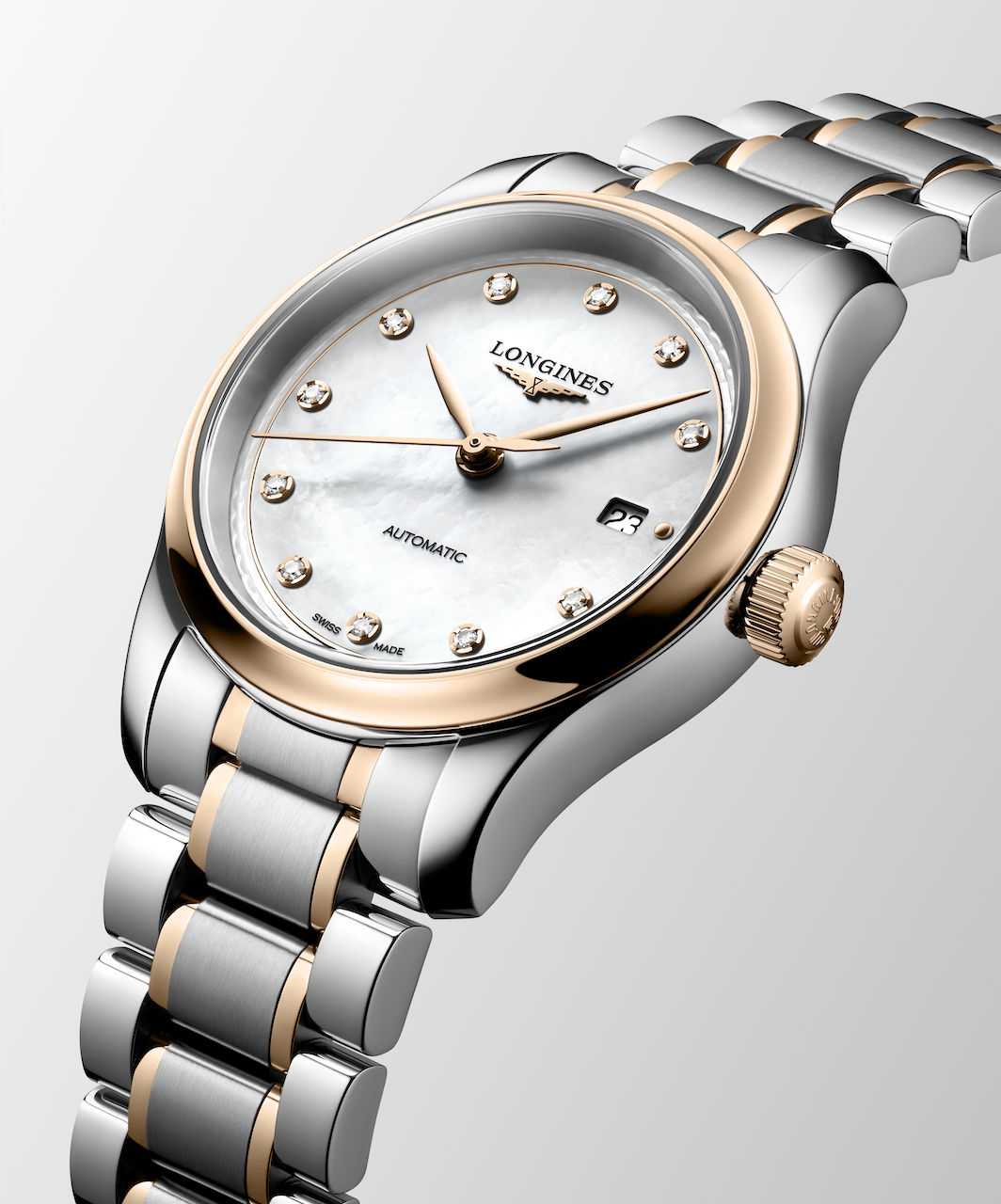
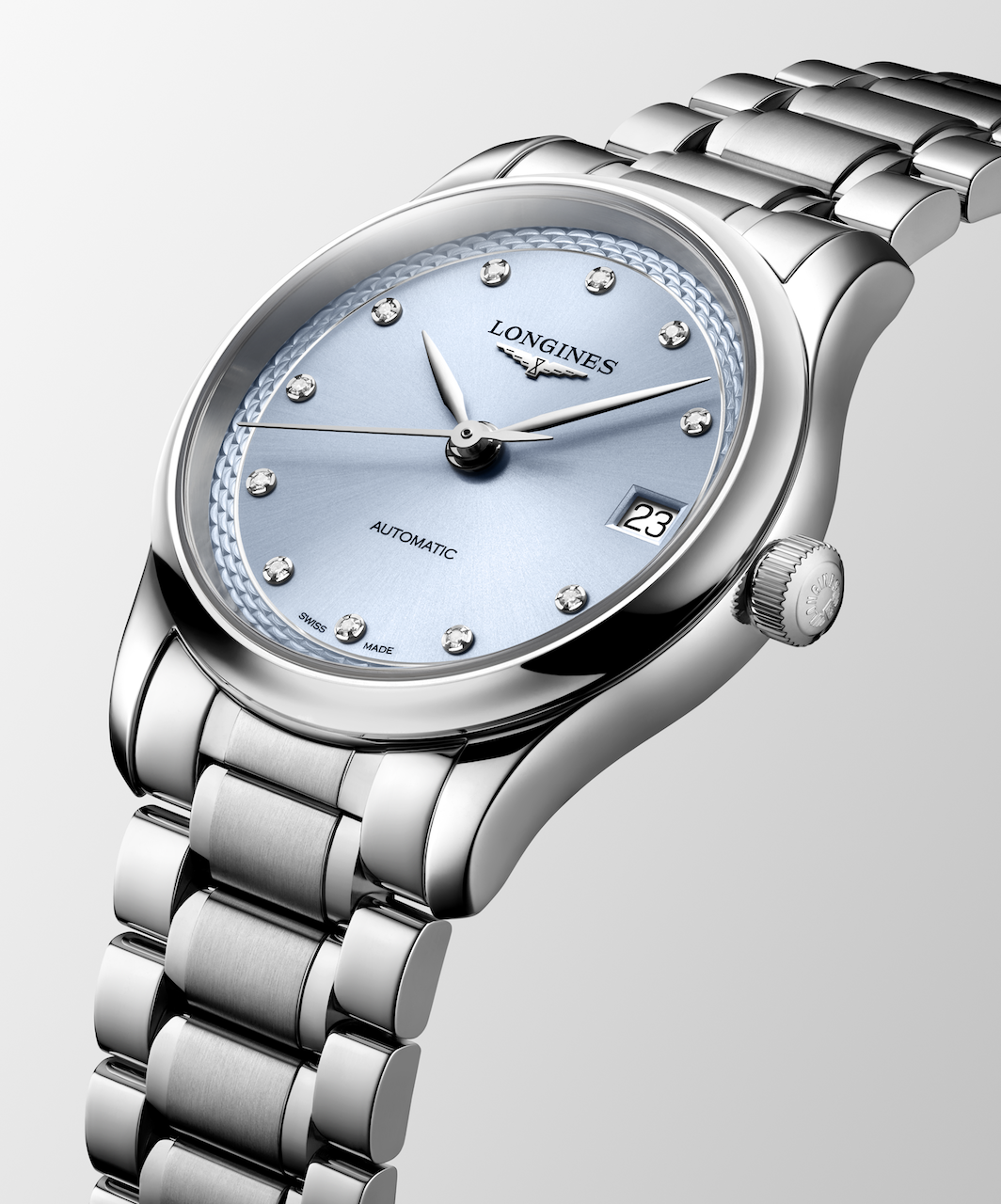
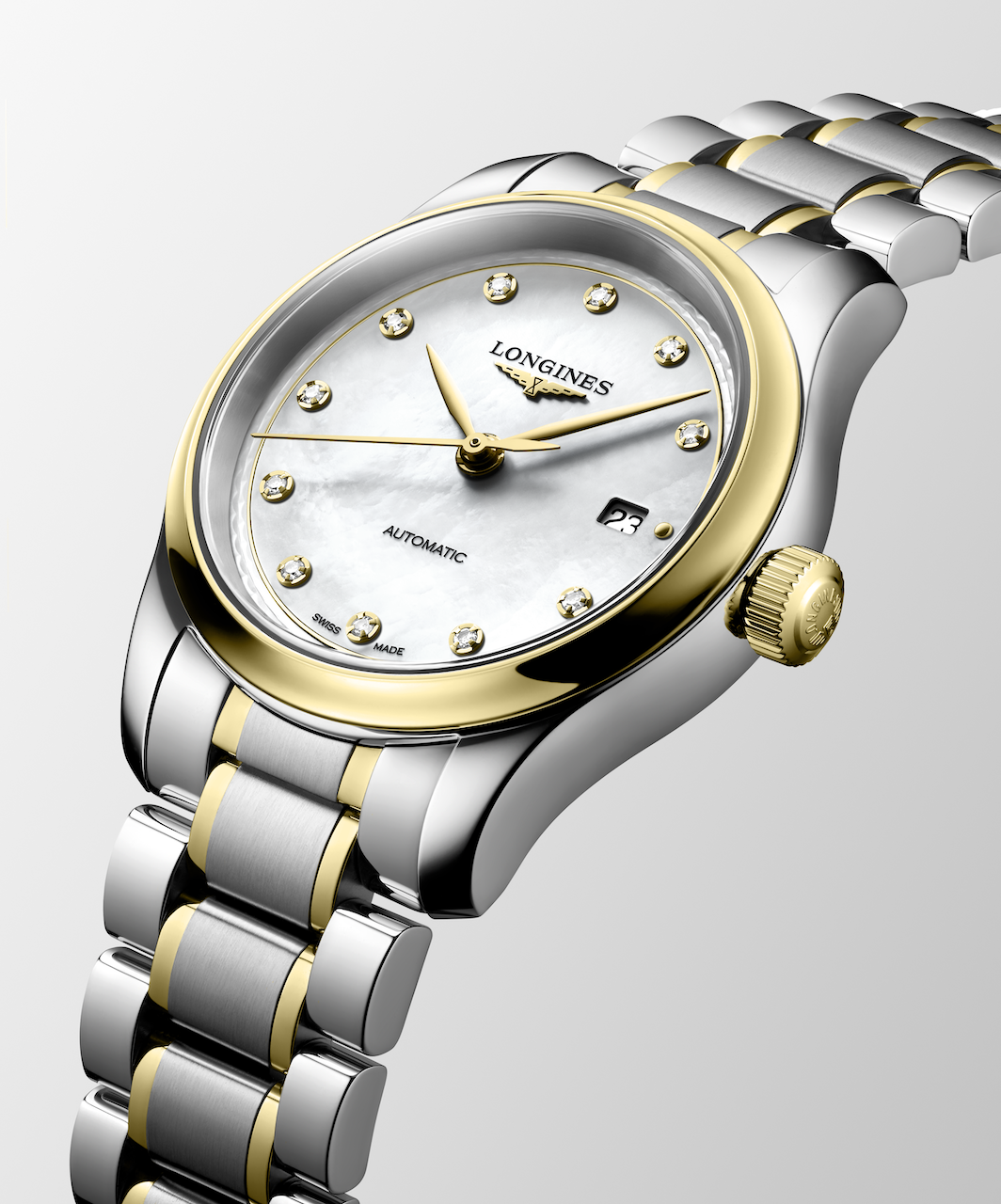
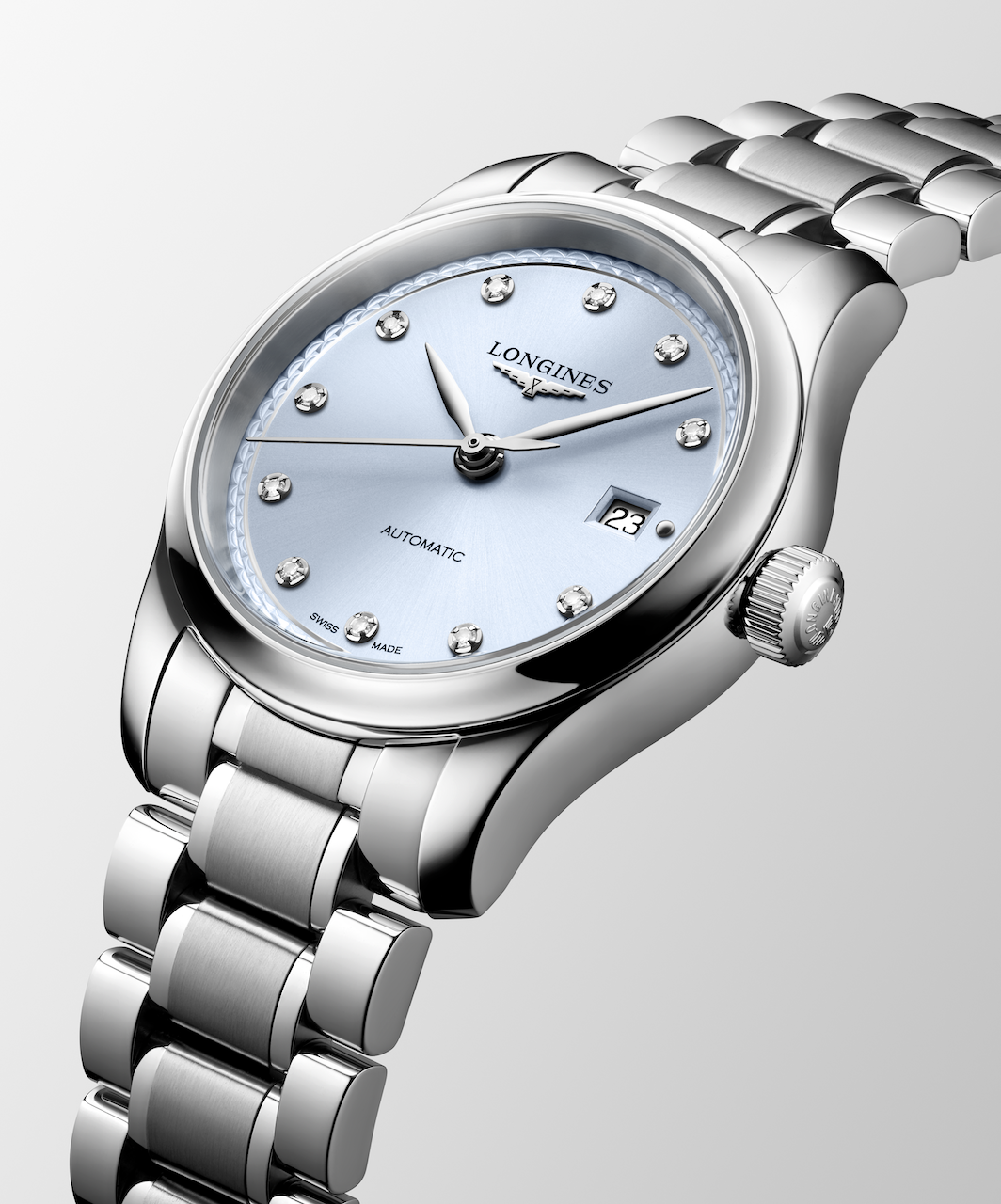
The 30 mm model features the L592.5 automatic movement, 8½ lines in size, with 22 jewels, a silicon balance spring, a frequency of 28,800 vibrations per hour, and a power reserve of up to 45 hours. The case is 9.10 mm thick, with 15 mm lugs.
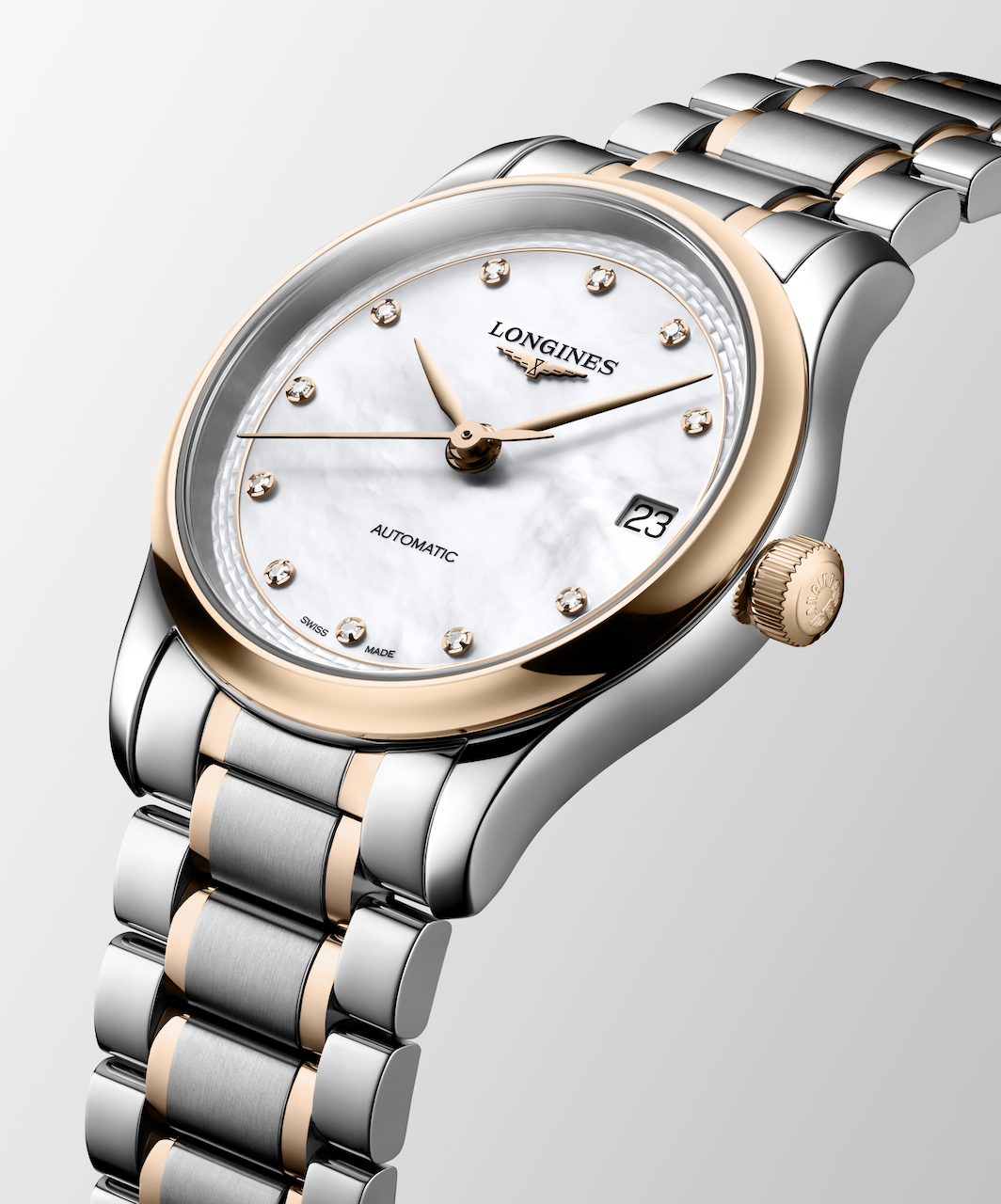
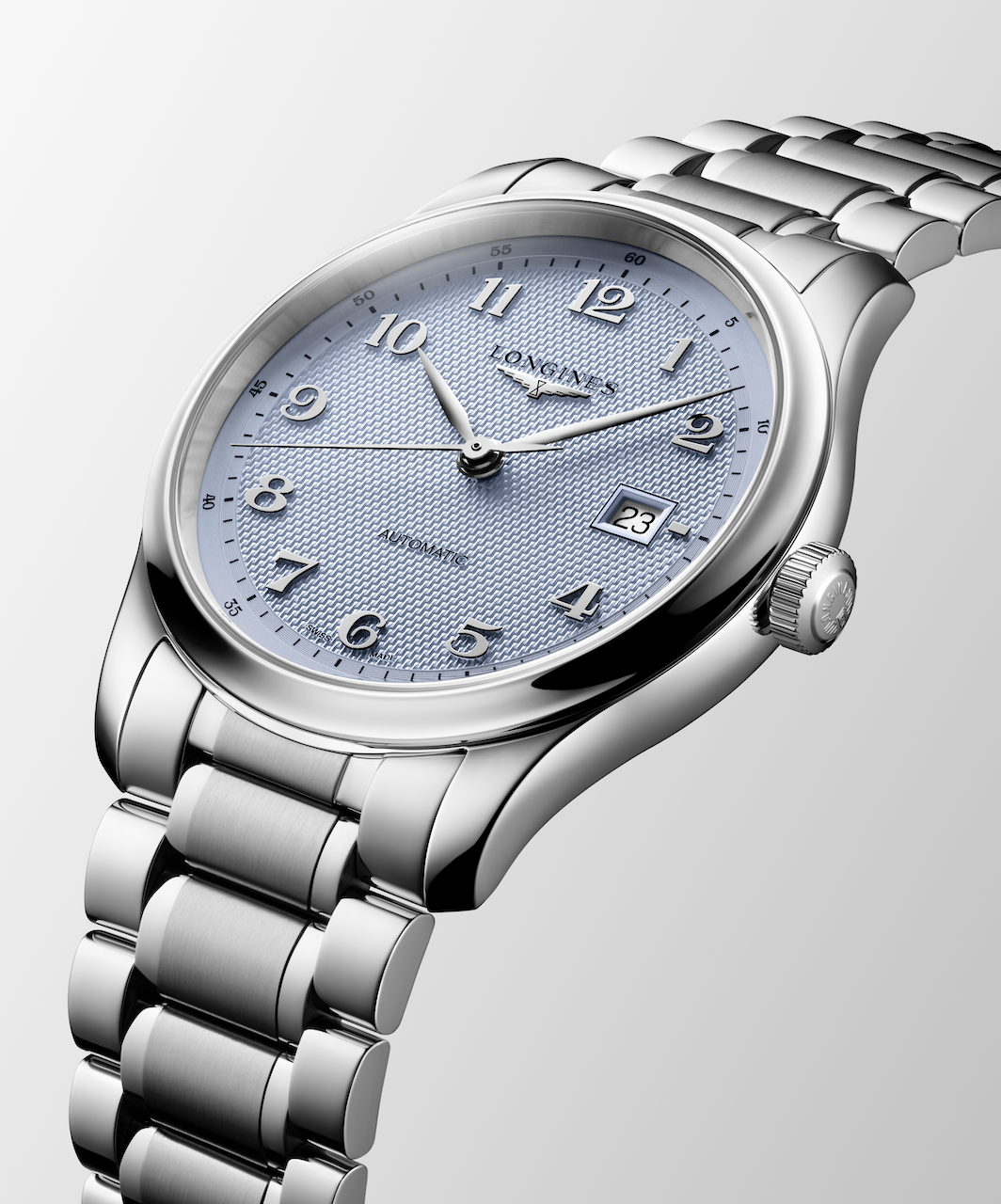
The stainless steel version features an ice-blue sunburst dial. The two-tone models feature bezels with 2N-200 yellow gold or 5N-200 rose gold caps, matching 18-karat gold crowns, and white mother-of-pearl dials. Eleven Top Wesselton VS-SI 8/8 diamonds, totaling 0.047 carats, serve as hour markers.
The 34 mm model features the L888.5 automatic movement, 11½ lines, 21 jewels, a silicon balance spring, and a frequency of 25,200 vibrations per hour. The power reserve reaches 72 hours, while the case is just 9.30 mm thick, with 18 mm lugs.
The “glacier blue soleil” finish appears on the stainless steel and mother-of-pearl versions, while diamonds and gold accents are featured on the two-tone models. The oscillating weights are visible through the transparent casebacks; on the two-tone models, they are finished in a shade that matches the bezel.
The 39 and 41-mm models have a more understated and decidedly versatile look. Both are powered by the L888.5 with a 72-hour power reserve and feature light blue “grain d’orge” dials, eleven applied Arabic numerals, and rhodium-plated hands.
The 39 mm model is 9.05 mm thick, with a lug-to-lug width of 20 mm; the 41 mm model is 9.50 mm thick, with lugs 21 mm wide.
It is these dimensional relationships, above all, that reveal the attention paid to proportions. Both cases are less than ten millimeters thick, maintaining that slimness which, in an elegant timepiece, matters more than many of the other figures listed in a technical specification sheet.
The 39 mm model, in particular, has specifications that look very promising on paper: a bold enough presence for a contemporary style, a thickness of 9.05 mm, and proportions that work naturally in a wide variety of settings. It’s probably the model we’d look at first among the new time-only watches.
The bracelet has also been redesigned. The links are now shorter, allowing the bracelet to better conform to the contour of the wrist, while the clasps feature micro-adjustment, a feature also available on the deployant clasps of the alligator straps.
On the dial, the removal of the flange, on the other hand, alters the perception of the dial as a whole. The usable surface area increases, the barley grain pattern appears more open, and the applied Arabic numerals stand out more clearly.
Home of Elegance: One Collection, Six Interpretations
The new generation of the Master Collection is accompanied by “Home of Elegance,” a campaign that brings together the Longines Ambassadors of Elegance for the first time in a single project.
Kate Winslet, Eddie Peng, Jennifer Lawrence, Henry Cavill, Zhao Liying, and Yosh Yu share the spaces of a home while wearing different looks from the collection.

The choice of a domestic setting gives the watches a more natural presence than the traditional institutional portrait and, above all, allows us to appreciate the breadth of the collection. From the 30 mm mother-of-pearl model to the 39 and 41 mm time-only models, all the way to the Chrono Moonphase and the Monopusher, the sizes and features vary considerably without compromising the collection’s recognizability.
Of all of them, the silver Chrono Monopusher is also the one we find ourselves returning to most often with our gaze.

The bicompax layout is well-balanced. The pulsometer has a clear historical legitimacy. The co-axial pushbutton next to the crown retains the distinctive handling that makes the single-pushbutton design fundamentally different from a conventional chronograph. Barley grain and rose gold details add the refinement needed to integrate it into the Master Collection without compromising the technical and functional origins of its design language.
Longines can afford a poetic license that few watchmakers possess: not having to retell its entire story every time it references it. On the new Monopusher, all it takes is a single push-button, two sub-dials, and a pulsometer scale.
Are you looking for the perfect gift? Explore our online store and discover the entire collection signed IWS – Italian Watch Spotter!
For all real-time updates on the world of watchmaking follow us on Instagram and visit our Youtube channel.