
Until just a few years ago, the watch market was divided between official boutiques and the secondary market.
It seemed as though these two worlds had nothing in common and that, to put it bluntly, the latter might even be a problem for the former: as we well know, this is certainly not true, and the situation is more complex than that.
2022 was a groundbreaking year when Rolex launched its Certified Pre-Owned program, a disruptive moment in the watch market.
Every move by the crown-adorned brand causes a stir in the watchmaking world, but the creation of a structured system for buying and selling pre-owned watches was truly something no one expected.
A few years later, we now have feedback and, above all, data: let’s take a look at how the Rolex Certified Pre-Owned program has evolved from a gamble into a reality that is estimated to generate one billion dollars by 2027.
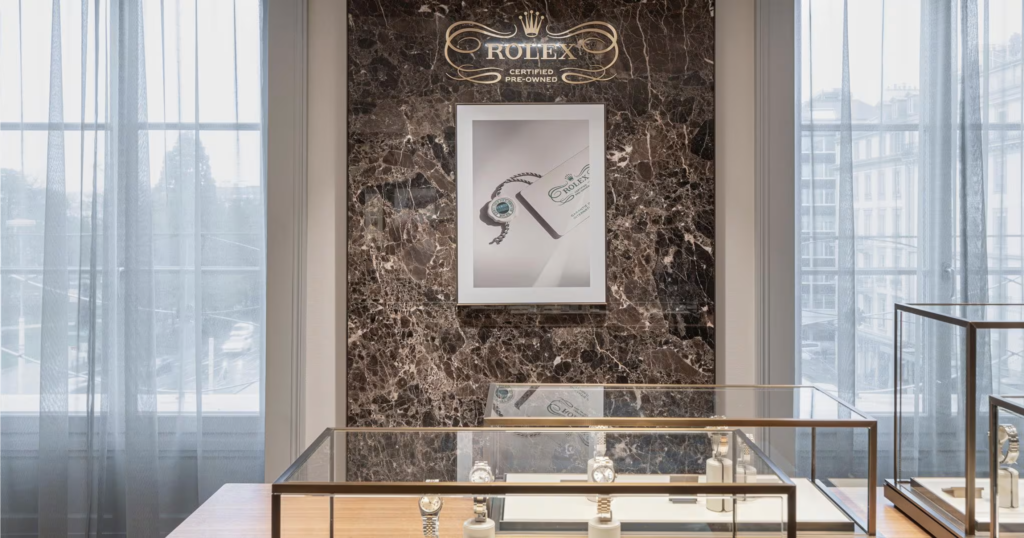
Credits: Rolex
How the Rolex Certified Pre-Owned Program Works
Launched in late 2022, the Rolex Certified Pre-Owned program offered customers the opportunity to purchase pre-owned Rolex watches that had been serviced by the manufacturer and made available through select Bucherer boutiques.
These were watches that were at least three years older than those in the current collection; as of May 2025, this has changed, allowing the sale of Rolex watches introduced just two years earlier.
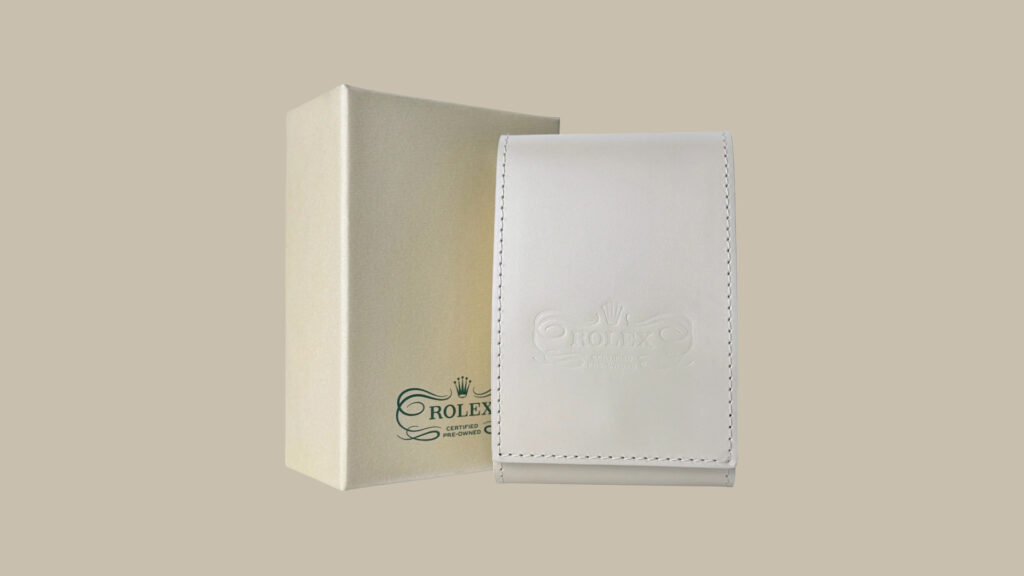
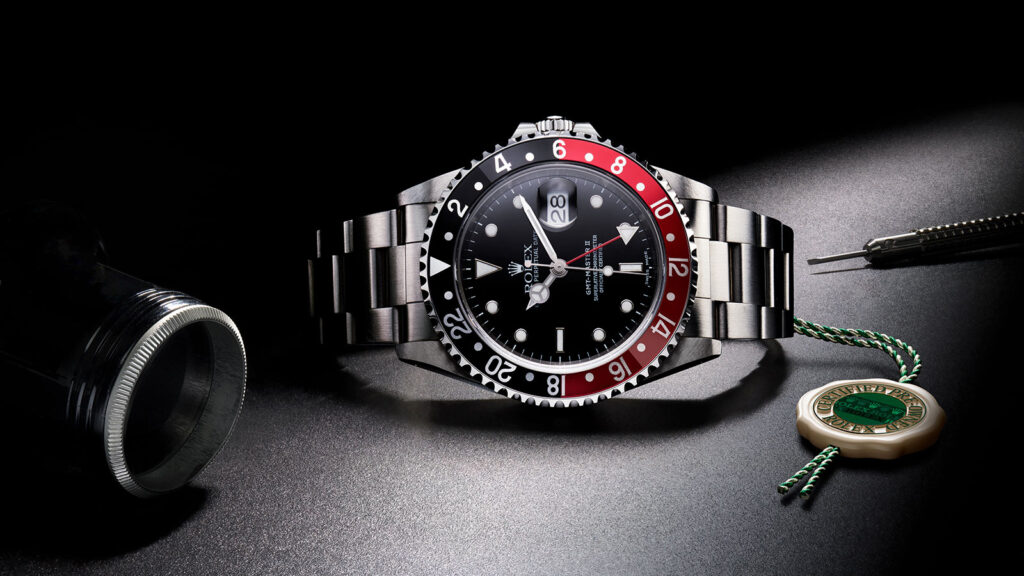
The timepieces undergo thorough inspections, are restored (if necessary), and are sold through an extensive network of retailers with a 2-year warranty and packaging that differs from the original: the iconic green box is replaced by a box containing a watch holder, both in beige, along with an authenticity badge certifying that the watch is guaranteed pre-owned.
This move by the Geneva-based brand has opened new doors for its clientele; there may be two main reasons for this.
The first is undoubtedly the opportunity to purchase the Rolex watch of one’s dreams with the certainty of owning an authentic piece, in excellent condition and backed by a warranty: this scenario is ideal for, let’s say, new customers of the brand who lack either the time or the expertise to find a reliable reseller to do business with, let alone to determine whether the watch they’re considering is genuine.
Another issue is the possibility of increasing the amount of time customers spend in the boutiques. Let’s look at this more closely: as we all know, buying a watch from the brand at list price is a daunting task, let’s imagine a customer walking into a retailer participating in the CPO program who, instead of being told they’ll have to wait months or even years for their favorite watch, finds the same model available, albeit a slightly older one. This scenario inevitably sparks the buyer’s desire to consider this new offer: the Rolex Certified Pre-Owned program plays the exceptional role of providing an alternative.
Many potential customers of the brand, discouraged by the purchasing process, might have turned to a competitor’s brand; this new sales approach aims to prevent that from happening.
At what cost? Inevitably, at the cost of a significant markup on the purchase price. It has been estimated that the price difference between a CPO model and its equivalent sold by qualified independent dealers in the same geographic area ranges from 20 to 25 percent.
For many, this factor is negligible, as they prioritize peace of mind when making a purchase; for others, the higher cost is unaffordable, and in such cases, they prefer to negotiate with a reseller.
In addition to Rolex, this service is also offered by other brands; the most recent one, in chronological order, was Audemars Piguet. You can find our article on this topic here.
The Data Speaks for Itself
To understand the scope of the phenomenon, we need to look at the numbers.
According to the latest report from Morgan Stanley and WatchCharts, published in October 2026, the Rolex Certified Pre-Owned program recorded estimated sales of $229 million in the third quarter, the highest quarterly figure since the initiative was launched in December 2022.
The growth is particularly significant when viewed on a year-over-year basis: sales revenue increased by 61% compared to the same period in 2025, while a comparison with the previous quarter shows a 30% increase. In terms of volume, approximately 10,300 certified watches were sold in the third quarter alone.
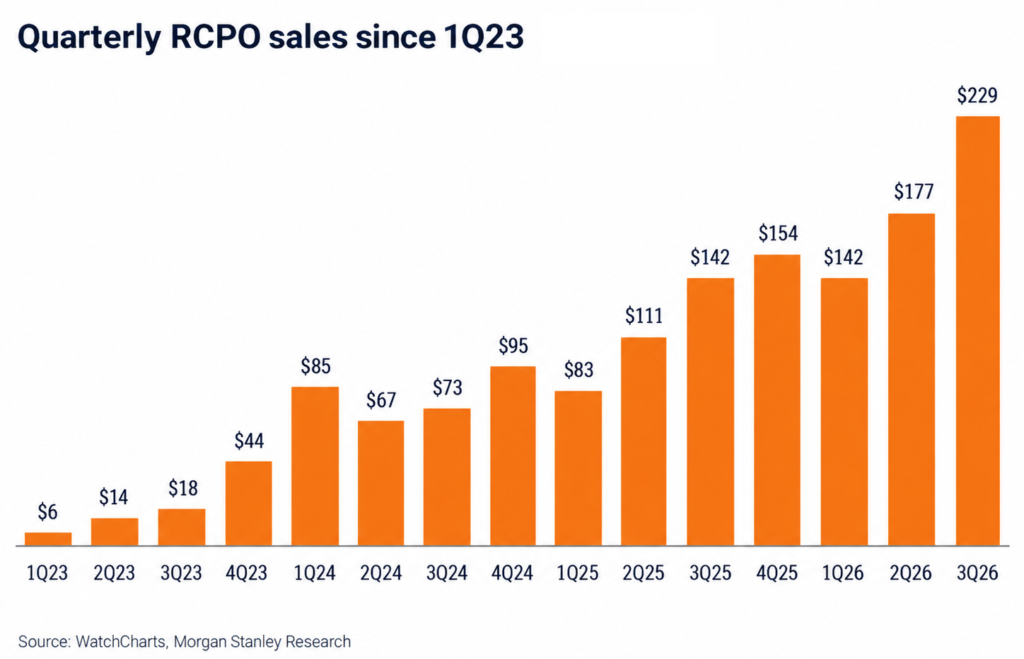
To put this into even clearer perspective, it is enough to consider that CPO sales for the third quarter of 2026 alone are equivalent to nearly half of the total generated in all of 2025.
If the fourth quarter were to replicate the results just reported, the program would close out 2026 with sales of nearly $780 million: an estimate that would imply growth of about 59% compared to the previous year and would bring the CPO within reach of an entirely new scale of business.
The $1 billion milestone is projected for 2027; this is not a guaranteed outcome, but rather an estimate consistent with the current pace of growth.
According to the reported forecasts, by 2027 the program could also exceed 50,000 units sold annually, reaching a volume of watches sold that exceeds Audemars Piguet’s annual production. If it were to reach $1 billion, the CPO would effectively attain an economic scale comparable to that of a major Swiss watch brand, potentially placing it among the top ten players in the industry by retail sales value—an achievement that is anything but insignificant for a business founded less than four years ago.
Another factor helps illustrate just how much the program is shifting the balance of the secondary market; the H1 2026 report published by EveryWatch highlights a significant shift: In the first half of the year, sales of Rolex Certified Pre-Owned watches exceeded the revenue generated by new, unworn watches sold on the unofficial secondary market.
A comparison with the same period in 2025 makes the scale of this service even more evident. CPO sales grew by 101.3%, rising from approximately $191.5 million to $385.4 million. In contrast, the unworn segment saw a 24.7% decline, falling from $444.4 million to $334.5 million.
We’re talking about two different channels in the secondary market where, however, official certification seems to have gained such commercial significance that it now surpasses the segment of unworn Rolex watches sold by independent dealers.
To put this result into further context, the global secondary market for watches reached a total value of $10.5 billion in the first half of 2026, up 37.2% from the same period the previous year; approximately 795,000 units were sold, representing an 18.7% increase. Rolex alone accounted for 41% of the total transaction value, amounting to approximately $4.29 billion.
Credits: SJX Watches
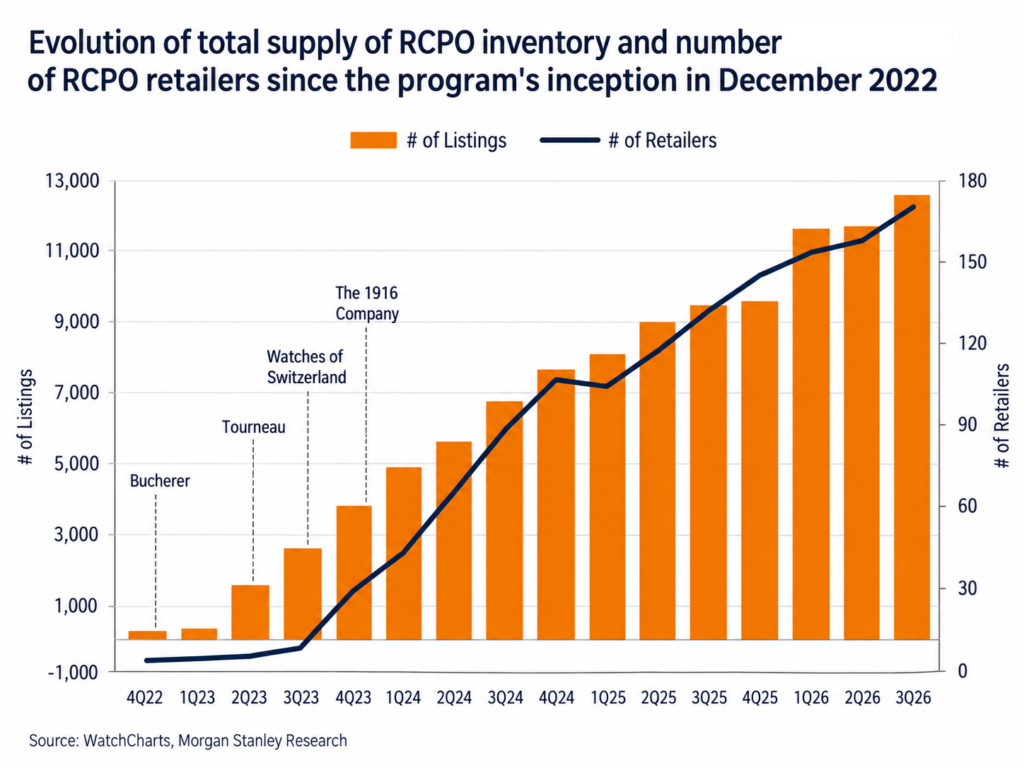
What about the network of dealerships participating in the CPO program? Sales growth has been accompanied by the expansion of the distribution network, albeit at a slower pace than in previous years.
As of the end of September 2026, there were 167 retailers participating in the program worldwide, compared to 157 at the end of June. During the first nine months of the year, 23 new retailers joined the program, compared to 81 in 2024 and 37 in 2025.
The slowdown in network expansion, coupled with an increase in quarterly sales, therefore suggests an improvement in productivity among the dealers already participating in the program. In other words, the program’s growth does not appear to depend solely on the addition of new dealers, but also on the ability of existing dealers to maximize their business potential.
The distribution of inventory across the retail network shows a certain degree of concentration: of the 12,390 CPO Rolex watches advertised at the end of September, 47% belong to three major international groups: Bucherer/Tourneau collectively account for 25% of the global inventory, Watches of Switzerland for 14%, and The 1916 Company for 8%. The remaining 53% is distributed among the other 164 participating retailers.
One of the most important aspects of the program concerns the premium charged compared to equivalent watches available on the independent secondary market.
In the early years of the program, some CPO retailers charged prices nearly 40% higher than those of unauthorized dealers, a gap that posed one of the main obstacles to the program’s adoption, especially for customers who were already accustomed to searching online for appraisals and prices of their dream watches.
According to the latest Morgan Stanley/WatchCharts update, the global median premium rose to 23.1%, up from 22.6% in the previous quarter. The comparison is made between watches of the same model, in pre-owned condition, and sold in the same geographic area by independent retailers considered reliable: it should be noted that each CPO retailer has the discretion to set the price of its watches; the difference therefore remains significant, but is decidedly lower than initial levels. The market appears to be gradually recognizing the economic value of official certification, while still evaluating the affordability of the purchase.
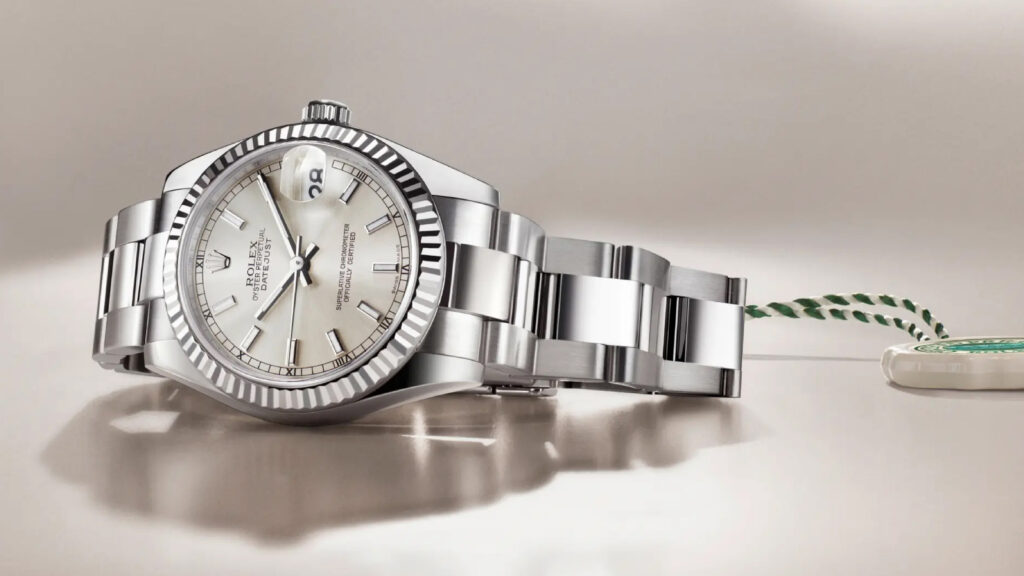
The premium also varies significantly depending on the collection; here are some figures: Datejust models, which account for nearly a quarter of the entire CPO inventory, have a median premium of 22.3%, with a median asking price of $14,310; for the Submariner, the premium rises to 24.2%, while the Daytona and Day-Date stand at 17.5%. The highest premiums, however, are recorded for the Lady-Datejust at 33.2%, the Oyster Perpetual at 29.9%, and the Cellini at 29.2%.
Credits: Rolex
Our Thoughts
The Certified Pre-Owned program has been a turning point for Rolex, both in terms of revenue and customer satisfaction.
The numbers point to a significant transformation: the CPO is not merely an extension of Rolex authorized dealers’ offerings, but a sales channel with growing economic clout, capable of competing with independent dealers and capturing an increasingly significant share of the secondary market.
As is well known, demand for timepieces from the Geneva-based brand continues to outstrip supply, so having more certified pieces on the market is excellent news for fans of the brand.
We’ve also seen how the surcharge for this service can divide customers, but in this case, what matters is finally having the option to choose, which is perhaps the greatest luxury of all.
by Gabriele Passarella
Are you looking for the perfect gift? Explore our online store and discover the entire collection by IWS – Italian Watch Spotter!
For all the latest updates on the world of watchmaking, follow us on Instagram and visit our YouTube channel.