
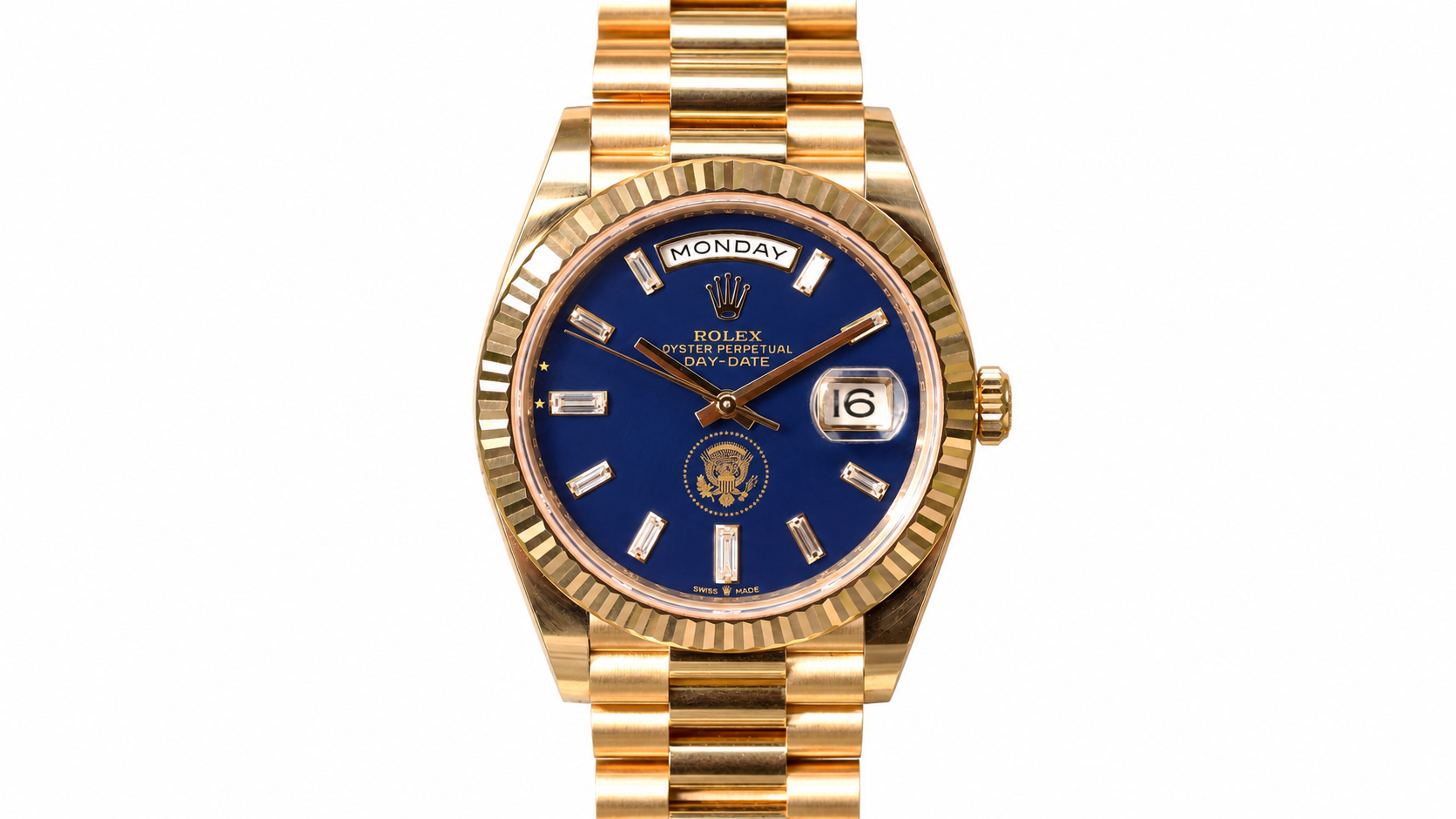
It is a Rolex Day-Date in yellow gold, featuring a fluted bezel, a President bracelet, and a deep blue dial on which ten baguette-cut gemstones mark the hours. To distinguish it from other Day-Date models, one need only look at the section of the dial between the hand pivot and the six o’clock hour marker, where the two lines of text indicating the chronometer certification would normally appear. The U.S. President’s eagle appears, drawn gold on blue, with a shield on its chest and outstretched wings. It’s the most striking detail of the “White House,” the Day-Date customized in London for select members of Donald Trump’s inner circle. But is there more to this Washington watch?
On the Rolex Day-Date White House, the dial is blue to match the presidential eagle
The day of the week is displayed in full within the arched opening at 12 o’clock, while at 3 o’clock the Cyclops lens magnifies the date number. These are the two features around which Rolex designed the Day-Date in 1956, giving each the space needed for easy reading. The month is displayed in a rectangular window, while the day of the week follows the curve of the dial and extends to just touch the hour markers at 11 o’clock and 1 o’clock.
The baguette-cut diamonds complement this arrangement, each oriented toward the center and held in place by a thin gold border, so that their long, parallel facets retain, even when caught in the light, the geometry of a rod-shaped index. While the stone at the 9 o’clock position is horizontal, the one at the 6 o’clock position is vertical, almost serving as the base for the presidential seal.
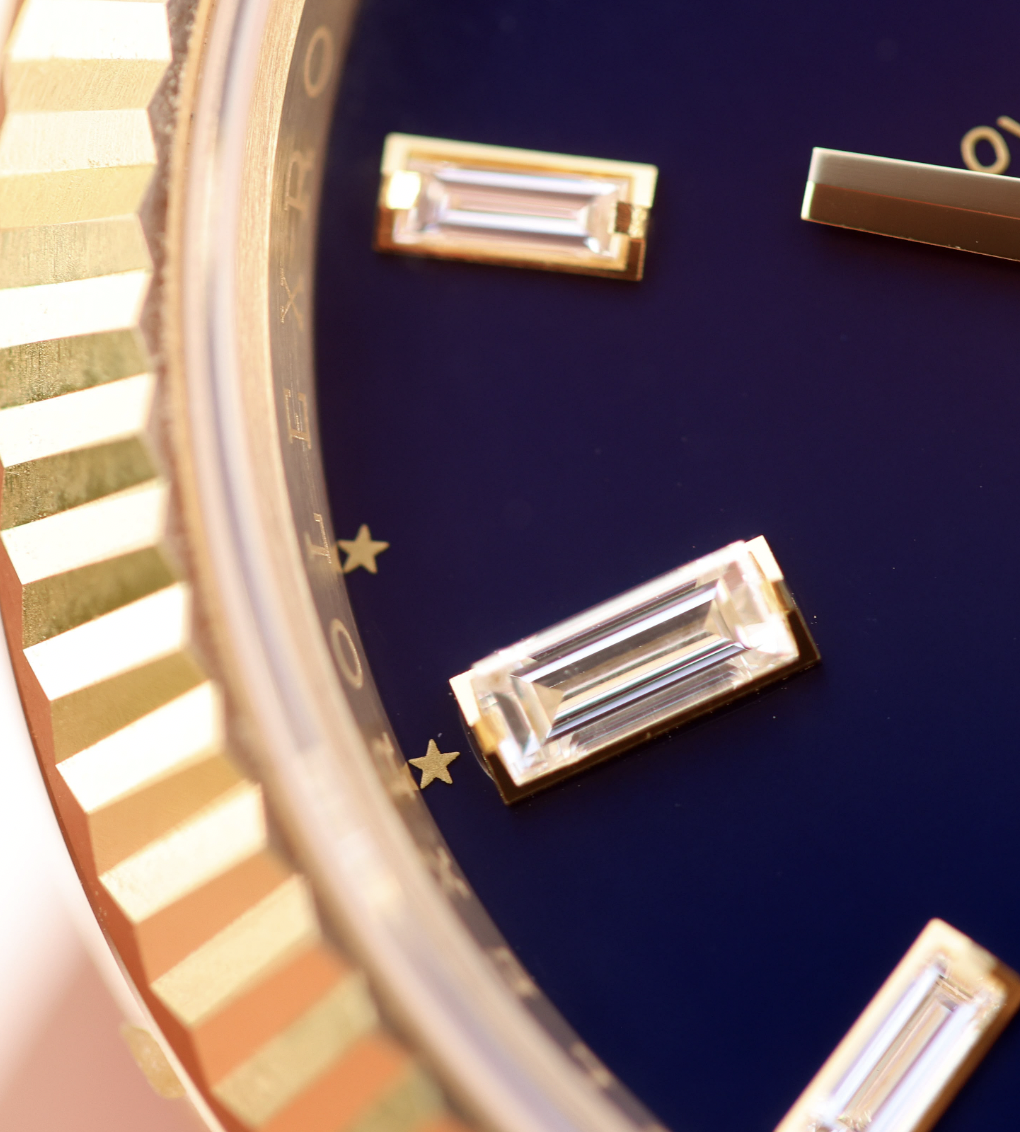
Just past the nine o’clock marker, almost flush with the inner edge of the case, two small gold stars are visible, set apart from the circle surrounding the eagle. The first is aligned with the horizontal axis of the hands; the second is positioned two seconds further along, toward the ten o’clock position. They correspond to 45 and 47, Trump’s two positions in the succession of U.S. presidents. While the seal could belong to any presidency, those two stars identify both, and unequivocally, his.
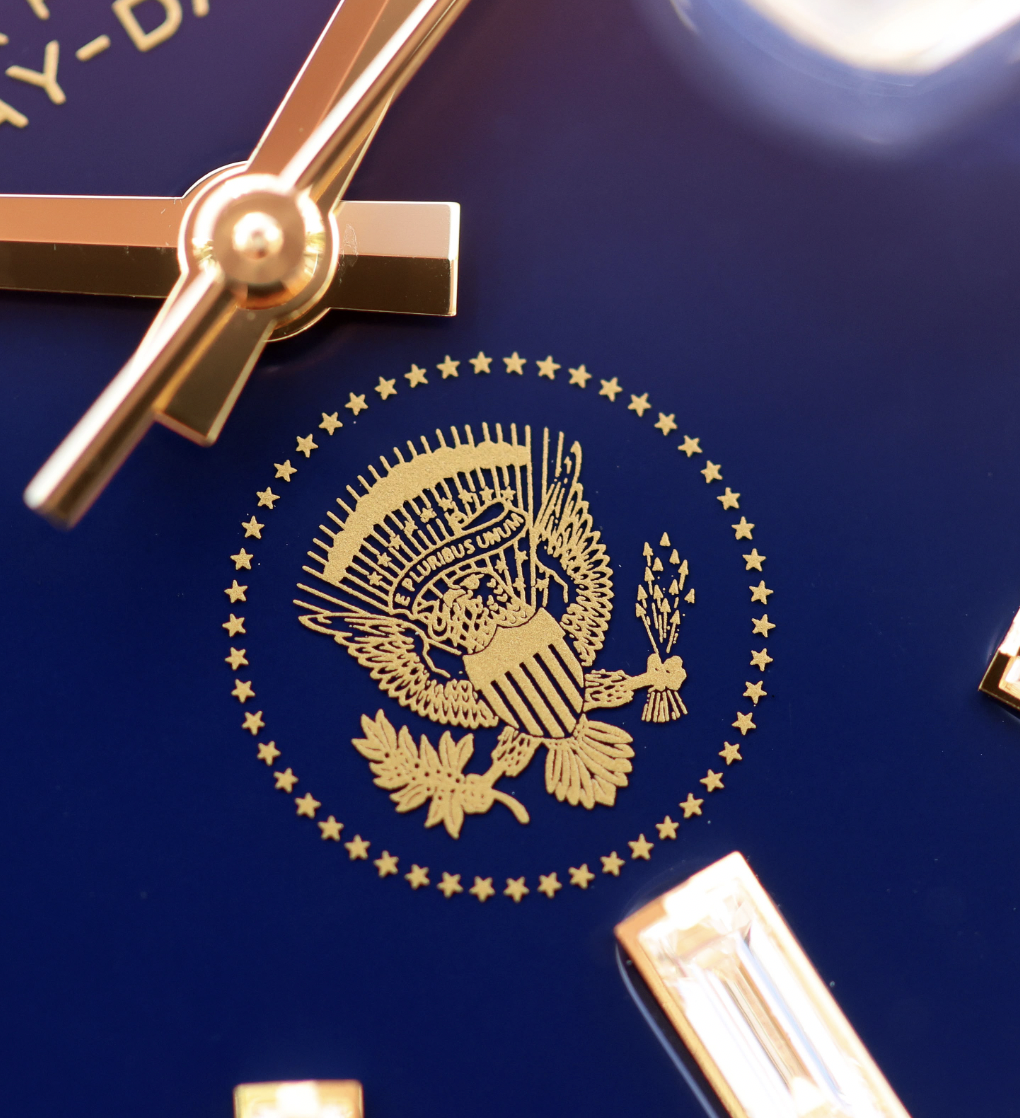
The blue of the dial, left unfilled around the eagle, allows one to make out details that, at this scale, might otherwise have been lost. You can make out the feathers on the wings and the vertical stripes on the shield, as well as the olive branch and the bundle of arrows clutched in its talons. A wreath of tiny stars frames the entire design.
The same golden hue appears in the Rolex logo and on the hands, while the gold on the bezel has a very different appearance. Here, the grooves alternate between light and dark sections around the entire circumference, creating a sharp contrast with the solid blue of the dial. On the President bracelet, the transition is smoother because the central links, domed and polished, catch a broad reflection that is interrupted by the satin finish of the two outer rows.
But who makes the “White House” Day-Date?
Aidan McLaughlin was the first to write about it in a feature for Vanity Fair in September of this year. According to his account, some administration staff members were able to purchase a personalized Rolex at their own expense, choosing between the gold Day-Date and a “Pepsi” GMT-Master II.
The distinction that matters, especially for a collector, is the origin of the dial. The watches are purchased and then entrusted to a London atelier, which is responsible for their customization. “White House” is therefore the nickname by which these pieces are known in Washington, not a reference directly assigned by the parent company.
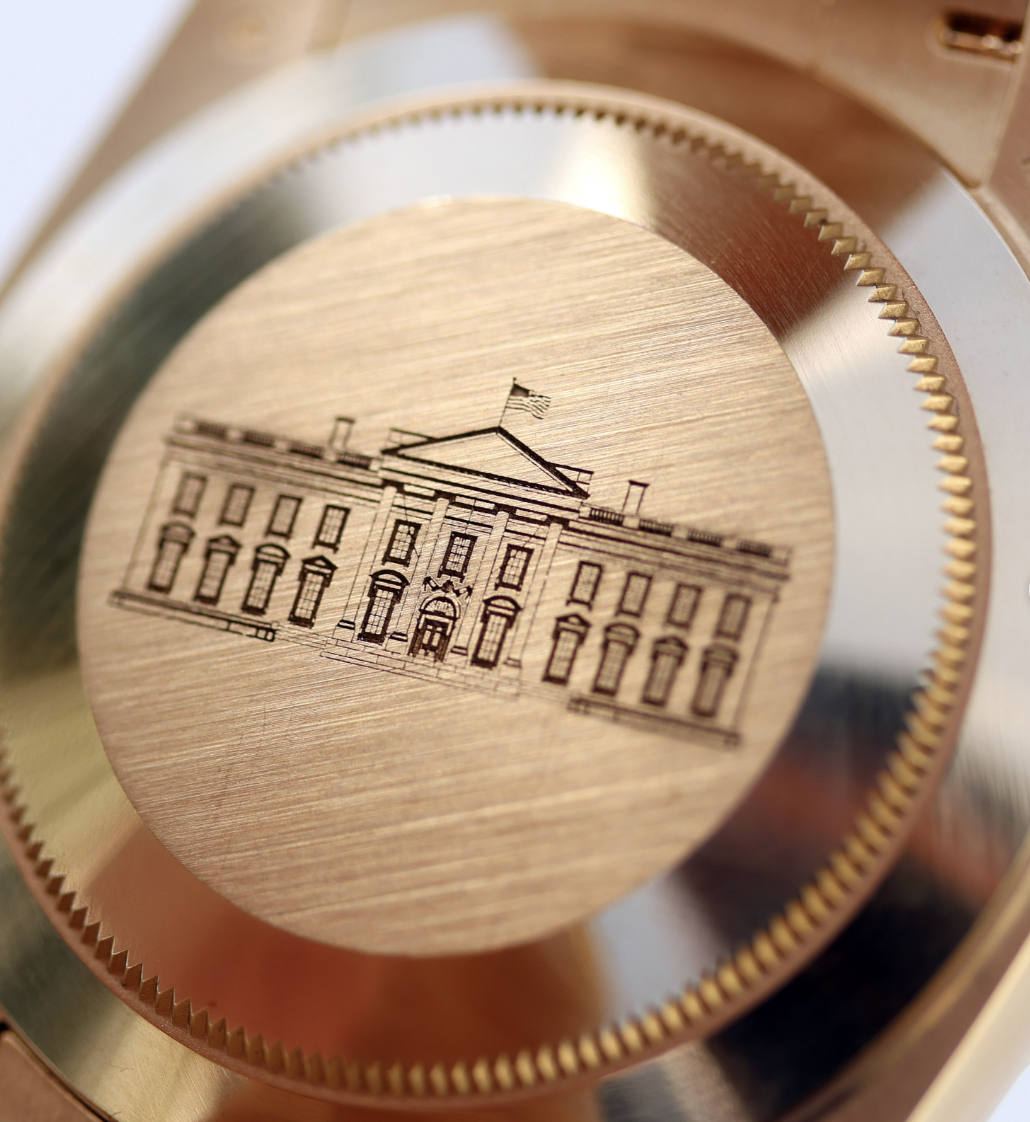
McLaughlin tells us that the White House is engraved on the case back, while the dial always bears the presidential seal. Among the owners of one of the two models, the journalist mentions Chief of Staff Susie Wiles and Special Envoy Steve Witkoff.
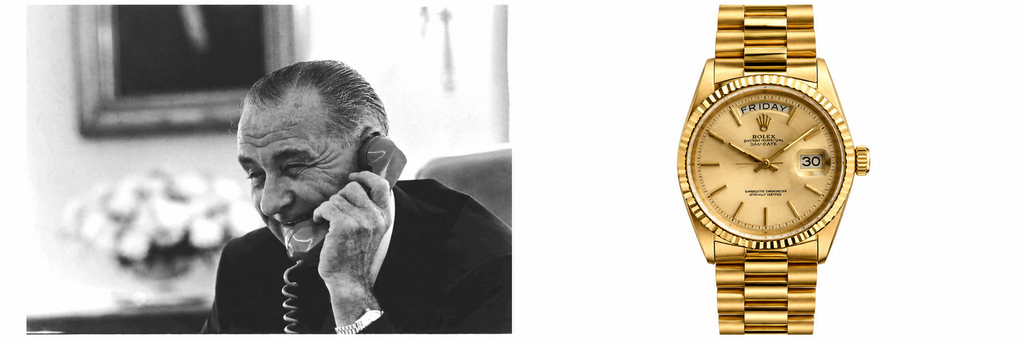
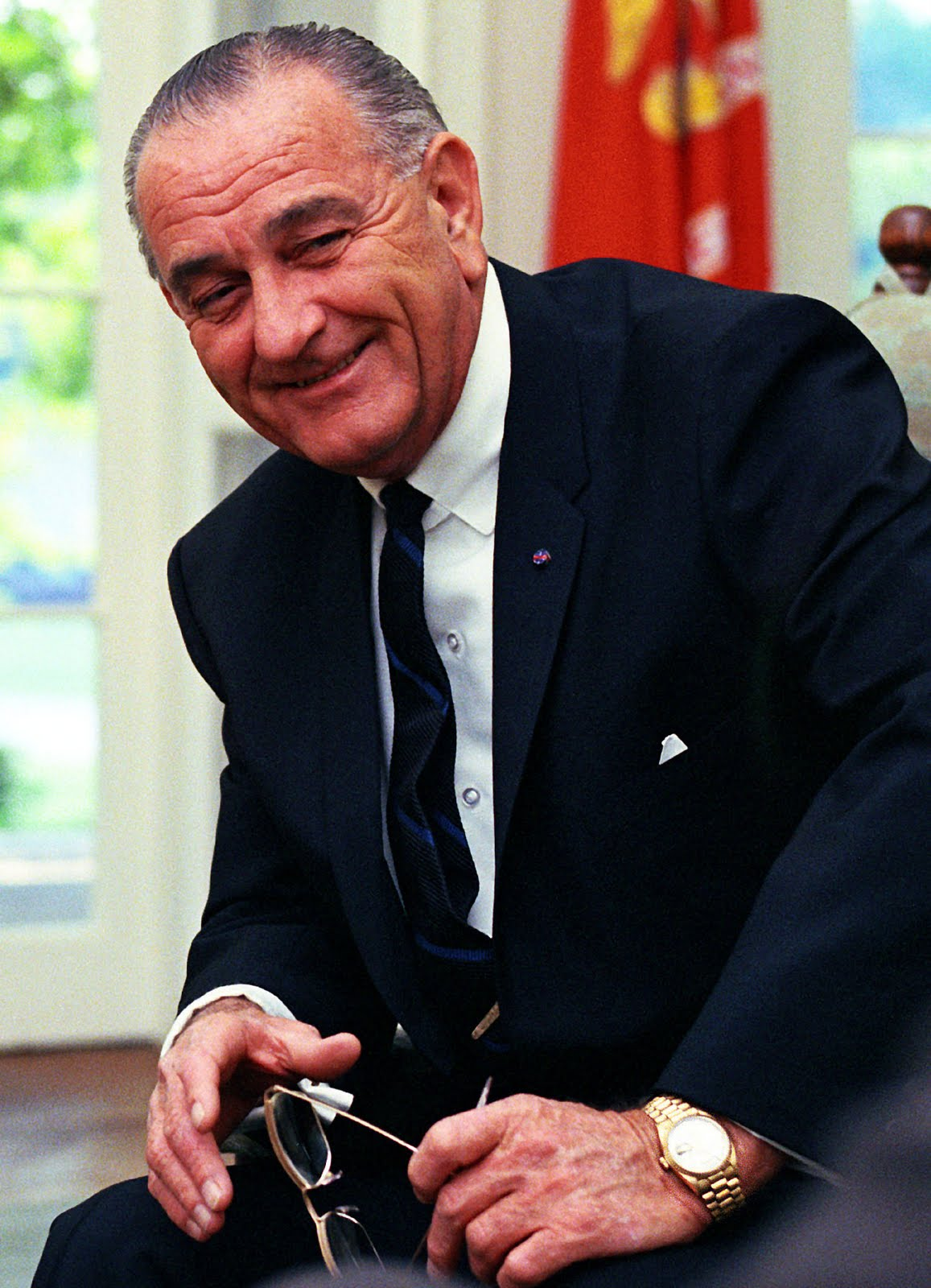
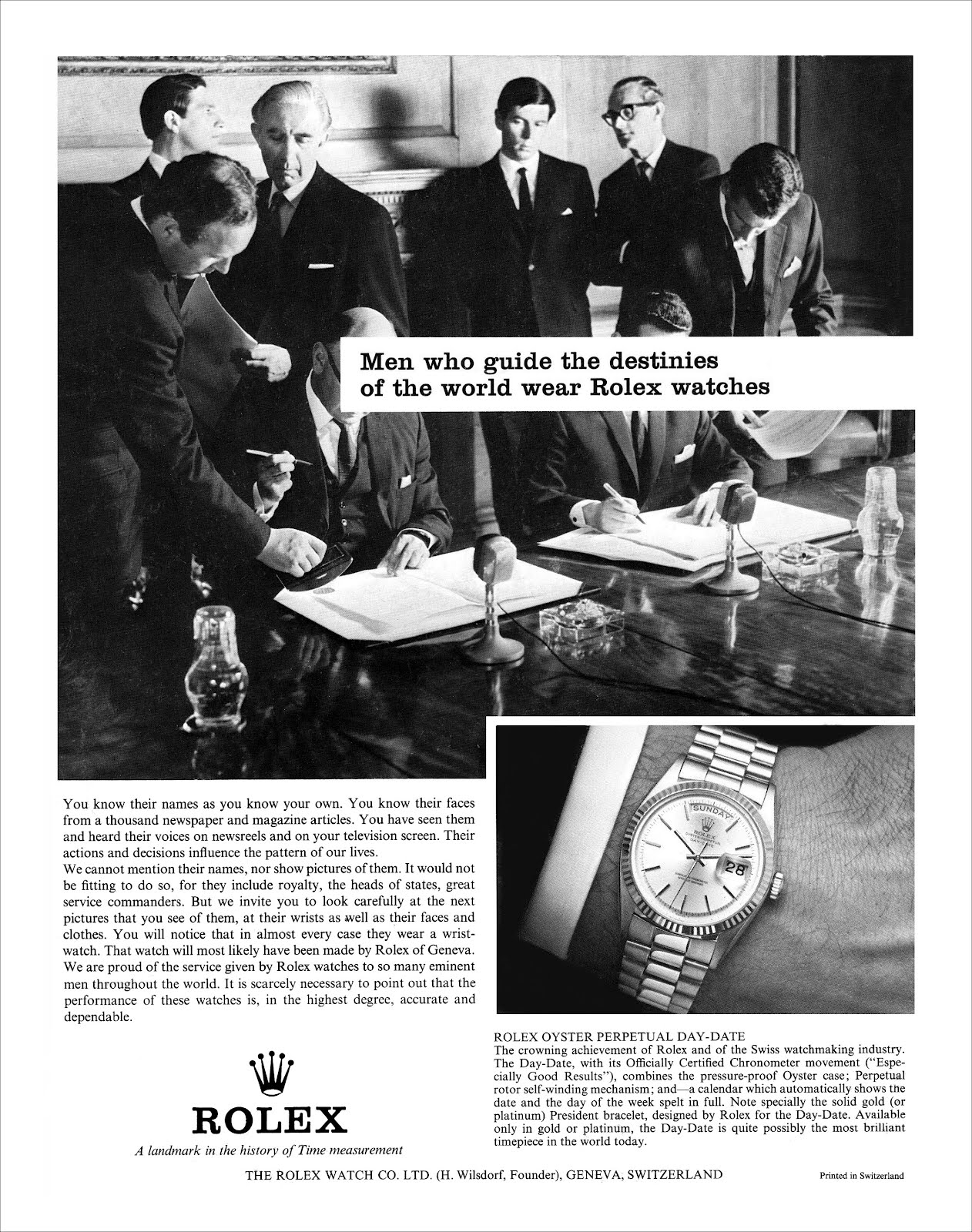
For the Day-Date, the connection to the White House actually predates the addition of the eagle at the 6 o’clock position by several decades. When Lyndon B. Johnson took office in 1963, he was wearing a Day-Date on his wrist. The bracelet, which is now known as the “President” thanks to the numerous photographs showing Johnson wearing it, had already made its debut seven years earlier, along with the watch, featuring its iconic three rows of semicircular links. In today’s “White House,” these two stories can thus be seen side by side on the same timepiece.
From Oman’s khanjar to Washington’s two stars
When compared to the “White House,” there is a precedent that surprises us with the similarity of the colors. In October 2023, Christie’s auctioned a Day-Date reference 1803 from circa 1974, commissioned for the Sultanate of Oman, for $32,760. The case is in yellow gold, the bracelet is a President model, and on the blue dial, the khanjar, the curved dagger superimposed on two crossed swords that forms the Omani emblem, stands out in red against the blue dial.
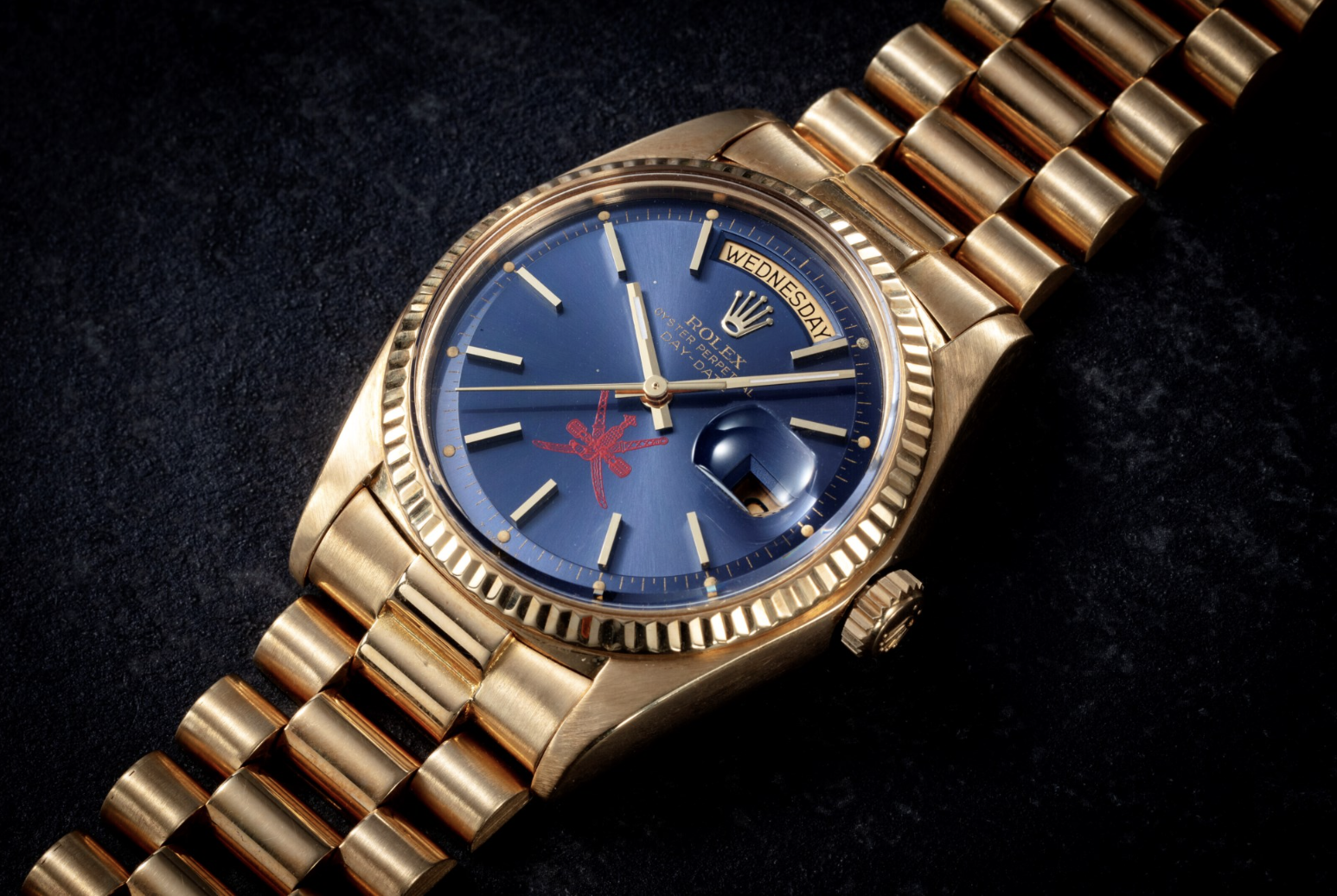
But it’s not the only one. There are several known references of those Day-Date models, and even examples of the same reference in which the Omanite emblem varies in appearance and finish. On a contemporary 1803 model in yellow gold documented by Sotheby’s, the case back is silver-plated, and the same motif is highlighted by a delicate gold appliqué at the 6 o’clock position. Another, very similar version of the 1802 in platinum was auctioned by Christie’s in May 2014, featuring a diamond-set bezel and baguette-cut hour markers.
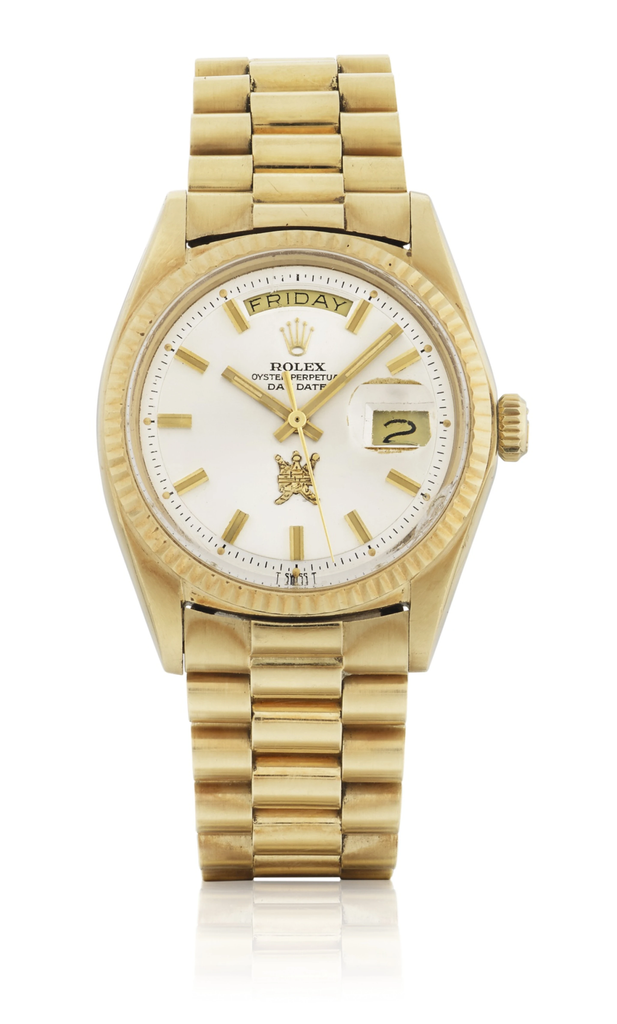
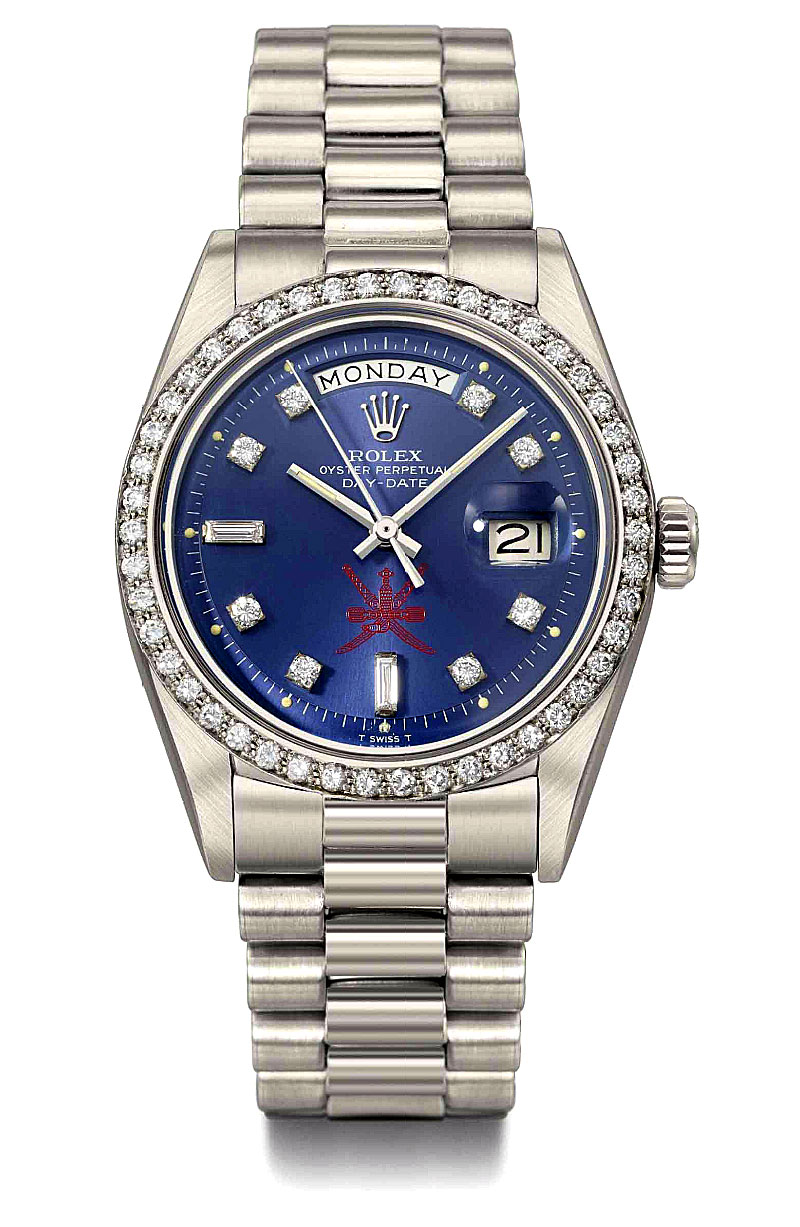
Furthermore, a 1975 platinum 1802 model auctioned by Phillips perhaps offers the most precise comparison with the Washington Day-Date. On the blue dial, surrounding the red khanjar, eight round diamonds mark the hours, and two baguette-cut diamonds highlight the six and nine. It is precisely these two hour markers, and especially the vertical stone supporting the seal, that reveal the visual kinship with the “White House” model, which extends the baguette cut to all ten positions left vacant by the calendar.
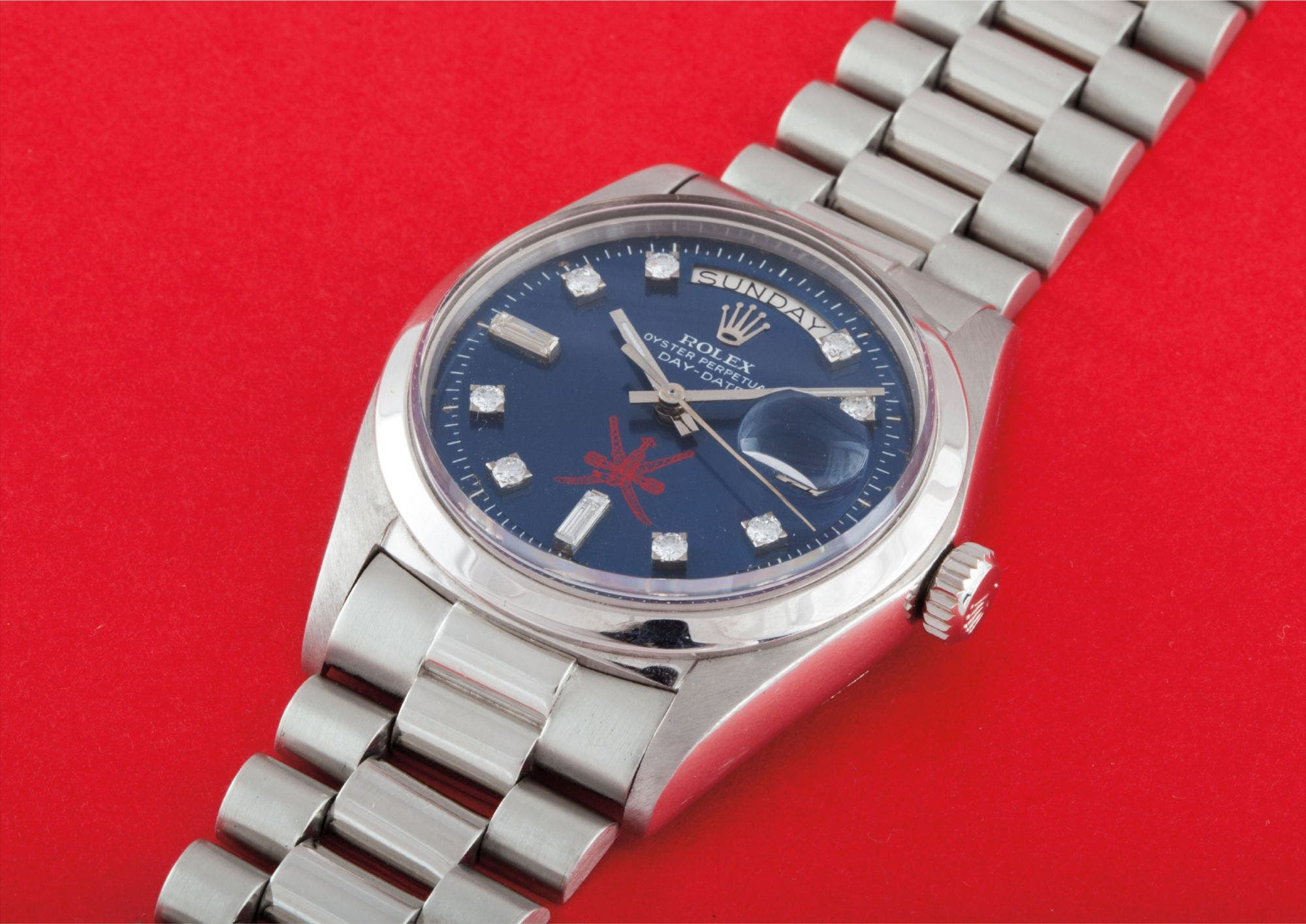
Some of these watches commissioned by the sultan also passed through London, such as the Washington version. The caseback of the 1803 model, auctioned by Christie’s in 2023, is engraved with the name Asprey, the jeweler through whom Sultan Qaboos procures watches to give as gifts.
Half a century later, the resemblance between the two Day-Date watches is all the more interesting because it reflects two different customs. At the court of Qaboos, the dial bears the mark of the person who gave the gift, in all its countless variations. In Washington, it is the buyers themselves who choose to wear the emblem of the administration to which they belong on their wrists. Will there be other versions of the Rolex White House, or will this remain the only one?
Are you looking for the perfect gift? Explore our online store and discover the entire collection by IWS – Italian Watch Spotter!
For all the latest updates on the world of watchmaking, follow us on Instagram and visit our YouTube channel.