
Ninety jobs cut, sales down by nearly 30%, production reduced by more than a third, and the possible discontinuation of a large portion of the current collections. For Zenith, one of the most important watchmakers in the history of Swiss watchmaking, 2029 could mark the beginning of a completely different era.
What if we told you that Chronomaster, Defy, and Pilot, three of the most recognizable names in the Zenith catalog, could be among the casualties of this transformation?
The news, which broke on October 22 and was reported by numerous publications, concerns a sweeping restructuring plan initiated by the Le Locle-based company, which has been part of the LVMH group since 1999. The goal is radical: to transform Zenith into a luxury watch brand , with significantly lower production volumes and a much higher price point.
But what makes this operation particularly delicate are the numbers. Because behind the promise of a more exclusive Zenith lie years of losses, a profoundly changed market, and an industrial structure that the Maison is now struggling to sustain.
Zenith Cuts 90 Jobs: What’s Happening in Le Locle?
On October 22, 2026, CEO Benoit de Clerck, who has led the company since January 2024, presented employees with a three-year plan designed to reshape Zenith’s future.
Early reports suggested that 100 jobs might be cut at the Le Locle manufacturing facility, where about 200 people worked, and that an equal number of jobs might be at risk in the company’s international sales and distribution operations.
The situation became clearer on November 18, 2026: following consultations with the Unia union, Zenith confirmed the elimination of 90 jobs at its Swiss headquarters and reached an agreement on support measures for the affected employees.
This reduction represents approximately 45% of the local workforce.
As for possible job cuts overseas, initial reports indicated that up to 100 positions were at risk, but a definitive number has not yet been confirmed. The reorganization will also affect the sales network, distribution, and the manufacturing division’s production capacity.
The reason? According to management, Zenith’s current structure is designed to produce and sell far more watches than the market can currently absorb.
Zenith’s crisis figures: revenue down 29% and production down 35%
To understand all the reasons behind this shift, we need to start with the data.
According to estimates by Morgan Stanley and LuxeConsult, Zenith’s annual revenue is expected to decline from 138 million Swiss francs in 2023 to 98 million in 2025.
A decline of 40 million francs, equivalent to about 29 percent, in just two years.
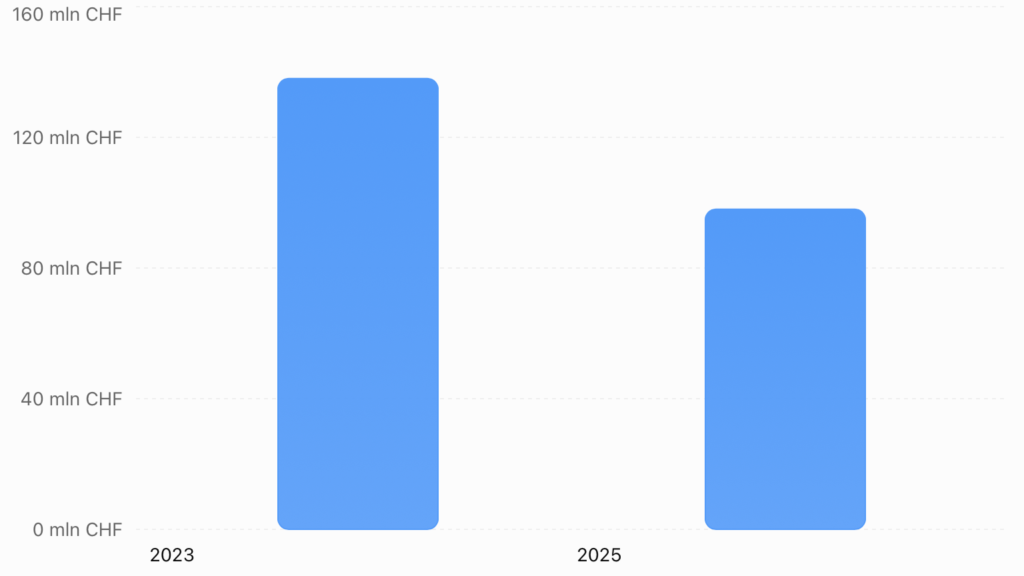
Zenith’s estimated revenue between 2023 and 2025 | Credit: Morgan Stanley/LuxeConsult.
The decline in production volumes was even more pronounced:
- 2023: approximately 13,000 watches.
- 2025: approximately 8,500 watches.
- Difference: 4,500 fewer units, equal to approximately 34.6%.
(These are industry estimates, not financial data published independently by Zenith, since LVMH does not disclose the financial results of individual brands.)
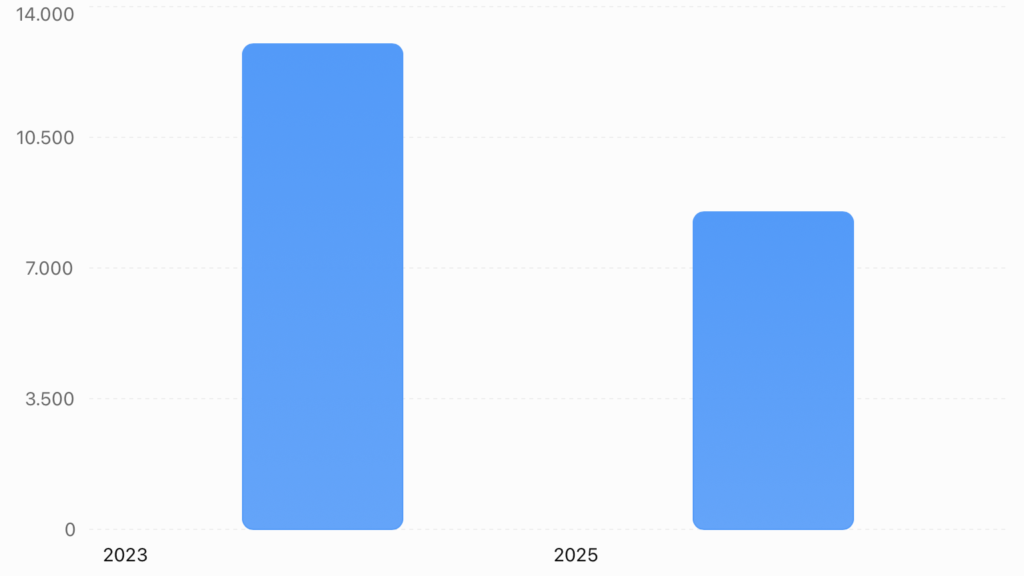
The decline in Zenith’s sales volume between 2023 and 2025 | Credit: Morgan Stanley/LuxeConsult.
The picture remains significant, however. The manufacturing sector, historically structured to handle higher production volumes, now finds itself bearing industrial and commercial costs that current volumes can no longer offset. And the problem goes far beyond a mere temporary dip in demand!
CEO Benoit de Clerck acknowledged that Zenith operates in a particularly competitive segment, facing off against brands with significantly greater marketing and distribution resources.
Other factors weighing on the company include the strengthening of the Swiss franc, U.S. tariffs, and the slowdown in key markets such as Asia and the Middle East.
Management’s conclusion is clear: Zenith must change its business model to regain financial sustainability.
Chronomaster, Defy, and Pilot: Which Zenith watches are at risk of being discontinued?
Here comes the bad news for us fans and collectors!
According to rumors, the restructuring plan is expected to involve the discontinuation of production of numerous models in the Chronomaster, Defy, and Pilot lines. Furthermore, Zenith may phase out the vast majority of its current collections in the near future.
But be aware: the complete discontinuation of these three product lines has not been officially confirmed, nor has a definitive list of the items to be removed from the catalog been released.
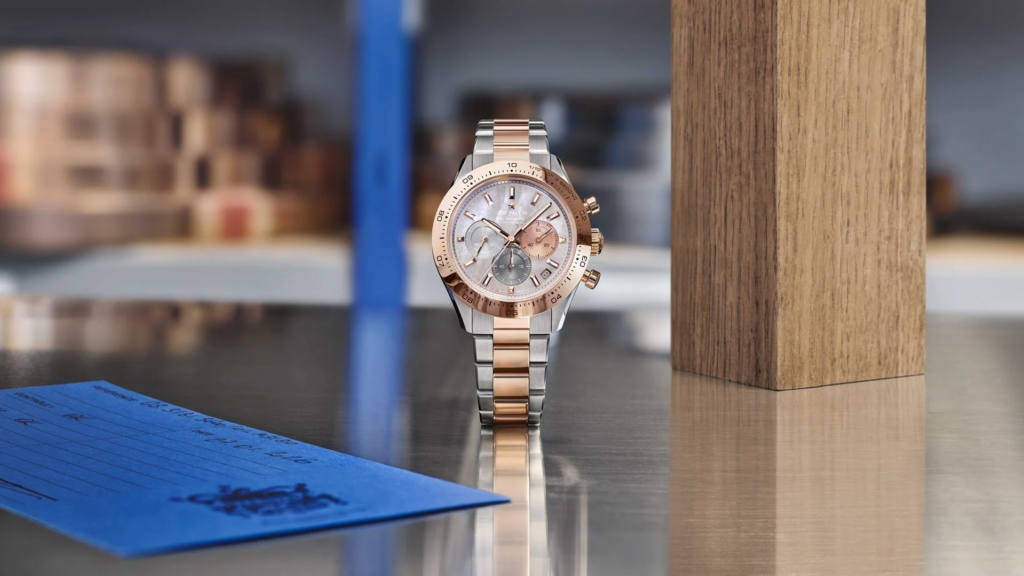
Zenith CHRONOMASTER Sport Collection, two-tone version with mother-of-pearl dial | Credits: Zenith
It remains, however, a scenario of enormous significance. The Chronomaster embodies the legacy of the El Primero chronograph, introduced in 1969 and which has become one of the most important movements in the history of watchmaking. The Defy, with its contemporary interpretations and more experimental technical solutions, embodies the Maison’s innovative spirit. Finally, the Pilot preserves Zenith’s connection to the history of aviation and precision instruments.
Three distinct collections, yet essential to understanding the brand’s contemporary lineup. Any scaling back of these collections would represent much more than a simple update to the product lineup; it would mean redefining which watches will represent Zenith in the coming decade.
Fewer watches, prices starting at 50,000 francs: LVMH’s new strategy
The new Zenith is expected to produce fewer watches, focusing on high-end models, more sophisticated craftsmanship, and a higher degree of exclusivity.
According to forecasts, annual sales volumes could fall significantly below the estimated 8,500 units in 2025, while the average retail price could approach 50,000 Swiss francs. For comparison, the Morgan Stanley/LuxeConsult report indicated an estimated average retail price of approximately 15,565 francs.
If the 50,000 franc scenario were to materialize, the average price would therefore be more than three times higher, representing an increase of approximately 221%.
One clarification is essential: Zenith has not officially announced a future average price of 50,000 francs. This is a journalistic projection, not a formal target set by the Maison.
The strategic direction, however, is clear: reduce production volumes, increase the value of each individual timepiece, and focus resources on a clientele of collectors willing to invest considerably larger sums.
A move that would put Zenith in competition with brands such as Patek Philippe, Audemars Piguet, Richard Mille, and numerous leading names in the independent watchmaking scene. Not to mention that within the LVMH group itself , Daniel Roth, Gérald Genta, and Louis Vuitton are already active, with haute horlogerie projects developed through La Fabrique du Temps.
Zenith G.F.J. Caliber 135: Has the Maison’s future already arrived?
To get a sense of what Zenith might look like in 2029, one need only look at one of the most interesting watches recently unveiled by the manufacturer.
The Zenith G.F.J. Caliber 135, introduced in 2025, pays tribute to Georges Favre-Jacot, the brand’s founder in 1865, and brings one of the most prestigious movements in its history back into the spotlight.
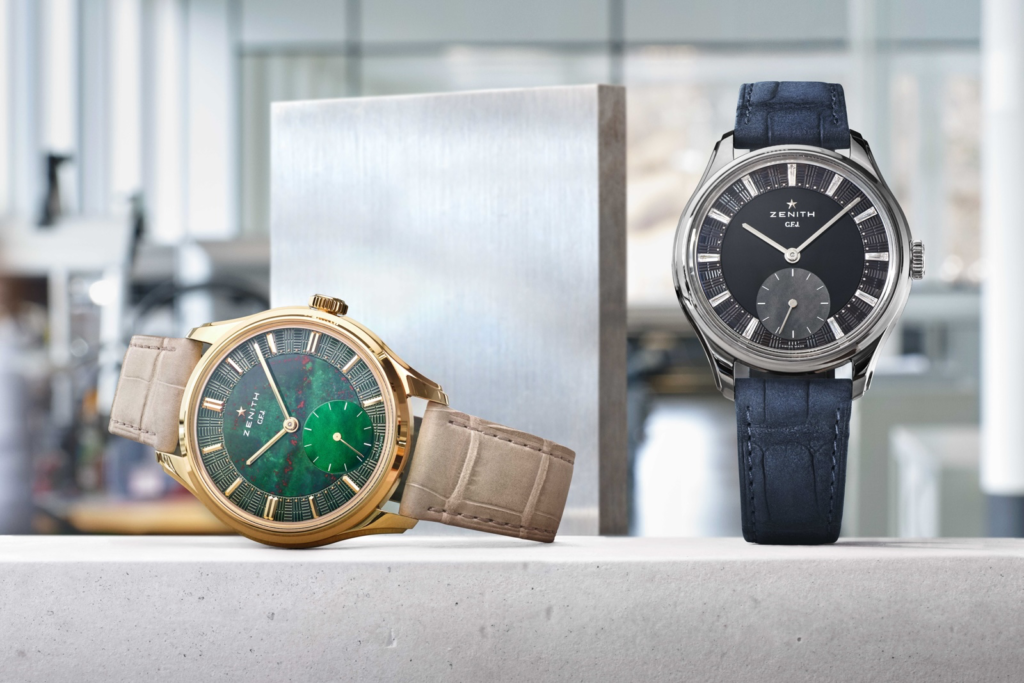
Zenith G.F.J. Collection Caliber 135, available in yellow gold with an oxblood dial and in tantalum with an onyx dial | Credits: Zenith
The Caliber 135 is closely linked to the Maison’s chronometric tradition and its successes in observatory competitions. An impressive technical legacy: Zenith has won 2,333 chronometric awards, a historic record that is one of the most important elements of its identity.
G.F.J. interprets this legacy through refined design, high-end finishes, and limited production, with a starting price of around $50,000.
But let’s focus on another element that can help us bring things full circle! The collaboration with independent Japanese watchmaker Naoya Hida has resulted in a special edition of the G.F.J., priced at approximately $75,000 and limited to just 10 pieces.
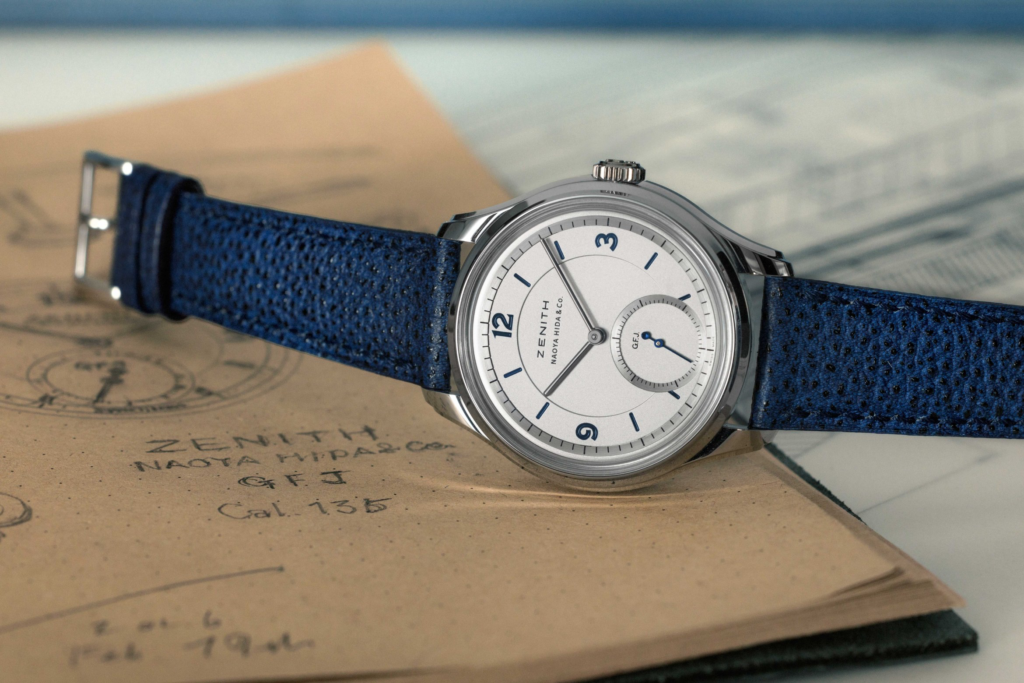
Zenith G.F.J. Collection Caliber 135 x Naoya Hida | Credits: Zenith
All ten had already been sold even before the public unveiling. This result demonstrates that a segment of the public is ready to place a high value on Zenith’s technical heritage, especially when it is expressed through particularly exclusive designs.
Who knows, perhaps this is precisely where the manufacture’s new identity could emerge: fewer models, greater attention to finishes, reinterpreted historic movements, and extremely limited editions.
What will become of the El Primero? The story Zenith can’t afford to lose
It would be impossible to discuss Zenith’s future without mentioningthe El Primero. Introduced in 1969, this famous high-frequency automatic chronograph, beating at 36,000 vibrations per hour, represents one of the Maison’s most significant technical contributions to modern watchmaking.
Its history is inextricably linked to Charles Vermot, the watchmaker who, in the 1970s during the quartz crisis, decided to secretly preserve the equipment, blueprints, and components needed to produce the movement.
A decision that would have paved the way for the El Primero’s revival in the years that followed, when other brands also began seeking high-quality automatic chronograph movements. Among them, of course, was Rolex, which used a significantly modified version of the El Primero for the first generation of the automatic Daytona, introduced in 1988.
Today, the landscape has changed, but the movement’s industrial significance remains. Zenith will, in fact, continue to produce calibers for other brands within the LVMH group, including Hublot and Bulgari.
According to estimates, the order backlog for the supply of movements is already fully booked through 2027.
Service and restoration activities are also expected to continue. The manufacture maintains a stock of over one million components in Le Locle for the maintenance and restoration of historic watches.
For this reason, the possible downsizing of the Chronomaster family should not be confused with an abandonment of the El Primero. On the contrary, the caliber could become one of the central elements of the new strategy, both as a technical legacy and as an industrial resource for the group.
The Swiss Watchmaking Crisis: The Data Explains Why Zenith Is Changing Course
Zenith’s transformation comes at a particularly delicate time for the entire watch industry.
According to data from the Federation of the Swiss Watch Industry, the value of exports fell from 26.7 billion francs in 2023 to 25.5 billion in 2025, a decrease of about 4.5 percent .
During the same period, the number of watches exported fell from 16.9 million to 14.6 million units, marking a decline of approximately 13.6%.
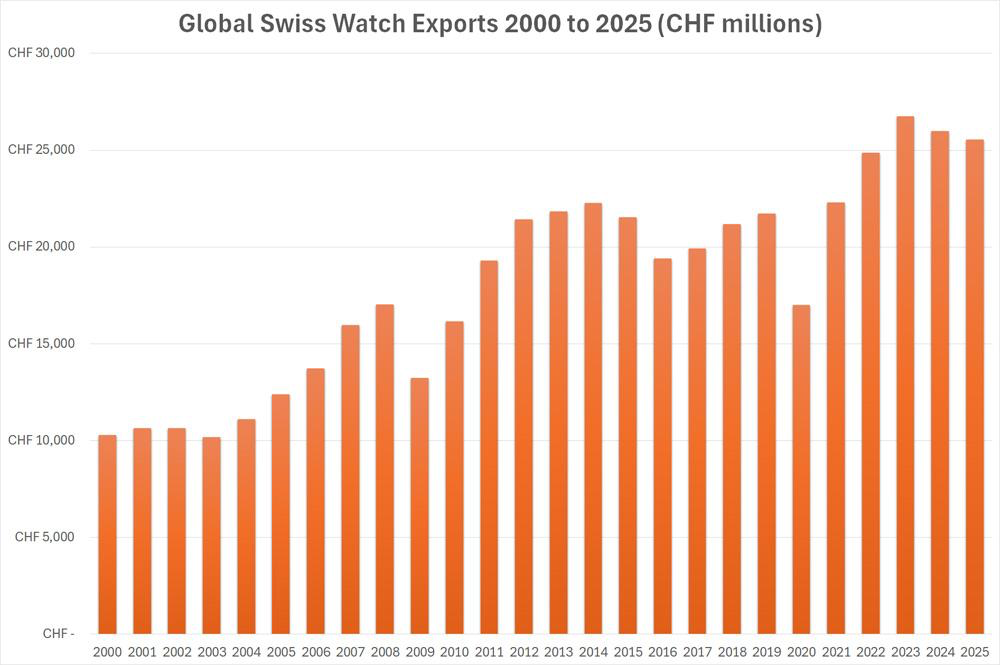
Trends in the Value of Exports from the Swiss Watch Industry | Credits: Fédération de l’industrie horlogère suisse (FH).
The comparison is telling: volumes are declining much more rapidly than the total value of exports. This phenomenon reflects, at least in part, the market’s growing concentration on higher-end products.
While some fashion houses capable of sustaining high prices and strong desirability continue to show greater resilience, numerous brands in the mid-range segment are grappling with weaker demand and operating costs that are difficult to reduce.
Zenith’s restructuring is therefore part of a broader trend affecting other companies in the Swiss watch industry, with staff reductions already reported at firms such as Breitling, Montblanc, and IWC.
For LVMH, however, the challenge is particularly significant. Zenith has a history spanning more than 160 years, an integrated manufacturing facility, a legacy of exceptional movements, and technical expertise that is difficult to replicate.
The issue, therefore, is not merely about reducing costs, but about understanding how to transform these strengths into a sustainable long-term industrial and commercial model.
Zenith 2029: The End of an Era or the Beginning of a New Chapter?
At this point, the question is inevitable: what kind of Zenith will we see in 2029?
A brand with much more limited production, a significantly scaled-back lineup, and watches aimed primarily at a high-end watchmaking clientele? Or a brand capable of retaining at least some of the collections that have made it recognizable, reinterpreting them according to new standards of exclusivity and finish?
For now, the business plan sets a clear direction, but many questions about the future of individual products remain unanswered.
There is also one aspect that deserves special attention! Zenith doesn’t need to invent a story to justify its entry into the world of fine watchmaking. That story already exists: from the Caliber 135 to the El Primero, spanning more than a century and a half of research into precision.
The challenge will be to demonstrate that this heritage can support a radically different economic positioning without compromising the identity that has made the brand recognizable to enthusiasts.
In the 1970s, it was Charles Vermot who saved the El Primero from a fate that seemed all but sealed. Today, more than fifty years later, Zenith is preparing for another decisive transformation.
The difference is that this time, it’s not about saving a movement, but about deciding which Zenith to pass on to the next generation of collectors.
What about you, would you give up the Chronomaster, Defy, and Pilot for a more exclusive Zenith?
Are you looking for the perfect gift? Explore our online store and discover the entire collection by IWS – Italian Watch Spotter!
For all the latest updates on the world of watchmaking, follow us on Instagram and visit our YouTube channel.