
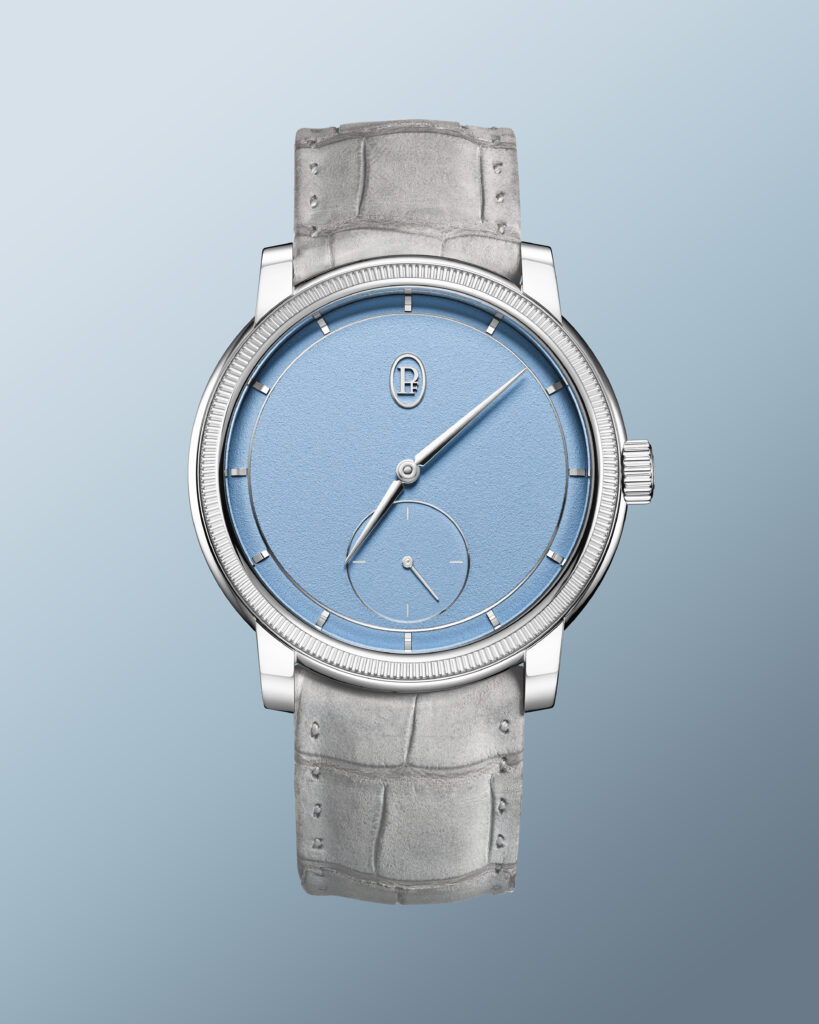
At Milan Watch Week 2026, Parmigiani Fleurier presents the new TORIC Petite Seconde Platinum Morning Blue. 950 platinum, hand-engraved white gold dial, PF780 manual-winding caliber in rose gold. Hours, minutes, and small seconds. Three hands are all it takes for a watch that channels its complexity elsewhere: into the materials, the proportions, and the craftsmanship required to create it.
“Morning Blue” is the final chapter of this story. To get there, we need to start in 1996.
TORIC, Thirty Years Later
TORIC is Parmigiani Fleurier’s founding collection, through which Michel Parmigiani first expressed his vision for the Maison in 1996.
Its origins coincide with a pivotal moment in mechanical watchmaking. The quartz crisis had weakened the cultural and artisanal fabric of the industry; Michel Parmigiani, on the other hand, came from the field of restoration, having spent years studying and bringing back to life objects built according to mechanical principles and crafts that were in danger of disappearing.
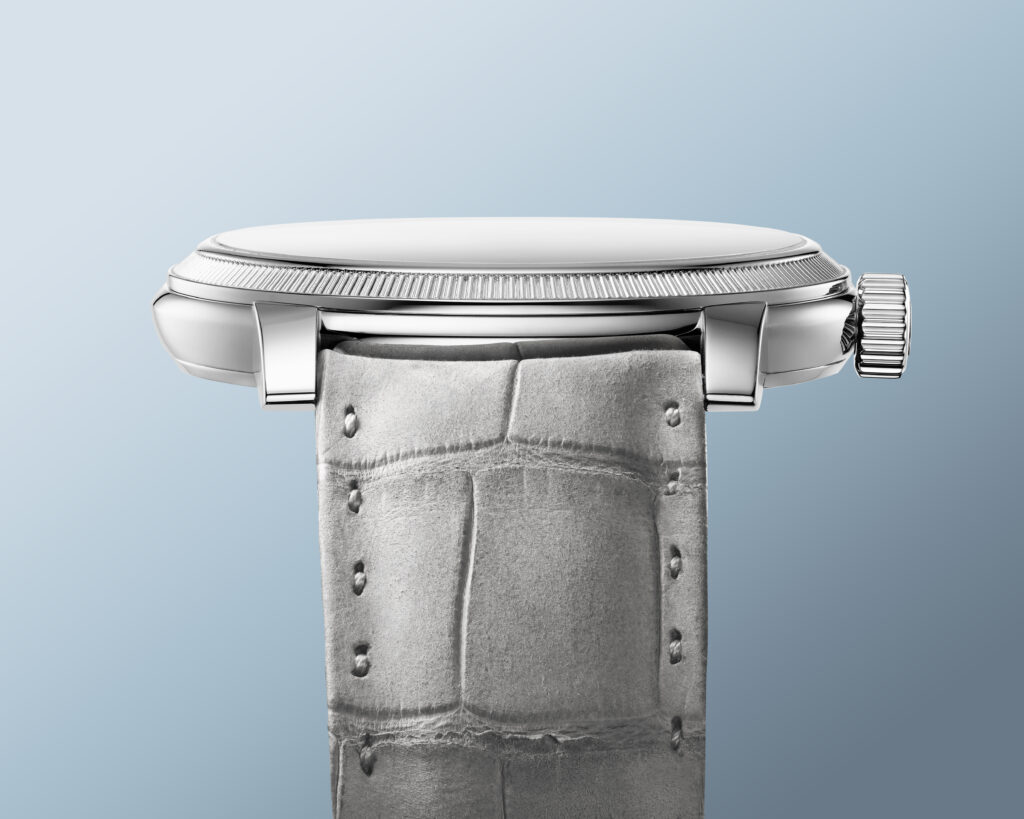
TORIC was born out of this understanding. The distinctive fluted bezel drew inspiration from the rhythm of classical architectural moldings, while its proportions reflected Michel Parmigiani’s interest in natural geometry, harmony, and the balance of forms.
Thirty years later, the language has changed. The contemporary TORIC draws on that culture and frees it from the need to appear historic. The result is a different take on the elegant watch: less tied to the formal codes of the traditional dress watch, and more personal, tactile, and relaxed.
Guido Terreni, CEO of Parmigiani Fleurier, sums it up this way: “With TORIC, we didn’t set out to revive the past, but to reinterpret it.”
The Platinum Morning Blue perhaps embodies this idea in its most complete form.
A 17th-century recipe, a clock face from 2026
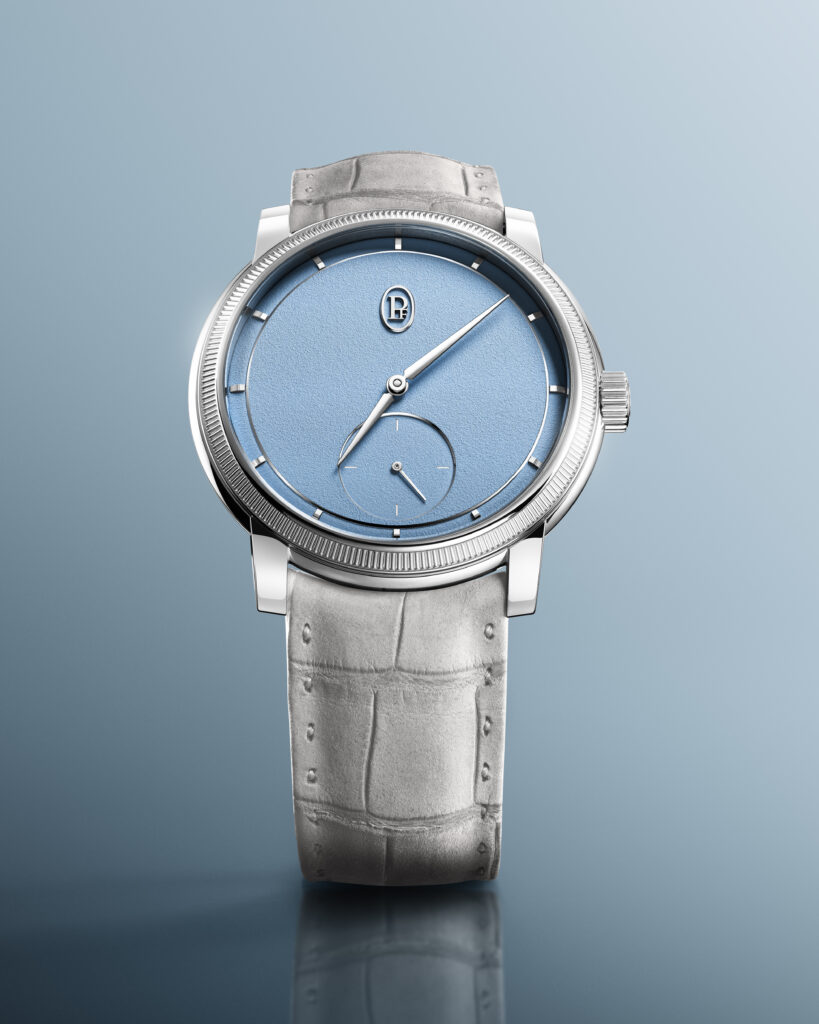
From a distance, the Morning Blue dial appears almost uniform. As you get closer, the surface begins to shift. The base is made of 18-karat white gold, and its texture is the result of “grenage,” an ancient finishing technique preserved by Michel Parmigiani through his work as a restorer.
The recipe dates back to the 17th century and seems almost as if it came from a workshop of another era: cream of tartar, sea salt ground with a glass pestle, silver, and demineralized water.
In developing the contemporary TORIC, Parmigiani Fleurier sought a surface that would appear serene from a distance and reveal its complexity only upon closer inspection. Michel Parmigiani personally passed on the technique to the Maison’s artisans.
The process remains entirely manual. The paste is applied to the surface and worked with brushes using circular and multidirectional movements. The silver in the mixture is photosensitive, so the artisan works in semi-darkness.
First, a stiffer brush is used to prepare the surface. This is followed by finer, softer tools capable of creating a progressively denser and more delicate texture. Pressure, movement, and the sensitivity of the hand become tools of measurement: at a certain point, even the resistance felt beneath the brush changes—a sign that the tiny silver particles are adhering to the dial.
No two surfaces can be perfectly identical.
Morning Blue
Morning Blue is applied to this surface. It is a light, desaturated blue, designed to evoke that moment in the morning when the sky begins to brighten. The description might seem purely chromatic; on the TORIC, it inevitably takes on a tactile quality.
The graining prevents light from behaving as it would on a perfectly smooth surface. The thousands of micro-irregularities scatter the light and continuously alter the perception of color as the wrist is tilted.
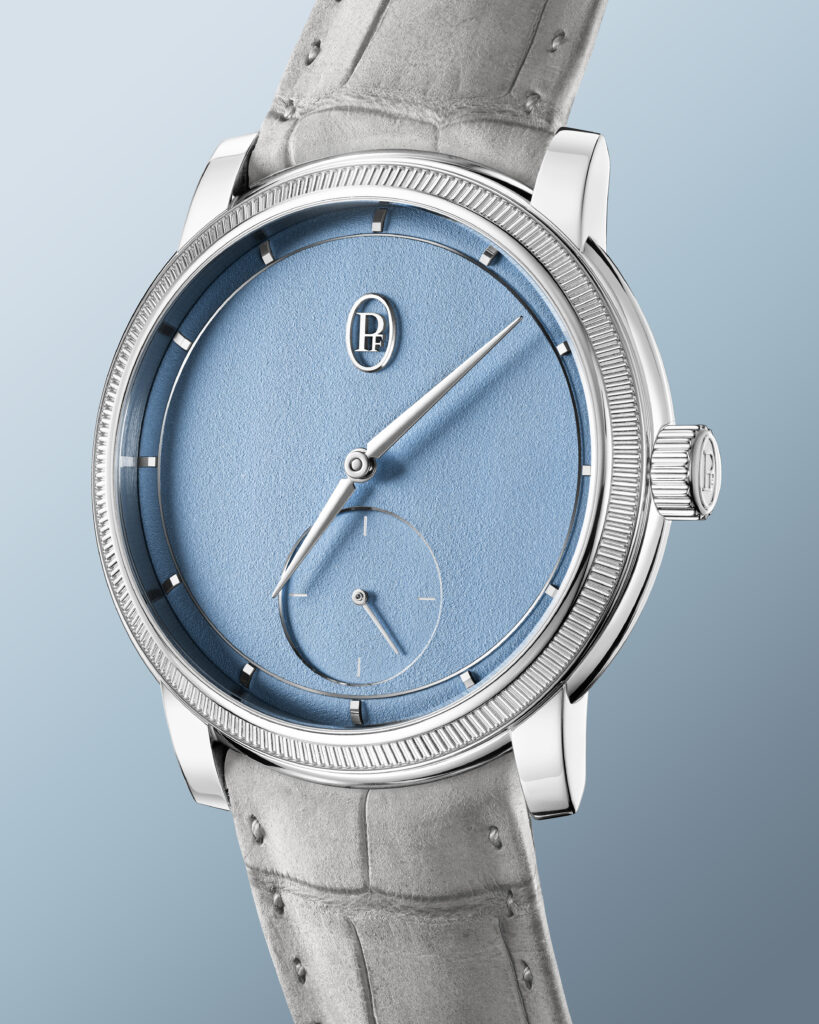
The dial’s construction further enhances the effect. It is crafted in a stepped design: rather than lying flat on a single plane, it slopes gradually toward the edge, creating a transition between the central surface, the hour markers, and the case. This design is inspired by the contoured dials of the mid-20th century, reinterpreted in a way that avoids any overtly retro references.
Very few elements remain on the blue dial: 18-karat rhodium-plated gold alpha hands, applied hour markers, and a small seconds sub-dial at 6 o’clock. At 12 o’clock, the PF logo alone replaces the brand’s full signature.
950 platinum: 40.6 mm and 8.8 mm thick
The Morning Blue features a 40.6-mm polished 950 platinum case that is just 8.8 mm thick.
The fluted bezel remains one of the TORIC’s defining features and creates a subtle, rhythmic band around the grained surface of the dial. Platinum adds another dimension to the design: its color remains understated, almost cool, while the density of the material is immediately apparent when you hold the watch in your hand.
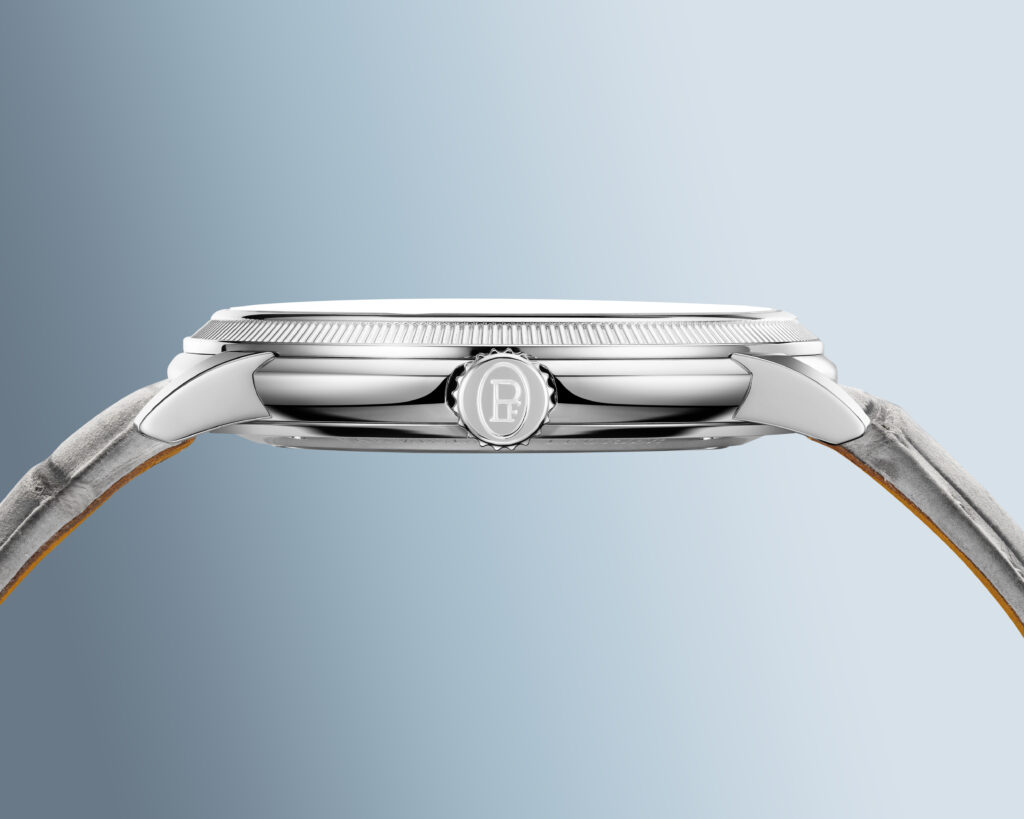
It’s an interesting contrast. Visually, the TORIC appears lightweight. Physically, the platinum tells a completely different story. The crystal and case back are made of sapphire with an ARunic anti-reflective coating, and the watch is water-resistant to 30 meters.
The real surprise comes when you turn the box over.
The PF780 Gauge
The Parmigiani Fleurier dial’s subdued color palette contrasts with the richness of the PF780.
The manual-winding movement is crafted from 18-karat rose gold, a rare material for the structural components of a movement and one that is particularly challenging to machine and finish.
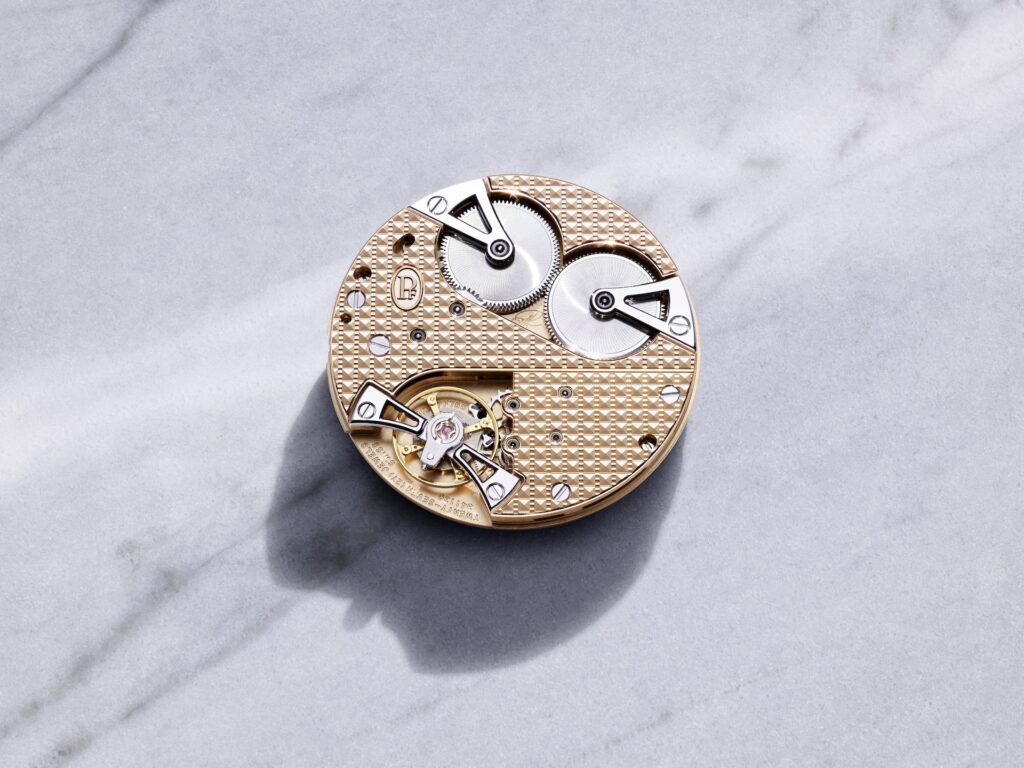
The design is characterized by two large bridges and two visible barrels. The decision to use a double barrel stems from a principle developed in part through Michel Parmigiani’s experience in restoration: to distribute energy more evenly, thereby reducing stress and wear along the movement’s train.
On the rose gold bridges, we find the “Côtes de Fleurier” pattern, created by the intersection of wavy motifs. Here, too, the method is just as important as the result: rather than relying on an electronically controlled process, Parmigiani Fleurier uses an antique cam-driven guilloché machine.
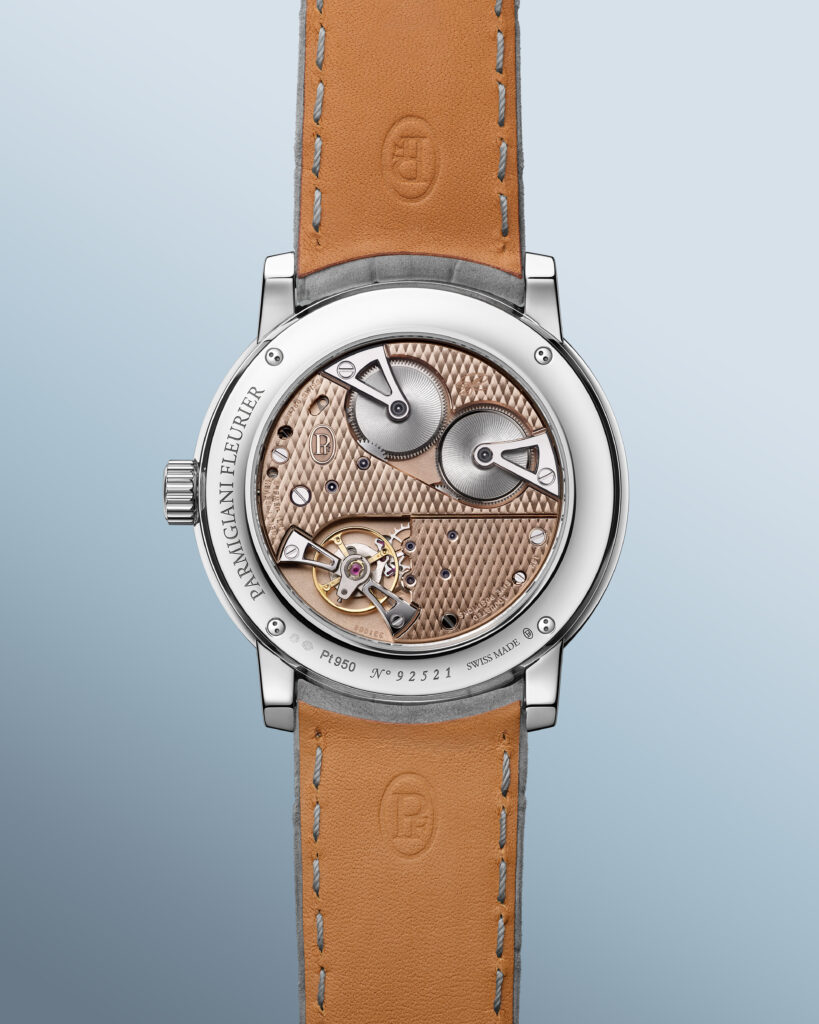
The PF780 has 157 components and 27 jewels, is just 3.15 mm thick, operates at 4 Hz (equivalent to 28,800 vibrations per hour), and offers a 60-hour power reserve.
The manual winding mechanism completes the watch’s character. No rotor obstructs the view of the movement, and the act of winding the crown remains part of the daily experience.
The Legacy of Neapolitan Tailoring
Parmigiani Fleurier pays the same attention to the element that normally concludes a technical specification sheet: the strap.
The Akoya Grey alligator nubuck was chosen to complement the matte, grainy surface of Morning Blue through its texture, rather than through a striking color contrast.
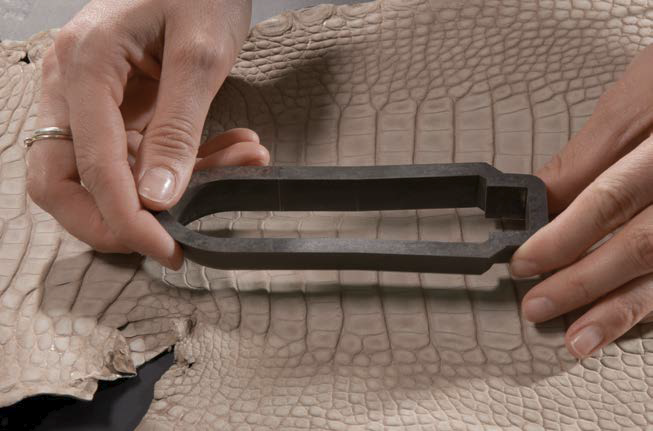
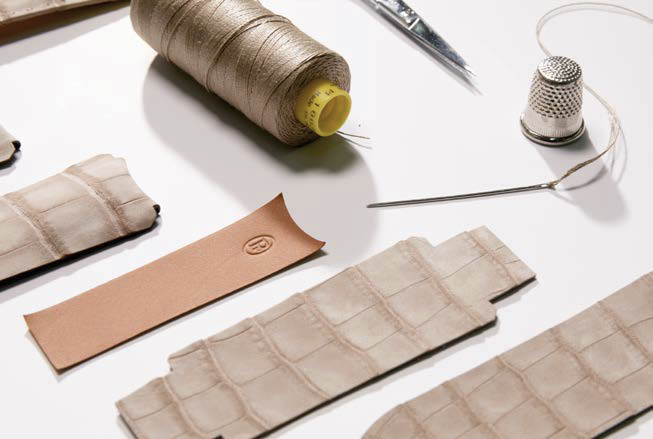
It takes about twenty manual steps and two days of work to make it. Six layers are shaped and assembled by hand.
Then there is the stitching. Parmigiani Fleurier uses a technique inspired by the Italian tradition of hand-stitching: a fine stitch followed by a longer interval, a nod to the understated craftsmanship of Neapolitan tailoring.
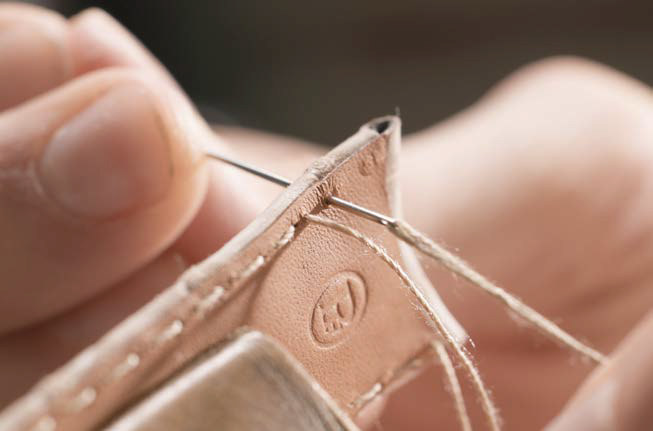
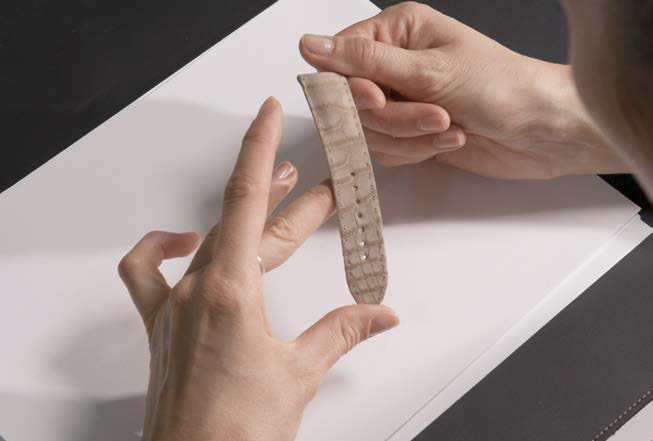
It’s a tiny detail, but at Milan Watch Week it inevitably takes on a special significance. On a Swiss watch born out of the culture of restoration, one of the final steps before it reaches the wearer’s wrist speaks Italian.
The clasp is a simple 950 platinum pin buckle. This design avoids the metal prongs of a folding clasp and allows the strap to open completely, providing an unobstructed view of the PF780.
TORIC Morning Blue at Milan Watch Week
The Parmigiani Fleurier TORIC Petite Seconde Platinum Morning Blue, reference PFC940-2010008-300181, makes its debut at Milan Watch Week 2026.
From a few meters away, all that remains is a light blue dial, a light-colored case, and two hands. From a distance of about a palm’s width, the grain pattern becomes visible. Even closer up, you can make out the hour markers, the bevelled edge of the dial, and the rhythm of the bezel. When you turn it over, the platinum suddenly gives way to the rose gold of the PF780.
That initial simplicity then begins to reveal just how much work is required to achieve it.
Perhaps this is precisely why TORIC remains true to the vision Michel Parmigiani conceived thirty years ago. The past remains present without being imitated: a 17th-century technique becomes the surface of a contemporary dial; a cam-driven guilloché machine decorates a modern movement; a hallmark of Italian tailoring finds its way onto the strap of a Swiss watch.
Morning Blue brings this story into the present with a new shade, while preserving the techniques and craftsmanship that define TORIC.
Thirty years after the first TORIC, Parmigiani Fleurier continues to do what Michel Parmigiani envisioned in 1996: preserving ancient craftsmanship well enough to still be able to transform it.
Are you looking for the perfect gift? Explore our online store and discover the entire collection signed IWS – Italian Watch Spotter!
For all real-time updates on the world of watchmaking follow us on Instagram and visit our Youtube channel.