
Every iconic collection, sooner or later, reaches a crossroads: whether to continue evolving or to return to its roots. With the Scafograf 200 MCMLIX, unveiled at Watches and Wonders 2026, Eberhard & Co. demonstrates that these two paths can converge. But to understand the significance of this choice, we must go back to the moment when it all began.
It all began in 1959. That was the year the Scafograf 100 made its debut, the brand’s first diver’s watch and the model that would give rise to one of the most important collections in the history of Eberhard & Co.
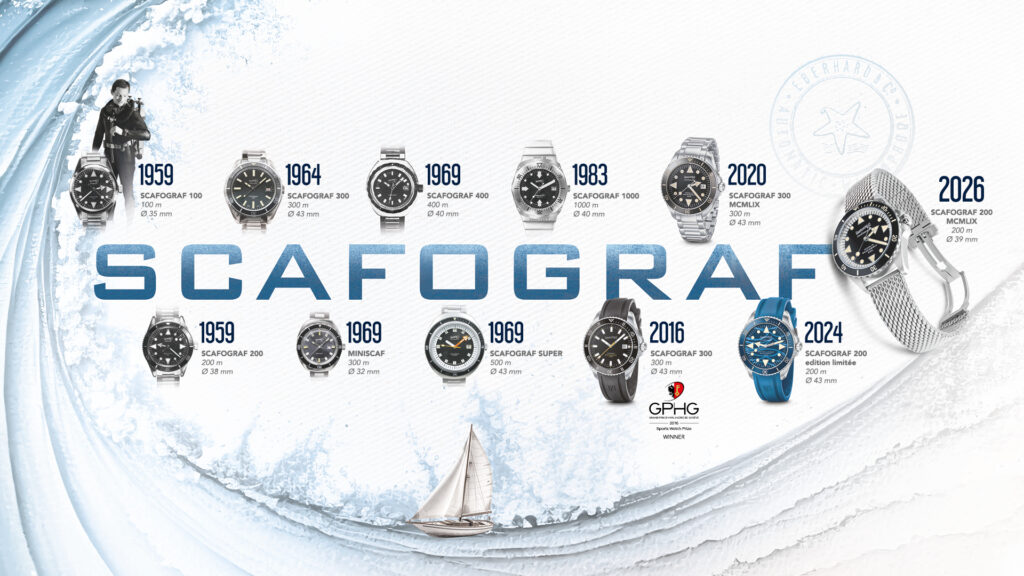
Scafograf Collection Timeline | Credits: Eberhard & Co.
The name itself reflects this choice. MCMLIX, 1959 in Roman numerals, marks the starting point of the new model and embodies the idea that guided its development: to bring back to the forefront the elements that have shaped the Scafograf’s identity.
To achieve this result, Eberhard & Co. retraced the entire evolution of the collection. From the first Scafograf 100 to the Scafograf 300, 400, and 1000, including the Miniscaf, the Scafograf Super, the Grand Prix d’Horlogerie de Genève Sports Watch Prize won in 2016, and the most recent models. Each generation has left a legacy that is now reemerging in the MCMLIX.
But how does all of this translate into the new Scafograf 200 MCMLIX?
The New Scafograf 200 MCMLIX
While the name MCMLIX openly references the year 1959, one need only look at the watch to understand just how thoroughly Eberhard & Co. has explored its own history. Rather than faithfully reproducing the first Scafograf, the brand has chosen to draw on its most iconic elements, reinterpreting them through proportions, materials, and finishes that are perfectly contemporary.
The first significant choice concerns the 39 mm stainless steel case. This size is now considered by many enthusiasts to be the ideal balance for a diver’s watch and brings the Scafograf back to the proportions of the 1959 model. The 12.3 mm thickness and 19 mm lugs complete an extremely harmonious design, faithful to the spirit of the original yet perfectly in tune with contemporary tastes.
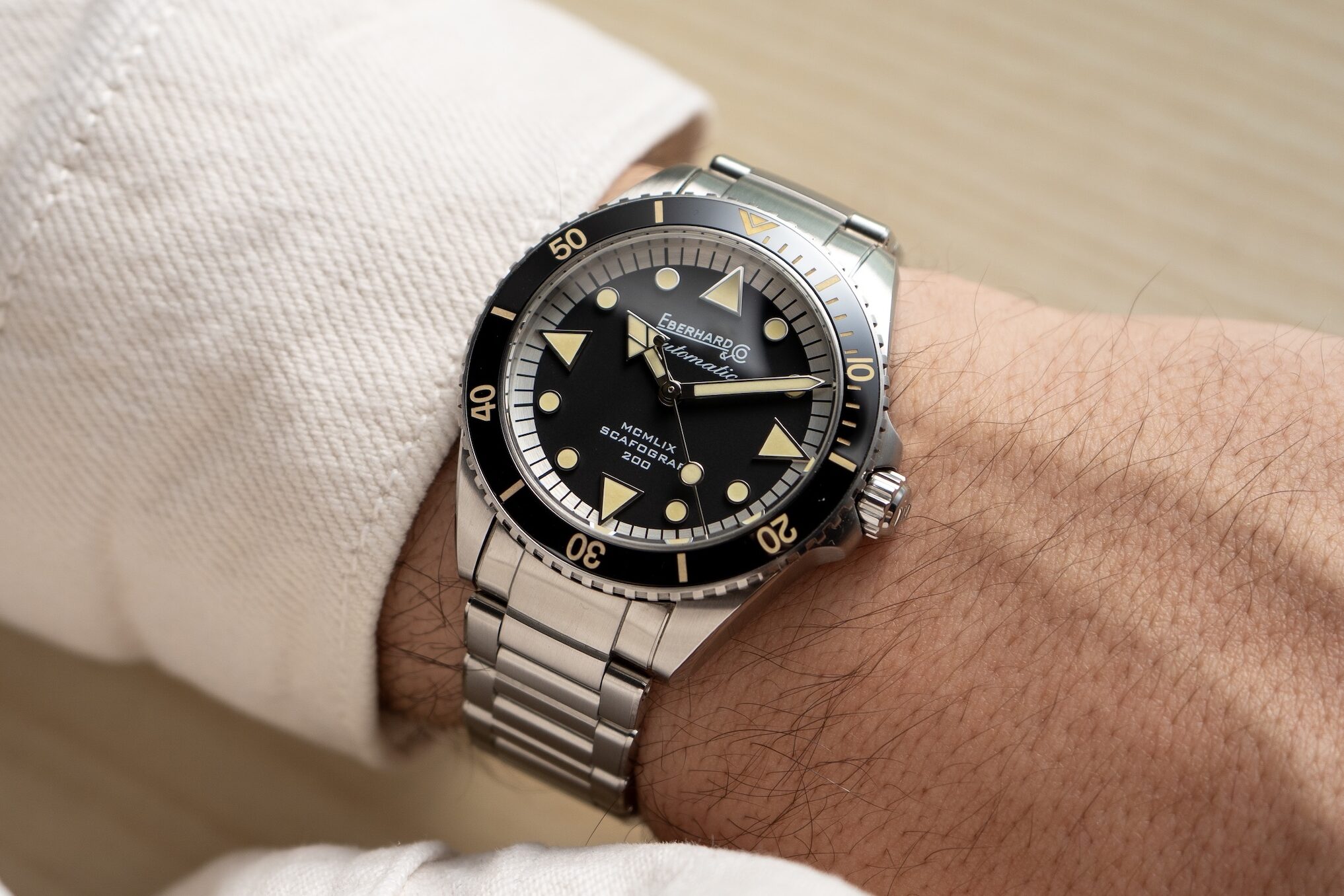
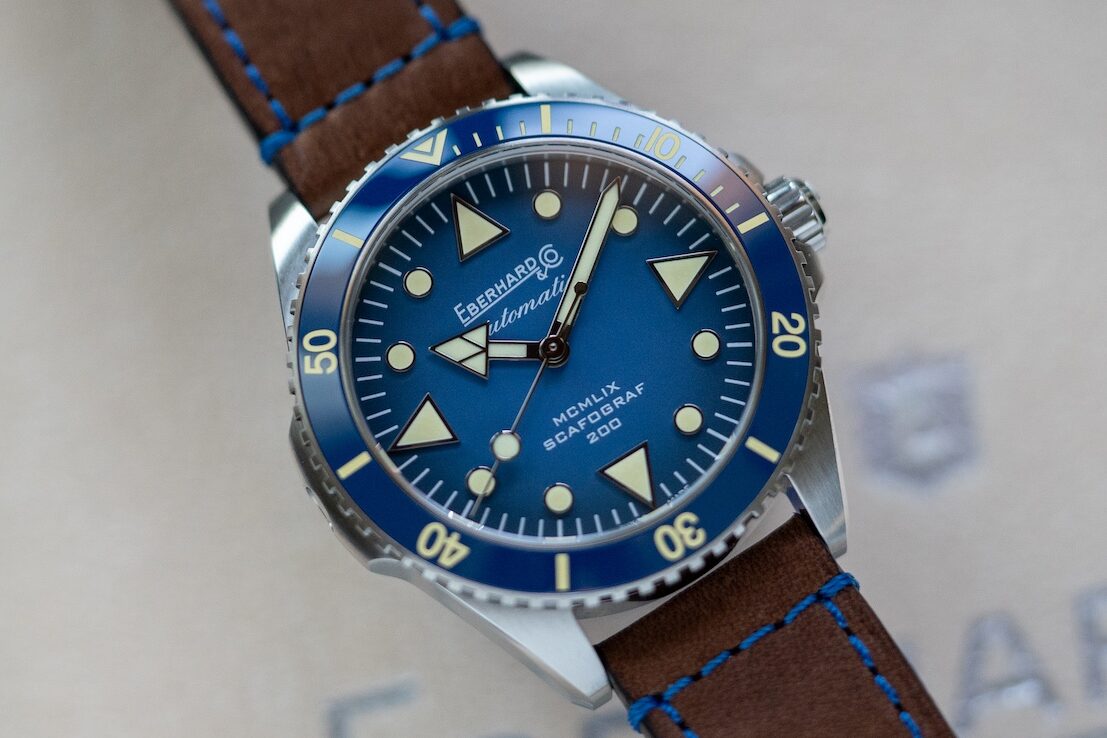
The dial is probably the element where the dialogue between the past and the present is most evident. In fact, the triangular hour markers at 3, 6, 9, and 12 o’clock remain, alternating with the classic applied circular hour markers, a configuration that, from the very beginning, was designed to make the dial easy to read even under the most challenging visibility conditions. Alongside these, we find the historic hour hand with a triangular tip (one of the Scafograf’s symbol), the “baton” minute hand, and the central seconds hand with a circular luminescent element.
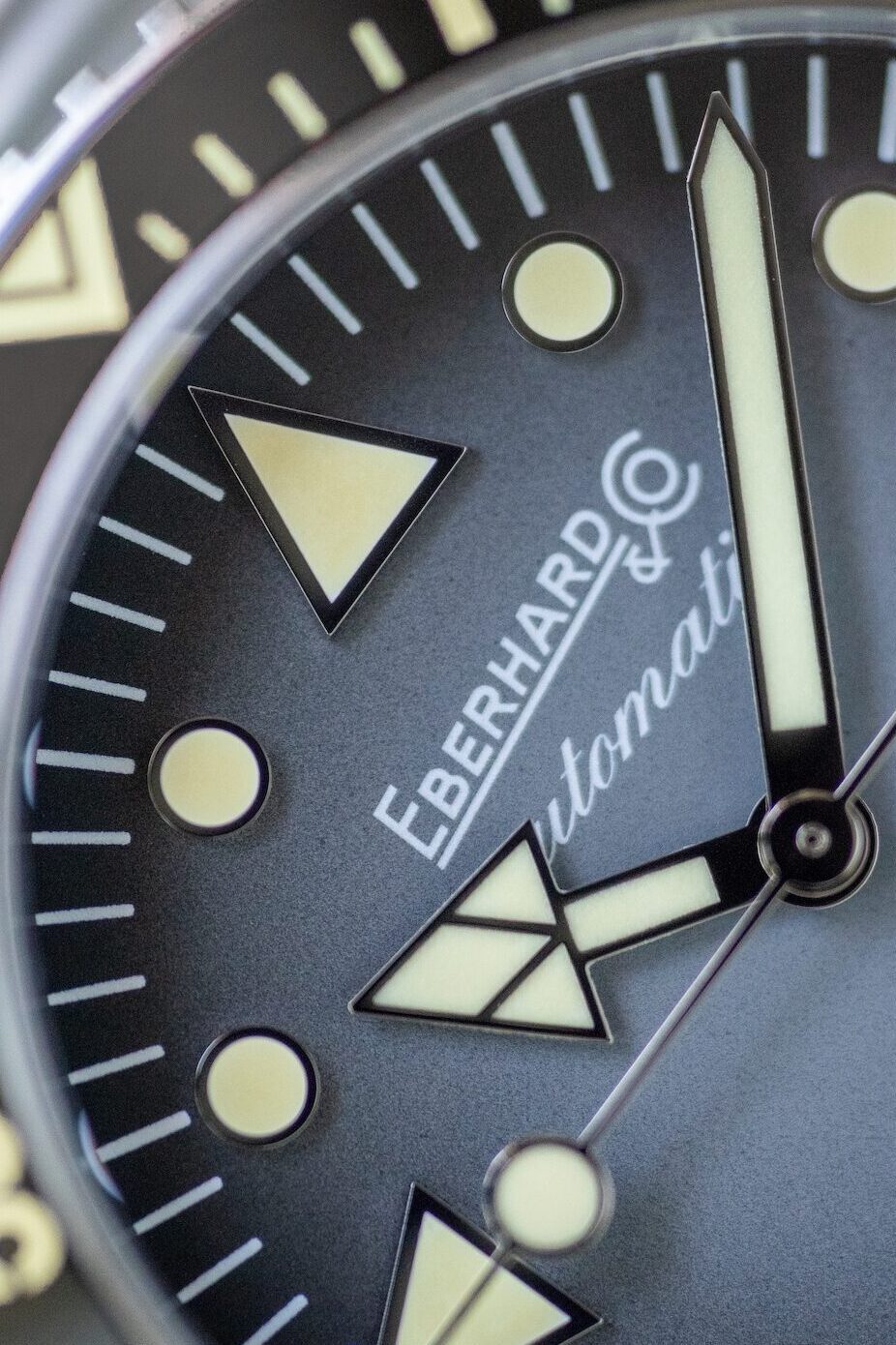
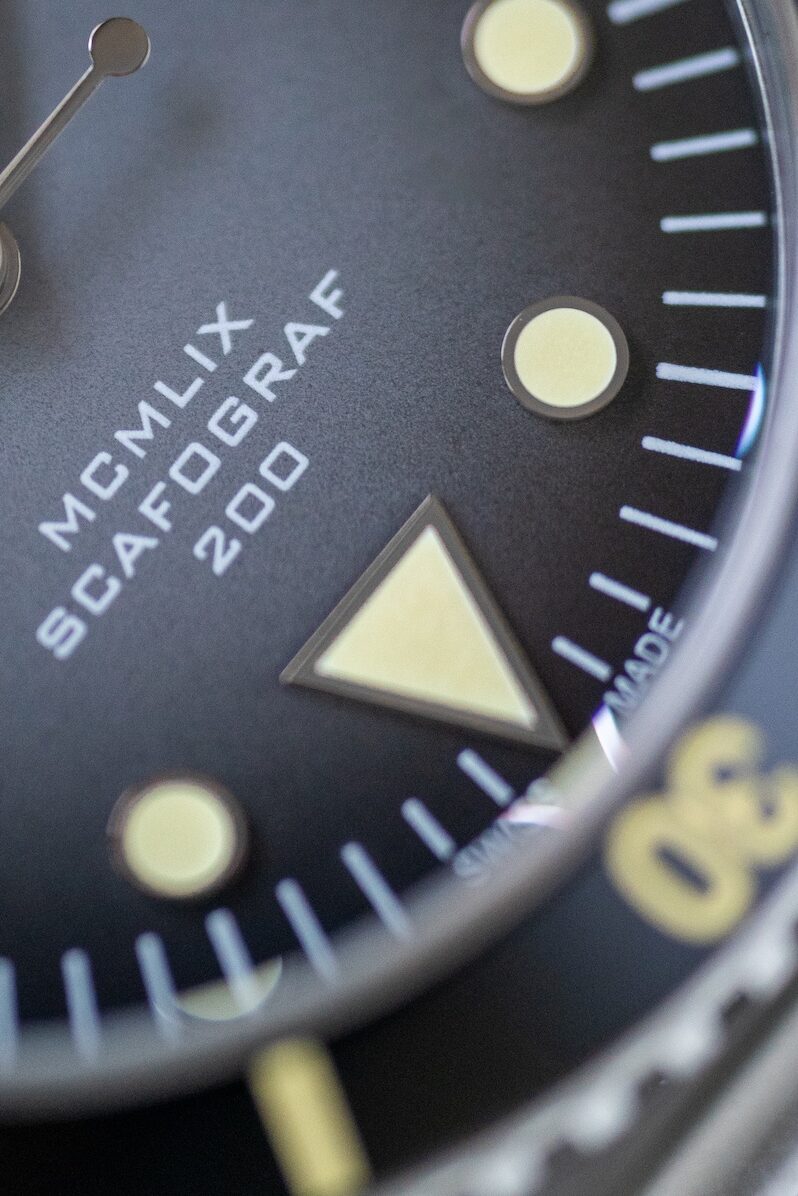
The luminescence also clearly reflects the approach taken by Eberhard & Co. The ivory hue naturally evokes the appearance of vintage luminescent materials after decades of aging, but without resorting to the faux patina so common in the world of vintage-inspired diver’s watches.
Now comes the hardest question: Which of the four new Scafograf 200 MCMLIX configurations should you choose? The answer depends on which chapter of the Scafograf’s history resonates most with you. The matte black and blue dials, with open silver-tone hour markers and a circular satin finish, hark back to the aesthetic codes of the 1969 Scafograf Super. The matte black and blue dégradé versions, on the other hand, sensitively reinterpret the natural patina that characterizes many vintage Scafograf 100 and 200 models.
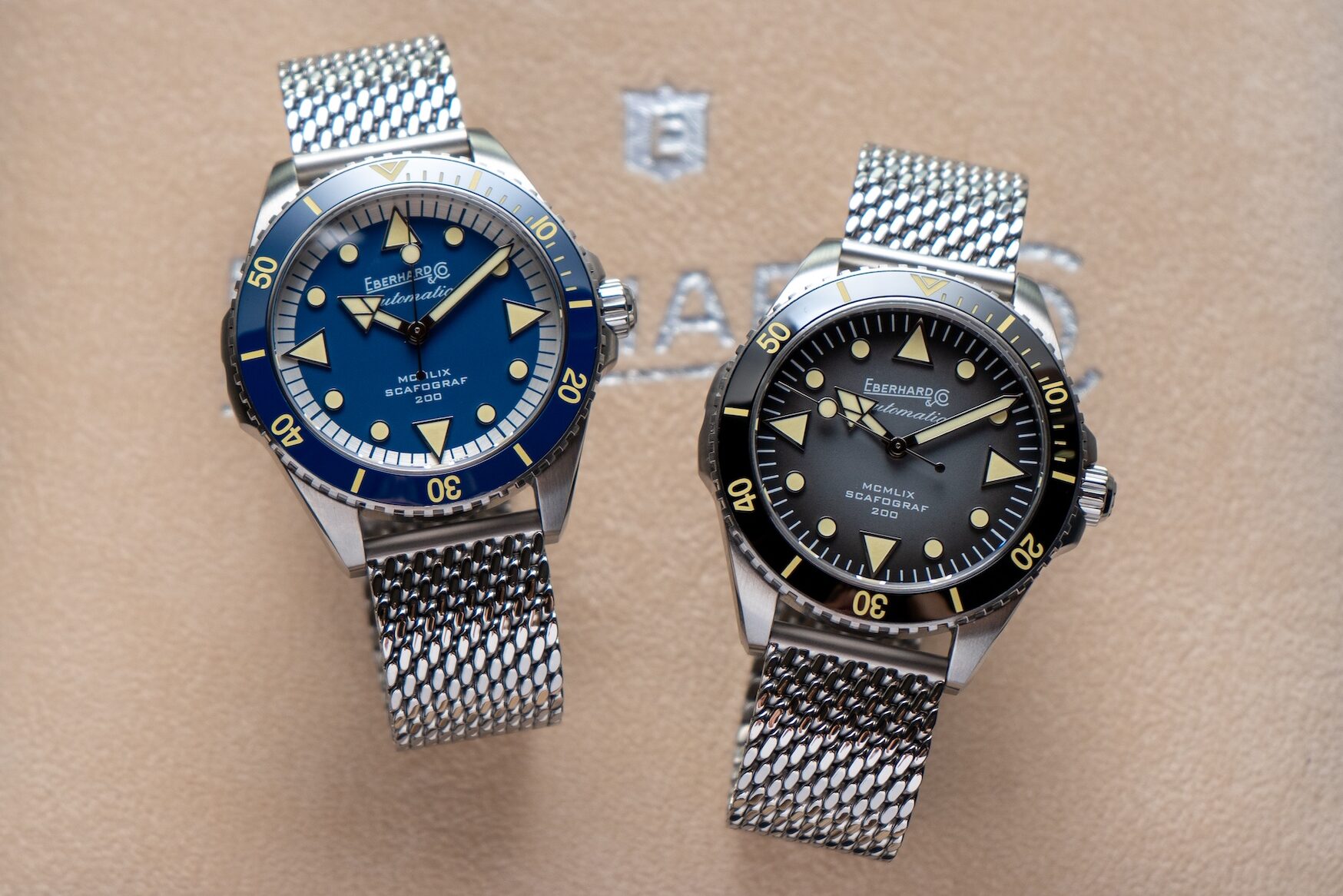
What unites all four models is the unidirectional rotating bezel with a ceramic insert, available in black or blue depending on the chosen configuration. This element effectively encapsulates the entire design: shapes faithful to tradition, combined with materials and details designed for contemporary use.
The Technical Heart of the Scafograf
The nod to 1959 is evident, but it does not fully capture the watch’s identity. Behind the numerous historical references lies a diver’s watch developed to today’s standards and faithful to the diving heritage that has defined the collection since its inception.
The case is water-resistant to 200 meters and features a custom screw-down crown with an embossed “E,” a screw-down caseback decorated with the traditional starfish, and a domed sapphire crystal with an internal anti-reflective coating.
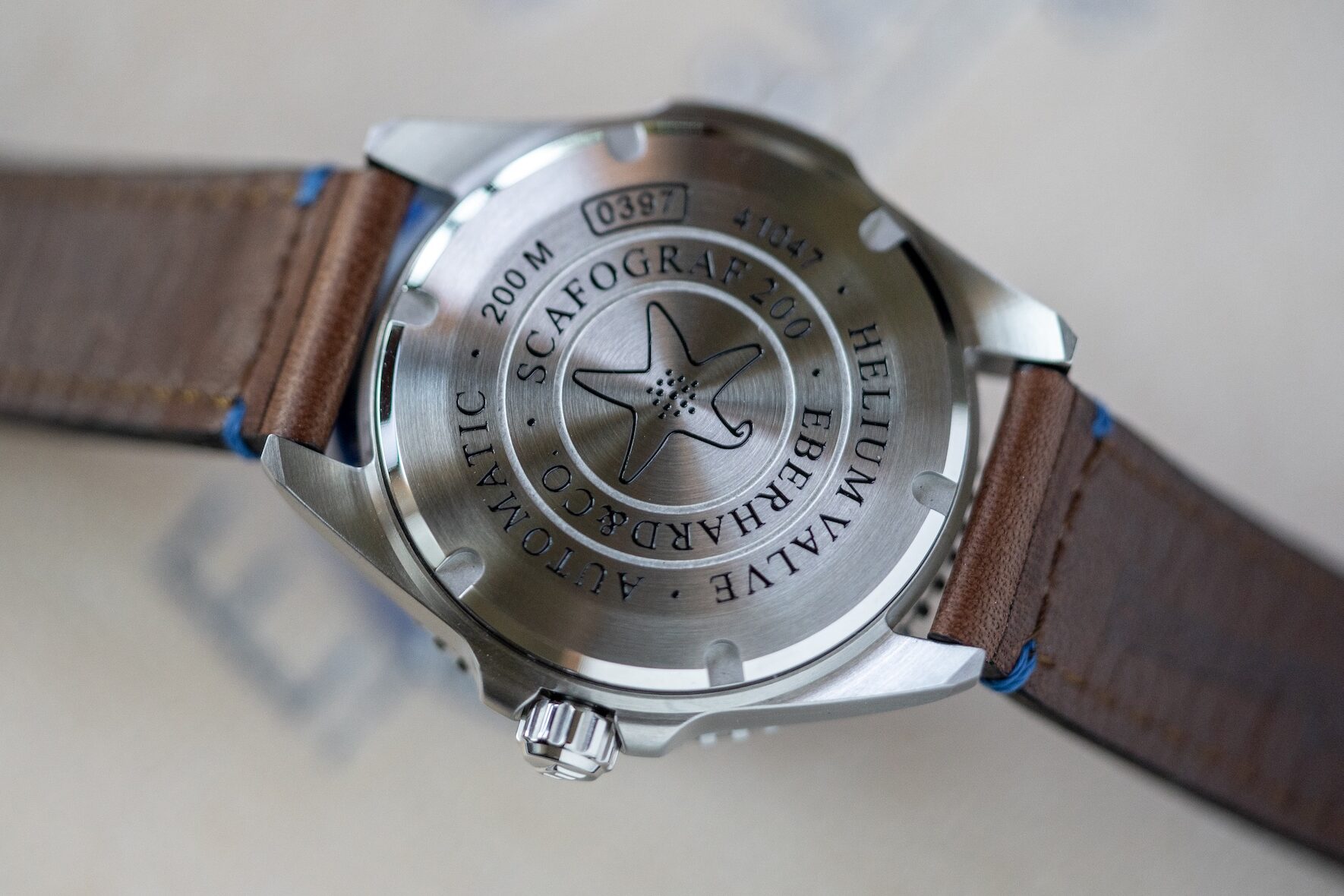
Another standout technical feature is the automatic helium escape valve, located at the 9 o’clock position. This is a feature typically found in watches designed for saturation diving, during which tiny helium molecules can penetrate the case while the diver is in a hyperbaric chamber. During the subsequent decompression phase, the valve allows the gas to escape automatically, preventing the increase in internal pressure from compromising the watch’s integrity.

The unidirectional rotating bezel also underscores the focus on functionality. The ceramic insert, available in black or blue depending on the model, features a sexagesimal scale for measuring dive times. The markings for the first fifteen minutes and the zero reference, both treated with Super-LumiNova®, ensure immediate readability even in the most challenging lighting conditions.
Inside, it houses a self-winding mechanical movement with a Glucydur balance wheel and a central seconds hand, a choice that prioritizes reliability and durability, in keeping with the Scafograf tradition.
The detail that changes the character of the Scafograf: the new bracelet
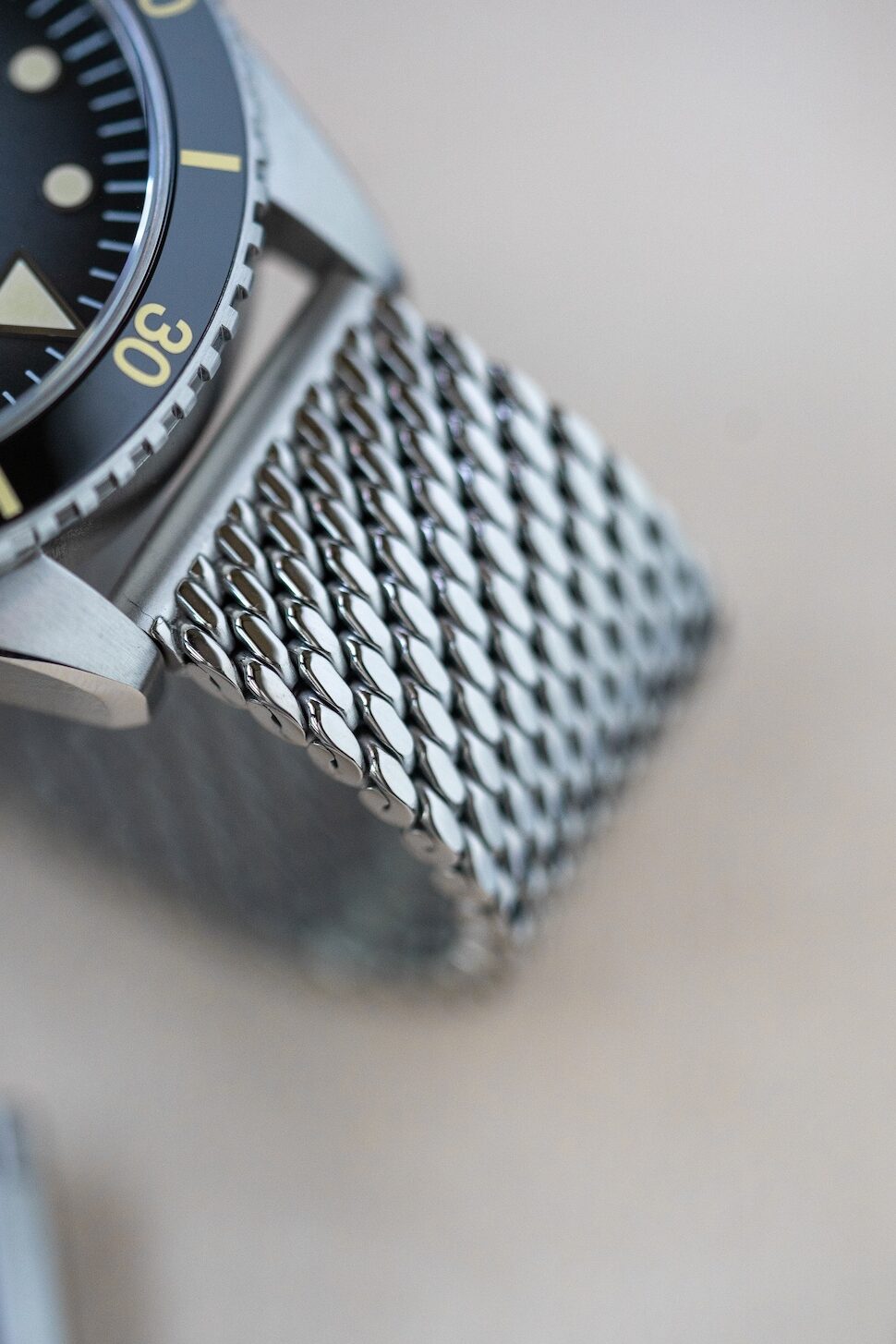
For the first time in the collection’s history, Eberhard & Co. has paired the Scafograf with a Milanese-link steel bracelet. This choice goes beyond current trends and is deeply rooted in the Maison’s history.
As the Eberhard & Co. archives reveal, this type of bracelet was already featured in the manufacturer’s catalog before 1914, many decades before its rediscovery in contemporary watchmaking. Its return to the Scafograf thus takes on special significance: it revives an authentic tradition of the Maison and seamlessly integrates it into the collection.

The design of the new bracelet underscores the attention paid even to the most subtle details. The weave is particularly dense yet retains a high degree of flexibility, allowing it to follow the contours of the wrist seamlessly. Eberhard & Co. has also maintained a uniform link design even in the elements used to adjust the size, a solution that contributes to the bracelet’s perceived quality.
The 2CLICK® folding clasp is a must-have feature and one of the brand’s most recognizable technical elements. The dual button opening mechanism enhances safety during everyday use and blends seamlessly into the bracelet’s design.
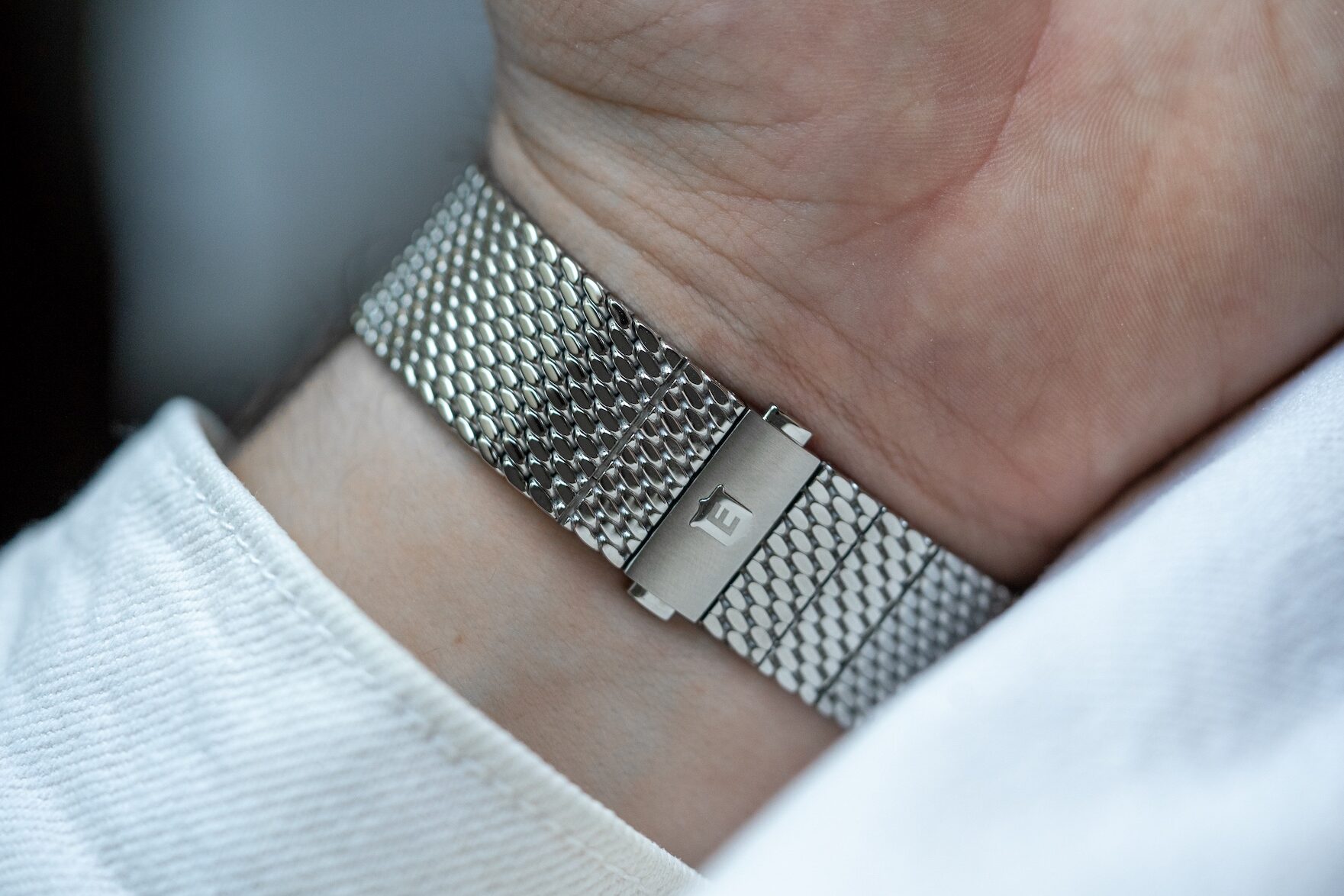
Finally, the new Milanese model joins the other configurations already available for the Scafograf 200 MCMLIX. In fact, the tried-and-true Chassis® bracelet in satin-finished steel with polished accents—designed for those who prefer a sportier look, and the water-repellent leather strap, which highlights the collection’s more classic side, remain available.
Our thoughts and price lists
The Scafograf 200 MCMLIX looks to the past with the respect of someone who deeply understands its history, and to the present with the practicality of a true diver’s watch. This is the most successful summary of Eberhard & Co.’s new diver’s watch: instantly recognizable, comfortable to wear, and designed to lead the collection into a new chapter in its evolution.
The collection is available in the four configurations we’ve described and can be paired with three different strap or bracelet options. The models with a water-repellent leather strap ( Ref. 41047.01/.02 CP and Ref. 41047.03/.04 CP) are priced at €2,950.00, while the versions with a satin-finished steel Chassis® bracelet ( Ref. 41047.01/.02 CA2C and Ref. 41047.03/.04 CA2C) come to €3,590.00, and those with the new 2CLICK® Milanese bracelet (Ref. 41047.01/.02 CAM2C and Ref. 41047.03/.04 CAM2C) total €3,740.00.
Are you looking for the perfect gift? Explore our online store and discover the entire collection signed IWS – Italian Watch Spotter!
For all real-time updates on the world of watchmaking follow us on Instagram and visit our Youtube channel.