
By 2026, mini watches no longer need to be defended as an eccentric choice. In the space of just a few months, Audemars Piguet has added new stone dials to the 23 mm Royal Oak Mini, Chanel has brought the J12 down to 28 mm, and Rolex has brought gold back to the wrist of the smallest Oyster Perpetual in the collection, also measuring 28 mm. The return to smaller proportions is now so evident that it doesn’t even need to be called a trend.
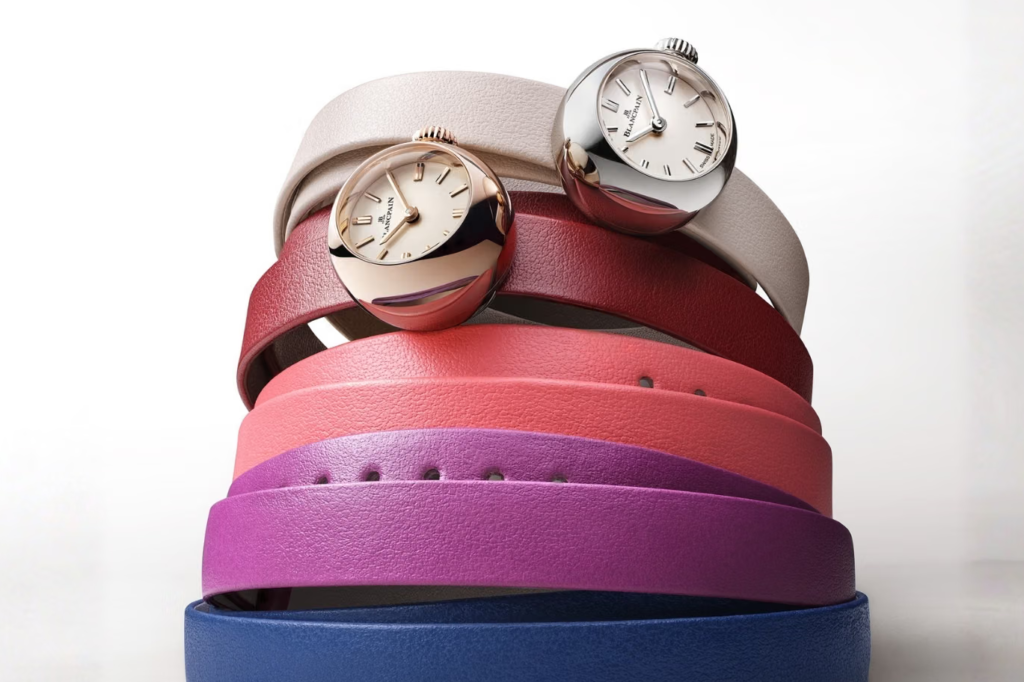
Blancpain, too, with its new Lady B, has reduced the case thickness to 19 millimeters and decided that even within that small sphere, there must still be a rotor, 180 components, and nearly a century of women’s watchmaking history. Does that seem impossible? A “small technical miracle,” they said in 1956, when the first predecessor of the Lady B was unveiled at the Basel Trade Fair.
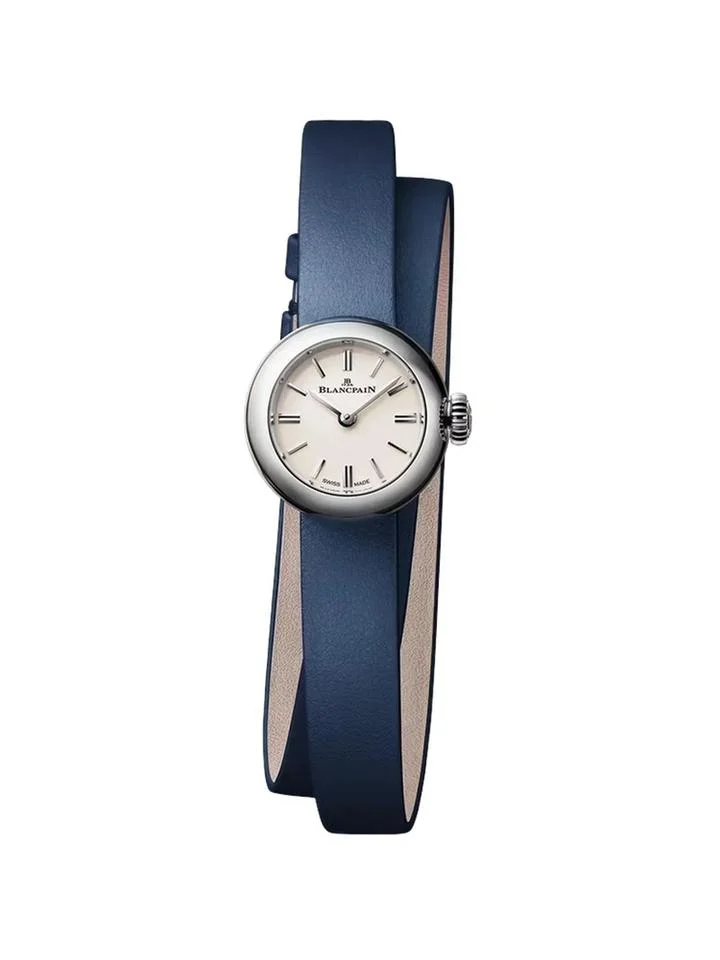
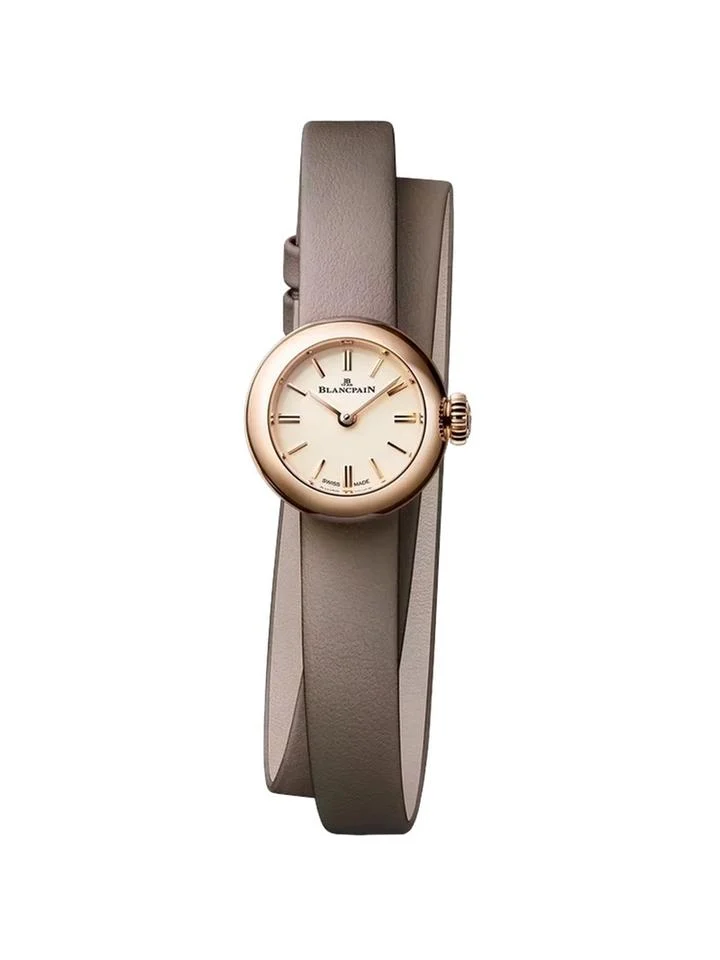
When you see it for the first time, it’s hard not to think of a piece of jewelry: the nearly perfectly spherical case, the slender strap that passes through it and wraps twice around the wrist, and proportions that seem closer to those of a cabochon than to those of a traditional case. Yet Blancpain didn’t start with the shape but with the movement, which dictated how the rest of the design had to adapt. This is no minor detail, especially considering how easily an object of this size could have been made with a quartz movement and how little the public, at the time, would likely have objected.
The first Blancpain Lady B was the Ladybird from 1956
The precedent Blancpain draws upon is the 1956 Ladybird “Bullet,” created under the direction of Betty Fiechter, who had taken over the Manufacture in 1932 and would go on to become the first woman to own and lead a Swiss watchmaking house. Under her visionary and incredibly original leadership, women’s watches were never treated as a secondary sector, as had often been the case in previous decades: the Ladybird was created with the very specific ambition of housing the world’s smallest mass-produced round mechanical movement.

The R52/R55 caliber measured just 11.85 mm in diameter, a size achieved without compromising robustness: following Betty Fiechter’s insight, Blancpain added a fifth wheel to the gear train to better regulate the energy supplied to the escapement, and succeeded in incorporating a balance wheel shock absorber, a feature that the miniaturized movements of the time tended to omit. The result comprised 133 components, operated at 3 Hz, and guaranteed approximately 40 hours of power reserve, as did its immediate variant, the R520/R550 caliber.
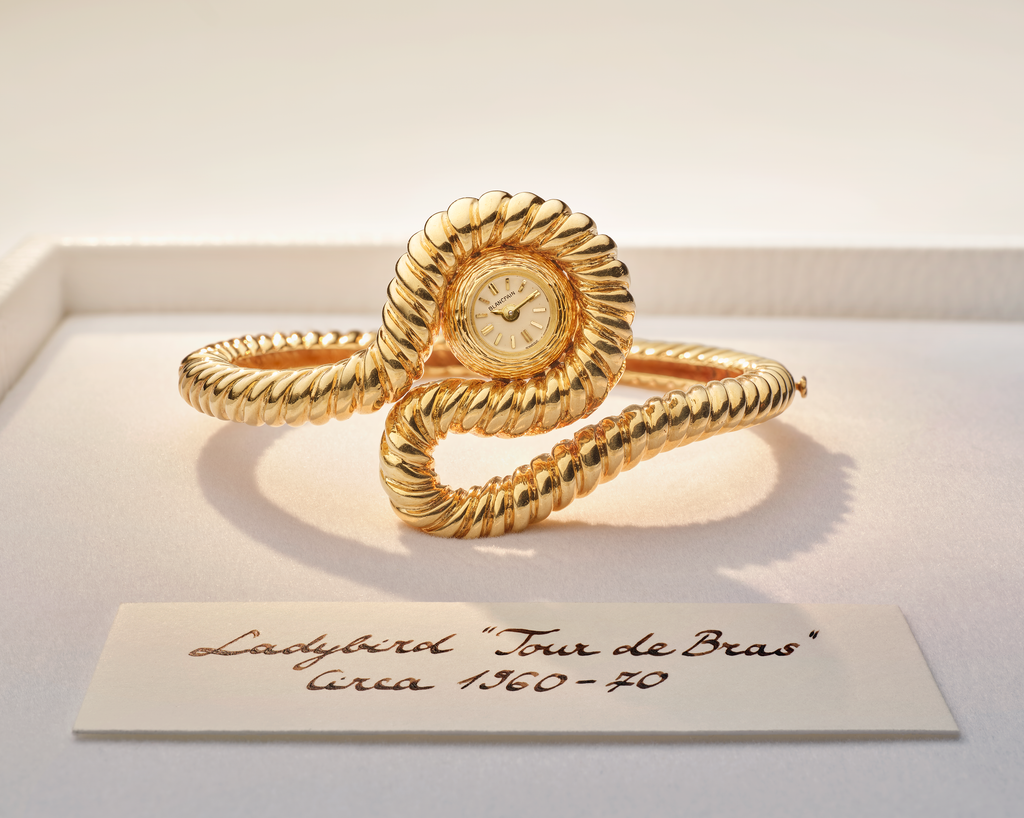
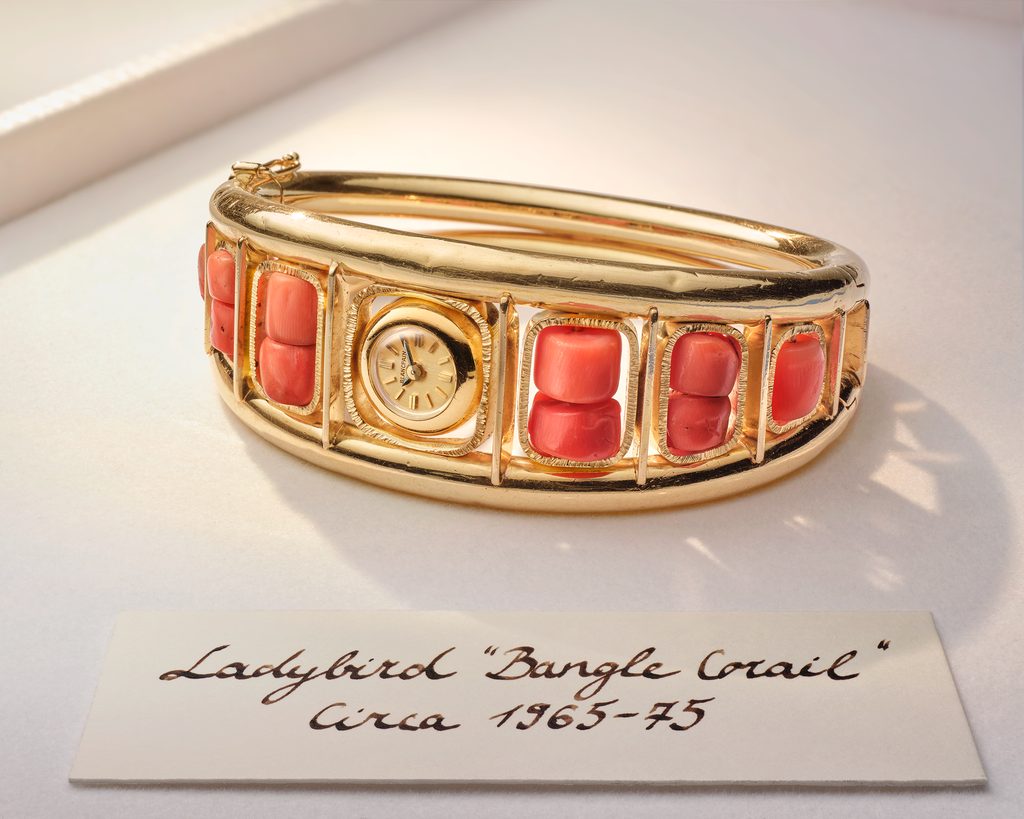
For Blancpain, miniaturization today is not simply a consequence of the return to smaller case sizes. For the Maison, as early as 1956, it was already a technical challenge worth investing in, so much so that the small Ladybird caliber was later adopted by other watchmakers as well, enabling Blancpain to create a surprising array of jewelry watches, including rings, pendants, and bracelets. The movement was made smaller not to disappear, but to allow greater freedom for everything built around it.

Nearly thirty of these historic creations from the Maison’s archives, including wristwatches, bracelets, pendants, rings, and other jewelry pieces made possible by the size of the Ladybird caliber, have been brought together for the first time in a traveling exhibition dedicated to the world of the collection. Throughout 2026, the exhibition will make stops in New York, Shanghai, Paris, Tokyo, and Seoul, before continuing in 2027.
The Lady B is equipped with the new 615 automatic movement

Seventy years later, the concept remains the same, even though the movement has changed. The new Lady B features the automatic Caliber 615, introduced in 1995 and already used by the Maison in the 21.5 mm Ladybird Ultraplate models. It measures 15.70 mm in diameter and 3.90 mm in thickness, contains 180 components and 29 jewels, beats at 21,600 vibrations per hour, and offers a 38 hour power reserve; over the course of its long history, it has also been updated with a silicon balance spring, while the bridges retain their Côtes de Genève decoration.
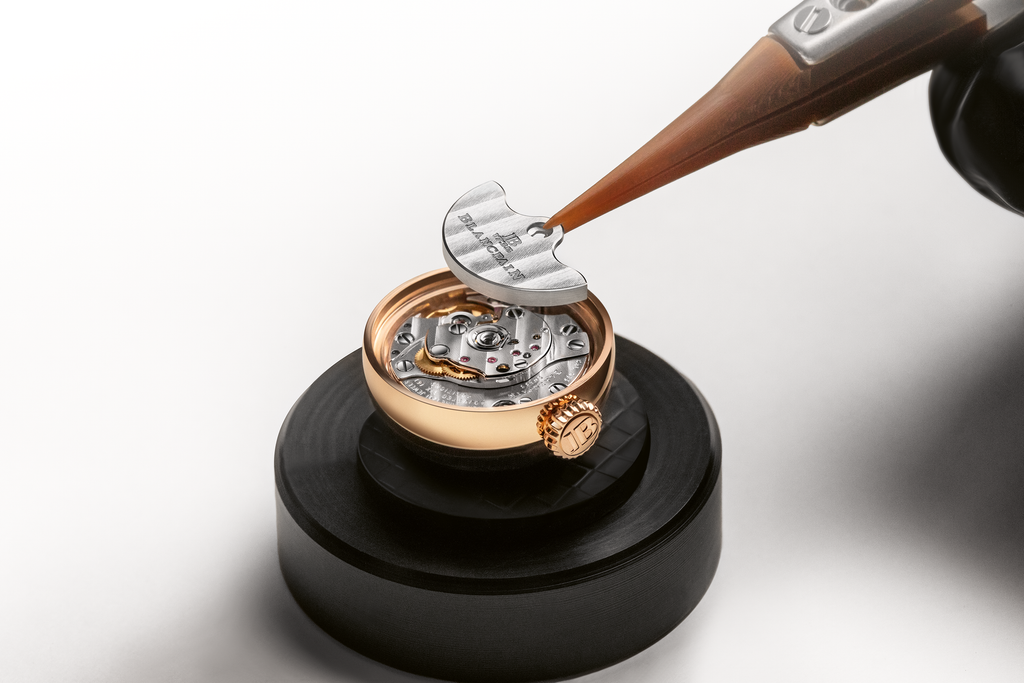
Thirty-eight hours , taken alone, isn’t a particularly impressive figure in 2026. It becomes a little more so when you remember that the movement is less than sixteen millimeters in diameter and, above all, that it is automatic. For comparison, the Jaeger-LeCoultre Calibre 101 , one of the great historical benchmarks of mechanical miniaturization , measures 14 x 4.8 mm and is 3.4 mm thick, but is manually wound and offers 33 hours of power reserve.
Even Bulgari’s current Piccolissimo operates on an even smaller scale, but it remains a hand-wound movement. The 615 does not claim any absolute record in and of itself, but its uniqueness lies in having condensed the automatic winding mechanism into proportions that remain unusual even thirty years after its introduction.
In a rather telling coincidence, the 2730 quartz movement that Audemars Piguet uses in the 23-mm Royal Oak Mini also measures 15.7 mm in diameter, exactly the same as the Blancpain 615, but is only 2.2 mm thick. This isn’t meant to determine which of the two solutions is better, that would be a rather pointless comparison, but rather to highlight the space that Blancpain has deliberately chosen to sacrifice for the sake of the mechanical movement.
Case and Design of the Blancpain Lady B
The Lady B’s case has a diameter of 19 mm but a stated thickness of 13.2 mm, for a total volume of just 2.9 cm³. This ratio of diameter to height seems almost disproportionate on paper, yet it clearly explains why Blancpain opted for a spherical design rather than a small disc.
The case consists of two parts, and its construction is deliberately concealed through its proportions and polish, so that the dividing line between the bezel and the case back disappears as much as possible. This design required more than thirty technical drawings.
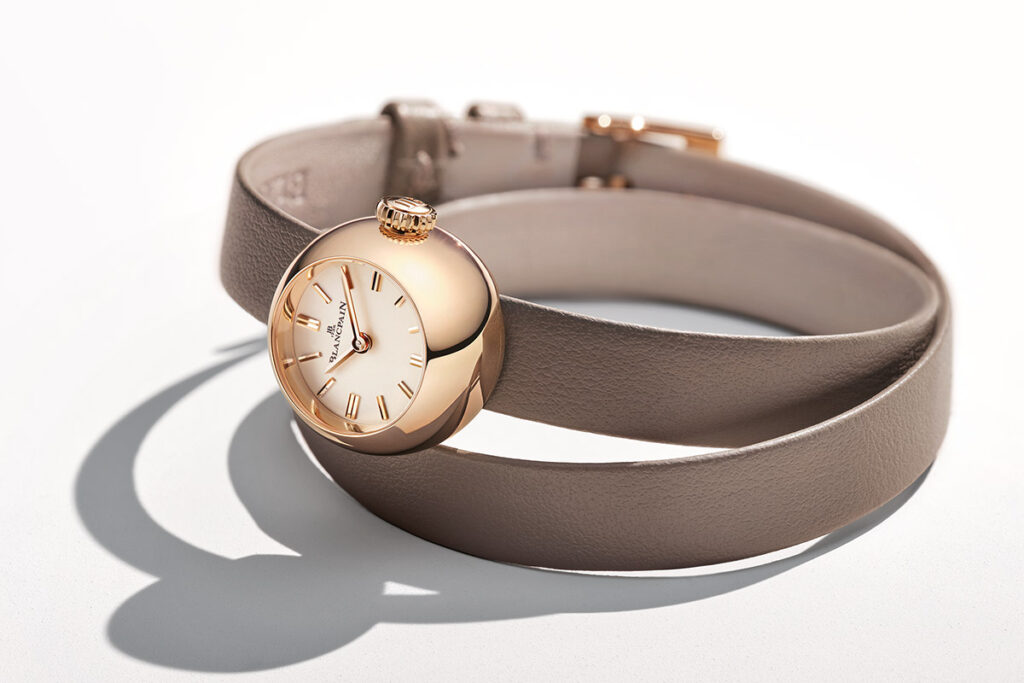
It’s also the part of the design I like best, because it doesn’t try to make the Lady B seem like something it isn’t. A 19 mm watch could easily come across as affected, or look like a scaled-down version of a larger model. Here, the case’s substantial presence avoids both of those pitfalls. It’s small, but doesn’t look fragile; the curved surface lends it an almost tactile presence and shifts the focus from classic watchmaking to jewelry, without needing to resort to gemstones to achieve that effect.
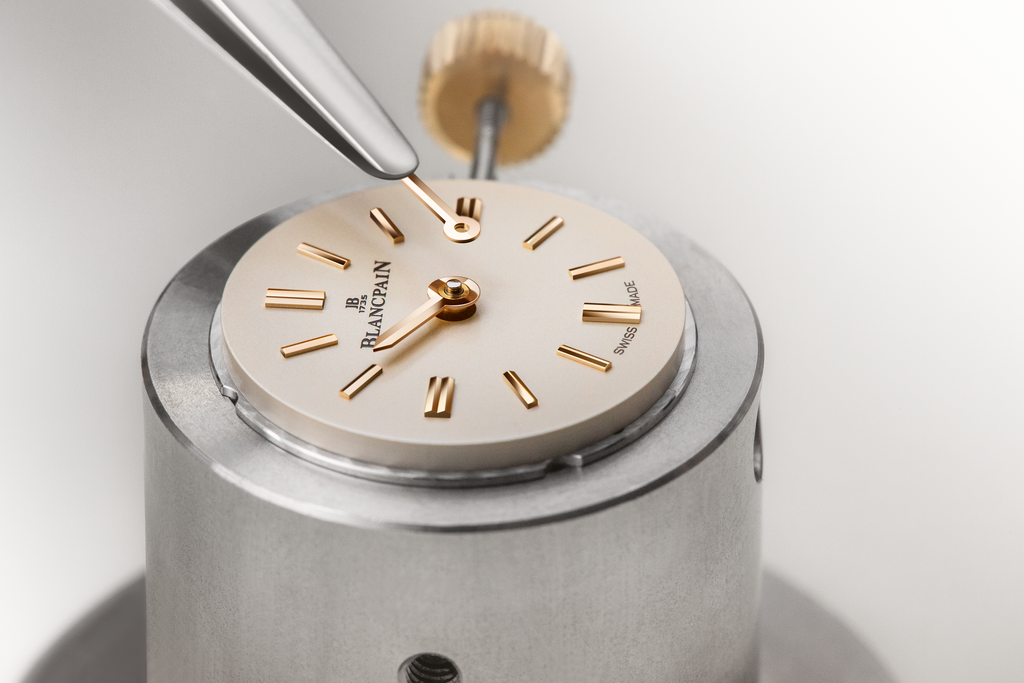
In fact, perhaps the most interesting aesthetic choice is the very absence of diamonds. The opaline dial remains simple, identical in both the stainless steel and rose gold versions; the gold applied hour markers, measuring just 1.82 by 0.39 mm, are satin-finished, while the hands indicate only hours and minutes.
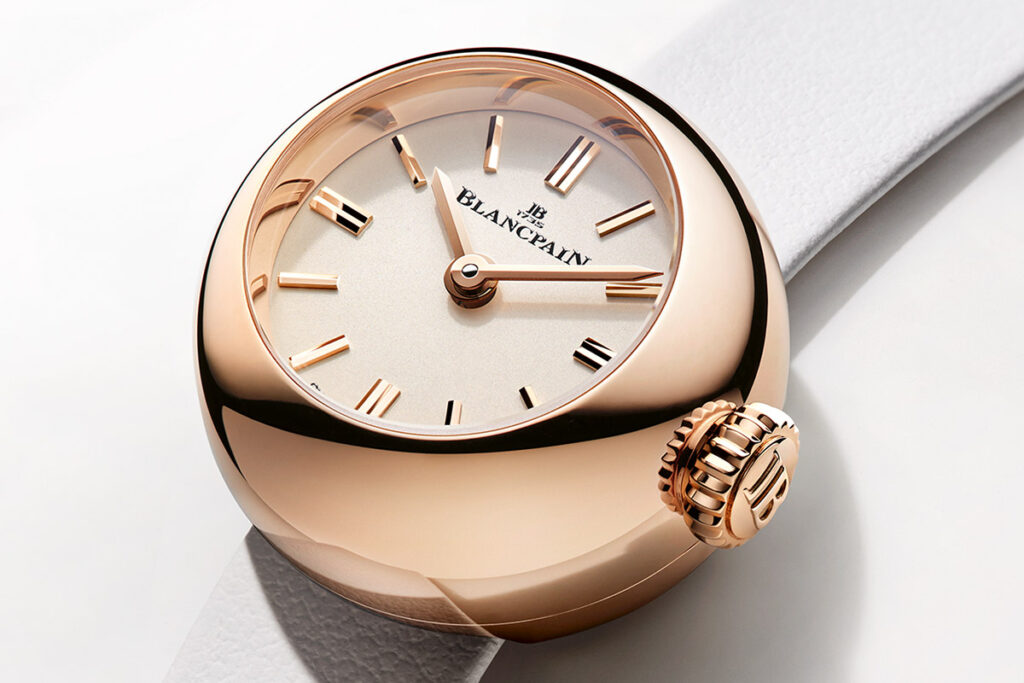
The fully polished flange reflects the dial and seamlessly follows the curve of the case. There is no mother-of-pearl, pavé, or other conventions that women’s watchmaking has accustomed us to conventions designed to immediately signal the intended audience for a product.
It’s a choice I appreciate, in part because I still find it curious how often, when a watch is designed for a woman, its femininity must be made explicit through a precious surface. The Lady B is unmistakably feminine, though let’s be clear, that doesn’t mean it’s meant to be worn only by women, and it doesn’t need to prove it that way. Its femininity lies in its scale, in the balance between leather and metal, and in the way it blends with other accessories already worn on the wrist.
The strap is a thin 10 mm calfskin band that passes directly through the case without lugs and wraps twice around the wrist. The inner passage measures just 10 x 1.6 mm and uses small ball bearings so that the leather can slide without friction; the metal edges, on the other hand, are beveled by hand. These are details that are technically disproportionate to their visibility, but it is precisely this kind of disproportion that lends credibility to an object like this.
Is the new Lady B just part of a trend, or is it much more than that?
Of all this year’s mini watches, from the 28 mm J12 Mini to the 23 mm Royal Oak Mini to the new Oyster Perpetual 28, the Lady B is the smallest of them all and, above all, it doesn’t look like a miniaturized version of an existing design.
Perhaps that is precisely why, among the many small watches that have appeared recently, the Lady B strikes me as one of the few in which size truly has something to say. At 19 mm, it isn’t small just to appear delicate, nor is it mechanical simply so it can be listed on the spec sheet: the two aspects are interdependent, just as they were in the 1956 Ladybird. It draws on an idea, rather than a shape, from the 1956 Bullet: using the mechanical movement as the boundary within which to design the watch.
The new Blancpain Lady B is available in an unlimited edition in stainless steel for 11,360 euros and in 18k red gold for 17,350 euros, with a choice of seven colors for the double-wrap calfskin strap. Seventy years after the first Ladybird, this new model hits the market without trying to resemble it too closely.
Are you looking for the perfect gift? Explore our online store and discover the entire collection signed IWS – Italian Watch Spotter!
For all real-time updates on the world of watchmaking follow us on Instagram and visit our Youtube channel.