
Baume & Mercier, a Swiss watch Maison, has a rich and fascinating history spanning nearly 200 years. With deep roots in the Swiss watchmaking tradition, it combines craftsmanship with innovation and entrepreneurial spirit, a mix that has led to the establishment of one of the longest-lived watchmaking Maisons, which has played an important role in our industry.
Foundation and Early Years
The history of Baume & Mercier began in 1830, when brothers Louis-Victor and Pierre Joseph Célestin Baume opened a watch store in Les Bois, a small village in the Swiss Jura region. Their philosophy is simple yet powerful, and is based on the motto: “Accept only perfection, produce only watches of the highest quality.”
In 1847 Pierre Joseph Célestin moved to London with the aim of expanding the business beyond the Swiss market and making himself independent of his distributors. In 1851 Baume Brothers is founded in Clarkenwell. The company quickly grew in the United Kingdom and the Commonwealth gaining a solid reputation for the precision and reliability of its watches, winning numerous international prizes and awards including ten Grand Prix and seven gold medals.
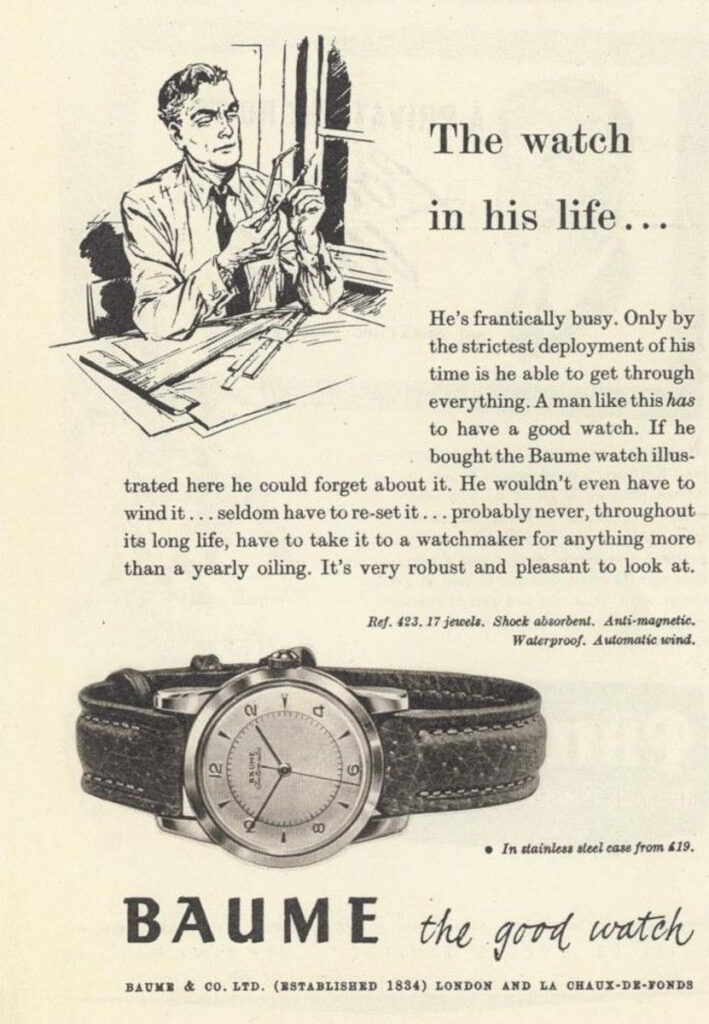
The founders of the Baume watchmaking house decided to participate in the chronometry competitions organized by the Kew Observatory, with noteworthy results: the first year, three watches placed among the top 7 in the competition, the following year among the top 4. In 1893, the Maison triumphed in the competition with a pocket chronograph equipped with a tourbillon movement, also setting a scoring record that remained unbeaten for 10 years.
The Encounter with Paul Mercier
Paul Mercier is the son of a Parisian seamstress and a Czarist army officer. His intense passion for learning and for languages led him from a young age to speak seven of them fluently. After a brief stint in the ‘army, he left Russia and returned to London, where he took charge of the business of the Haas watchmakers in Geneva, who sensed his potential.
Meanwhile, William Baume, representative of the third generation of the eponymous family and sole heir, took over the reins of the company. According to tradition, William finally met Paul Mercier in Geneva in 1912.
In 1918, the two decided to join forces, their visions of excellence and innovation in watch design by founding Baume & Mercier Genève. On August 27, 1920 at 8 a.m., the company registered its trademark consisting of an oval inside which are inscribed the letters B & M, G. This partnership marked the beginning of a new chapter in the company’s history, with the creation of iconic timepieces combining elegance and technical precision.
In 1919, the Maison was awarded the Poincon de Genève, one of the most authoritative certifications in the world of haute horlogerie.
L’espansione ed il passaggio di testimone
William and Paul continued to lead and expand the company until 1935 and 1937, respectively. The brand’s fortunes evolved over the years until, in 1988, Baume & Mercier became part of the Vendôme Group, now Richemont, and introduced unprecedented timepieces in its collections that would go on to become icons.
Dear friends of IWS, after outlining the birth and evolution of such a long-lived Maison, as we approach modernity we will change the focus of our narrative to move from the historical narrative to one related to the development of the iconic timepieces created by Baume & Mercier during the 1900s, watches that defined milestones and the most important moments in the Maison’s production.
Chronographs and Rectangular Watches
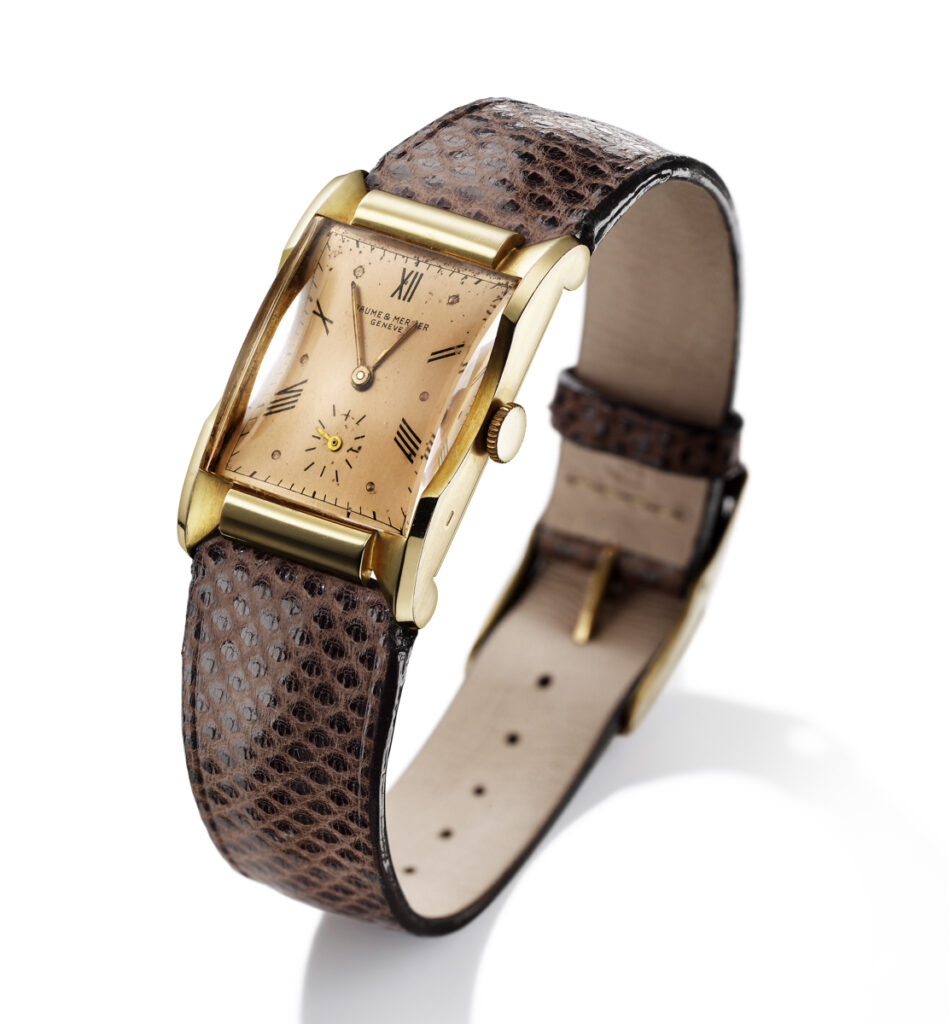
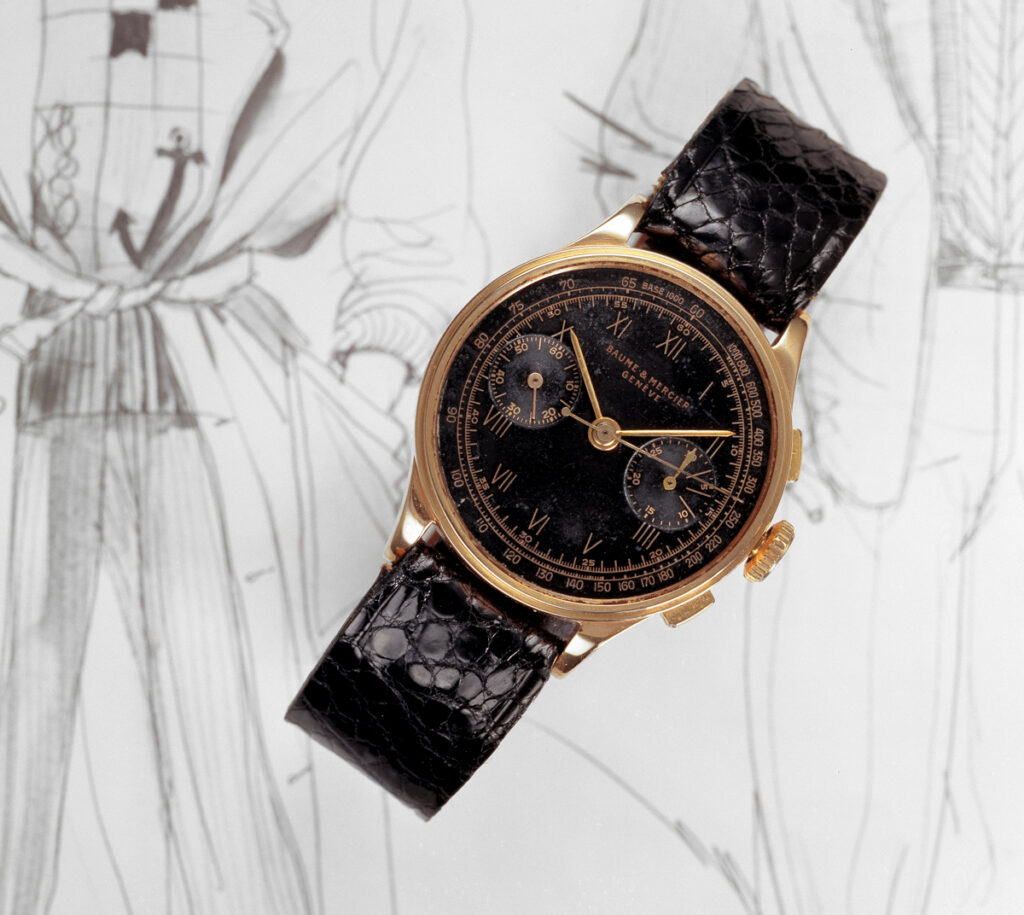
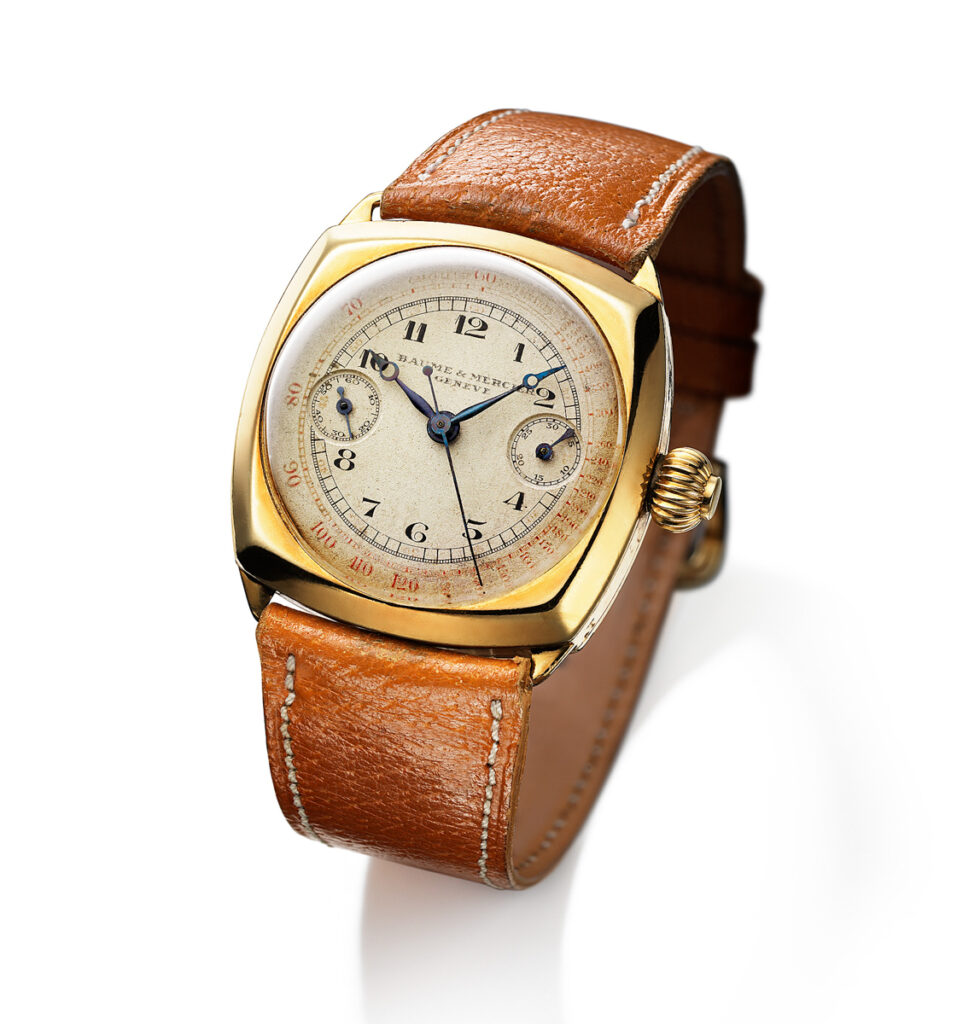
During the 1930s and 1940s Baume & Mercier focused on the production of chronograph watches and iconic rectangular-shaped timepieces, with results that were, on closer inspection, incredible. Of course, the war years were a thunderbolt for the watchmaking industries, which had to readjust to the new scenario in those years in order to survive.
Marquise
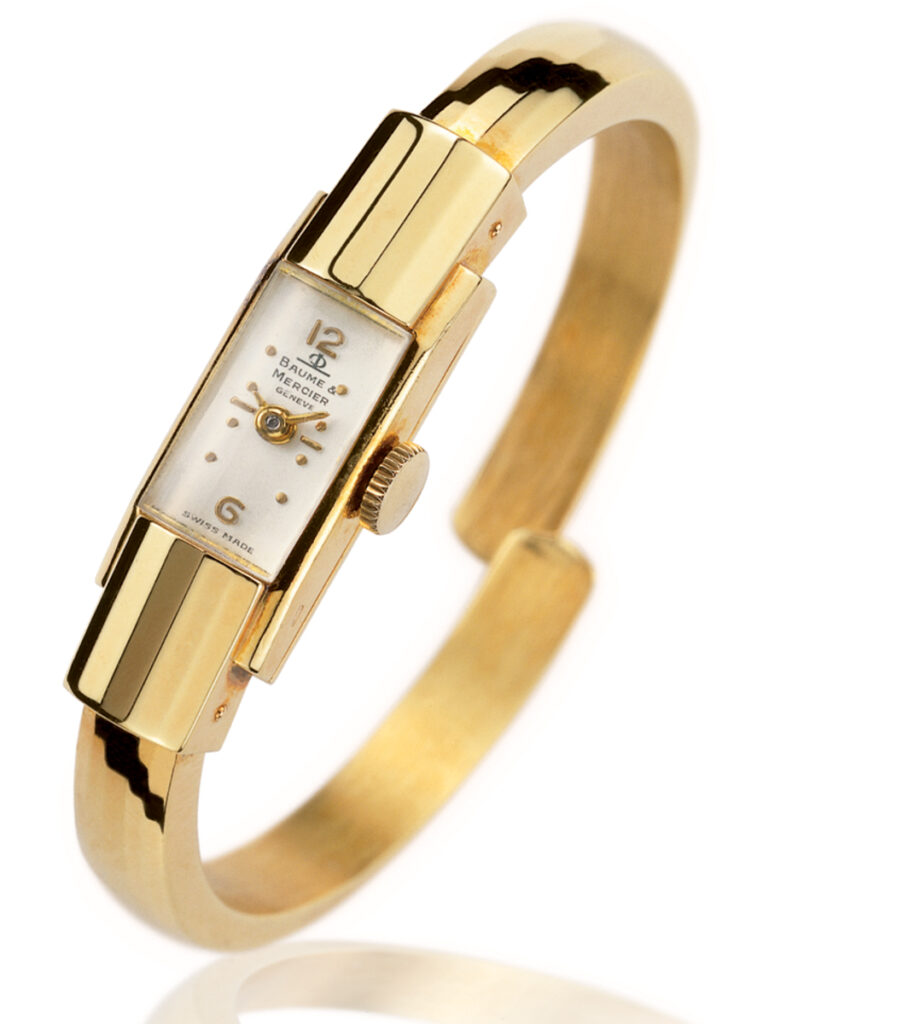
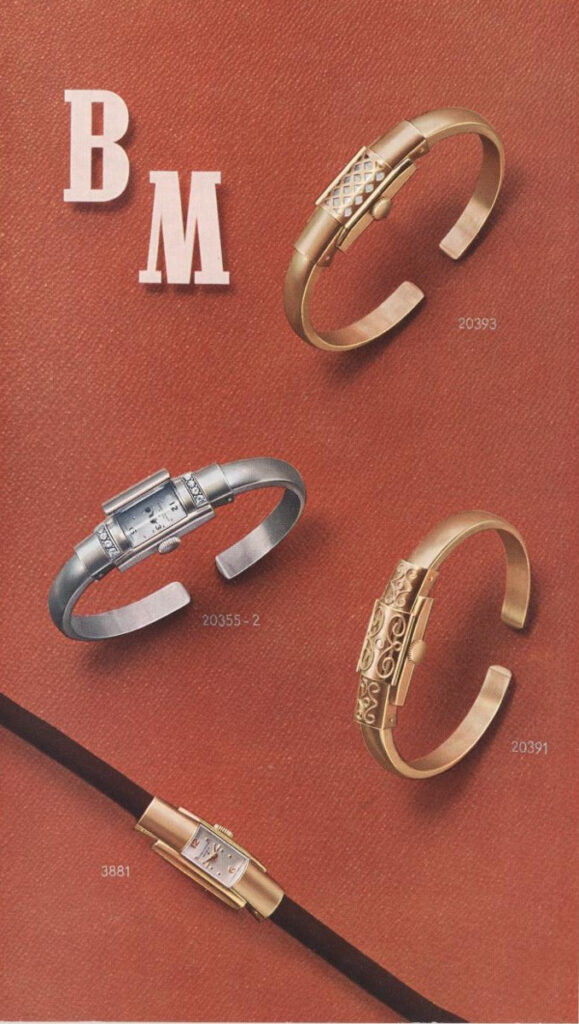
Following the war years, which were very difficult for business and dramatic on a human level, Europe entered a period of full euphoria and rehabilitation of the concept of luxury. Maison Baume & Mercier lives with the times and embraces the changes.
It was in this context and with an awareness of the importance of women’s emancipation that Baume & Mercier’s Marquise watch was presented in 1946. A timepiece that, in its absolute essentiality revolutionized postwar women’s fashion. Its unusual shape and slave-style bracelet made it an example of originality and modern elegance. The Marquise was the Maison’s best-selling watch until the 1960s, cementing Baume & Mercier’s reputation in the world of women’s jewelry watches.
The Planetary Rotor
In the early 1960s, highly dependent on markets in the United States and Italy, the company forged relationships with Piaget, which enabled it to obtain ultra-flat gauges and expand its sales network. In 1964, Piaget acquired a majority stake in the company. This enabled Baume & Mercier to afford huge investments, which came to fruition in 1968 with the creation of the Planetary Rotor, which, thanks to its innovative oscillating mass, enabled the creation of the thinnest automatic calendars of the time.
Tronosonic
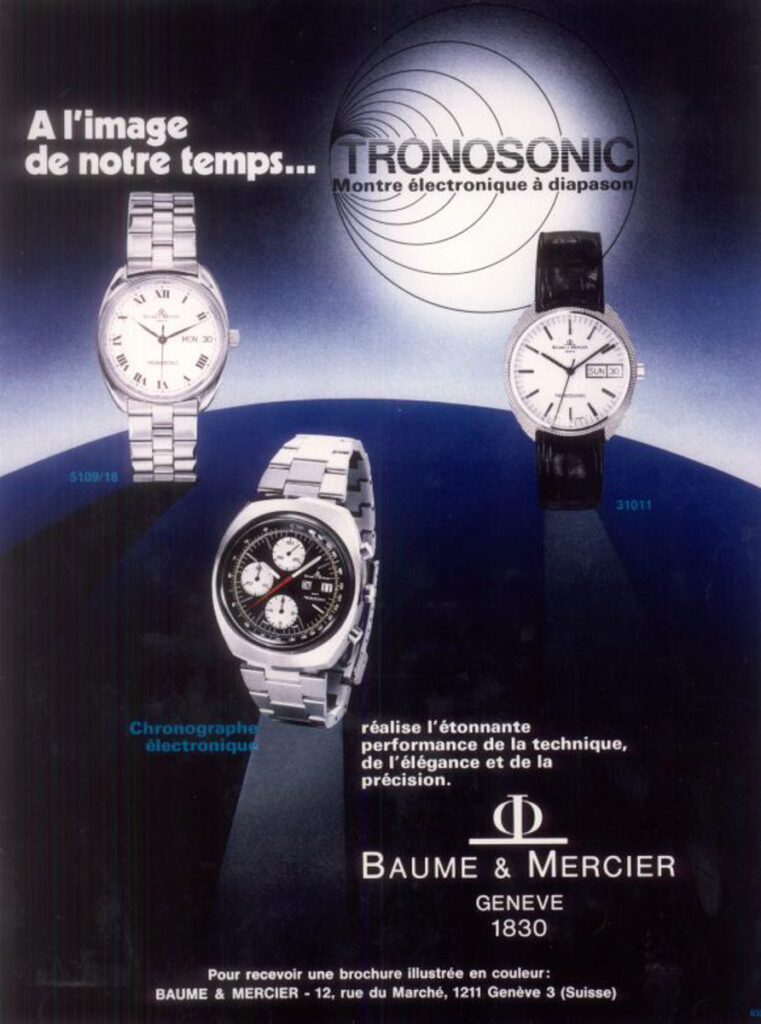
Fast-forwarding to 1971, we enter the electronic era with the Tronosonic. This model, equipped with a pre-quartz tuning fork movement, marked an era for its precision, exceeding that of the best mechanical mechanisms by ten times. A true milestone for Baume & Mercier, leading watchmaking into a new era.
It is worth noting that in the 1970s Baume & Mercier also expressed itself in the use of semi-precious stones on dials or enamel decorations such as the pocket watches inspired by the works of De Chirico and Giorgio Morandi presented in 1971. A testimony to the attention to innovation as much as to the extreme respect for tradition.
Stardust, Mimosa e Galaxie
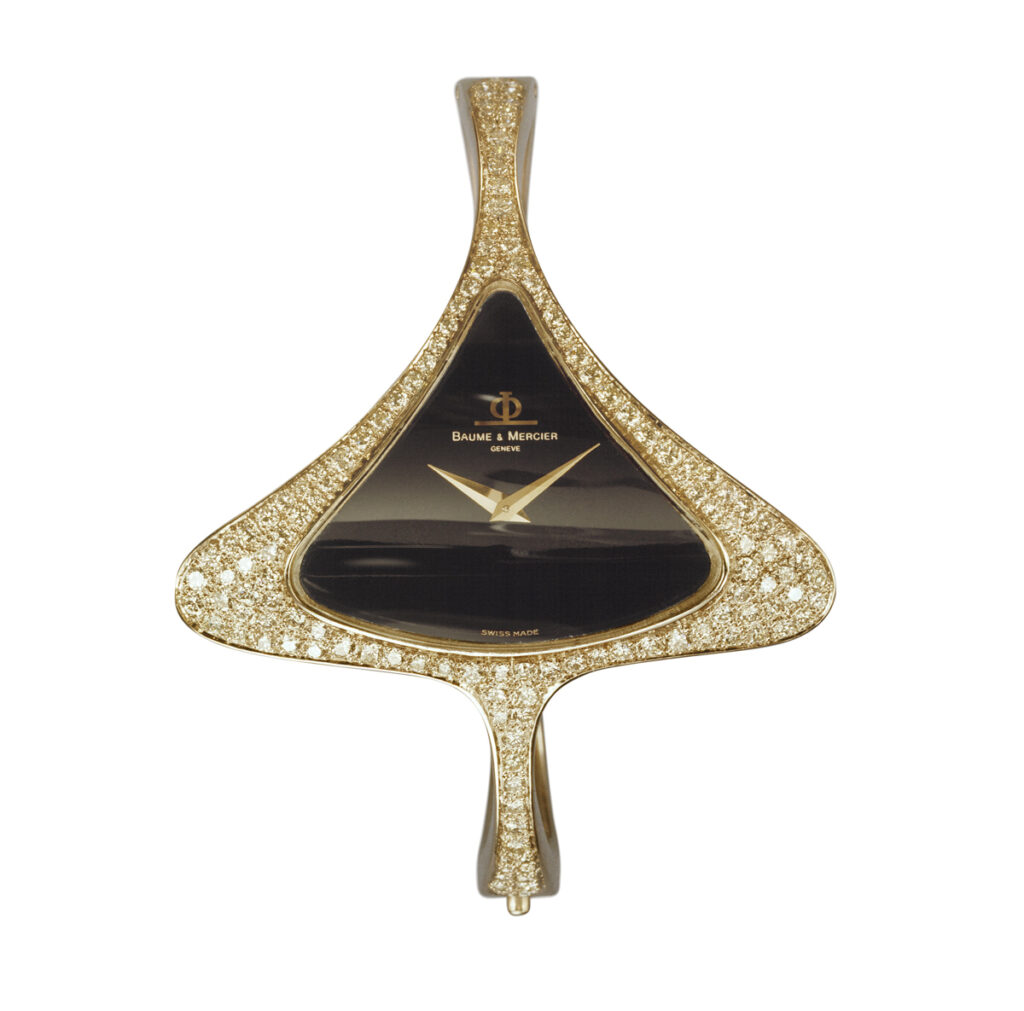
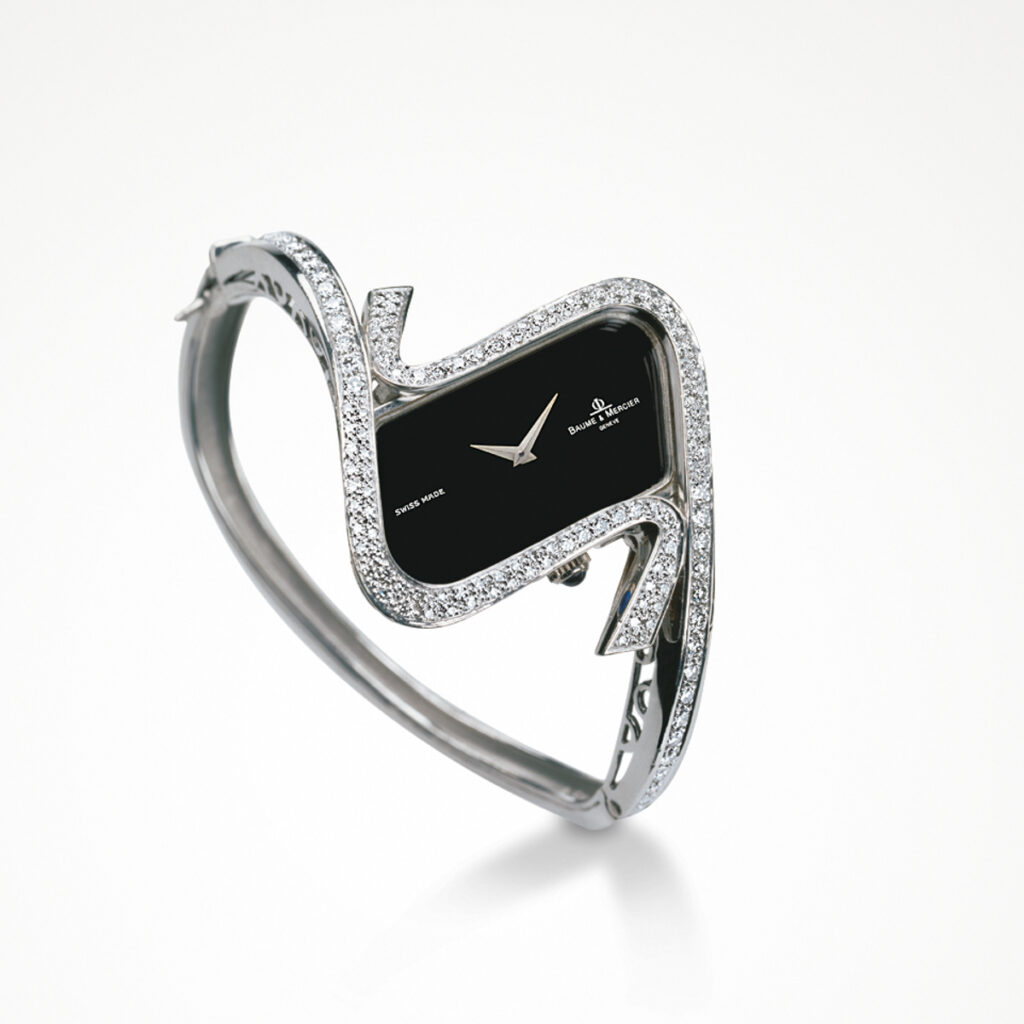

In the 1970s the Maison also offered the fascinating Stardust (with onyx dial embellished with 138 diamonds), Mimosa and Galaxie creations, which enchanted everyone with their unique and sparkling style. These women’s models, awarded the Golden Rose at the 1972 Baden-Baden International Watch and Jewelry Show, stand out for their bold and innovative design.
Riviera
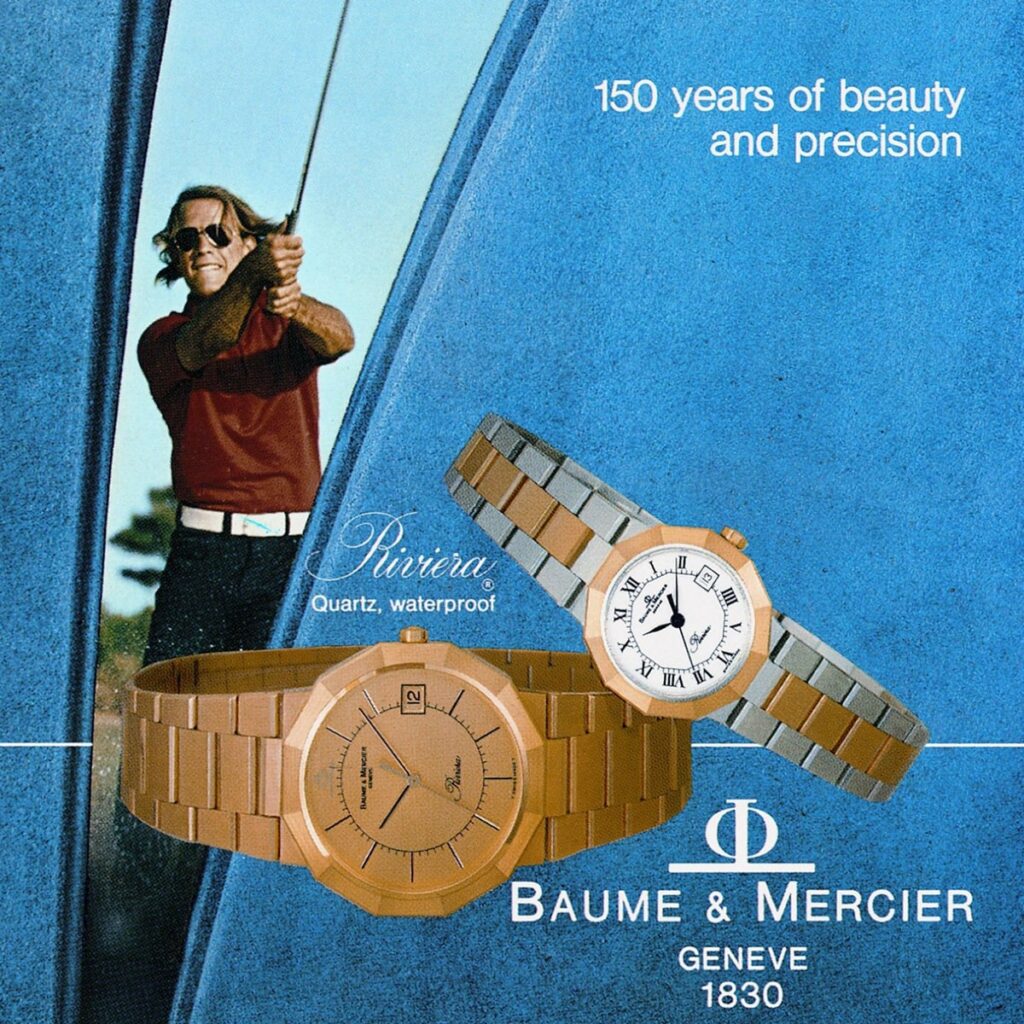
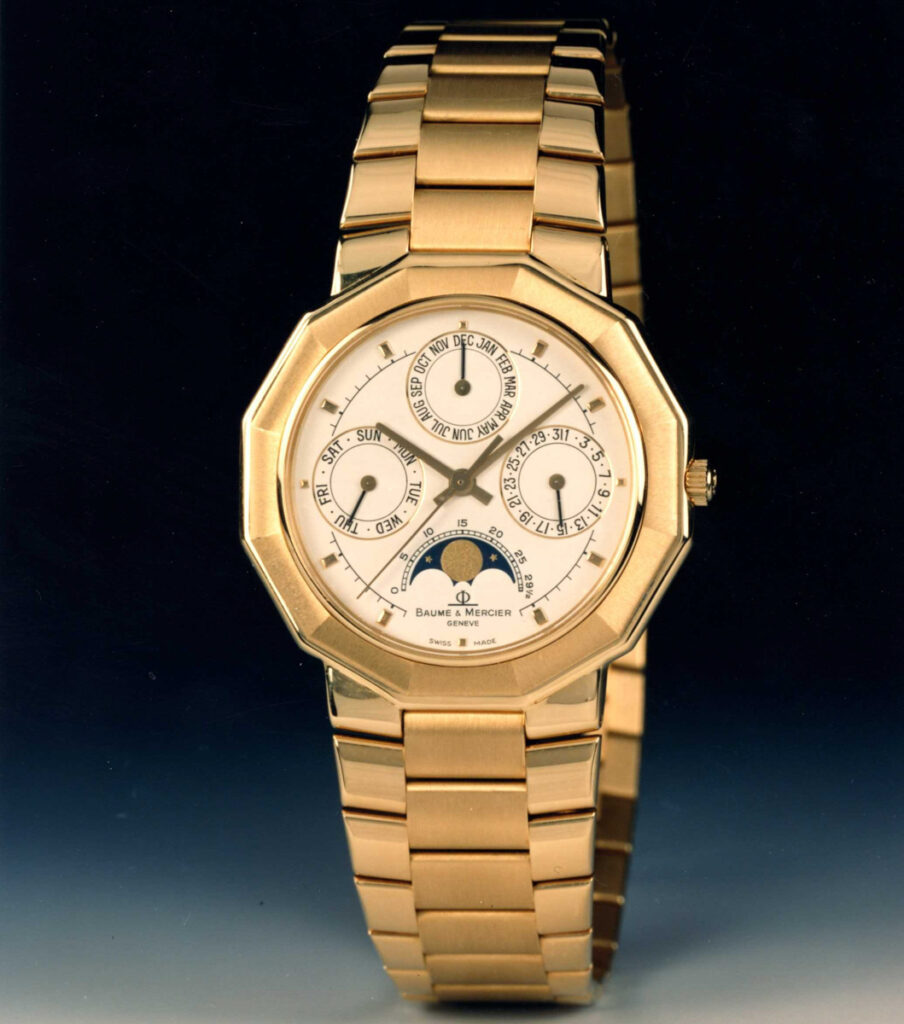
In 1973 the Riviera made its debut, immediately establishing itself as Baume & Mercier’s flagship model for the next 25 years. The historical context is positive, the need for good living is gaining momentum, and as a result, the desire to devote time to sports and outdoor activities is also gaining ground in affluent circles.
With a dodecagonal-shaped case and bezel, a first in watchmaking, and its avant-garde design, the Riviera wins over a new clientele looking for an innovative way to express an elegant and dynamic attitude. The name itself, Riviera, evokes the glamorous and relaxed art de vivre of the French Riviera as declined in sports, leisure and professional life.
Contrary to the fashion of the time, which offers ceremonial watches in gold, Baume & Mercier in fact chooses steel for the Riviera, which makes the timepiece suitable for various occasions in one’s lifestyle, without sacrificing reliability and durability.
Over time, the watch is enhanced with various complications and declined in different metals and variations.
Hampton
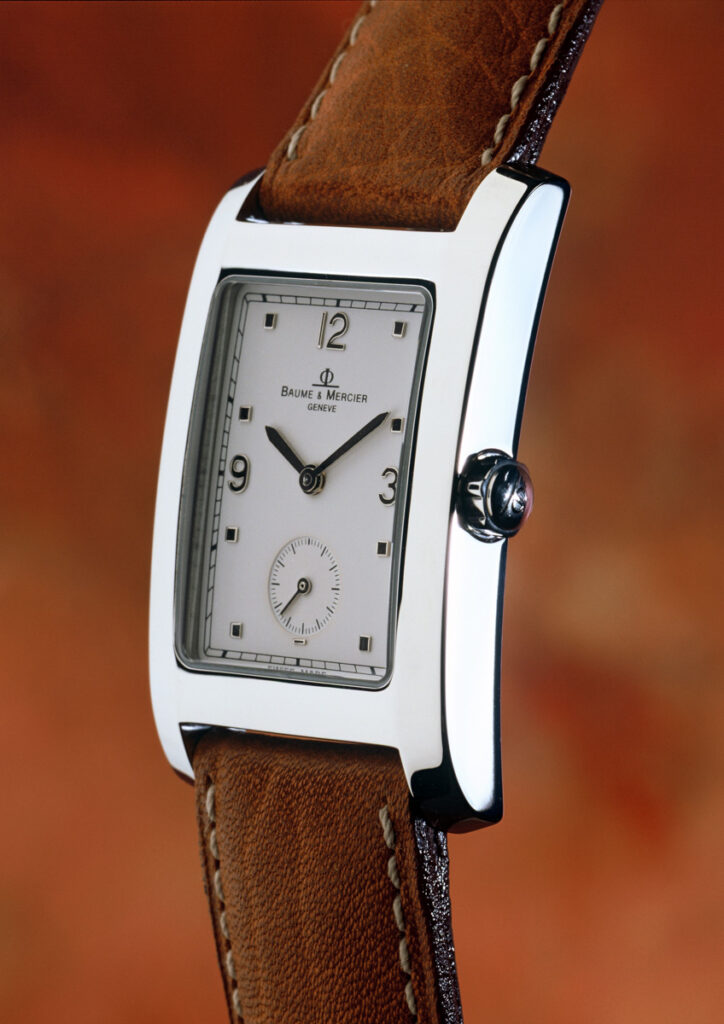
In 1994, Baume & Mercier introduced the Hampton model, which broke new ground for the brand in the shaped steel watch market. Its flowing lines revisit traditional design with a modern aesthetic, and the slightly curved case conforms to the wrist to provide maximum comfort.
The name Hampton recalls the American seaside resort The Hamptons near New York City, synonymous with a chic lifestyle away from the hustle and bustle of the city. Originally created as a time-only, the watch was later declined into chronograph, dual time and power reserve indicator versions.
Capeland
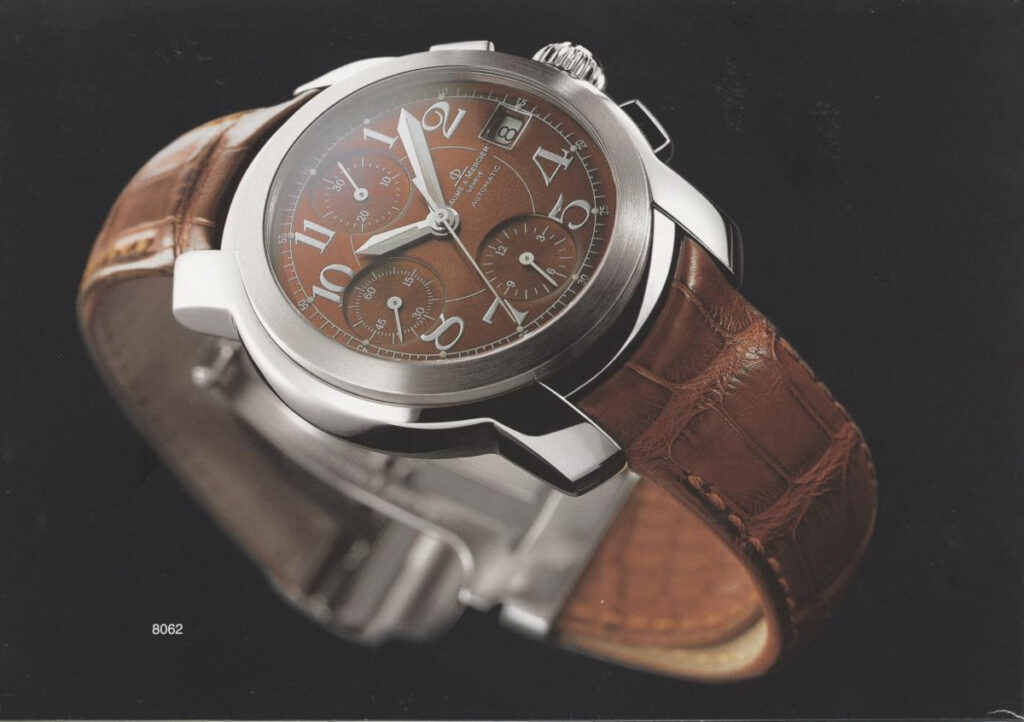
Launched in 1988, the Capeland collection aims to bring the more distinctly masculine taste back into the brand’s offerings with a strong identity. The name Capeland is derived from the union of the words Cape, which refers to the ocean and travel, and Land, which brings back the earth.
Promoting the fashion of elegant watches even for a more relaxed style for leisure and everyday use, the Capeland, with steel or two-tone case, and initially equipped with a second time zone or alarm clock, later offers chronograph and sports diver models.
Catwalk
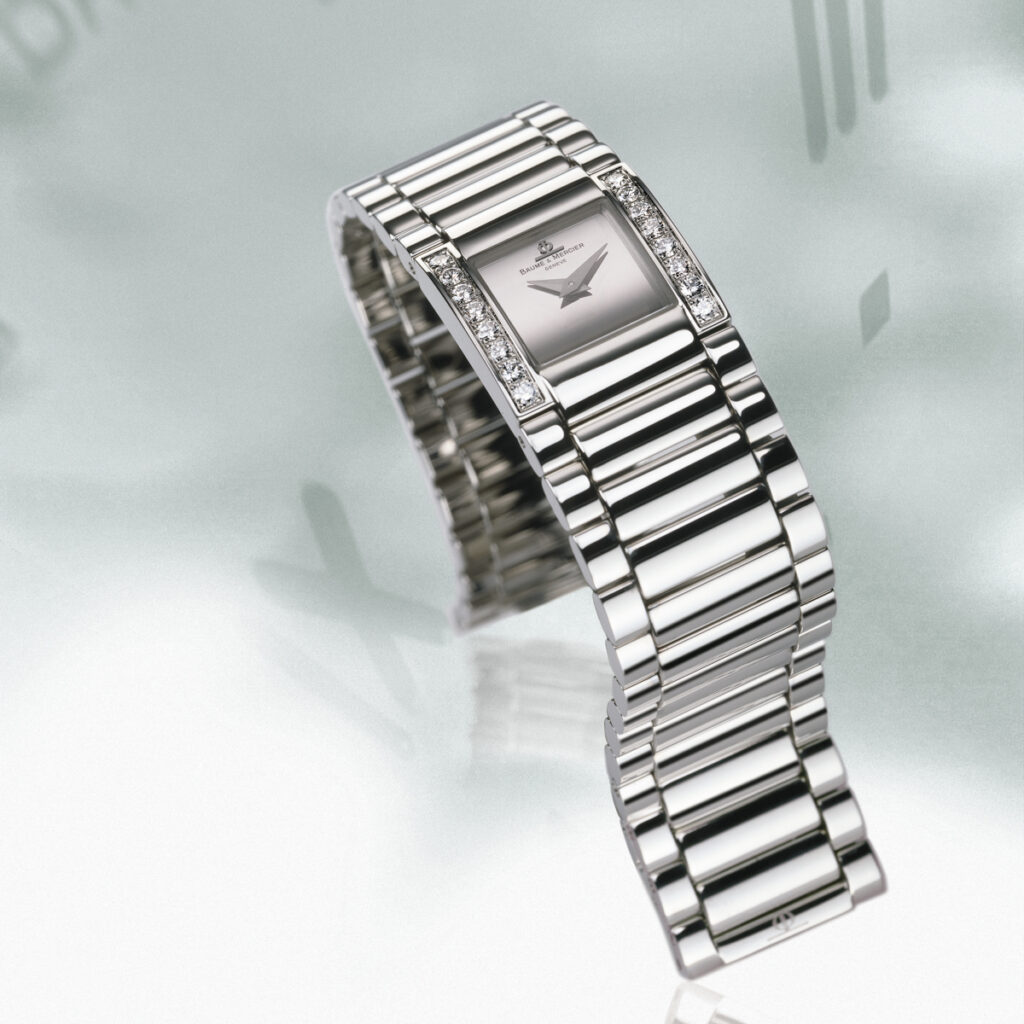

The Catwalk, introduced in 1997 as “a bracelet that is also a watch,” revolutionized the concept of the watch-bracelet, becoming a style icon for Baume & Mercier. Originally with a polished steel bracelet, the Catwalk was offered in variants with rubber or leather straps, transforming it into a true jeweled watch. This model would almost seem to be a conceptual evolution of the Marquise, projected into the modern era. The concept of a bracelet watch remains, but the slim and extremely elegant cut is replaced by a more robust and durable bracelet, consistent with new consumer demands.
Classima

Classima, first introduced in 1997, is a collection initially designed for the professional environment. The round case design has been revisited over time to suit contemporary tastes while retaining its classic allure. The collection adopts self-winding, manual-winding or quartz movements with features such as a second time zone, chronograph or small seconds at 6 o’clock.
Clifton

In 2013, the Maison introduces an entirely new collection. Characterized by clean lines, a harmoniously proportioned case, and clear, legible dials, the Clifton collection ranges from simple models with time-only functions to complex chronographs and complications such as full calendar and power reserve. Often inspired by the design of vintage watches from the 1950s, this line combines Baume & Mercier’s watchmaking heritage with modern technical mastery, as evidenced by the inclusion of the Baumatic caliber made in 2018
The Baumatic Caliber

In 2018 Baume & Mercier, presents a significant innovation in the field of watchmaking, being the first automatic mechanical movement developed in-house by the brand. It is distinguished by its high energy efficiency, ensuring a 5-day power reserve, precision that meets COSC standards, and resistance to magnetic fields up to 1,500 Gauss.
These features, combined with a modern design that respects watchmaking tradition, make the Baumatic a movement that offers enthusiasts a watch capable of combining technical innovation with aesthetic elegance.
Final Thoughts
In this journey through time, Baume & Mercier has shown us how elegance, innovation and boldness, along with respect for tradition have always been at the heart of its philosophy, creating watches that, in addition to their function of measuring time, also tell fascinating stories.
Visit our Youtube channel to experience the best of the world of watchmaking firsthand.
For all real-time updates follow us on Instagram.