
November opens with a busy calendar for watch enthusiasts. From November 8, top auction houses such as Phillips, Christie’s, Sotheby’s and Antiquorum will turn the spotlight on Geneva, anticipating a crucial week for the industry. Next up, on November 13, will come the awarding of the Grand Prix d’Horlogerie de Genève (GPHG), and from November 19 to 23 Dubai Watch Week, one of the most anticipated events on the international scene, will be staged.
Among this season’s headliners is FutureGrail, the young Singapore-based auction house, which will hold an online sale from Nov. 8 to 14, 2025, that is bound to spark discussion. Leading the catalog is a genuine “holy grail” for collectors: the Rolex Ref. 4113, the only rattrapante chronograph ever produced by the crowned house.
FutureGrail: the future of digital auctions?
FutureGrail is an auction house founded in 2022 that has quickly gained the attention of enthusiasts, where we find a smooth digital auction experience along with a rigorous selection of lots, with a focus on vintage and fine watchmaking pieces.
Prominent among the stars of the upcoming November auction is lot 147, dedicated to the Rolex Ref. 4113. The example, serial com 051319, is one of only twelve ever made in 1942, and today represents one of the greatest rarities in the Rolex world.
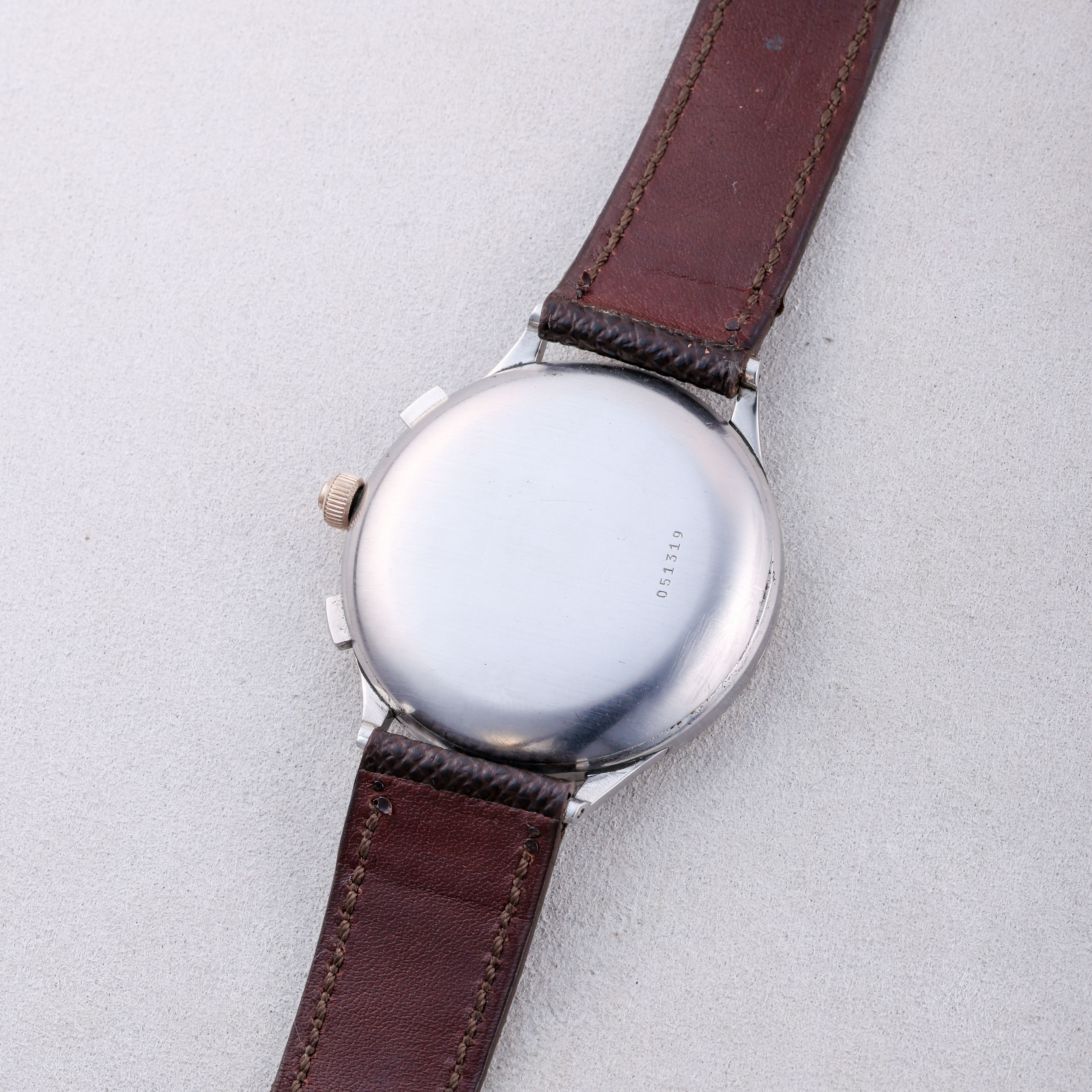
Credits: FutureGrail
Rolex and the racing world
To understand the 4113, it is useful to frame the historical context in which it was born. The 1930s was a period dense with innovation in watchmaking, both technically and stylistically. The world of racing was growing larger and larger, and greater precision was required.
Did you know that Rolex was already linked to the sports world in those years?
In fact, its relationship with motors and motor racing goes back long before the famous Daytona Race of the 1960s. The Maison did not yet have a line specifically dedicated to sports, although thirty years earlier it had already provided some models, including the reference 4113, designed for more sporty use.
For this very reason Rolex made the 4113 experimentally, working closely with Valjoux to develop the movement. It is estimated that only twelve examples were produced, all in 1942,

Credits: FutureGrail
In those years, motor racing was experiencing a true golden age: in Italy, the Mille Miglia and the Targa Florio attracted fans from all over the country. Thanks to precise characteristics, which we will see in a moment, the clock was used as a measuring instrument, enabling track engineers and insiders to record the cars’ times clearly and accurately.
The first and only Rolex rattrapante
As mentioned, the Rolex 4113 was distinguished by features that made it a valuable instrument for experts and pilots. In what way?
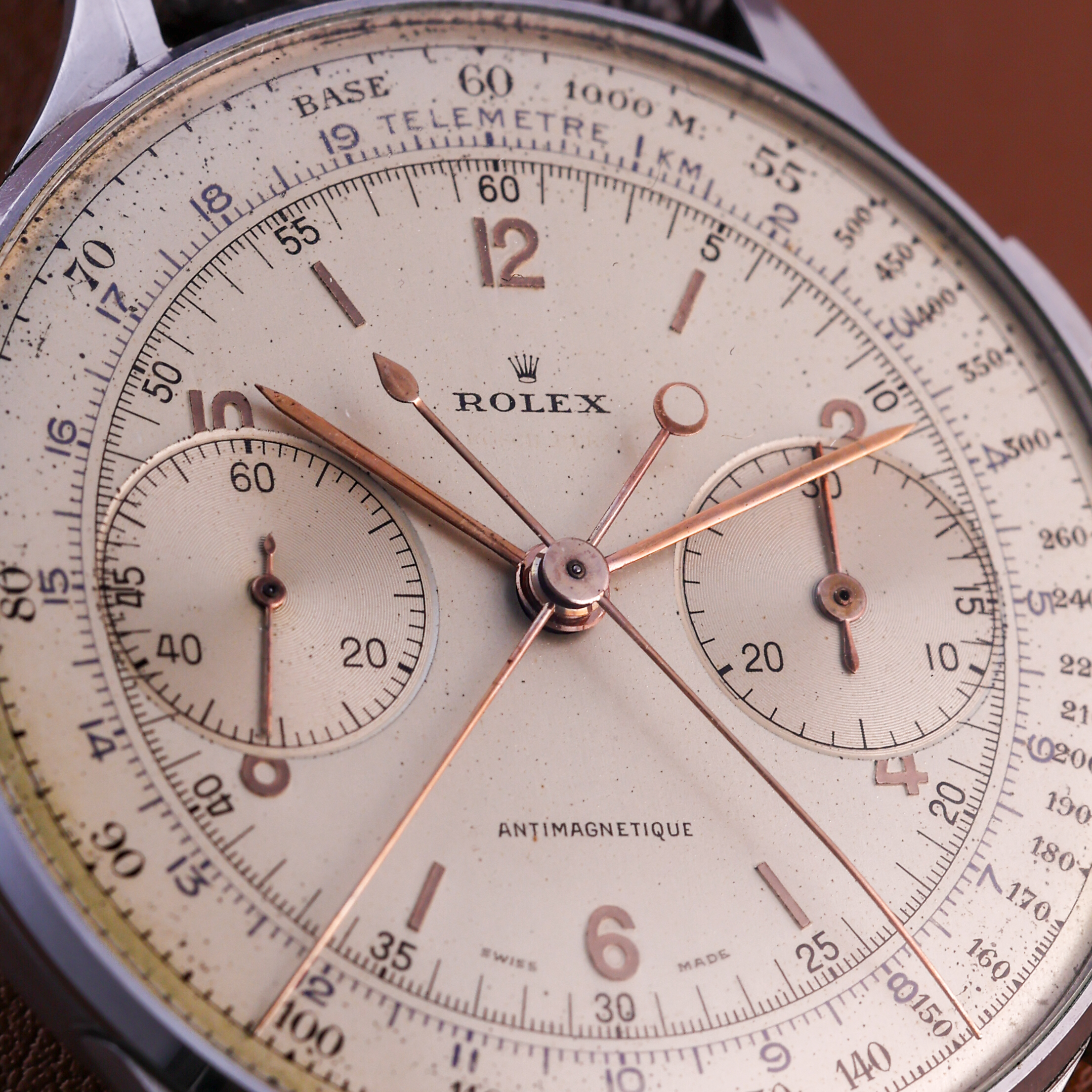
It features a 44 mm dial, which ensures immediate readability of information. Its main peculiarity is the possibility of measuring two separate intervals thanks to the rattrapante function (with which it was possible to time two cars at the same time or two laps on the track).
Credits: FutureGrail
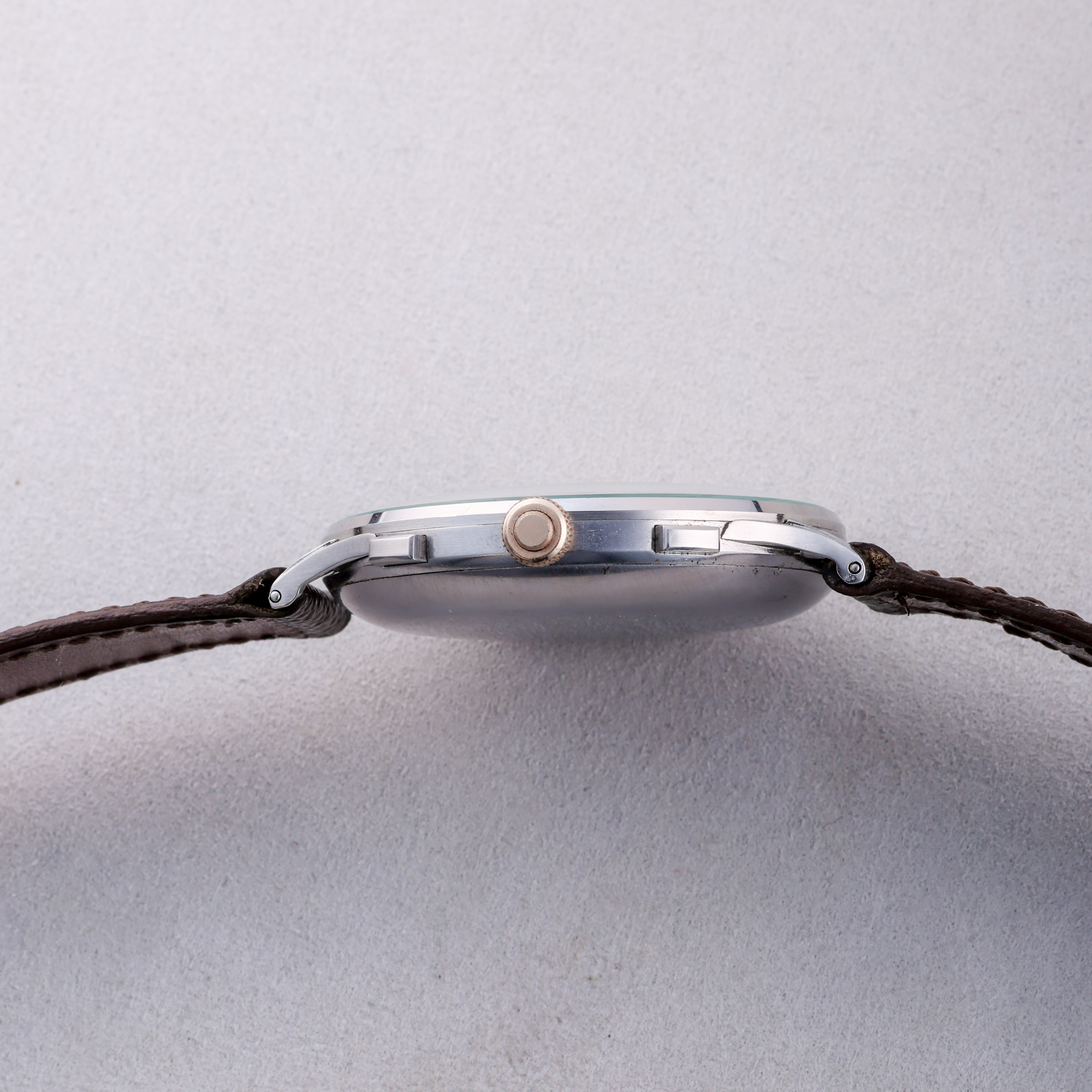
The case is made of steel and is surprisingly thin, only 11.3 mm thick. The rose gold crown, a rare detail for Rolex in those years, integrates the pusher that operates the second chronograph hand.
Credits: FutureGrail
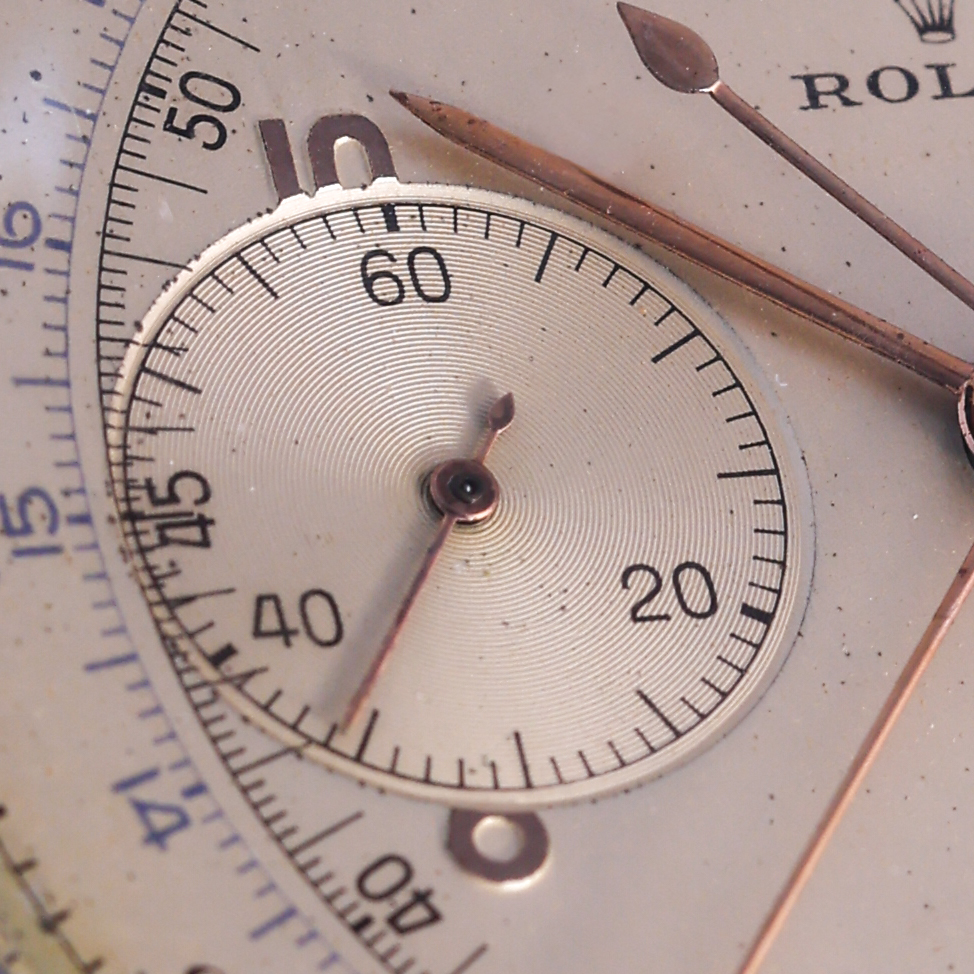
The dial has a matte silver satin finish that, over time, has taken on an elegant coppery tone in which we find at three o’clock the chronograph minute counter (0-30 scale), while at nine o’clock is located the small seconds dial. Around the hour markers stand two scales: tachymeter in black and telemetric in blue, useful for calculating speed and distance traveled.
Credits: FutureGrail
At the twelve o’clock position stands out the inscription “ANTIMAGNETIQUE,” which is unusual for Rolex and indicated the resistance to magnetic fields, a concrete requirement in the automotive environment.
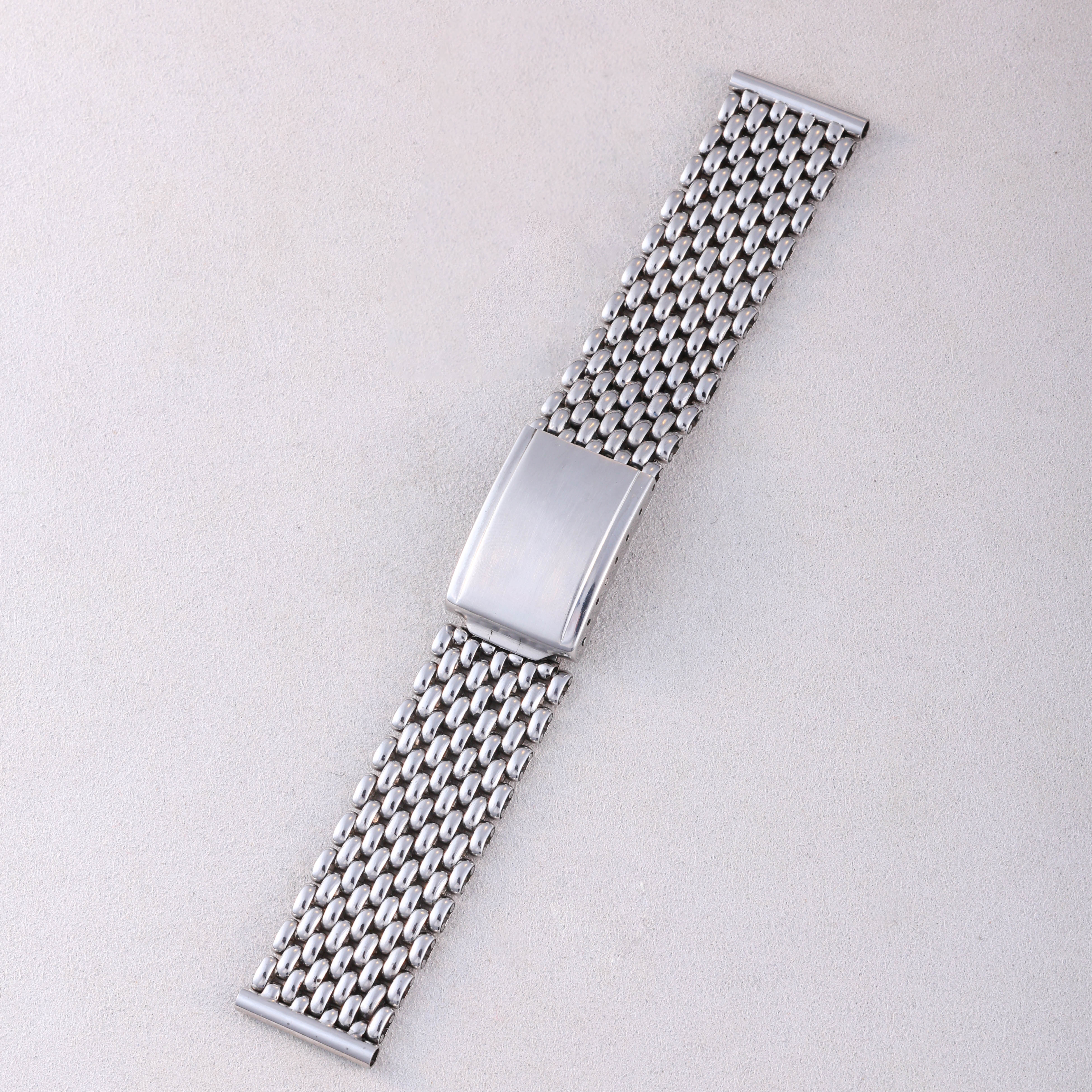
One of the most fascinating details is the Gay Frères steel bracelet, among Rolex’s most iconic suppliers and a symbol of mid-twentieth-century Swiss savoir-faire. Made with flexible links and a sturdy clasp, it gives the watch a perfect balance between elegance and functionality, a detail that alone contributes to its collector’s appeal.
Credits: FutureGrail
An exceptional movement
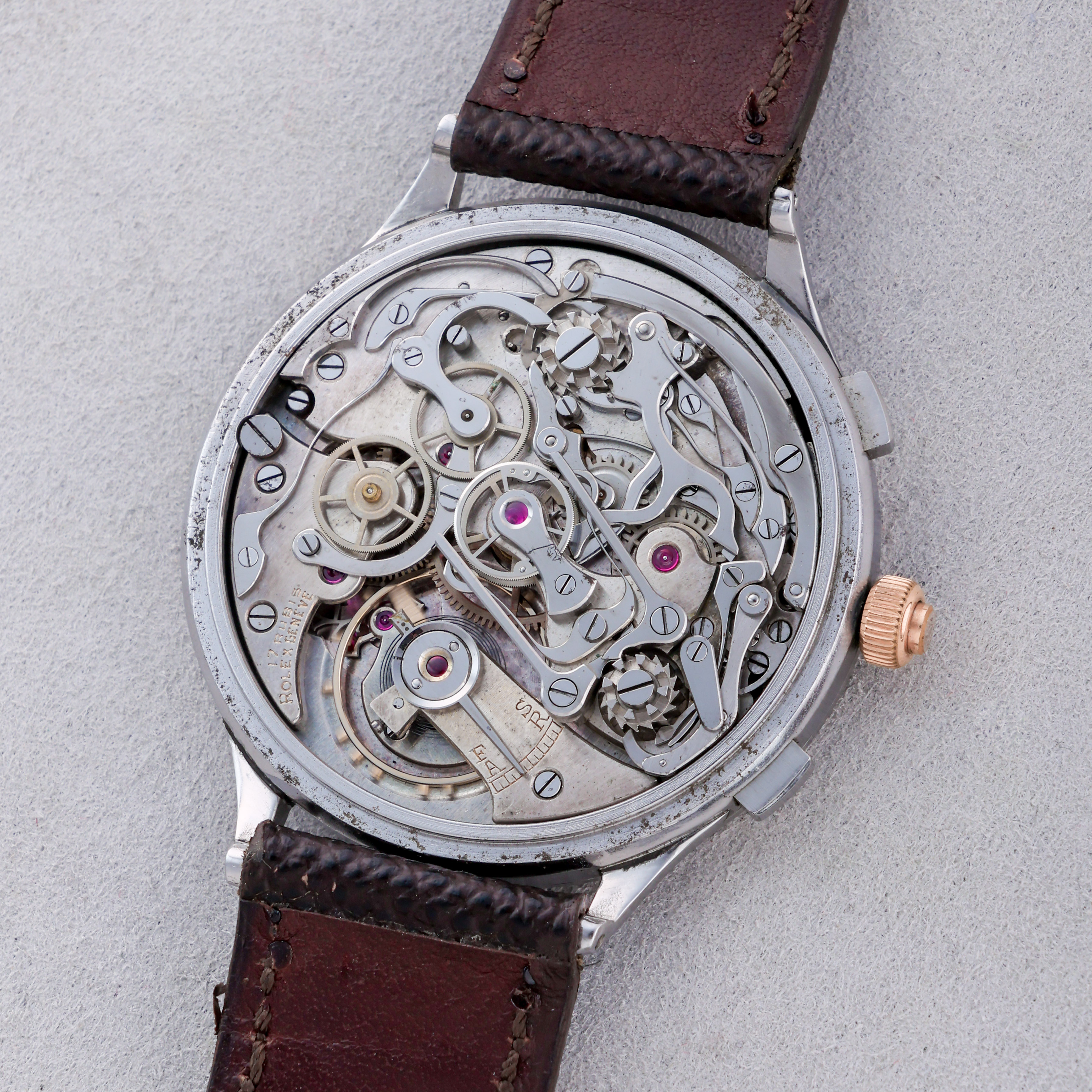
Inside we find the Valjoux 55 VBR, a technical marvel for the time, revised by Rolex to complement the 4113.
This is one of the most complex movements ever mounted on a Rolex, featuring the double column subdial typical of top-tier split-seconds. The pusher on the crown, dedicated to the second chronograph hand, enhances its usability and testifies to the Maison’s ingenuity in finding functional and innovative solutions.
Credits: FutureGrail
This movement helped to make the 4113 famous, placing it alongside other coeval masterpieces such as the Patek Philippe 1563 and the Longines 13ZN rattrapante, true top-of-the-line pieces of the period.
Conclusions
The Rolex Ref. 4113 is much more than a rare watch: it is tangible evidence of a time when mechanics was still an act of ingenuity and courage; it represented Rolex’s willingness to push the limits when innovating really meant taking risks, when the watch really had practical value.
Today, eight of the twelve examples ever produced are publicly registered. In 2024 the model with serial 051321 was awarded for $3,284,000 to the Monaco Legend Group, while in 2022 another reference was hammered for $2,600,000.
So the date is November 8: What do you think the price will be sold at?
Visit our Youtube channel to experience the best of the world of watchmaking firsthand.
For all real-time updates follow us on Instagram.